Gray Versus Fox Squirrels in the Timber
There's nothing quite like the crisp air of a Missouri autumn, the crunch of leaves underfoot, and the thrill of spotting movement in the timber. But if you've spent any time at all chasing squirrels in our woods, you've likely noticed that not all bushy tails are created equal. Sometimes you see a big, rusty critter, other times a smaller, zippier gray ghost. It can be a little confusing trying to figure out if you're looking at different species or just variations within the same one, and knowing the difference can seriously impact your hunting strategy. This guide is all about helping you clearly distinguish between Missouri's gray and fox squirrels, understanding where they live, how they act, and ultimately, how to hunt them more effectively in our diverse woodlands.
The Distinctive Looks: Telling Gray and Fox Squirrels Apart in Missouri
When you're out there in the timber, especially during the busy early season, those flashes of movement can make identification tricky. But with a keen eye and a bit of practice, you'll start to recognize the subtle (and sometimes not-so-subtle) differences between a gray squirrel and a fox squirrel. It’s more than just a passing glance; it’s about understanding their unique physical traits that tell them apart at a distance.
Size and Build Differences
The most immediate tell-tale sign for many hunters is often their sheer size. Fox squirrels are generally the heavyweights of the Missouri squirrel world. They are noticeably larger and possess a more robust, chunkier build than their gray counterparts. Imagine a stocky, muscular little bruiser of the woods, often weighing in at a pound and a half or even more, with a body length that can stretch to nearly two feet including their impressive tail. When you see one perched on a limb, they fill out that space a lot more. This larger size often makes them appear a bit slower or more deliberate in their movements compared to the frantic energy of a gray squirrel.
Gray squirrels, on the other hand, are the more agile, slender athletes of the timber. They are significantly smaller and more delicate in appearance, rarely tipping the scales over a pound, and their body length, including the tail, typically measures around 18 inches. Think of them as sleek, nimble gymnasts. Their smaller stature contributes to their reputation for lightning-fast movements and an ability to disappear into dense cover with incredible speed. If you're constantly seeing a squirrel that seems to vanish into thin air the moment you blink, chances are you're dealing with a gray.
Coloration and Markings
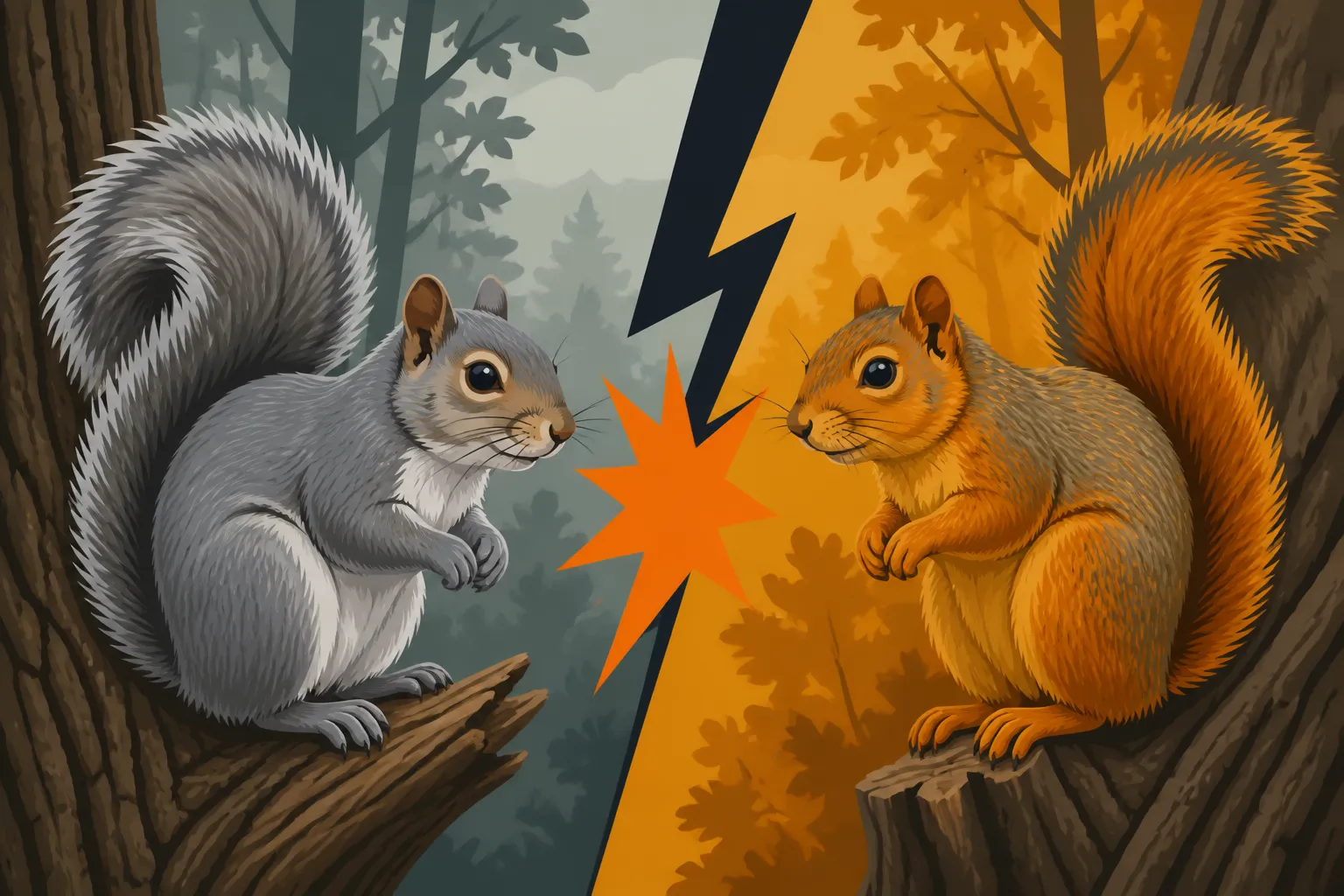
Beyond size, color is your next best friend in the identification game. Fox squirrels are famous for their vibrant, often rusty-red or orange bellies and undersides. This rich coloration usually extends to their feet, ears, and often the edges of their tail. Their backs and sides are typically a grizzled mix of gray and black, giving them a somewhat mottled appearance. This rusty hue is often what gives them their "fox" moniker. Occasionally, you might even encounter a melanistic (all black) fox squirrel, especially in certain regions or specific timber blocks, which can be quite a surprise! Their tails are a real standout, generally long and bushy, often with a mix of rusty-orange and black hairs that create a distinctive, somewhat striped effect.
Gray squirrels live up to their name with their characteristic salt-and-pepper gray coat. Their backs are usually a clear, classic gray, blending almost seamlessly with the bark of many deciduous trees, making them masters of camouflage. Their bellies are typically a clean, stark white, which provides a good contrast to the darker fur on their backs. While predominantly gray, sometimes you might see faint reddish or brownish patches on their sides or along their legs, but never the deep, widespread rusty tones of a fox squirrel. Their tails are also quite bushy, but they tend to be a more uniform gray with a frosty white fringe, lacking the rusty highlights seen on fox squirrels. Missouri's Long Squirrel Season Explained provides more detail on when you can chase these distinct beauties.
Behavioral Cues You Might Notice
Once you get a feel for their looks, paying attention to their behavior can be another crucial identifier. Fox squirrels often present as more deliberate and perhaps a bit bolder. When disturbed, they might climb high into a tree and simply flatten themselves against a limb, relying on camouflage, or slowly circle the trunk to stay out of sight. They tend to be a little more curious, sometimes pausing to watch you from a distance before making a decisive move. You might see them spending more time on the ground foraging, taking their time to dig for nuts, or moving through open timber more casually. This can be both a blessing and a curse for a hunter; sometimes they're easier to spot, but their caution means they won't always bolt immediately.
Gray squirrels, in contrast, are the epitome of nervous energy. They are almost constantly on the move, scampering, twitching, and darting. When they sense danger, they often explode into action, rapidly spiraling up trees, leaping between branches, and disappearing into the densest foliage imaginable. Their quick, erratic movements make them incredibly difficult targets, and they are masters of using the smallest amount of cover to their advantage. If you hear a flurry of rustling leaves and see a blur vanish into a thick canopy, it's almost certainly a gray squirrel making a quick exit. Understanding these behavioral patterns is key, as it directly influences how you'll approach hunting each species.
Habitat Preferences and Where to Find Them
Knowing what a gray or fox squirrel looks like is only half the battle; the other half is understanding where they prefer to set up shop in Missouri's diverse landscapes. While there can be overlap, each species generally gravitates toward specific types of timber and terrain, offering clues to where you should focus your hunting efforts.
Fox Squirrels: The Edge Dwellers
Fox squirrels are truly creatures of the edge. They thrive in more open woodlands, scattered woodlots, and especially along the timber lines that border agricultural fields, pastures, or even suburban areas. They don't typically prefer the vast, unbroken expanses of dense forest. Think of those classic Missouri fencerows, small patches of oak and hickory trees amidst crop fields, or the fringe of a larger timber block where it meets an open space. These environments offer a rich food source from field crops combined with the protective cover of trees.
You'll often find them foraging on the ground in these edge habitats, digging for buried nuts, or raiding corn and soybean fields after harvest. They love to sun themselves on prominent limbs overlooking open areas. If you're scouting areas with a mix of hardwoods and agriculture, especially in North Missouri's big-buck farm country, you're in prime fox squirrel territory. These animals appreciate the slightly more open canopy that lets in more sunlight and often allows for a better view of potential predators. When you're using your GoHunt app to scout satellite imagery, look for those distinct transition zones between timber and field to pinpoint likely fox squirrel hangouts. Hunting a Missouri Fencerow Between Fields can provide great insights into these specific edge habitats.
Gray Squirrels: The Deep Woods Residents
Gray squirrels, conversely, are true denizens of the deep woods. They prefer mature, extensive blocks of timber, particularly those with a dense canopy and a rich understory, such as bottomland hardwood forests along rivers and creeks, or expansive oak-hickory stands in the Ozarks. These are the places where the canopy overhead is thick, providing abundant shade and many branches for arboreal travel. They thrive where there's a continuous canopy, allowing them to travel great distances from tree to tree without ever touching the ground, a key defense mechanism against predators.
If you're hiking through a vast, unbroken forest, especially areas with mature mast-producing trees like white oaks and shagbark hickories, you're squarely in gray squirrel country. They are more communal than fox squirrels, often found in higher densities within these preferred habitats. River breaks, deep hollows, and heavily timbered hillsides are all classic spots to find gray squirrels. Their preference for these dense, interconnected environments makes them harder to pin down, as they have an almost infinite number of escape routes. Squirrel Hunting in Oak Hickory Timber gives more details on their preferred food trees and locations.
Overlap Zones and What to Expect
While each species has its preferred niche, it's important to remember that nature isn't always so clear-cut. There are definitely overlap zones where you might encounter both gray and fox squirrels in the same general area. This usually happens in areas where large tracts of dense timber gradually transition into more open woodlots or agricultural fields. For instance, a broad river bottom might hold gray squirrels in its deepest, thickest sections, while fox squirrels might be found along its edges where it meets a levee or a smaller, more fragmented woodlot.
In these transition zones, you might observe the two species exhibiting their characteristic behaviors side-by-side, or you might spot one type predominantly in a specific micro-habitat within the larger area. A common scenario is finding fox squirrels primarily along a timbered ridge leading down to a bottomland, with gray squirrels dominating the denser, wetter areas closer to the creek. As a hunter, this means being prepared for anything. Don't assume that just because you see one type of squirrel, the other isn't present nearby. Being aware of both species' habits in these mixed environments can give you a tactical advantage.
Behavior and Hunting Strategies for Each Species
Understanding the distinct behaviors of gray and fox squirrels isn't just academic; it directly translates into more effective hunting strategies. Their temperament, how they react to pressure, and their daily routines require different approaches if you want to fill your vest.
Hunting Fox Squirrels: Patience and Observation
Because fox squirrels are often found in more open timber and along field edges, they can sometimes be a bit more conspicuous. However, their tendency to flatten out on a limb or slowly circle a tree to avoid detection means you'll need a healthy dose of patience. Still-hunting, where you move slowly and deliberately, pausing frequently to observe, can be incredibly effective. Take a few steps, then stop for several minutes, scanning every branch and tree trunk. Use binoculars, like a good 8×42 pair, to meticulously examine potential hiding spots. Binocular Power for Timber Hunting can help you choose the right optics. They are less likely to bolt in a panic, offering you a better chance to make a careful shot if you can spot them before they spot you.
Setting up an ambush is another excellent tactic. Find a comfortable spot on a field edge or overlooking a known food source – perhaps a stand of mature oak trees or a pecan grove – and simply sit quietly. Many hunters, myself included, use advanced mapping tools like GoHunt to scout potential squirrel timber from home, identifying those precise edge habitats for fox squirrels or dense bottoms for grays. Fox squirrels often become active a little later in the morning than grays, and again in the late afternoon. They're more inclined to be on the ground, so keep an eye on the forest floor, especially where Reading Cuttings Under an Oak might indicate recent feeding activity.
Hunting Gray Squirrels: Speed and Stealth
Gray squirrels are a different ballgame altogether. Their explosive speed and uncanny ability to disappear into dense cover demand a more active and stealthy approach. Still-hunting is still a viable strategy, but you'll need to move even slower and more quietly, focusing on catching those fleeting movements in the thick understory. They're often most active right at first light and again towards dusk, making those early morning pushes into the deep woods particularly productive. As soon as you hear that frantic rustle of leaves or a quick chatter, freeze and scan the trees in every direction.
Sometimes, "bushytail drives" can be surprisingly effective for grays. If you have a hunting partner, one person can slowly walk through a dense section of timber, pushing squirrels towards the other hunter who is set up quietly on the opposite side. This works best in areas where grays are known to travel between specific trees or across narrow draws. They are quick to retreat into their den trees or thick nests, so getting a shot off before they reach safety is crucial. Pay close attention to movement high in the canopy, as they prefer to stay elevated. A good, quiet pair of boots and a slow, methodical pace are your best assets when pursuing these speedy timber ghosts.
The Best Times and Conditions
While squirrels can be active throughout the day, the early morning hours, especially from first light until about 10 AM, and the late afternoon, from an hour or two before sunset until dark, are generally the most productive times to hunt both species. During the middle of the day, especially if it's warm, they tend to nap or stay closer to their dens.
Weather also plays a significant role. Crisp, calm autumn days are ideal. A light rain or drizzle can sometimes make squirrels more active as they forage for nuts dislodged by the moisture, and the sound of falling drops can help mask your approach. However, heavy rains or strong winds can keep them hunkered down. Cold, snowy days, particularly after a fresh snow, can offer excellent hunting opportunities as squirrels will often be out foraging for buried caches, and their tracks are easy to follow. Still-Hunting After a Fresh Snow can teach you some unique strategies for these conditions. Always remember to check Missouri's Long Squirrel Season Explained for specific dates and regulations, as squirrel season typically offers generous limits and a long window to hunt.
Why Understanding the Difference Matters for Missouri Hunters
Beyond just identifying what you're seeing, recognizing the nuances between gray and fox squirrels has practical benefits that can make you a more successful and knowledgeable Missouri hunter. It's about efficiency, experience, and truly appreciating the game you pursue.
Tailoring Your Approach
Knowing which species dominates a particular piece of timber allows you to tailor your entire hunting approach from the moment you step out of the truck. If you're targeting gray squirrels in a vast, dense bottomland, you'll likely focus on still-hunting slowly through the thick canopy, listening for movement high in the trees, and being ready for a quick shot as they bound through branches. Your clothing might be quieter, your movements more deliberate. On the other hand, if you're after fox squirrels on a timber edge next to a cornfield, you might set up an ambush near a known mast tree, focusing on scanning the ground and lower limbs, patiently waiting for a larger, rustier target to appear.
This knowledge also refines your scouting. Instead of just looking for "squirrel sign," you're looking for species-specific sign. When you're using a mapping tool like GoHunt, you can overlay property lines and topographical maps with aerial photos to identify those deep, mature timber stands for grays, or the fragmented woodlots and field edges that scream fox squirrel habitat. This focused scouting means you spend less time in unproductive areas and more time where your target species is likely to be. Scouting Missouri Public Land Before Season is invaluable for this kind of preparation.
Culinary Differences and Meat Yield
While both gray and fox squirrels offer delicious wild game meat, there are some subtle differences in terms of meat yield and texture. Fox squirrels, being larger and heavier, naturally provide more meat per animal. If your goal is to harvest as much wild game as possible for the pot, a few fox squirrels can go a long way. Their meat might be slightly coarser in texture due to their larger size and more muscular build, but it's incredibly flavorful when slow-cooked or stewed.
Gray squirrels, though smaller, are often praised for their tender, fine-grained meat. You might need to harvest a few more grays to get the same amount of table fare as a single fox squirrel, but many hunters appreciate their delicate flavor. Both species are fantastic for a variety of dishes, from classic fried squirrel to stews, pot pies, or even gourmet preparations. Knowing which one you've harvested can sometimes influence your cooking method or portion planning. Regardless of the species, proper field dressing and cooling are crucial for Getting Deer Meat Cooled Quickly, and the same principles apply to small game to ensure the best flavor. Both make for some of the Best-Eating Game in Missouri you can find.
Beyond the Harvest: Enjoying Missouri's Squirrel Woods
Ultimately, understanding the differences between gray and fox squirrels enhances your overall experience in Missouri's woods. It deepens your appreciation for the biodiversity around you and makes you a more observant and skilled hunter. It’s not just about the shot; it's about the entire ecosystem. Recognizing a gray squirrel's frantic dash through a dense Ozark hollow versus a fox squirrel's deliberate movements along a fencerow helps you connect more intimately with the landscape and its inhabitants.
This knowledge turns every outing into a learning experience, honing your tracking skills, your ability to read habitat, and your patience. Whether you're filling your freezer or simply enjoying a peaceful morning in the timber, being able to identify and understand these two distinct species makes you a more rounded and respectful sportsman. It's part of the rich tapestry of Missouri Small Game and Rabbits that makes our state such a special place to hunt.
| Feature | Gray Squirrel (Sciurus carolinensis) | Fox Squirrel (Sciurus niger) |
|---|---|---|
| Size | Smaller, slender, agile (0.75-1.25 lbs) | Larger, bulkier, robust (1.5-2.5 lbs) |
| Primary Color | Salt-and-pepper gray | Grizzled gray/black with rusty/orange |
| Belly Color | White | Rusty red/orange |
| Tail | Bushy, gray with frosty white fringe | Bushy, rusty/orange mixed with black |
| Preferred Habitat | Dense, mature, continuous canopy timber; bottomlands | Open woods, woodlots, timber edges near fields/urban |
| Movement | Quick, erratic, arboreal, nervous | More deliberate, often terrestrial, curious |
| Common Reaction to Threat | Spirals up trees, leaps, vanishes quickly | Flattens on limb, circles trunk, observes |
| Meat Yield | Less meat, fine-grained | More meat, slightly coarser |
Disclaimer
This article is for general informational purposes only and does not constitute professional advice. Laws, prices and regulations vary by location and change over time. Consult a qualified professional for guidance on your specific situation.