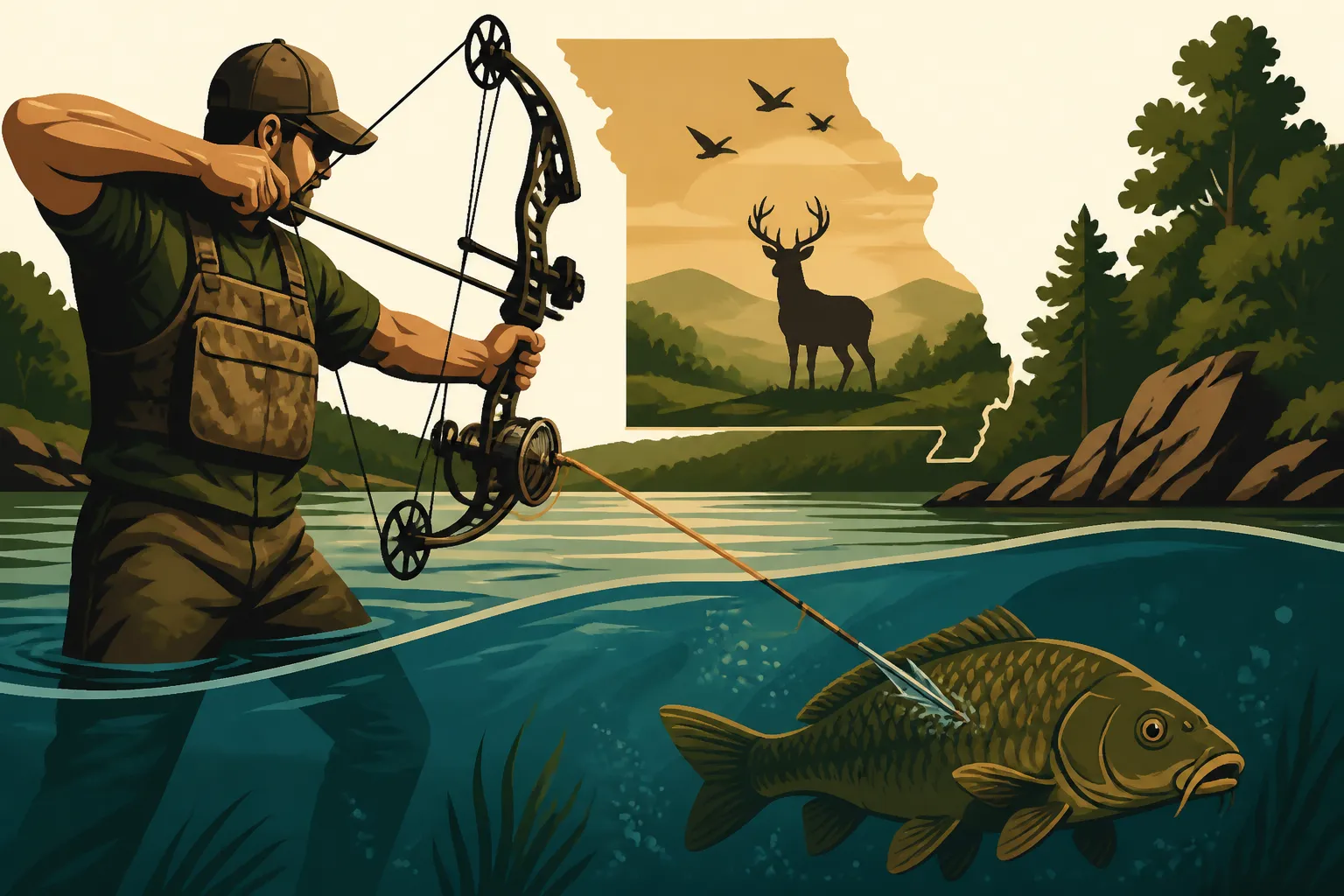
Bowfishing Rivers and Lakes
Ah, the tug of a big carp on the end of your line, or the thrill of spotting a gar lurking in the shallows – bowfishing in Missouri offers a unique blend of hunting and angling that gets your heart pumping like few other outdoor pursuits. But let's be honest, figuring out the specific rules, the best spots, and the right gear can feel a bit like trying to navigate the Missouri River in a canoe without a paddle. It’s not always straightforward, especially when you’re dealing with diverse waterways and constantly updated regulations. This guide is here to untangle all that, helping you get set up for success whether you're aiming for common carp on a local lake or bighead carp in a major river system.
Understanding Missouri's Bowfishing Regulations and Seasons
Before you even think about stringing an arrow or shining a light over the water, it’s absolutely crucial to know the rules. Missouri’s Department of Conservation (MDC) does a great job of managing our natural resources, but it means there are specific regulations you need to abide by. Ignoring them can quickly turn a fun outing into a costly mistake.
Legal Species for Bowfishing
One of the biggest frustrations for new bowfishermen is knowing what you can actually shoot. It's not a free-for-all on every finned creature in the water. In Missouri, bowfishing primarily targets what are considered "non-game" or "rough" fish. These are species that aren't typically pursued with hook and line for sport or table fare by most anglers, or those that can negatively impact native fish populations.
The primary targets include various species of carp, such as common carp, grass carp, silver carp, and bighead carp. These invasive species, especially the silver and bighead, can proliferate rapidly and outcompete native fish for food and habitat. That's why many bowfishers feel they're contributing to conservation efforts by removing them. You're also allowed to target buffalo (bigmouth, smallmouth, and black), drum, suckers, paddlefish (with specific regulations and tags), and most species of gar (longnose, shortnose, spotted). Each of these offers a different challenge, from the wary common carp to the prehistoric gar. It's important to remember that game fish like bass, crappie, catfish, and sunfish are strictly off-limits when bowfishing. Always double-check the latest MDC regulations to be sure, as rules can change.
Permit Requirements and Rules
Just like any other hunting or fishing activity in the Show-Me State, you’ll need the right permits. For bowfishing, you generally need a valid Missouri fishing permit. If you're a resident, this is usually straightforward, but non-residents will need to purchase a non-resident fishing permit. You can easily get your permits online through the MDC website, or at authorized vendors across the state. It's super convenient to be able to jump onto the Buying Missouri Permits Online portal and get what you need before heading out.
There aren’t specific seasons for most rough fish when bowfishing, meaning you can pursue them year-round, which is fantastic for those of us who love being on the water. However, some species, like paddlefish, have very specific regulations, including a limited season and the need for a separate permit and tag. When you harvest a paddlefish, it must be reported through Telecheck, similar to deer and turkey harvests. General rules also dictate that bowfishing must occur during legal hours, which are typically sunrise to sunset for most activities, though night bowfishing with artificial lights is explicitly allowed for non-game fish. It's also critical to understand that you cannot shoot fish in certain areas, such as within 200 feet of a public boat ramp or dock, or in waters designated as trout parks. Always carry your permit with you, and be prepared to show it if a conservation agent requests it.
Night Bowfishing and Equipment
Night bowfishing is incredibly popular in Missouri, and for good reason—it’s often more productive, especially in warmer months. The low light of night allows you to get closer to fish that might be skittish during the day. The core of night bowfishing involves powerful artificial lights, typically halogen or LED, mounted to your boat to illuminate the shallow water. These lights are often powered by a generator, which means noise can be a factor, so consider a quieter inverter generator if you can.
You're allowed to use these artificial lights to attract and locate fish, but remember, the primary target remains non-game species. For safety, ensure your boat’s navigation lights are functioning correctly, and always wear a PFD (personal flotation device), especially if you're standing and shooting. Having a dedicated boat setup with a shooting platform, light racks, and a powerful generator makes a world of difference. Many experienced bowfishers will tell you that having good quality, bright lights is paramount for spotting fish in murky waters or at greater depths.
Prime Locations for Bowfishing in Missouri
Missouri is blessed with an incredible network of rivers, lakes, and streams, offering a huge variety of bowfishing opportunities. From vast reservoirs to winding river systems, there’s a spot for every preference and skill level.
River Systems and Their Opportunities
Missouri's major river systems are absolute goldmines for bowfishing. The mighty Missouri River itself, along with the Mississippi, Osage, Gasconade, and Current Rivers, all offer fantastic chances to find rough fish. These rivers are dynamic, with constantly changing water levels, currents, and bottom structures.
The Missouri River, often referred to as "The Big Muddy," is famous for its abundance of carp, buffalo, and gar. Its expansive sandbars and shallow sloughs, especially during lower water periods, can concentrate fish. While you're out there, you might even notice some familiar territory mentioned in articles like Missouri River and Big Muddy Access which focuses on general hunting access but highlights the very areas you'd want to explore. Look for backwaters, slower eddies, and flooded timber adjacent to the main channel. These areas provide cover and feeding grounds. The Mississippi River, particularly its numerous wing dams, islands, and feeder creeks, holds massive populations of common carp and bighead carp. These fish often congregate in areas where current is broken or where warmer water enters. The Osage River, especially above Truman Lake, offers miles of relatively shallow, nutrient-rich waters that are perfect for stalking fish from a boat or even wading in spots.
When fishing rivers, pay close attention to water clarity and temperature. After a heavy rain, rivers can become extremely muddy, making spotting fish nearly impossible. However, as the water begins to clear and drop, the fish often move into shallower areas to feed, creating prime bowfishing conditions.
Lake and Reservoir Hotspots
Missouri's large reservoirs and lakes also provide phenomenal bowfishing. Truman Lake, Stockton Lake, Lake of the Ozarks, and Table Rock Lake are all well-known for their rough fish populations. What’s different about lakes compared to rivers is often the clearer water and more stable environment, though wind can certainly make things choppy.
Truman Lake, with its vast shallow arms, coves, and stump fields, is arguably one of the best bowfishing lakes in the state. The massive amount of cover and shallow feeding flats make it a perfect habitat for carp and buffalo. Many bowfishing tournaments are held here for a reason! Similarly, the shallower arms of Lake of the Ozarks, especially upstream from Bagnell Dam, can be incredibly productive. While Lake of the Ozarks Hunting Access might talk about deer, the principles of finding secluded coves and shallow water hold true for fish too. Look for areas with dense vegetation or shallow flats where fish come to feed or spawn. Stockton Lake, known for its clear water, is excellent for spotting gar, which often hang just below the surface in clearer conditions. Even smaller public lakes, especially those managed by the MDC, can offer surprising opportunities if you do your scouting.
Smaller Waters and Hidden Gems
Don't overlook the smaller, less-pressured waters. Many local conservation areas have small lakes, ponds, and sloughs that are teeming with carp and buffalo, especially in the spring during spawning season. These can be fantastic for wading or using smaller jon boats, offering a more intimate bowfishing experience away from the crowds. Exploring the backwaters and oxbow lakes connected to major rivers, or the numerous tributary creeks that feed into larger bodies of water, can reveal hidden gems.
For instance, many of the smaller streams and sloughs in the northern and central parts of the state offer fantastic shallow-water opportunities. These often require a bit more effort to access, sometimes involving dragging a small boat or even just wading, but the reward of unpressured fish can be well worth it. Always check local regulations for any specific area, as some conservation areas might have unique rules regarding boat size or access. Using mapping tools, like those available through GoHunt or similar outdoor platforms, can help you identify these lesser-known spots by highlighting public access points and water features that hold fish.
Essential Gear and Techniques for Successful Bowfishing
Having the right gear makes a huge difference in bowfishing. It's more than just a bow and arrow; it's a specialized setup designed to handle the unique challenges of shooting fish in water.
Bow Setups and Reel Choices
Most bowfishing setups revolve around a dedicated bowfishing bow. While you can convert a regular compound or recurve, many prefer bows specifically designed for the sport. These typically have lower draw weights (often 30-50 pounds) and a no-let-off system, meaning you can shoot instantly without needing to come to full draw, which is critical for quick shots at moving fish. Brands like PSE Archery, Cajun Bowfishing, and Muzzy are popular choices. Some bows even feature a zero-pound draw weight for snap shooting, making them ideal for rapid fire when schools of fish are present.
The reel is arguably the most critical component after the bow. There are three main types:
- Bottle Reels (or Spincast Reels): These are essentially heavy-duty fishing reels mounted to your bow, often used for lighter setups or by those who prefer the familiar feel of a spincast. They are typically mounted below the grip.
- Drum Reels: These are simple, robust reels where the line is manually wrapped around a drum. They're incredibly durable and reliable, though retrieving line can be slower. They excel in thick cover where snags are common.
- Retriever Reels: These are specialized closed-face reels designed to rapidly retrieve heavy bowfishing line. They're often mounted to the front stabilizer bushing and are favored by serious bowfishers for their speed and efficiency, especially when dealing with larger fish. Each type has its pros and cons, so choose one that fits your shooting style and the type of fishing you plan to do.
Arrows, Tips, and String
Bowfishing arrows are much heavier and stronger than regular archery arrows, designed to penetrate water and fish scales without bending or breaking. They’re typically solid fiberglass, carbon fiber, or a blend, and lack fletching for better water penetration.
The arrow tip is where things get really specialized. There's a wide array of options, each designed for different fish and situations:
- Barbed Tips: These are the most common, featuring one or more barbs that deploy after penetrating the fish, preventing it from slipping off the arrow. They require manually depressing the barbs to remove the fish.
- Grapple/Harpoon Tips: These tips have multiple heavy-duty barbs for holding large, powerful fish like big buffalo.
- Innerloc Tips: Some tips, like those from Innerloc, have a design that allows for quick release of the fish without needing to physically collapse barbs, making them efficient for fast shooting.
- Safety Slide Systems: Most bowfishing arrows use a safety slide system, which keeps the line in front of the bow and away from the string. This is absolutely critical for preventing "arrow slap," where the line catches on the bowstring and causes the arrow to snap back at the shooter – a very dangerous scenario. Always ensure your safety slide is correctly installed and functioning.
The line itself is usually heavy-test braided nylon or Spectra, ranging from 80-pound to 400-pound test. It needs to be strong enough to haul in large fish and withstand the abuse of rocks and timber.
Boat Setup, Lights, and Safety
For serious night bowfishing, a boat setup is key. Most bowfishermen use flat-bottomed jon boats, typically 16-20 feet long, which offer a stable platform and can navigate shallow waters. The boat is usually modified with a raised shooting deck or platform to give hunters a better vantage point for spotting fish.
Lighting: This is where the magic happens at night. You'll need powerful lights, usually 12-volt LED or halogen, mounted around the bow and sides of the boat to illuminate the water. A quiet, portable generator (like a Honda or Yamaha inverter generator) is necessary to power these lights. The brighter the lights, the more fish you'll see, especially in stained water.
Trolling Motors: A reliable electric trolling motor, preferably a foot-controlled model, is essential for quietly maneuvering the boat in shallow water, allowing you to sneak up on fish without spooking them.
Safety: Never compromise on safety. Always have life jackets readily accessible (and wear them, especially at night), a fully charged battery for your boat, basic first-aid supplies, and a fully functional kill switch on your outboard. Also, be mindful of where your arrow might go if you miss – always shoot into the water and be aware of anything beyond your target. Remember, you're on the water at night, often moving, and mistakes can happen quickly.
Day vs. Night Tactics
Bowfishing during the day and at night each present unique challenges and rewards.
Daytime Tactics:
During the day, you're relying solely on natural light. This means clearer water conditions are usually preferable, as stained or muddy water makes spotting fish nearly impossible. Focus on shallow flats, weed lines, and submerged timber where fish might be feeding or holding. Polarized sunglasses are absolutely indispensable for cutting glare and seeing into the water. In the spring, common carp will move into extremely shallow water to spawn, often churning up mud and making themselves easy targets. This is a prime time for daytime bowfishing. During the heat of summer, gar are often seen "gulping" air at the surface, making them visible even in less-than-clear water. Stalking slowly and quietly is key, much like still-hunting for deer, as fish are far more aware of your presence during daylight hours.
Nighttime Tactics:
Night bowfishing offers the advantage of fish being less wary due to the artificial light. The lights penetrate the water, allowing you to see fish that would be hidden during the day. This is particularly effective for species like common carp, buffalo, and bighead carp that often feed in shallow water at night. Your boat's lights act like a spotlight, momentarily disorienting the fish and giving you a shot. However, the limited visibility beyond your lighted zone means you need to be extra vigilant for obstacles like submerged logs or rocks. Night bowfishing also means dealing with generators, fuel, and more gear, so preparation is key. Many anglers find the cooler temperatures of night fishing to be much more comfortable, especially during Missouri’s hot summers.
Targeting Specific Species and Ethical Considerations
Bowfishing isn't just about shooting; it's about understanding the fish you're targeting and being a responsible conservationist.
Common Bowfishing Targets and Their Habits
Each species presents a different challenge and requires a slightly different approach.
- Common Carp: These are the bread and butter of bowfishing. They’re found almost everywhere—rivers, lakes, ponds—and are often seen feeding in shallow, muddy areas. They spook easily, so quiet approach is crucial. In spring, they gather in dense schools for spawning, presenting excellent opportunities.
- Grass Carp: These are typically found in clearer, vegetated waters, as they feed heavily on aquatic plants. They can grow quite large and are powerful fighters.
- **Silver Carp & Bighead Carp: These are the notorious "jumping carp" of the Missouri and Mississippi Rivers. They are filter feeders and are considered highly invasive. Spotting them can be tricky because they often cruise just below the surface in open water. They can also jump out of the water when startled, so be aware! Targeting these can be a fast-paced, action-packed experience.
- Buffalo (Bigmouth, Smallmouth, Black): These are native rough fish, often mistaken for carp, but they have a different mouth structure. They can grow very large and are strong fighters. They typically inhabit deeper water but will move to shallows to feed or spawn.
- Gar (Longnose, Shortnose, Spotted): These prehistoric predators are sleek, fast, and have bony bodies that make them challenging targets. Their long, toothy snouts are distinctive. They often lie motionless near the surface in clear water, especially in slack current. You'll need a sharp tip and good aim to penetrate their tough scales.
- Drum: Also known as freshwater drum or sheepshead, these fish have a distinctive humped back and can be found in a variety of habitats, often near bottom structure.
Fish Handling, Disposal, and Consumption
This is a critical, and often overlooked, aspect of bowfishing. Unlike hook-and-line fishing where catch-and-release is common, most bowfished fish are harvested due to the nature of the sport.
Immediate Handling: Once a fish is shot and reeled in, it's important to quickly and humanely dispatch it. Many bowfishers carry a club or a short-handled gaff for this purpose. Once dispatched, large fish can be put on a stringer or directly into a cooler with ice. Rapid cooling is essential if you plan to eat the fish.
Disposal: For fish you don't intend to eat, proper disposal is paramount. You absolutely cannot just dump unwanted fish back into the water, as this can spread disease or simply become a nuisance. The most ethical approach is to take them home for composting, bury them, or dispose of them in a proper landfill. Some individuals use these fish as fertilizer for gardens. Many communities also have facilities that accept fish waste. It's about being respectful of the resource and other users.
Consumption: While many people turn up their nose at carp, some species of rough fish, particularly buffalo and common carp, can be quite delicious if prepared correctly. The key is often to bleed them immediately and get them on ice quickly to prevent the meat from developing a "muddy" taste. Smoking, frying, or pickling are popular methods. Grass carp, in particular, are often praised for their white, flaky meat. Don't be afraid to experiment, you might be surprised!
Conservation and Responsible Bowfishing
Being a responsible bowfisher means more than just following the rules; it means being a good steward of Missouri's waters. This includes not just proper disposal of fish, but also being mindful of your impact on the environment.
- Respect Private Property: If you’re near private land, always be aware of property lines and adhere to Missouri's trespass law. Use tools like those offered by GoHunt or the Missouri Conservation Atlas to confirm public land boundaries.
- Minimize Disturbance: While bowfishing is a noisy activity with generators and boats, try to minimize unnecessary disturbance to other anglers, boaters, and wildlife.
- Educate Others: If you encounter someone new to bowfishing, share your knowledge of rules and best practices. Help them understand why we target certain species and the importance of ethical handling.
- Protect Native Species: Always be vigilant to avoid accidentally shooting game fish. If you're unsure of a fish's identity, don't shoot. The health of our native populations depends on careful identification.
Bowfishing is a fantastic way to enjoy Missouri's outdoors, combining the thrill of the hunt with the relaxation of being on the water. By understanding the regulations, finding the right spots, using appropriate gear, and practicing responsible ethics, you can have countless memorable adventures on Missouri’s rivers and lakes. So, grab your bow, string an arrow, and get ready for some action!
Comparison of Common Bowfishing Targets in Missouri
| Feature | Common Carp | Silver & Bighead Carp | Gar Species | Buffalo Species | Freshwater Drum |
|---|---|---|---|---|---|
| Primary Habitat | Rivers, lakes, ponds, backwaters | Large rivers (Missouri, Mississippi) | Rivers, clear lakes, slack water | Rivers, large lakes, deep channels | Rivers, lakes, often near bottom structure |
| Appearance | Large scales, barbels, typically gold/brown | No scales on head, silver/grey, large mouth | Long, cylindrical body, bony, long snout, sharp teeth | Deep body, small scales, sucker-like mouth | High back, silver/grey, large scales |
| Behavior | Bottom feeder, schooling, spawns in shallows | Filter feeder, jump when startled | Lie motionless near surface, ambush predator | Bottom feeder, often in deeper water | Bottom feeder, often schooling |
| Challenge Level | Medium (spook easily) | Medium (fast, jump) | High (bony, tough scales) | Medium (powerful fighters, can be large) | Low (slower, predictable movement) |
| Edibility | Fair to Good (smoked, fried, pickled) | Poor (bony, soft meat) | Good (firm, white meat, requires skill to clean) | Good to Excellent (white, flaky meat) | Good (white, mild meat) |
| Conservation Impact | Invasive in some areas, can degrade habitat | Highly invasive, disrupt food webs, compete with natives | Native, important part of ecosystem | Native, important part of ecosystem | Native, important part of ecosystem |
Disclaimer
This guide is intended for informational purposes only. Hunting and fishing regulations are subject to change. Always consult the latest Missouri Department of Conservation (MDC) regulations and local ordinances before engaging in any bowfishing activities. User assumes all risks.