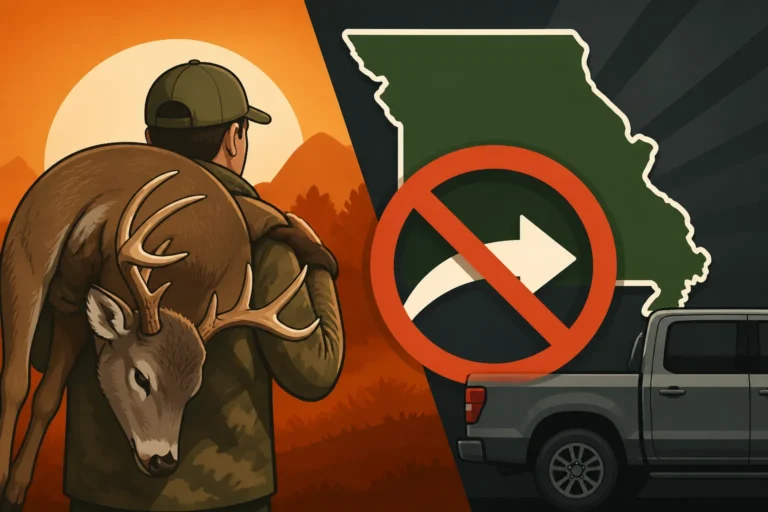
Missouri Landowner Permits and Exemptions
Owning a piece of Missouri land often comes with the dream of stepping out your backdoor and harvesting game, but the reality of permits and regulations can feel like a tangled mess. Many landowners feel a deep connection to their property and find it frustrating to navigate rules that seem to imply they don't fully control what happens on their own acreage. This comprehensive guide is designed to cut through that confusion, clearly explaining Missouri's landowner permits and exemptions, outlining who truly qualifies, what permits you might still need (or don't), and how to responsibly enjoy hunting on your land.
Understanding Missouri's Landowner Privileges
For generations, the concept of hunting on your own land has been a fundamental aspect of property ownership, deeply ingrained in the rural lifestyle of Missouri. It feels natural, almost inherent, that if you pay the taxes and tend the soil, you should have a special right to pursue game there. However, the intricacies of modern wildlife management and conservation efforts mean that while landowners do indeed receive special considerations, they still operate within a broader regulatory framework. The Missouri Department of Conservation (MDC) strives to balance these traditional landowner rights with the scientific management of wildlife populations, ensuring healthy herds and flocks for everyone, including future generations. This often leads to understandable confusion and sometimes a bit of frustration for those who simply want to enjoy their property.
The Philosophy Behind Landowner Exemptions
The existence of landowner exemptions isn't just an arbitrary courtesy; it's rooted in a pragmatic understanding of land stewardship and resource management. Landowners, by virtue of their direct connection to the land, are often the primary caretakers of wildlife habitat. From managing timber stands to planting food plots, these individuals play a crucial role in supporting healthy deer, turkey, and small game populations. The MDC recognizes this critical contribution by offering certain permit exemptions as a way to acknowledge and encourage this stewardship. It's a nod to the fact that while the wildlife belongs to the state, the land they live on is privately managed.
Many folks rightly ask, "If it's my land, why should I need any permit at all?" It's a fair question that gets to the heart of state ownership of wildlife. While you own the dirt and the trees, the deer, turkeys, and other game animals roaming across your property are a public resource, managed by the state for the benefit of all citizens. So, the exemptions are not an outright relinquishment of state control but rather a specific set of privileges designed to ease the burden on those actively maintaining habitat, while still ensuring harvest limits and other conservation measures are met.
What "Exemption" Really Means
It's absolutely critical to understand that "landowner exemption" in Missouri primarily refers to an exemption from purchasing certain permits, not an exemption from all hunting regulations. This is where a lot of landowners get tripped up, and it's a frustration I hear regularly. You might not need to buy a specific tag, but you still absolutely have to abide by all other statewide hunting laws, including season dates, legal shooting hours, bag limits, methods of take, and carcass transport regulations related to things like Chronic Wasting Disease (CWD).
For instance, if you're a qualifying resident landowner and you harvest a deer on your property during the firearms portion, you won't need to buy a regular firearms permit. However, you still must check that deer in via Telecheck, and you must declare it as a landowner harvest, adhering to the legal shooting hours and daily/seasonal bag limits for your specific county. Failing to understand this distinction can inadvertently lead to violations, which nobody wants. The intent is to make it simpler and more affordable for landowners to hunt their own ground, not to give them a free pass on responsible hunting practices.
Eligibility Requirements for Landowner Permits
The key to unlocking Missouri's landowner hunting privileges lies in meeting specific eligibility criteria. It's not as simple as just owning any patch of dirt; the state has defined what constitutes a "qualifying landowner" and what "owned land" means in this context. Without a clear understanding of these definitions, you could mistakenly assume you're exempt when you're not, or conversely, miss out on benefits you're entitled to.
Defining "Owner" and "Owned Land"
In Missouri, to be considered an "owner" for hunting permit exemption purposes, you generally need to be a resident of the state. This is a common point of contention for non-resident landowners who invest in Missouri property but don't reside here. While they contribute to the local economy and often manage their land well, they typically do not qualify for the same permit exemptions as residents. The rationale is often tied to the idea that residents pay state taxes that fund conservation efforts, and the exemptions are part of that reciprocal benefit. You can find more specific details on what defines a resident for hunting purposes by checking out Missouri Resident Definition for Permits.
When it comes to "owned land," the definition is also quite specific. For most deer and turkey landowner permits, the property must be a minimum of five acres. This generally needs to be a contiguous tract or tracts that are adjacent to each other. If you own two separate 3-acre parcels that are miles apart, they typically would not qualify together for the 5-acre rule for some exemptions, though rules can vary slightly depending on the specific permit. The land must also be primarily used for agricultural purposes, including but not limited to farming, ranching, or timber production, or for wildlife habitat management. This isn't about owning a tiny suburban lot; it's about properties that have a tangible connection to the rural landscape and its resources.
What about ownership structures? If your land is held in a trust, an LLC, or a partnership, the individual hunter must still be able to prove their direct ownership interest and residency. For example, a single-member LLC where the resident hunter is the sole owner would likely qualify, but a large corporate entity with multiple non-resident stakeholders might not grant individual hunting exemptions. It's always best to verify your specific situation with the MDC if your ownership structure is complex, as misunderstandings here are common.
Acreage and Residency Requirements
The five-acre minimum is a recurring theme for many of the significant landowner exemptions, particularly for deer and turkey. If your property is smaller than this threshold, you will generally be required to purchase the standard resident or non-resident permits, just like any other hunter. This acreage requirement aims to ensure that the exemptions are applied to properties substantial enough to contribute to or sustain wildlife populations, rather than very small, residential plots where hunting might be less impactful or appropriate.
As mentioned, residency is a non-negotiable requirement for the vast majority of landowner exemptions. A non-resident landowner, no matter how large their property, is generally required to purchase non-resident permits. This can be a bitter pill for out-of-state folks who have invested heavily in Missouri land, but it's a standard practice in many states to prioritize resident hunters for certain privileges. For example, a non-resident who owns 100 acres in Pike County would still need to buy a Missouri Nonresident Firearms Deer Permit Cost and a Missouri Nonresident Archery Deer Permit Cost if they wished to hunt deer, whereas a resident landowner with the same acreage would qualify for certain exemptions.
It's also worth noting that the land must be owned by the hunter or their immediate family (as defined by MDC). This means that simply leasing land for hunting, even if you're a long-term lessee and a Missouri resident, does not confer landowner exemption privileges. On leased land, you are a "hunter," not the "landowner," and must possess the appropriate permits. This distinction is crucial and often confused, especially by those who manage property they don't legally own. For more detailed information on specific acreage requirements, take a look at Missouri Landowner Permit Acreage Requirement.
Specific Landowner Permit Types and Exemptions
Missouri's permit system can seem like a puzzle, but for qualifying resident landowners, several pieces of that puzzle are simply removed. These exemptions primarily focus on big game species like deer and turkey, as well as general small game, and they are designed to simplify the hunting process for those who own and manage the land.
Deer Hunting Exemptions
For many Missouri landowners, deer hunting is a primary focus, and thankfully, the exemptions here are quite generous for residents. If you are a resident landowner with at least five acres, you (and your immediate family members living with you) can hunt deer on your own property during the archery, firearms, and alternative methods portions without purchasing certain statewide permits. This is a huge benefit and saves a significant amount of money each year.
Specifically, a qualifying resident landowner can harvest one antlered deer and two antlerless deer annually, on their qualifying property, without needing to purchase a general statewide firearms or archery permit. This means that a landowner can effectively take their entire deer quota for their county solely using their landowner exemption, as long as it's within the established season dates and bag limits. The "any deer" permit is essentially covered by this exemption when hunting on your own land. For counties where additional antlerless permits are available, landowners may still need to purchase those if they wish to exceed the two antlerless deer provided by the exemption. When you harvest a deer under this exemption, you'll still Telecheck it, but you'll declare it as a "landowner" harvest, which differentiates it from a purchased tag. For a full breakdown of general deer permits, see Missouri Deer Permits and How to Buy One.
Turkey Hunting Exemptions
Just like with deer, resident landowners who meet the acreage criteria also receive significant exemptions for turkey hunting. This is particularly valuable during the spring turkey season, which is incredibly popular across the state. A qualifying resident landowner (and immediate family residing with them) can take one male turkey (or turkey with a visible beard) during the regular spring season, and one turkey of either sex during the fall archery portion, all without needing to purchase a permit.
In the spring, this means you can pursue that gobbler that's roosting on your back forty without buying a Missouri Resident Spring Turkey Permit Cost. However, remember that if you wish to take a second bird (which is allowed for hunters with purchased permits in most counties), you would need to buy that second permit. For fall turkey, the landowner exemption covers one bird of either sex during the archery season. If you choose to hunt fall turkey during the firearms portion, you would typically need a purchased permit for that. Always cross-reference your county's specific regulations and bag limits, as these can vary slightly. You can learn more about general turkey permits here: Missouri Spring Turkey Permits and Limits and Missouri Fall Turkey and Small Game Permits.
Small Game and Furbearer Exemptions
When it comes to small game and furbearers, the rules for resident landowners are even simpler: generally, you do not need a permit to hunt or trap small game (like rabbits and squirrels) or furbearers (like coyotes, raccoons, and bobcats) on your own property. This is a broad and welcome exemption that applies across the board for qualifying resident landowners.
So, if you want to walk your timber chasing squirrels or set out some traps for coyotes causing issues on your farm, you're good to go without buying a small game permit or a furbearer permit, as long as you're on your own qualifying land. This exemption recognizes the often-practical need for landowners to manage these populations for nuisance control or simply for subsistence and recreation. Just like with deer and turkey, all other regulations still apply – season dates, bag limits, and legal methods of take. For an overview of what a general small game permit covers for other hunters, see What the Small Game Permit Covers.
Navigating Multi-Owner Properties and Family Land
The landscape of landownership in Missouri isn't always cut and dry; many properties are held by multiple individuals, inherited through generations, or split among various family members. This complexity can quickly muddy the waters when it comes to understanding who qualifies for landowner permits and how those privileges extend to immediate family. It's a common source of questions and, sometimes, family disagreements.
Joint Ownership and Family Members
When a property is jointly owned, the good news is that typically, each resident owner of record who meets the acreage requirements can qualify for the landowner exemptions. For example, if a 100-acre farm is owned equally by a husband and wife, both of whom are Missouri residents, both can avail themselves of the landowner deer and turkey exemptions on that property. The same generally applies to co-owners, as long as each co-owner's interest, when combined with other qualifying factors, meets the state's definition of an "owner."
The term "immediate family" is also crucial here. Missouri law specifies that "immediate family members" generally include the landowner's spouse, children, and grandchildren who reside with the landowner on the qualifying property. This means that if your adult child lives with you on your 40-acre farm, they can also use the landowner exemption to hunt deer and turkey there. However, if that same adult child lives across town in their own home, they would need to purchase their own permits to hunt on your land, just like any other guest hunter. This distinction is often overlooked and can cause issues if not understood. It's important to clarify these definitions to ensure everyone hunting on the property is legally covered. Unfortunately, this definition usually does not extend to siblings, aunts/uncles, cousins, or friends, even if they're "like family."
Hunting Leased Land as a Landowner
This is one of the most common areas of misunderstanding for Missouri hunters. Many individuals own a piece of land but also lease additional ground for hunting. The key takeaway here is simple: land you lease does not confer landowner hunting privileges upon you, even if you are a qualifying resident landowner yourself. When you are hunting on property you lease, you are considered a "hunter," not the "landowner" of that specific tract. This means you must possess all the appropriate, purchased permits for the species you are pursuing, just like any other hunter who doesn't own that particular piece of ground.
For example, if you own a 20-acre parcel in Boone County and also lease 80 acres in Callaway County, you would use your landowner exemption to hunt your 20 acres, but you would need to purchase general statewide permits (like a firearms deer permit or an archery deer permit) to hunt the leased 80 acres. It's a crucial distinction that can lead to significant legal trouble if ignored. Conversely, if you lease out your land to another hunter, you, as the property owner, still retain your landowner exemptions for hunting that property yourself, and your immediate family residing with you. The act of leasing it out does not negate your status as the owner. For more on how to obtain permission for hunting private land, see Getting Private Land Permission in Missouri.
Key Restrictions and Responsibilities for Landowners
While Missouri's landowner exemptions offer significant benefits, they are not a free pass from all hunting regulations. In fact, a major responsibility of any landowner availing themselves of these privileges is to understand and strictly adhere to all other state hunting laws. Overlooking these restrictions, even unintentionally, can lead to serious consequences and compromise the conservation efforts that these rules are designed to protect.
Staying Within Legal Boundaries
Perhaps the most critical point for landowners to remember is that exemptions relate to permit fees, not the rules of the hunt. This is where a lot of frustration and misunderstanding happens, because it can feel like the state is micromanaging even on your own property. However, it's essential for consistent wildlife management. All statewide hunting regulations apply to landowners, just as they do to any other hunter. This includes:
- Season Dates: You must only hunt during the established open seasons for each species. Hunting outside these dates, even on your own land, is poaching.
- Bag Limits: The number of animals you can harvest per day or per season, including antler point restrictions (if applicable in your county, though many were recently removed), must be strictly followed. Your landowner exemption covers up to the standard bag limit, it doesn't add to it.
- Legal Shooting Hours: Hunting is restricted to specific hours, typically from 30 minutes before sunrise to 30 minutes after sunset. Spotlighting deer at night, for instance, is illegal even on your own property unless specifically permitted for nuisance control by the MDC. Learn more about these specific times by reading Missouri Legal Shooting Hours.
- Methods of Take: You must use legal weapons and methods. For example, using a fully automatic weapon for deer hunting is illegal, regardless of landownership. Similarly, baiting deer and turkeys is prohibited for hunting purposes, even on private land.
- Carcass Transport and CWD Rules: This is a big one. Even though you don't buy a permit, you are still absolutely required to Telecheck your harvest. Furthermore, if your property is in a CWD Management Zone, you must adhere to all carcass transport restrictions and potentially present your deer for CWD sampling if required. Ignoring these rules poses a significant threat to Missouri's deer herd health. For the latest on these crucial regulations, check out Missouri CWD Rule Changes for 2026.
Staying informed about these regulations is paramount. Resources like the MDC's annual hunting regulations book, their website, and apps like GoHunt can be invaluable for verifying property lines and understanding local rules.
Ethical Considerations and Neighborly Relations
Beyond the letter of the law, landowners also bear a significant responsibility for ethical hunting practices and fostering good relationships with their neighbors. Just because you have the legal right to hunt your property doesn't mean you should ignore the impact of your actions on those around you.
Consider the following:
- Property Line Awareness: Always know where your property lines are. Accidental trespassing, especially when tracking game or setting up a stand too close to a boundary, can quickly sour neighborly relations and even lead to legal issues. Using a GPS app or a printed plat map is highly recommended. Tools like GoHunt are excellent for this, providing detailed property boundaries and ownership information right on your phone, making it much easier to avoid crossing onto someone else's land inadvertently.
- Sound and Safety: Be mindful of where you're shooting and the potential for noise disturbance, particularly if your property is adjacent to residential areas or areas with livestock. Safe shooting lanes are non-negotiable.
- Respect for Wildlife: Even with exemptions, landowners are stewards of the land and its wildlife. Practicing selective harvest, allowing younger animals to mature, and ensuring quick, ethical kills are all part of responsible hunting.
- Communication is Key: If you plan on doing a deer drive near a neighbor's line, or if you're concerned about game crossing boundaries, a polite conversation can prevent a lot of headaches. A simple heads-up can go a long way in maintaining peace and shared enjoyment of the rural landscape.
Remember, the vast majority of conflicts arise from misunderstandings or a lack of communication. As a landowner with special privileges, upholding these ethical standards reinforces the positive image of hunters and helps maintain community harmony.
Applying for Landowner Permits and Telechecking Harvests
The process for obtaining Missouri landowner permits isn't like walking into a retailer and buying a tag. For most exemptions, there isn't a traditional "application" or a physical permit to carry. Instead, it's more about declaring your landowner status when you Telecheck a harvested animal. This can be a point of confusion for many, especially those new to owning land or those used to buying permits for every species.
The Application Process (or Lack Thereof)
For the most common landowner exemptions (deer and turkey for resident landowners on qualifying acreage), you generally do not need to fill out a specific application or acquire a physical permit beforehand. This is a significant distinction. You simply hunt within the established seasons, legal hours, and bag limits on your own property. If you successfully harvest an animal under these exemptions, your "application" essentially happens during the Telecheck process.
However, there are a few exceptions where a form might be involved or where specific permits are indeed issued, though these are less common for general hunting. For instance, if you're dealing with specific nuisance wildlife situations outside of regular seasons, you might need to contact your local MDC conservation agent for special permits. But for the vast majority of deer, turkey, and small game hunting by resident landowners on their own property, the process is streamlined by removing the upfront permit purchase requirement. This is one of the ways the MDC simplifies things for landowners, recognizing that they're generally hunting land they directly control and manage.
Telecheck Specifics for Landowners
The Telecheck system is an absolutely critical component for landowners utilizing exemptions. Whether you've purchased a permit or are using your landowner privilege, all harvested deer and turkeys must be Telechecked. This isn't optional; it's a legal requirement and how the MDC collects vital harvest data for wildlife management. Ignoring this step, even with a valid landowner exemption, is a violation of state law.
Here's how it generally works for landowners:
- Harvest and Notch: After you harvest a deer or turkey on your qualifying property, you must immediately notch the permit or tag appropriately. Since you may not have a physical permit for a landowner harvest, you'll need to follow specific instructions provided by the MDC on how to "tag" your animal for transport prior to Telecheck. Often, this involves creating a written tag with your name, address, and the date and time of harvest, affixed to the animal.
- Access Telecheck: You have until 10:00 p.m. on the day of harvest to Telecheck your animal. You can do this online through the MDC website, via the MO Hunting app, or by calling the toll-free Telecheck phone number. The MO Hunting app is particularly convenient for this, allowing you to enter your harvest details directly from your phone, even from the field with a signal.
- Declare Landowner Status: During the Telecheck process, you will be prompted to indicate how you hunted the animal. This is where you select the option that identifies you as a "resident landowner hunting on own land" (or similar wording). This tells the system that you're using your exemption rather than a purchased permit.
- Provide Property Information: You'll need to provide the county and specific location details of where the animal was harvested. This helps the MDC gather localized harvest data.
- Receive Confirmation Number: Once successfully Telechecked, you'll receive a confirmation number. This number serves as your proof of legal harvest and must remain with the carcass until it is processed. This is your "permit" for that specific animal.
It's paramount to understand The Missouri Telecheck Deadline and to ensure you complete this step promptly and accurately. Many landowners appreciate that this digital process removes the need to carry physical tags for exempt animals, simplifying things while still ensuring vital data is collected.
Common Landowner Questions and Misconceptions
Despite the clarity of the regulations, certain aspects of Missouri's landowner permit system continue to generate questions and propagate common misconceptions. These typically revolve around who can hunt, how many animals can be taken, and the interplay between landownership and guest hunters. Addressing these directly can prevent unintentional violations and unnecessary frustration.
What About Guest Hunters?
This is, hands down, the most frequently asked question and the source of the most common misconception. A resident landowner, having acquired their property through hard work and investment, naturally feels a desire to share their hunting grounds with friends and extended family. It's a fundamental part of the hunting culture here in Missouri, and it fosters community.
However, the landowner exemptions in Missouri are strictly personal to the qualifying resident landowner and their immediate family members who reside with them. This means:
- Your friends cannot hunt on your landowner exemption. If your buddy wants to hunt deer or turkey on your land, they must possess their own valid, purchased statewide permits. There is no provision for a landowner to "share" their exemption or to allow guest hunters to harvest animals under their privilege.
- Extended family (e.g., adult children not living on the property, siblings, nieces/nephews) also need their own permits. While they are family, the "immediate family residing with you" clause is critical.
This distinction is not always popular, as it means you can't just invite anyone to hunt your property without ensuring they're fully permitted. However, it's a critical rule for managing harvest numbers and ensuring fairness across all hunters. If your guests are hunting, they need to have either their Missouri Resident Firearms Deer Permit Cost or Missouri Nonresident Firearms Deer Permit Cost, depending on their residency, and all other applicable tags.
Confusion Around Acreage and Permit Types
Another area of confusion stems from specific acreage requirements and the scope of the exemptions.
- Less Than Five Acres: As discussed, if your property is less than five acres, you generally do not qualify for the resident landowner deer and turkey permit exemptions. In this scenario, you, like any other hunter, would need to purchase all required permits to hunt on your land. This can be a hard pill to swallow if you own a small tract that holds plenty of game, but it's part of the state's defined eligibility.
- Hunting Off Your Land: Just because you own qualifying land and use landowner exemptions there doesn't mean those exemptions extend to other properties. If you decide to hunt public land, or land you lease, or even a neighbor's land (with permission), you must purchase the appropriate permits for those specific hunts. Your landowner status only applies to your qualifying owned property.
- Permit Specificity: Remember that even with exemptions, some specialized hunts or permits might still be required. For example, if you wanted to apply for a highly sought-after Missouri Managed Deer Hunt Applications and Draws on a conservation area, your landowner status would not give you any special advantage or exemption there; you'd still apply as a regular hunter.
It's a lot to keep straight, and I completely empathize with how challenging it can be to navigate these rules. When in doubt, always err on the side of caution and either purchase a permit or contact the MDC directly for clarification specific to your situation. Using a tool like GoHunt can provide an extra layer of confidence by clearly showing property boundaries and public land access points, helping you avoid accidental trespass or misidentification of hunting grounds.
| Feature | General Resident Hunter (No Landowner Status) | Qualifying Resident Landowner (5+ Acres) | Non-Resident Hunter (or Non-Resident Landowner) |
|---|---|---|---|
| Deer Permit Needs | Must purchase statewide permits | Exempt from purchasing statewide permits | Must purchase non-resident permits |
| Turkey Permit Needs | Must purchase statewide permits | Exempt from purchasing spring/fall archery permits | Must purchase non-resident permits |
| Small Game Permit | Must purchase small game permit | No permit needed on own land | Must purchase non-resident small game permit |
| Telecheck Required | Yes | Yes | Yes |
| Bag Limits Adhered | Yes | Yes | Yes |
| Season Dates Adhered | Yes | Yes | Yes |
| CWD Rules Adhered | Yes | Yes | Yes |
| Guests Hunt Free? | No | No (guests need their own permits) | No (guests need their own permits) |
Making the Most of Your Missouri Hunting Property
Owning hunting land in Missouri is a unique privilege, and while the permit exemptions are a nice perk, the true value often lies in the ability to actively manage your property for wildlife. Instead of simply relying on what nature provides, you have the power to enhance habitat, attract more game, and create a truly exceptional hunting experience for yourself and your family. This isn't just about chasing bigger bucks; it's about fostering a thriving ecosystem and leaving a lasting legacy of conservation.
Habitat Management for Deer and Turkey
Your land is a canvas, and with a little effort and planning, you can significantly boost its appeal to deer and turkeys. This isn't just about planting a food plot; it's about creating a mosaic of food, cover, and water sources that these animals need year-round. Many landowners feel overwhelmed by where to start, but even small changes can make a big difference.
For deer, consider:
- Food Plots: Planting strategic food plots with annuals (like clover, brassicas, or oats) or perennials (like alfalfa or chicory) can provide crucial nutrition during stress periods. Think about plots that offer different foods during early season versus late season. Tools like GoHunt can help you map out ideal locations based on terrain, sun exposure, and existing cover.
- Timber Stand Improvement (TSI): Work with a forester or learn about hinge cutting. This practice involves partially cutting trees so they fall but remain alive, creating low-lying browse and dense cover. It's excellent for bedding areas and creating thermal protection in winter.
- Water Sources: If natural water sources are scarce, especially during dry spells, creating small ponds or installing water guzzlers can be a game-changer.
- Edge Feathering: Converting straight field edges into more diverse, brushy habitat provides excellent cover and forage. This creates natural travel corridors and bedding areas that deer and turkeys both utilize heavily.
For turkeys, focusing on brood habitat is vital:
- Bugging Areas: Turkeys, especially poults, need insects. Creating open, grassy areas with native wildflowers or prescribed burns can boost insect populations.
- Diverse Timber: Mature timber with an open understory is great for roosting, but they also need areas with younger, denser growth for nesting and escape cover.
- Soft Mast Trees: Persimmons, oaks, and other trees that drop fruit or nuts are prime turkey food sources.
- Predator Control: While not always easy, managing predator populations can significantly improve poult and fawn survival rates.
Even small efforts, consistently applied, can transform a mediocre hunting property into a wildlife haven. Don't be afraid to experiment and observe what works best on your unique piece of Missouri.
Responsible Land Stewardship and Conservation
Beyond the direct benefits to your hunting success, engaging in responsible land stewardship contributes to the broader health of Missouri's wildlife and natural resources. The landowner exemptions are, in a way, a recognition of this vital role you play. It's about more than just avoiding permit fees; it's about embracing the role of a conservationist.
Consider these aspects of stewardship:
- Soil Health: Healthy soil leads to healthy plants, which support healthy wildlife. Practices like no-till farming, cover cropping, and minimizing chemical use can greatly benefit your property's ecological integrity.
- Water Quality: Protecting streams, ponds, and wetlands on your property not only benefits aquatic life but also provides clean water for all wildlife.
- Native Plants: Restoring native grasses, wildflowers, and trees can provide superior food and cover for a wider array of species, including pollinators and birds.
- Participation in Programs: The MDC and other organizations offer various cost-share and technical assistance programs for landowners interested in habitat improvement. Don't hesitate to reach out to your local conservation agent or NRCS office; they have a wealth of knowledge and resources.
- Wildlife Disease Monitoring: As a landowner, you're on the front lines of observing wildlife health. If you notice any sick or unusual-acting animals, especially deer, it's crucial to report it to the MDC. This helps with statewide disease surveillance and management, protecting the entire herd. For information on how to report, check out Missouri Wildlife Disease Monitoring.
Ultimately, your Missouri hunting property is more than just a place to hunt; it's a living, breathing ecosystem that responds to your care. By embracing both the privileges and responsibilities of landownership, you become a vital part of Missouri's proud conservation legacy.
Disclaimer
The information provided in this guide is for general informational purposes only and does not constitute legal advice. Hunting regulations in Missouri can change, and interpretations may vary. While we strive to provide accurate and up-to-date information, it is the individual hunter's responsibility to consult the most current Missouri Department of Conservation (MDC) regulations and, if necessary, seek legal counsel to ensure full compliance with all applicable laws and regulations before hunting.