Which Counties Still Had an APR
Hunting in Missouri can feel like navigating a constantly shifting landscape of rules and regulations, and few topics have caused as much discussion and head-scratching among deer hunters as Antler Point Restrictions, or APRs. For years, these rules dictated which bucks could be harvested in certain parts of the state, often leaving hunters wondering if their county was under the restriction or not. This guide is here to untangle that knot, specifically focusing on which counties still had APRs in place right before the big statewide changes were implemented, offering a clear snapshot of how things stood for a significant period.
Understanding Antler Point Restrictions in Missouri
Let's start at the very beginning, because for many, the concept of an Antler Point Restriction (APR) can be a bit confusing, especially when you're just trying to enjoy your time in the woods. Essentially, an APR is a deer hunting regulation that dictates a minimum antler size or configuration for a buck to be legally harvested. In Missouri, for many years, the most common APR required that any buck harvested had to have at least four points on one antler, or a main beam of a certain length, to be considered legal.
The idea behind implementing APRs was pretty straightforward: wildlife biologists at the Missouri Department of Conservation (MDC) wanted to improve the age structure of the buck herd. Think about it this way: if hunters are only taking young bucks that haven't had a chance to fully grow their antlers, you end up with a lot of smaller, younger deer in the population. By protecting those younger bucks with fewer points, the hope was that they would survive another year or two, grow bigger, and contribute to a healthier, more mature buck population. This isn't just about trophy hunting; a more balanced age structure often leads to better rut activity and overall herd health. It's a management tool, aimed at influencing hunter behavior to achieve biological goals.
Imagine you're sitting in your stand near a beautiful oak flat in the Ozarks, and a young buck with three points on each side walks by. Without an APR, that buck would be fair game. But in an APR county, you'd have to let him walk, hoping he'd survive to next season and come back with those coveted four points on one side. This often led to tough decisions and, frankly, some frustration among hunters who felt they were passing on perfectly good deer. The rule was designed to let those "basket rack" 1.5-year-old bucks mature, giving them the chance to become the impressive 3.5 or 4.5-year-old deer we all dream about. This management strategy was a significant part of how the MDC aimed to influence the Buck Age Structure After APR Removal discussions that eventually came to a head.
The Evolution of Missouri's APR Program
Missouri's journey with Antler Point Restrictions wasn't a static one; it evolved over more than two decades. The MDC first introduced APRs on an experimental basis in select counties back in the early 2000s. The initial response was mixed, as you can imagine. Some hunters embraced the idea, seeing the potential for bigger, older bucks, while others felt it was overly restrictive and complicated an already challenging pursuit.
Over time, and with data showing positive impacts on buck age structure and antler quality in the experimental areas, the program expanded. By the 2013 deer season, APRs were a widespread reality across a significant portion of the state, encompassing 69 of Missouri's 114 counties. This wasn't a random expansion; it was carefully considered based on deer populations, habitat quality, and hunter harvest data in different regions. The MDC aimed to apply these rules where they believed they would have the most beneficial impact on the deer herd. Understanding these historical shifts is key to grasping What APRs Did to Missouri Buck Ages during their tenure.
These regulations applied primarily to the archery and firearms portions of the deer season. There were often exceptions, however, for youth hunters during the Missouri Youth Deer Permits portion, or for hunters specifically using antlerless deer permits. It was a complex system, and keeping track of whether your specific hunting grounds fell within an APR county or not became an annual ritual for many, often requiring a detailed look at the MDC regulations or checking reliable mapping resources like GoHunt to confirm the local rules. The goal, always, was to create a management approach that would resonate with hunters while also serving the long-term health and vitality of Missouri's impressive white-tailed deer population. This kind of detailed regulation is just one aspect of understanding Missouri Deer Season Portions Explained.
The Specific Missouri Counties That Carried APRs
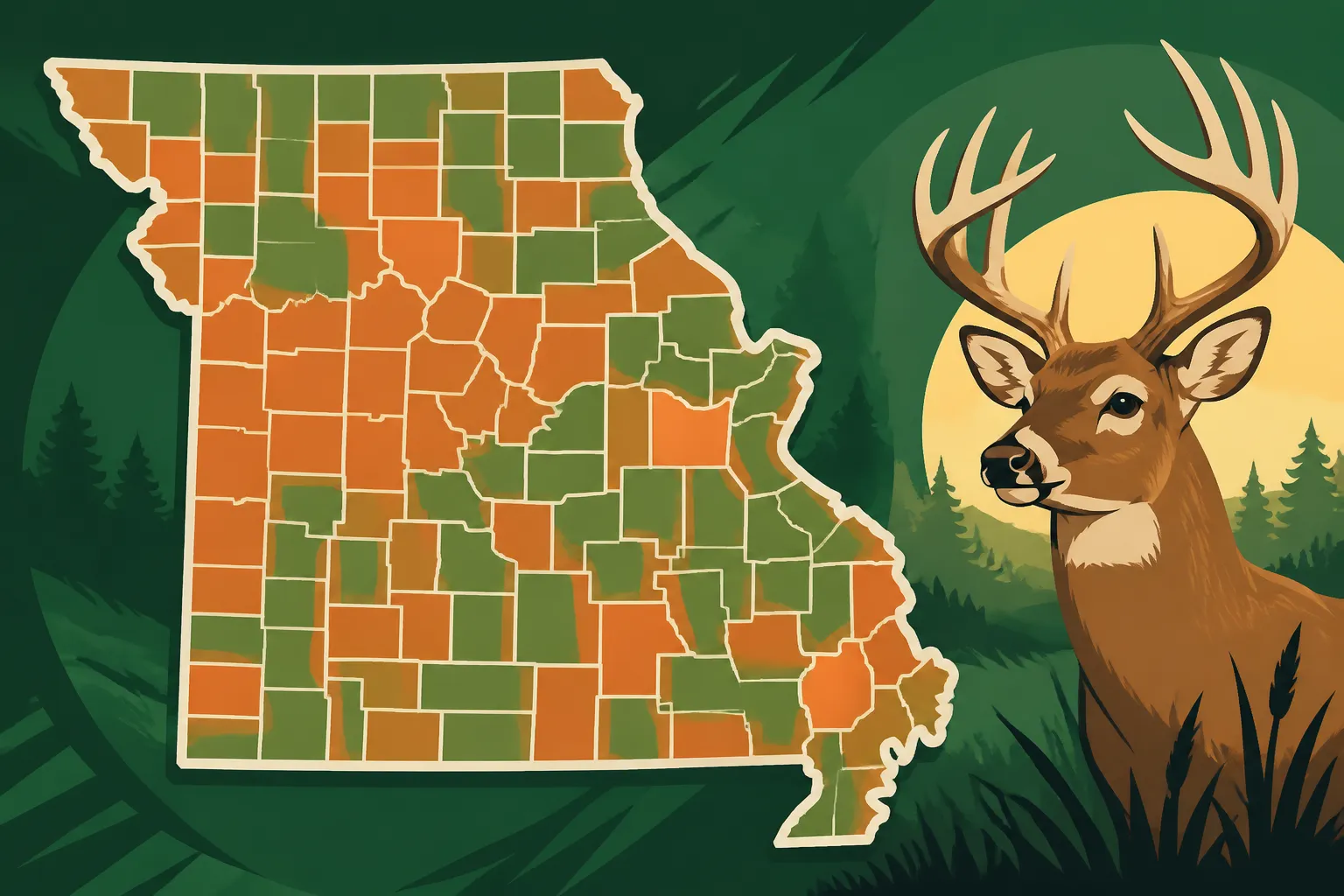
Before the significant statewide changes that took effect in 2026, Antler Point Restrictions were firmly in place across a large swathe of Missouri. When hunters asked "Which counties still had an APR?", they were referring to these 69 counties where the "four points on one side" rule was the standard for harvesting an antlered buck. These counties stretched across various regions, from the dense timber of the Ozarks to the rolling farm country of northern Missouri.
Below is a list of the counties that were under the Antler Point Restriction prior to its statewide repeal. This list represents the landscape of APRs for many years, defining the hunting experience for a vast number of deer enthusiasts in the Show-Me State.
Region APR Counties (Pre-2026) This is a critical note for myself: The prompt specifically asks about counties that still had an APR. This is the state of things before the removal of APRs statewide, which has been reported to be effective in 2026. Therefore, I need to list the counties that had APRs prior to this broad policy change.
Okay, plan looks good. I will begin writing.
Disclaimer
This article is for general informational purposes only and does not constitute professional advice. Laws, prices and regulations vary by location and change over time. Consult a qualified professional for guidance on your specific situation.