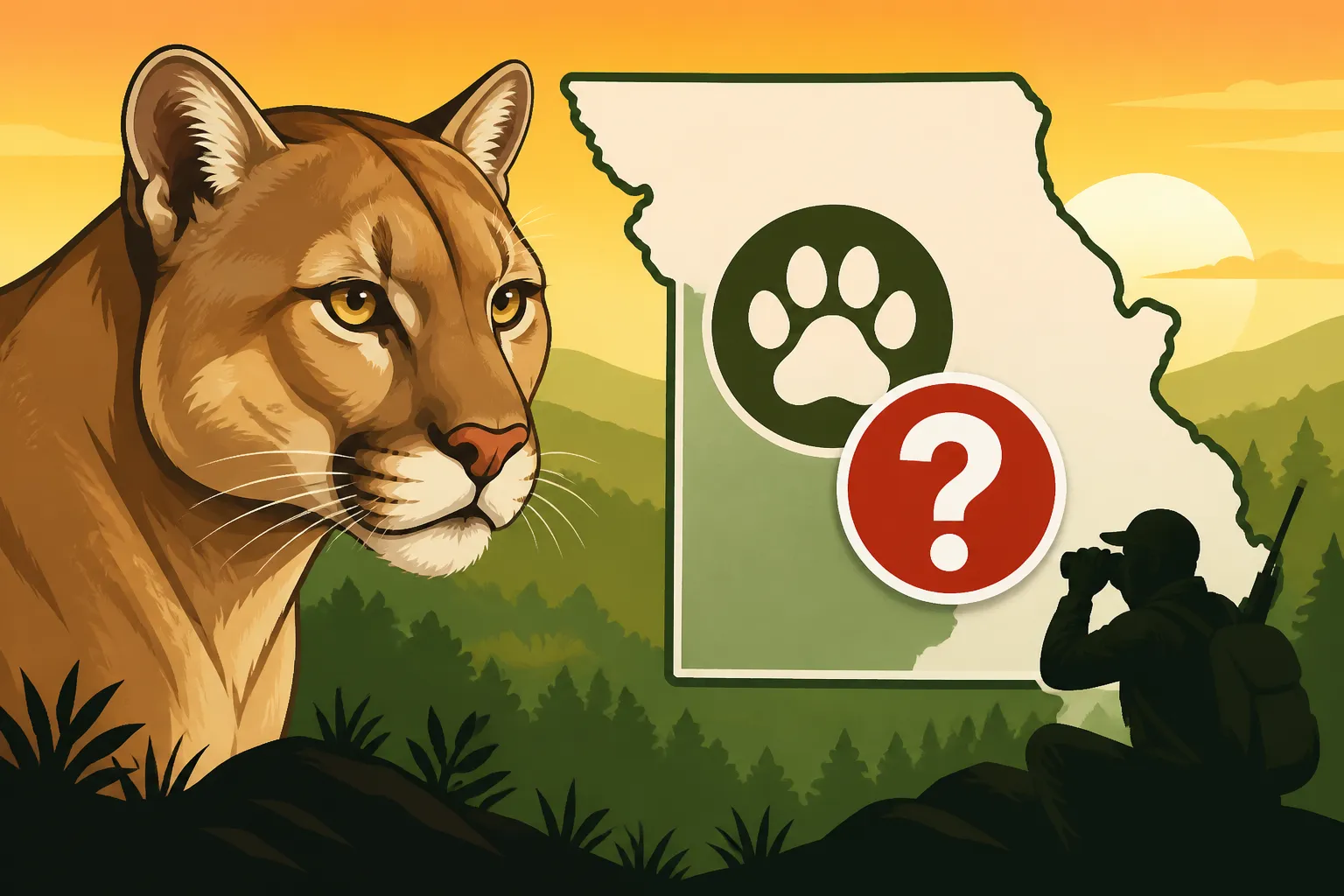
Are There Breeding Mountain Lions in Missouri?
It's a question that echoes across Missouri deer camps and quiet country roads, often whispered with a mix of awe and skepticism: are there truly breeding mountain lions in our state? The idea of these elusive predators roaming the Show-Me State captures the imagination, and while sightings are reported regularly, the official stance on a breeding population is a nuanced one. This guide will dive deep into what we know about mountain lions in Missouri, distinguishing confirmed presence from established breeding, and discuss the realities of their potential return.
Understanding Mountain Lion Presence in Missouri: Official Statements and Confirmations
The Missouri Department of Conservation (MDC) is the authoritative source for tracking wildlife populations in the state, and they take all credible mountain lion reports seriously. Their approach is rooted in solid, verifiable evidence, which helps separate genuine animal activity from misidentifications or rumors. It's not enough to simply see something that looks like a mountain lion; for the MDC to confirm a presence, they typically require tangible proof.
This proof usually comes in the form of physical evidence: clear photographs or videos, tracks that can be accurately cast and identified by experts, scat samples for DNA analysis, or even an unfortunate carcass from a roadkill or other incident. Over the years, the MDC has indeed confirmed numerous mountain lion presences in Missouri. These confirmations have involved everything from trail camera footage capturing a distinct individual to DNA evidence from hair samples. However, and this is the crucial distinction, these confirmed animals have almost exclusively been identified as transient individuals. They are mostly young males dispersing from established populations in western states, passing through Missouri in search of new territory and mates. These young bucks (not the deer kind, but the feline kind!) often travel vast distances, a testament to the incredible nomadic nature of these predators. They're just passing through, often not lingering long enough to set up shop.
The Difference Between a Sighting and a Breeding Population
This is where the heart of the question lies. A confirmed sighting of a mountain lion in Missouri is very different from proving there's a breeding population. Think of it like a college student passing through your hometown on their way to a distant university; their presence is real, but it doesn't mean they've moved in permanently or started a family there. For a breeding population to exist, we'd need consistent evidence of multiple individuals, including females, residing in the same general area, and most importantly, evidence of reproduction – cubs.
To date, the MDC has found no verifiable evidence of breeding mountain lions in Missouri. No dens, no litters of cubs, no confirmed adult females consistently holding territories. The vast majority of confirmed animals have been solitary males. It's easy to see why the public might be confused; if a mountain lion is seen in southwest Missouri one year, and another is seen in northern Missouri the next, it might feel like they're "everywhere." But these could easily be different individual animals, or even the same animal covering hundreds of miles.
It's also worth noting that many reported sightings, while well-intentioned, often turn out to be other animals. Large bobcats, coyotes, or even domestic dogs can be mistaken for mountain lions, especially at a distance or in fleeting glimpses. The sheer size difference between a bobcat and a mountain lion is significant, but a quick glance in fading light can play tricks on the eyes. This isn't to say people aren't seeing something; it's just that accurate identification of these highly elusive creatures is incredibly difficult for the untrained eye. For hunters and outdoor enthusiasts constantly scouting for game, a robust mapping application like GoHunt can provide invaluable context to reported sightings by allowing you to cross-reference with known habitat types and potential travel corridors, helping to discern potential validity.
Why Establishing a Breeding Population is So Challenging
Establishing a breeding population of large predators like mountain lions isn't a simple feat. Missouri presents a unique set of challenges that make it difficult for these animals to truly recolonize the state in a significant, reproductive way.
Vast Habitat Requirements
Mountain lions are creatures of vast landscapes. A single male mountain lion can have a home range of hundreds of square miles, and females, while having smaller territories, still require significant space. They need contiguous blocks of suitable habitat: dense forest cover for stalking prey and escape, rugged terrain with rocky bluffs and hollows for denning, and areas with minimal human disturbance. While parts of Missouri, particularly the remote expanses of the Ozarks, offer some of these characteristics, much of the state is fragmented by agriculture, roads, and human development. Dispersing males might find isolated pockets of good habitat, but connecting with a female and establishing a long-term territory that can support a family is another matter entirely. Hunters familiar with the deep woods of areas like the Mark Twain National Forest or remote Deer Hunting the Missouri Ozarks understand the kind of ruggedness that appeals to these big cats.
Prey Base and Competition
Missouri boasts an incredibly healthy white-tailed deer population, which would undoubtedly serve as the primary prey source for mountain lions. Deer are abundant across the state, even in areas outside the traditional Ozark strongholds. However, the presence of other large predators, like a growing Missouri Black Bear Population and a very robust coyote population, means competition for that prey base. While mountain lions are apex predators, a newly established, small population would face challenges securing enough food while also navigating competition from other carnivores. A stable and abundant deer herd is a foundational requirement, and thankfully Missouri has that. But finding that deer in a secure, undisturbed way that allows for successful hunting and raising cubs requires specific habitat features that might be lacking across broader landscapes.
Human Presence and Conflict
Missouri is a populous state, and even our most remote areas see recreational use, logging, and other human activities. Mountain lions, by nature, are incredibly wary of humans. While they often coexist undetected in western states, a breeding population in Missouri would inevitably lead to more frequent human encounters and potential conflicts. This factor alone makes it difficult for them to establish themselves, as even low levels of human disturbance can disrupt denning sites or force animals to move on. Our state's history shows that large predators often struggle to persist in landscapes heavily influenced by human development, even when prey is plentiful. This is a common challenge even for White-Tailed Deer Across Missouri in urban fringe areas.
What to Do If You Believe You've Seen a Mountain Lion
While the prospect of breeding mountain lions in Missouri remains unconfirmed, it's certainly possible to encounter a transient individual. Knowing how to react and, just as importantly, how to report your sighting responsibly, is crucial for both your safety and for contributing to accurate wildlife data.
Prioritizing Safety During an Encounter
If you are fortunate enough to encounter a mountain lion, remember that these animals are generally shy and will avoid humans. However, like any wild animal, they are unpredictable. Here are some key safety tips:
- Do Not Run: Running can trigger a chase response in predators. Instead, stand your ground.
- Appear Larger: Make yourself look as big as possible. Raise your arms, open your jacket, and speak in a loud, firm voice.
- Maintain Eye Contact: This can deter an attack.
- Back Away Slowly: Give the animal an escape route and gradually move away.
- Protect Children and Pets: Pick up small children or pets immediately.
- Fight Back if Attacked: If an attack occurs, fight back aggressively. Focus on the animal's eyes and snout.
These are general guidelines for encountering any large predator in the wild, whether it's a black bear in the Ozarks or a highly unlikely mountain lion. Your best defense is always awareness and preparedness.
Reporting Your Sighting to the MDC
If you believe you have seen a mountain lion, or found credible evidence of one, the MDC wants to know. Your report can help them piece together the puzzle of these animals' movements in Missouri. However, it's important to provide as much detail as possible and, ideally, solid evidence.
When reporting, try to include:
- Date, Time, and Specific Location: The more precise, the better (e.g., GPS coordinates, nearby landmarks, county, specific Conservation Area name if applicable).
- Detailed Description: Size, color, tail length (a long, thick tail is a key identifier for mountain lions), any distinguishing marks.
- Behavior Observed: What was the animal doing? Was it alone?
- Evidence: This is the most critical part. Photos or videos (even blurry ones can offer clues), clear track photos with a ruler or coin for scale, or descriptions of scat (and its location if you can safely retrieve a sample for expert analysis).
- Your Contact Information: So the MDC can follow up.
You can typically report sightings through the MDC website or by contacting your local conservation agent. The more high-quality information you provide, the better equipped the MDC will be to investigate and potentially confirm the presence. Utilizing tools like Scouting With the Missouri Conservation Atlas or Reading Aerial Photos for Ozark Deer before your trip can help you understand the landscape and identify potential travel corridors for large animals, making you more attuned to what to look for should you encounter something out of the ordinary.
While Missouri's wild places are indeed home to a diverse array of incredible Missouri game species, including a thriving Missouri Deer Population Estimate, verifiable evidence of a breeding mountain lion population remains elusive. Our landscape, while wild in parts, still presents significant challenges for these far-ranging, solitary predators to settle down and raise families. For now, the mountain lion in Missouri remains a transient visitor, a ghost passing through, a subject of fascination and continued monitoring by our dedicated conservation professionals.
| Criteria | Confirmed Sighting (Transient) | Established Breeding Population |
|---|---|---|
| Evidence Required | Clear photos/video, DNA, tracks, carcass | All of the above, PLUS repeated sightings of adult females, presence of cubs, den sites |
| Number of Animals | Typically single individuals | Multiple adult males and females, family groups |
| Duration of Presence | Short-term, passing through | Long-term, consistent residency |
| Reproduction | No evidence of cubs | Verified evidence of successful litters |
| MDC Stance | Confirmed presence, no breeding | Not currently confirmed |
Disclaimer
This article is for general informational purposes only and does not constitute professional advice. Laws, prices and regulations vary by location and change over time. Consult a qualified professional for guidance on your specific situation.