Scrape Lines Along a Logging Road
Scrape lines along Missouri logging roads serve as deer communication hubs, helping hunters locate productive travel corridors.
Close the distance.
Archery, muzzleloader, and firearm techniques — calling, stand placement, still-hunting, spot-and-stalk, and the weapon rules that change at the state line.
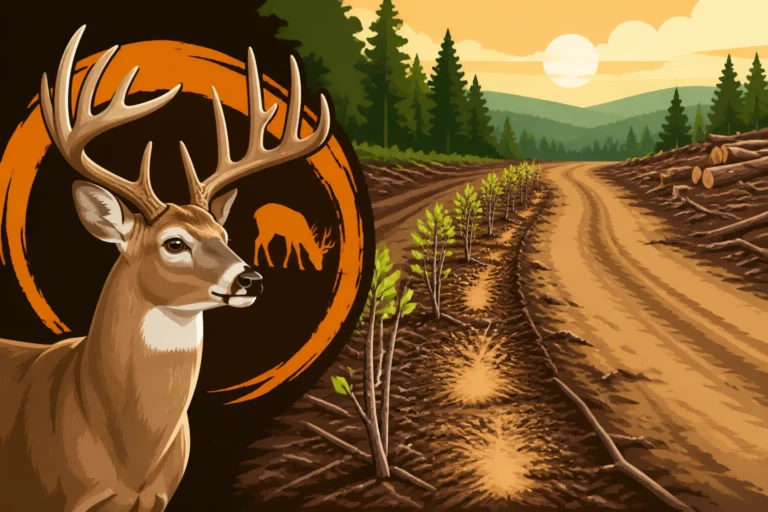
Scrape lines along Missouri logging roads serve as deer communication hubs, helping hunters locate productive travel corridors.
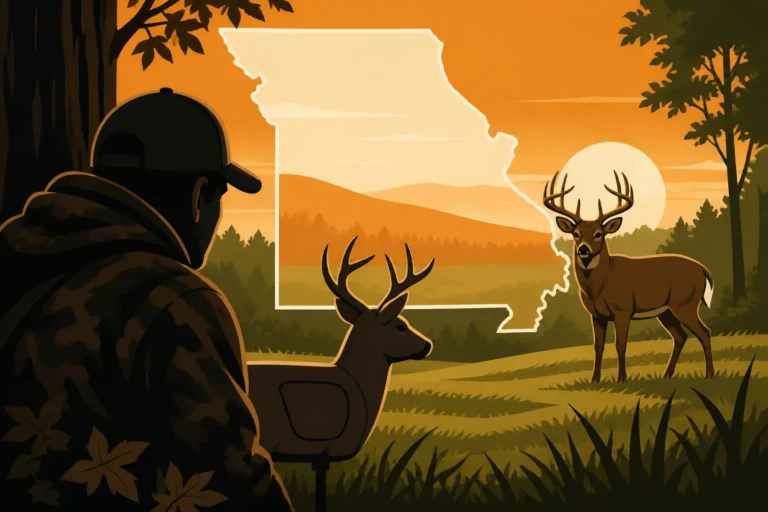
Deer decoys in North Missouri farm country explain how visual lures bring elusive whitetails into shooting lanes during the rut.
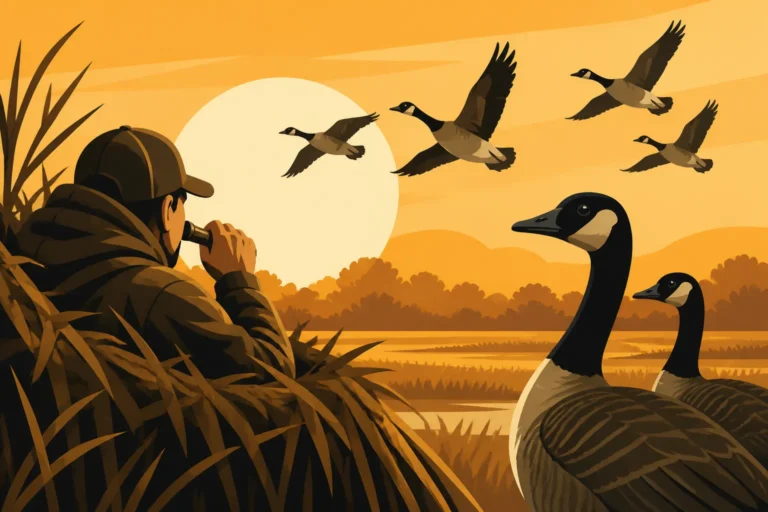
Grunt calls help Missouri river bottom hunters bring mature bucks through thick cover, sloughs, and dense willow patches.
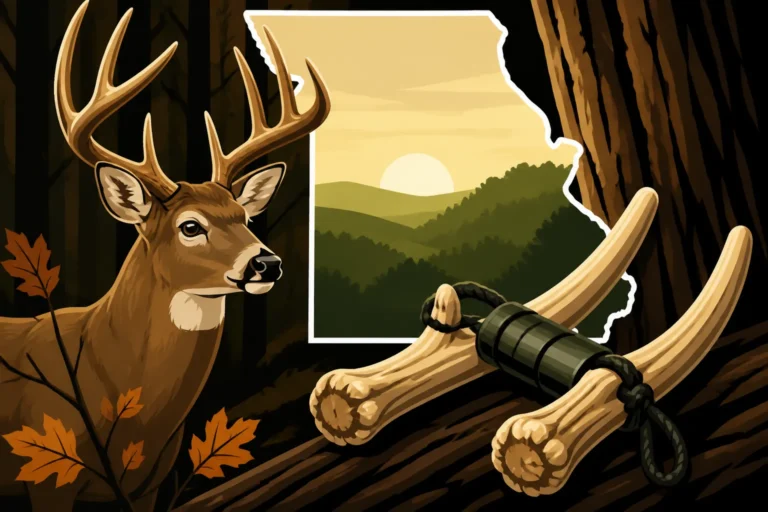
Subtle deer rattling techniques help hunters attract wary bucks in thick Missouri timber and dense Ozark cover using fifteen second bursts.
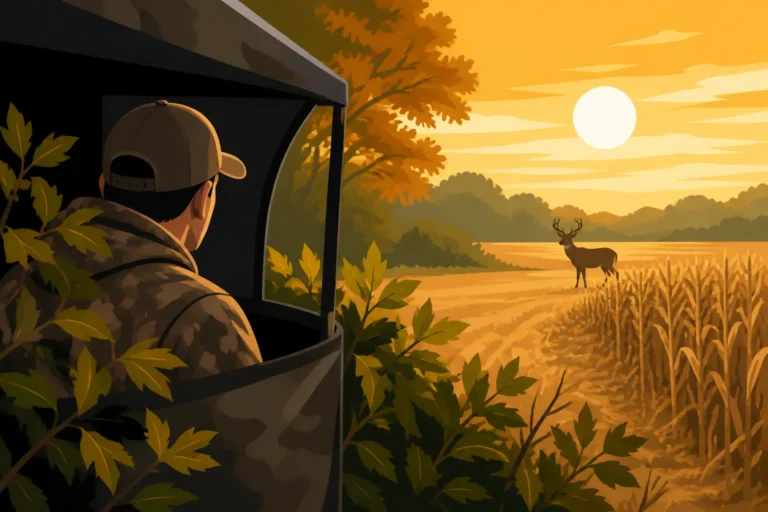
Effective ground blind concealment on Missouri field edges helps hunters hide pop-up blinds so wary deer walk right past.
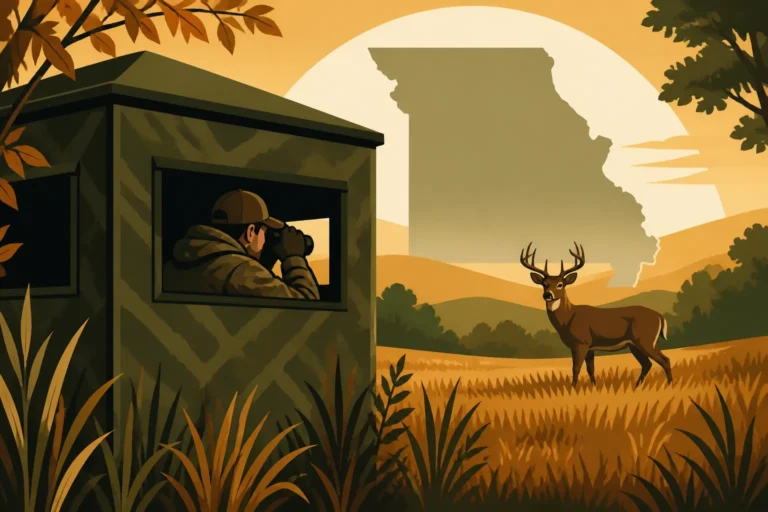
Ground blinds offer deer hunting concealment and flexibility across rugged Missouri public land terrain and changing winds.
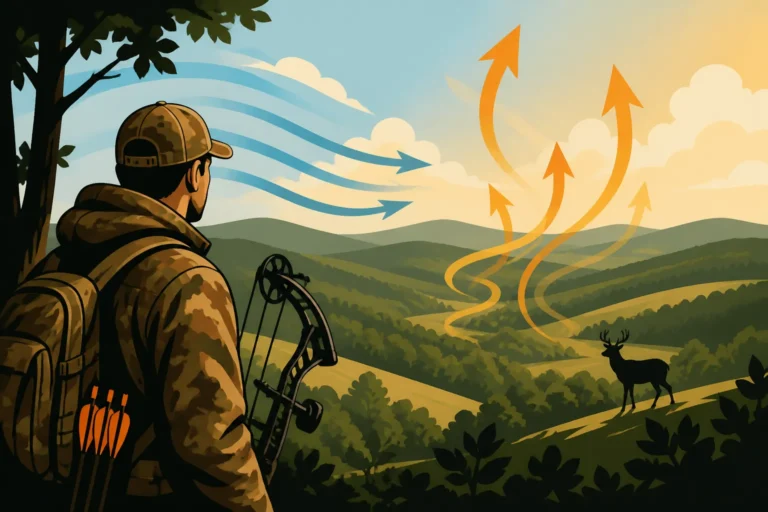
Wind and thermals in Missouri Ozark hills dictate how air currents move across steep ridges, hollows, and creek bottoms.
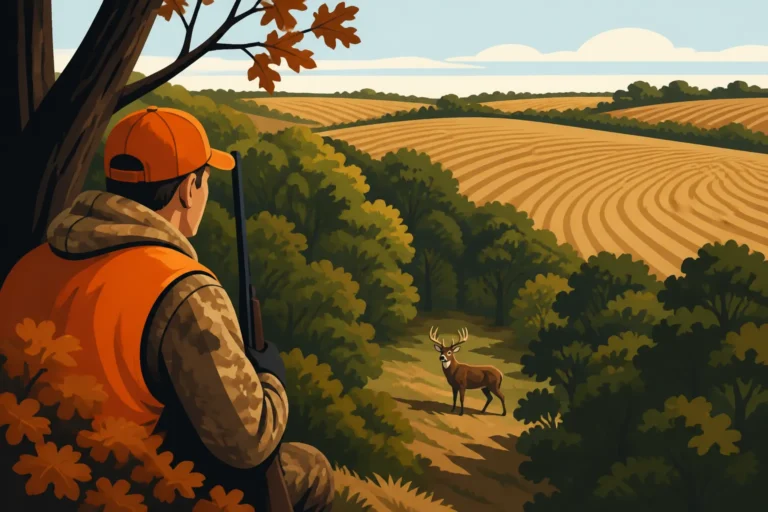
Timbered draws in Missouri farm country serve as secure deer travel corridors and bedding cover linking corn and soybean fields.
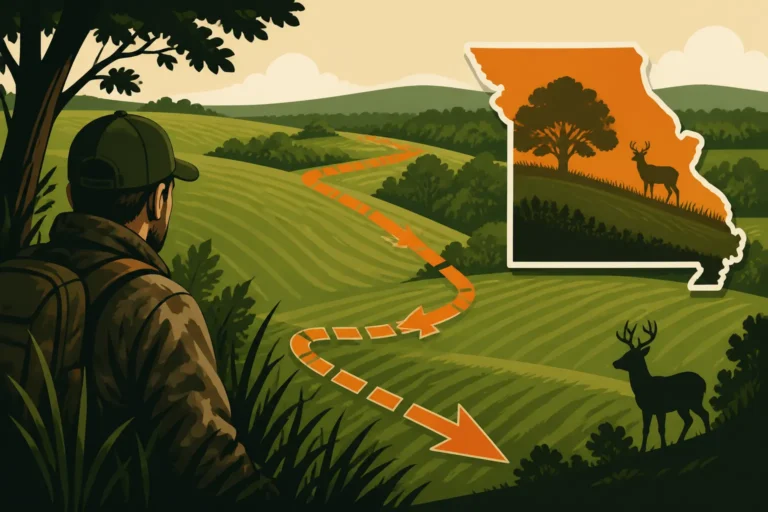
Missouri deer hunting entry routes on rolling farm ground, using topography maps, timbered draws, and wind to reach stands undetected.
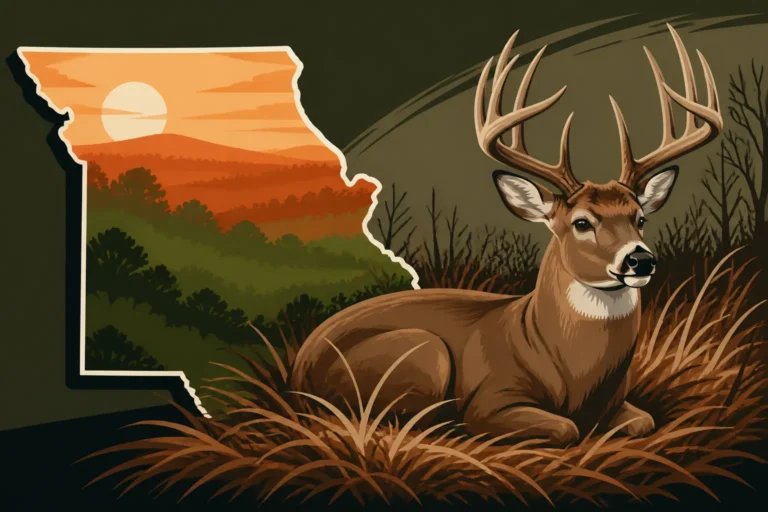
North Missouri deer bedding areas, including crop fields and timbered draws, dictate where bucks hide for security and food.