Missouri’s Early and Late Antlerless Portions
Oh, the Missouri deer season. It can be a whirlwind, can't it? For many of us, the general firearms season feels like a sprint, leaving us wishing for more time in the woods or another chance to fill the freezer. The good news is, the Missouri Department of Conservation (MDC) understands this, and they've thoughtfully implemented the Early and Late Antlerless Deer Portions. These crucial seasons offer fantastic extended opportunities to ethically harvest does, contribute to healthy herd management, and, let's be honest, ensure there's plenty of delicious venison to last until next year. This guide is all about demystifying these periods so you can maximize your success.
Understanding Missouri's Antlerless Deer Management
It’s easy to get focused solely on big bucks, but the truth is, a healthy deer herd relies on proper management of all deer, and that includes does. The MDC puts a lot of science and effort into balancing deer populations with the available habitat, and these antlerless portions are a cornerstone of that strategy.
The Role of Antlerless Harvest in Herd Health
When deer populations grow too large for the land to support, a lot of problems start to crop up, and it really impacts the hunting experience. We see habitat degradation as deer overbrowse their food sources, leading to less nutritious forage for all animals, including those coveted bucks. This overcrowding also means diseases, like Chronic Wasting Disease (CWD), can spread much more rapidly. Plus, let's not forget the increased deer-vehicle collisions on our roadways, which is a significant safety concern for everyone. You might notice more unhealthy-looking deer, or smaller bucks, and that's often a direct result of an unbalanced population.
That’s where antlerless harvest comes in. Taking does is, quite simply, the most effective tool available to balance herd numbers with the carrying capacity of the land. By reducing the number of breeding females, we help prevent overpopulation, ensuring that the remaining deer have ample food and resources. This leads to healthier, more robust animals across the board, including those impressive antlered deer. It’s not just about filling a tag; it’s about being a responsible steward of the resource, contributing directly to a more resilient and sustainable deer population for the future. When you fill your "How Many Deer You Can Take in Missouri" limit, you're doing your part.
Why the MDC Implements Specific Antlerless Portions
The MDC doesn't just throw darts at a map when it comes to season dates. They have specific, data-driven goals for deer density in different regions of the state. Some areas, particularly in northern Missouri's farm country, might need more aggressive population reduction, while parts of the Ozarks might have lower densities and thus different allowances for antlerless tags. This regional approach is why you’ll see varying county allowances for antlerless permits, reflecting the unique ecological needs of each area.
The timing of these antlerless portions is also highly strategic. The Early Antlerless portion typically occurs before the peak of the rut and the general firearms season. This allows archers to harvest does when deer are still largely in their predictable summer-to-fall patterns, often revolving around specific food sources, and when hunter pressure is generally lower. The Late Antlerless portion, on the other hand, targets deer after the rut has wound down and the major firearms seasons have passed. At this point, natural food sources are dwindling, often concentrating deer around remaining agricultural fields or food plots.
These distinct portions serve several purposes: they spread out hunting pressure, offer diverse hunting conditions that cater to different hunter preferences, and provide more flexibility for hunters to participate. Ultimately, they are carefully crafted components of a larger management strategy, all designed to help the MDC achieve its critical conservation objectives for Missouri's deer herd.
The Early Antlerless Portion
For many archers, the Early Antlerless portion is a welcome opportunity to get into the woods before the commotion of firearms season, providing a different, often more tranquil, hunting experience.
Key Dates and Counties Open for Early Antlerless
Generally speaking, the Early Antlerless portion usually kicks off in early October. However, it’s absolutely critical to remember that not every county in Missouri is open for this season, and the specific counties can change from year to year based on the MDC's ongoing population assessments. This is where your personal due diligence comes in: you must check the current year's regulations for precise dates and eligible counties. The MDC website and the MO Hunting App are your best friends here. You can find the exact "Missouri Early Antlerless Portion Dates" by checking the latest regulations.
The "early" aspect of this season means you're often hunting during pre-rut conditions. Deer are still primarily focused on their summer-to-fall routines, typically centered around abundant food sources like acorns or standing crops. One significant advantage for archers during this time is that hunter orange is not typically required, which allows for more camouflage and a more immersive archery experience. However, always double-check the regulations for any changes. Knowing "Which Counties Are Open for Early Antlerless" is non-negotiable, and using a modern e-scouting tool like the GoHunt app can be incredibly helpful for visualizing these boundaries and planning your approach.
Tactics for Hunting Early Antlerless Deer
When you’re out in the woods during the Early Antlerless portion, your focus should be squarely on food sources. Deer will be hitting hard mast like acorns as soon as they drop, and soft mast like persimmons can be absolute magnets. Don't overlook agricultural fields either, as standing soybeans and corn are prime feeding grounds. Your scouting efforts should concentrate on finding fresh sign – tracks, droppings, and browsed vegetation – around these areas. Early season often means warmer temperatures, so focus your hunts on the cooler periods of the day, typically the first few hours after sunrise and the last few before sunset. Water sources or thick, shaded bedding cover near food can be excellent spots.
For archery, successful stand placement means getting truly close to the deer's travel routes. Look for well-worn trails leading from bedding areas to feeding zones. Natural funnels, pinch points created by terrain features, or dense creek bottoms that deer use for travel are always excellent candidates. In warmer weather, thermals can be tricky, especially in Missouri's rolling terrain, so pay close attention to how the air currents are moving, particularly in the mornings and evenings. A subtle shift in wind can blow your cover.
Scent control is absolutely paramount during this warmer, early season. Elevated temperatures mean deer are even more likely to pick up human odor. Take all precautions: shower with scent-eliminating soap, use sprays on your clothes and gear, and store your hunting attire in airtight containers. Always, always play the wind. And remember, while early season deer might be less on edge from hunting pressure, they're still wild animals. Patience, stealth, and a quiet approach are always your best allies.
Permit Requirements for the Early Antlerless Season
When preparing for the Early Antlerless portion, you'll generally need a specific archery deer permit. This permit typically includes an antlerless option, or you might need to purchase additional antlerless-specific permits depending on the county and its management goals. These permits are usually in addition to your regular archery deer permit, meaning they allow you to harvest an extra doe beyond what your standard permit covers. It's crucial to understand these nuances, especially with the concept of county-specific restrictions. Not all antlerless permits are created equal, and their validity can vary greatly by location.
For the most up-to-date information on permit types, their associated costs, and where you can purchase them – whether online, through the MO Hunting App, or from a licensed vendor – it's always best to consult the MDC's official regulations. Don't rely on word-of-mouth or assume last year's rules still apply. Every hunter should have a copy of the current regulations, readily available online or as a physical booklet. Make sure to review the "Missouri Archery Deer Permits and Tags" information to ensure you're fully compliant before heading afield. A quick check of the "Missouri Deer Permits and How to Buy One" guide will lay out all the options.
The Late Antlerless Portion
As the leaves fall and winter truly sets in, the Late Antlerless portion offers a different kind of challenge and opportunity, often for hunters looking to extend their season or fill their last tags.
Key Dates and Counties Open for Late Antlerless
The Late Antlerless portion typically runs in December and often extends into January, long after the general firearms and alternative methods seasons have concluded. Just like with the early season, it's absolutely essential to consult the current year's MDC regulations for the exact "Missouri Late Antlerless Portion Dates" and, most importantly, which specific counties are open. These counties are often determined by the MDC's ongoing assessment of deer populations and harvest goals following the main seasons.
A key difference in this late portion is that it can allow for various weapon types – firearms, archery, or alternative methods – depending on the specific regulations for that year and county. This flexibility is a huge draw for hunters who might prefer a rifle or a muzzleloader, or who simply missed their earlier opportunities. However, with the use of firearms, hunter orange requirements typically apply, so always be prepared to wear the appropriate amount of blaze orange. These late-season hunts can be physically demanding due to colder weather, but they can also be incredibly rewarding as deer patterns become more concentrated around limited resources.
Strategies for Success in Colder Weather
Colder weather drastically alters deer behavior, shifting their priorities to conserving energy and finding calorie-rich food. Your scouting efforts for the Late Antlerless portion should be laser-focused on identifying these crucial resources. Look for standing crop remnants, especially corn and soybeans that might have been missed during harvest, as well as late-season food plots like winter wheat or brassicas. Deer will also browse on woody stems and evergreen vegetation in timber. Additionally, south-facing timber slopes that catch more direct sunlight can be important thermal refuges, offering both warmth and a bit of greenery.
Bedding areas become even more critical in bitter cold. Deer will seek out the densest thermal cover available to escape the wind and retain body heat. Think thick cedar thickets, dense brush piles, areas with heavy honeysuckle, or even large blowdowns that provide a secure, sheltered microclimate. Hunting the transition zones between these bedding areas and preferred food sources can be highly effective. Often, deer will make their moves during the warmer parts of the day, so don't be afraid to sit through midday hours when other hunters might be heading to lunch.
Layering is your absolute best friend when hunting in the cold. Start with moisture-wicking base layers, add insulating mid-layers, and top it off with a windproof and waterproof outer shell. Don't forget a warm hat, insulated gloves, and, most importantly, quality insulated boots. Hand and foot warmers are not a luxury; they're a necessity for comfortable, extended sits. And honestly, for ultimate comfort and concealment in the open winter woods, a well-brushed-in, insulated ground blind can be an absolute game-changer. These strategies are particularly important when you're looking for "Late-Season Food Sources for Whitetails".
Permit Requirements for the Late Antlerless Season
Similar to the early season, if you're planning to hunt the Late Antlerless portion, you will need to acquire the appropriate "Missouri Antlerless Deer Permits by County". These permits are absolutely essential for a legal harvest and are specifically designated as "Antlerless-Only" tags. It’s important to understand that these permits are issued based on county-specific harvest quotas, so their availability can vary.
Depending on your chosen weapon for this portion, you might need a valid firearms deer permit, an archery permit, or an alternative methods permit in addition to your specific antlerless tags. Always confirm the legal weapons allowed for the counties you intend to hunt and ensure you have all corresponding permits. Regulations are dynamic, and what was permissible last year might have changed. Reiterate the importance of checking current regulations, especially regarding "How Many Deer You Can Take in Missouri" and ensuring you possess all necessary permits before ever stepping into the field. The GoHunt app, alongside official MDC resources, can be an excellent tool for verifying permit specifics and county eligibility.
Comparing Early and Late Antlerless Opportunities
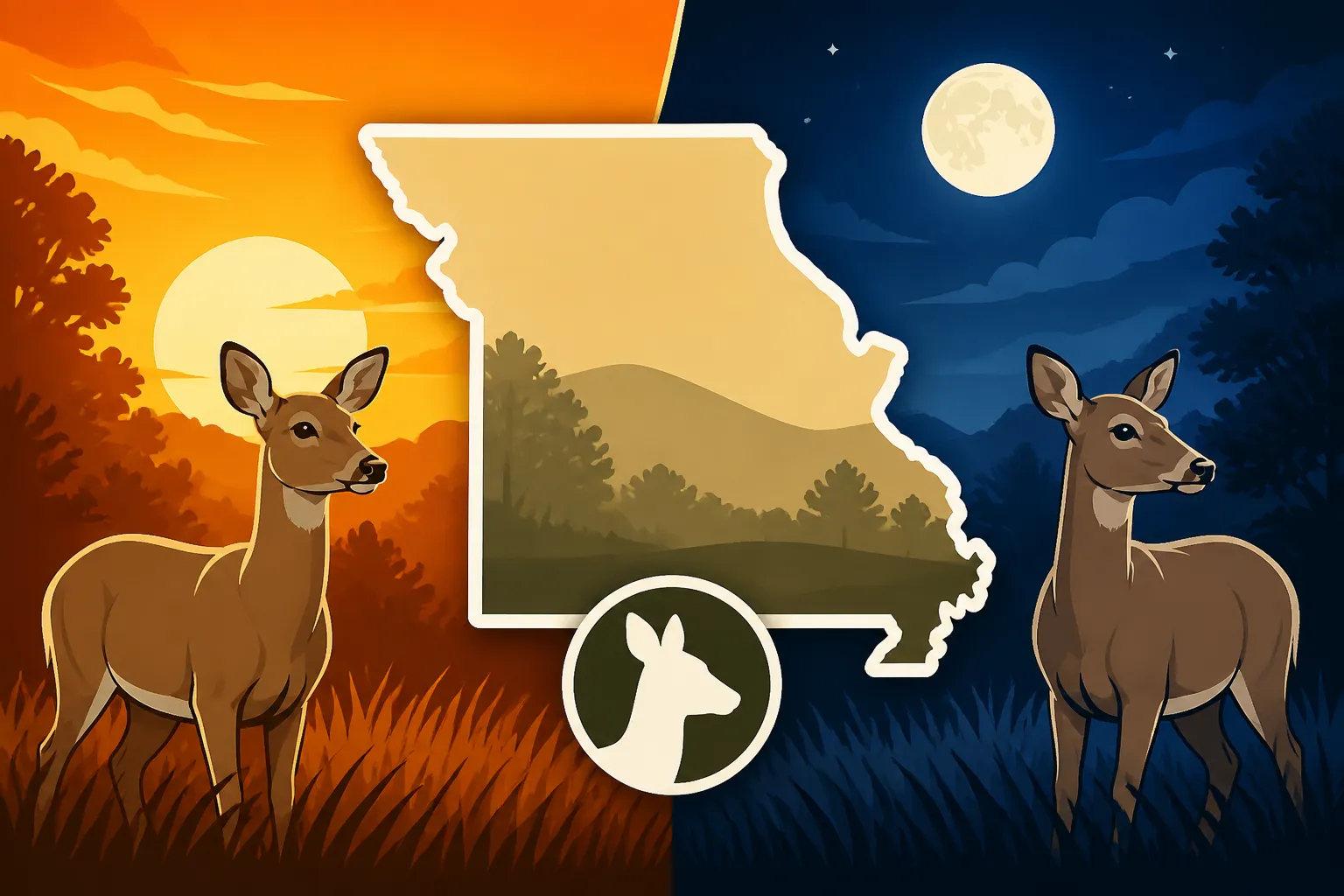
While both portions target antlerless deer, the experience, challenges, and strategies differ significantly due to changes in weather, habitat, and deer behavior.
Weather and Habitat Differences
The contrast between the Early and Late Antlerless portions is stark when it comes to the environment. During the Early Antlerless season, you'll typically encounter warm, sometimes even hot, conditions. Bugs like mosquitoes and ticks can still be a nuisance, and the woods are lush with green foliage. While this provides abundant cover for deer, it also makes spotting them more challenging for hunters. Food sources are widespread and varied, including soft mast, early-dropping acorns, and readily available standing crops.
Fast forward to the Late Antlerless season, and you're dealing with bitter cold, potentially snow or ice. This significantly increases visibility as most leaves have dropped from the trees, making it easier to spot deer at a distance. However, food sources are now much more limited, which tends to concentrate deer around the remaining viable options. Hunter orange may also be required, depending on whether other firearms seasons are concurrent or if you choose to hunt with a firearm during this portion. These environmental factors are the primary drivers behind why deer behave differently and how hunters must adapt their strategies. For instance, while scent control is paramount in the early heat, thermal layering becomes the focus in the late cold.
Deer Behavior and Movement Patterns
Deer behavior also undergoes a dramatic shift between these two periods. During the Early Antlerless season, deer are largely still in their family groups – does often traveling with their fawns. Movement patterns can be somewhat less predictable than later in the year and may be more nocturnal if temperatures are high or localized pressure exists. Rutting behavior is absent, so their primary focus is simply on finding abundant food and maintaining secure cover. They are generally less stressed than they will be post-rut.
By the Late Antlerless season, deer have endured the rigors of the rut and several weeks of hunting pressure. They are highly focused on replenishing lost weight and finding the most efficient, high-calorie food sources available. They'll also be seeking the warmest, most secure thermal cover. This often means their movement patterns become more patterned and predictable, especially around these limited resources. They're often more wary, having been exposed to previous hunting seasons. Understanding these shifts in behavior is absolutely critical for success in either portion. The overall "Missouri Deer Population Estimate" often dictates how many antlerless permits are issued for these times, reflecting population goals and expected deer density.
Hunter Pressure and Success Rates
Hunter pressure can vary considerably between the two antlerless portions. The Early Antlerless season, being archery-only, generally sees lower hunter pressure. Many bowhunters at this time are either holding out for a mature buck, waiting for the rut to kick in, or simply haven't hit the woods yet. This can translate to a more peaceful, solitary hunting experience. However, the trade-off is that warm weather and the dense, lush foliage can make deer harder to locate and stalk, potentially lowering immediate success rates for some.
The Late Antlerless season's pressure can be a mixed bag. After the intensity of the general firearms season, some hunters may be done for the year. However, those still eager to fill their freezers or participating in the "Alternative Methods Portion" can create localized pressure, especially on prime public land or around productive food plots. Success rates during this late period often depend heavily on the severity of the weather, how well a hunter has identified key late-season food sources, and their ability to adapt to colder conditions and wary deer. Many savvy hunters using tools like the GoHunt app often leverage its historical data layers to pinpoint less-pressured areas on public lands, giving them an edge.
| Feature | Early Antlerless Portion | Late Antlerless Portion |
|---|---|---|
| Typical Dates | Early October | December – January |
| Primary Weapon | Archery Only | Archery, Firearms, Alternative Methods |
| Hunter Orange | Not typically required | Often required for firearms |
| Weather | Warm, potentially hot; humid | Cold, potentially snow/ice; dry |
| Habitat | Lush green foliage, dense cover | Deciduous trees bare, increased visibility |
| Food Sources | Abundant: acorns, persimmons, standing crops | Limited: standing corn, winter wheat, browse |
| Deer Behavior | Family groups, pre-rut, food-focused | Recovering from rut, energy conservation, food-focused, wary |
| Hunter Pressure | Generally lower, focused archers | Variable, can be localized around food |
| Key Challenge | Scent control, dense cover, warm temps | Staying warm, limited food, wary deer |
Permit Acquisition and Rules for Antlerless Hunting
Navigating the permit system and understanding all the regulations is crucial for any hunting trip, and antlerless portions are no exception. Knowing the ins and outs ensures a legal and stress-free hunt.
How to Purchase Antlerless Permits
Acquiring your antlerless permits in Missouri is a straightforward process, but it's one you absolutely shouldn't put off until the last minute. You have a few convenient options: you can purchase them online directly through the MDC website, utilize the user-friendly "What the MO Hunting App Does" for mobile purchases, or visit any licensed permit vendor across the state. No matter your preferred method, always make sure you have your permits in hand before you head into the field to hunt.
It's vital to remember that Missouri's antlerless permits are often county-specific. This means you need to meticulously ensure that the permit you purchase is valid for the exact county you intend to hunt. Some counties, particularly those with higher deer densities, might have unlimited antlerless permits available, while others may have restricted quotas to help manage their local populations more precisely. This regional approach underscores the importance of checking current regulations. We can't stress this enough: always consult the current year's "Missouri Deer Permits and How to Buy One" annual regulations booklet thoroughly. Rules and permit availability can and do change from year to year, so relying on outdated information could lead to serious issues. Tools like the GoHunt app can also help cross-reference permit availability with specific county regulations, making your planning even more accurate.
Telecheck Requirements and Carcass Transport
Missouri mandates the Telecheck system for all harvested deer, and that includes every antlerless deer you take. This process is non-negotiable and must be completed by 10 PM on the day you harvest the deer, or before you transport the carcass out of the state, whichever comes first. You can Telecheck your deer either by calling a dedicated phone number or by accessing the Telecheck system online. It’s an efficient system designed to collect vital harvest data for wildlife management.
When you Telecheck, you'll need to provide specific information: your permit number, the county where you harvested the deer, the date of harvest, and the type of deer (antlerless in this case). Once you've successfully completed the process, the system will generate a confirmation number. This number is incredibly important; it must remain with the deer carcass until the animal has been processed and is no longer identifiable as a whole deer. Without this confirmation number, transporting the deer could lead to legal issues. For more detailed instructions, refer to the "Telecheck Requirements After a Harvest" section in the MDC regulations.
Briefly, on carcass transport, while Telecheck primarily tracks the harvest, you should also be aware of any CWD-related regulations, especially if you're transporting a carcass across county or state lines. While the statewide CWD zone has seen some adjustments, it's always wise to check for any current restrictions or recommendations on moving deer parts, though for general antlerless harvest within Missouri, these are usually less restrictive than for CWD-positive areas.
Important Regulations to Remember
Beyond permits and Telecheck, several other key regulations warrant your attention to ensure a legal and ethical hunt during the antlerless portions. Firstly, reiterate the importance of hunter orange requirements. During any concurrent firearms season or if you choose to use a firearm during the Late Antlerless portion, you are generally required to wear a certain amount of blaze orange. However, archery-only portions typically do not mandate orange, but again, always verify for the current year.
Secondly, always be mindful of legal shooting hours. In Missouri, these typically extend from 30 minutes before sunrise to 30 minutes after sunset. Shooting outside these hours is illegal and dangerous. You also need to be acutely aware of weapon restrictions specific to each antlerless portion. Some are strictly archery-only, while others may allow firearms, muzzleloaders, or crossbows. Using an unauthorized weapon can result in severe penalties.
Finally, we can't overstate the importance of responsible and ethical hunting. This includes respecting all private land boundaries, which is crucial in a state with significant private land. Always ensure you have permission if hunting on private property. Proper field dressing and swift recovery of game are not just good practice but a moral obligation. Being a good ambassador for hunting helps ensure that these valuable management and hunting opportunities continue for generations to come.
Maximizing Your Success in Antlerless Portions
Hunting antlerless deer effectively comes down to good planning, careful observation, and understanding deer behavior throughout the season.
Scouting and Stand Placement Tips
Effective scouting is the bedrock of successful deer hunting, and that holds true for the antlerless portions. While year-round scouting is always beneficial, dedicating specific time just before each antlerless season is a must. For the early season, focus on finding fresh rubs (though less numerous than the rut), scrapes (less intense), and, most importantly, feeding sign around prime food sources. For the late season, your scouting should pivot to identifying dwindling food sources and locating dense thermal bedding areas. E-scouting tools are fantastic for this; many hunters swear by GoHunt for its ability to help identify potential hotspots and property lines when they are "Scouting Missouri Public Land Before Season".
When it comes to stand placement, always consider your access and exit routes to minimize disturbance. In the early season, aim for shaded areas near well-used trails between bedding and feeding, perhaps along a creek or in a draw. In the late season, with sparse foliage, ground blinds can offer excellent warmth and concealment, especially when set up overlooking a primary food plot or a travel corridor along a field edge. Elevated treestands remain viable but focus on covering entry/exit points to thermal cover. Crucially, always play the wind. A perfect stand location is useless if the wind carries your scent directly to the deer.
Don't underestimate the power of trail cameras. They are invaluable for pattern verification. Setting them up on known travel corridors, over food plots, or near water sources can help confirm deer presence, identify their preferred travel times, and even show you the composition of the groups, which is critical when targeting does.
Food Sources and Cover for Antlerless Deer
Understanding where antlerless deer find their sustenance and sanctuary is key to successful hunting. In the Early Season, your focus should be on areas with abundant white oak acorns, which are a major draw. Persimmon trees can also be absolute magnets for deer when their fruit ripens. Furthermore, agricultural fields, particularly soybeans and standing corn, provide a high-calorie buffet. Does with fawns tend to stick to reliable, low-stress food sources that are close to good, thick cover, such as creek bottoms, dense draws, or brushy edges.
As you transition to the Late Season, the preferred food sources drastically change. With most natural forage gone, deer will concentrate on standing corn, winter wheat, brassicas, and any remaining browse. After heavy leaf fall, deer are also driven to seek out the densest thermal cover available to escape the cold winds and conserve energy. Look for thick cedar thickets, honeysuckle patches, dense multiflora rose, or even large areas of downed timber. Pinpointing these secure bedding areas immediately adjacent to active food sources can be the key to consistently finding and harvesting does. Always consult "Late-Season Food Sources for Whitetails" to stay current on what's available.
Generally, antlerless deer, especially does with fawns, tend to prefer thicker, more secure cover and often shy away from wide-open ground more than mature bucks might. Identifying these bedding and sanctuary areas and understanding how they relate to the current food sources will dramatically improve your chances.
Ethical Considerations and Shot Placement
As hunters, our top priority should always be an ethical, humane harvest. This means waiting for the right shot opportunity. A broadside or slightly quartering-away shot on a calm, unaware deer offers the best chance for a clean, swift kill. Avoid risky shots at running deer, through thick cover, or in extremely low light, as these significantly increase the chance of wounding an animal and losing it.
Consistent practice with your chosen weapon is not just a suggestion; it's a responsibility. Whether you're shooting a bow or a firearm, know your effective range and stick to it. Don't take a shot beyond what you know you can consistently hit under field conditions. A well-placed shot is the single most critical factor for a quick, humane harvest. If you're using a bow, practice from elevated positions if you plan to hunt from a treestand. If it's a firearm, practice shooting from hunting positions, not just a bench.
After the shot, patience is paramount. Unless you see the deer drop, give it enough time before initiating tracking, especially if the shot wasn't absolutely perfect. A deer hit in the liver or gut can travel a considerable distance, but given enough time, it will often bed down and expire. Blood trailing can be challenging, but thoroughness and patience usually pay off. Finally, always follow up on a shot to ensure a recovery, and honor the animal by utilizing all the meat. This respect for the game we pursue is fundamental to our hunting heritage.
Disclaimer
Please be aware that hunting regulations, season dates, and permit requirements in Missouri can change annually. Always consult the official Missouri Department of Conservation (MDC) website or the printed annual hunting regulations booklet for the most current and accurate information before planning and executing your hunt. This guide is for informational purposes only and should not be considered a substitute for official MDC regulations.