Single Reed Versus Double Reed
Single reed and double reed duck calls differ in mechanics, air pressure needs, and tonal range for Missouri hunters.

Single reed and double reed duck calls differ in mechanics, air pressure needs, and tonal range for Missouri hunters.

Calling ducks in Missouri flooded timber requires softer volume and subtle techniques to avoid spooking birds in dense cover.

Concealing your face and hands with camouflage prevents wild turkeys from spotting movement and ruining Missouri hunts.

Turkey vests with built in seats provide Missouri hunters physical comfort and quick setup during long waits for gobblers.

Decoy strategies for pressured Missouri turkeys explain how to adjust setups and consistently bring wary gobblers into range.

Locator calls use non-turkey sounds like owl hoots and crow caws to trigger shock gobbles from silent Missouri turkeys.

Moisture reduces friction on slate and glass turkey calls, creating thin squeals or total silence in damp weather.
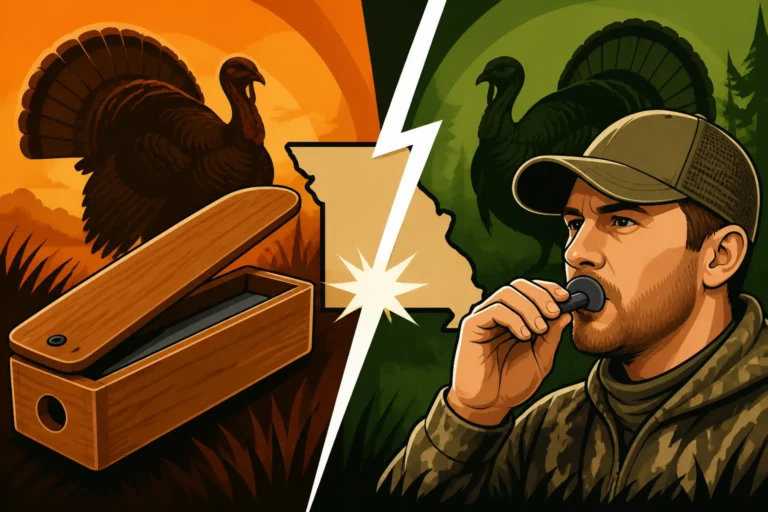
Box calls and mouth calls compared for Missouri turkey hunters, explaining mechanics, pros, cons, volume, and usage.

Turkey gun patterning at forty yards ensures lethal pellet energy into the brain and spine for Missouri hunters.
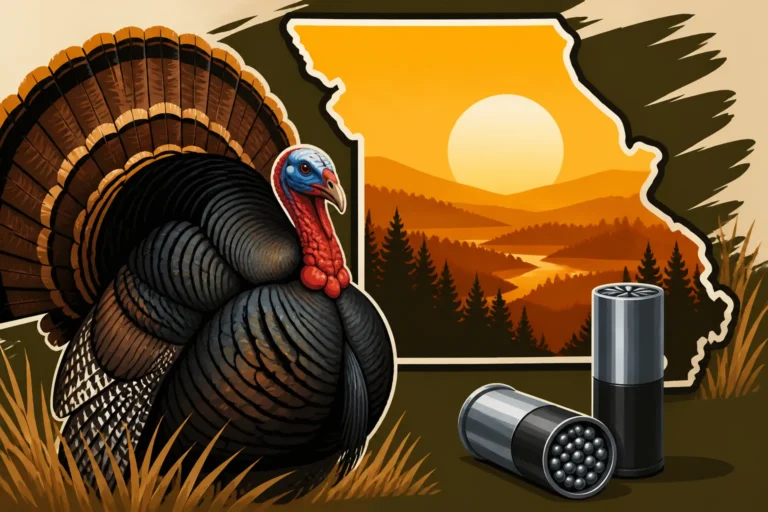
Tungsten turkey loads provide higher density and energy for Missouri hunters, but their complex manufacturing process makes them expensive.