Hunting North Missouri’s Big-Buck Farm Country
Hunting big bucks in North Missouri’s farm country can feel like a game of hide-and-seek where the deer are always a step ahead, especially with their keen ability to vanish into seemingly small patches of cover or turn strictly nocturnal. It’s a region that holds some incredible whitetail genetics, but unlocking its secrets requires a different approach than hunting the dense timber of the Ozarks. This comprehensive guide will walk you through the unique challenges and rewarding strategies for consistently finding and harvesting mature deer in North Missouri’s agricultural heartland.
Understanding North Missouri's Unique Deer Habitat
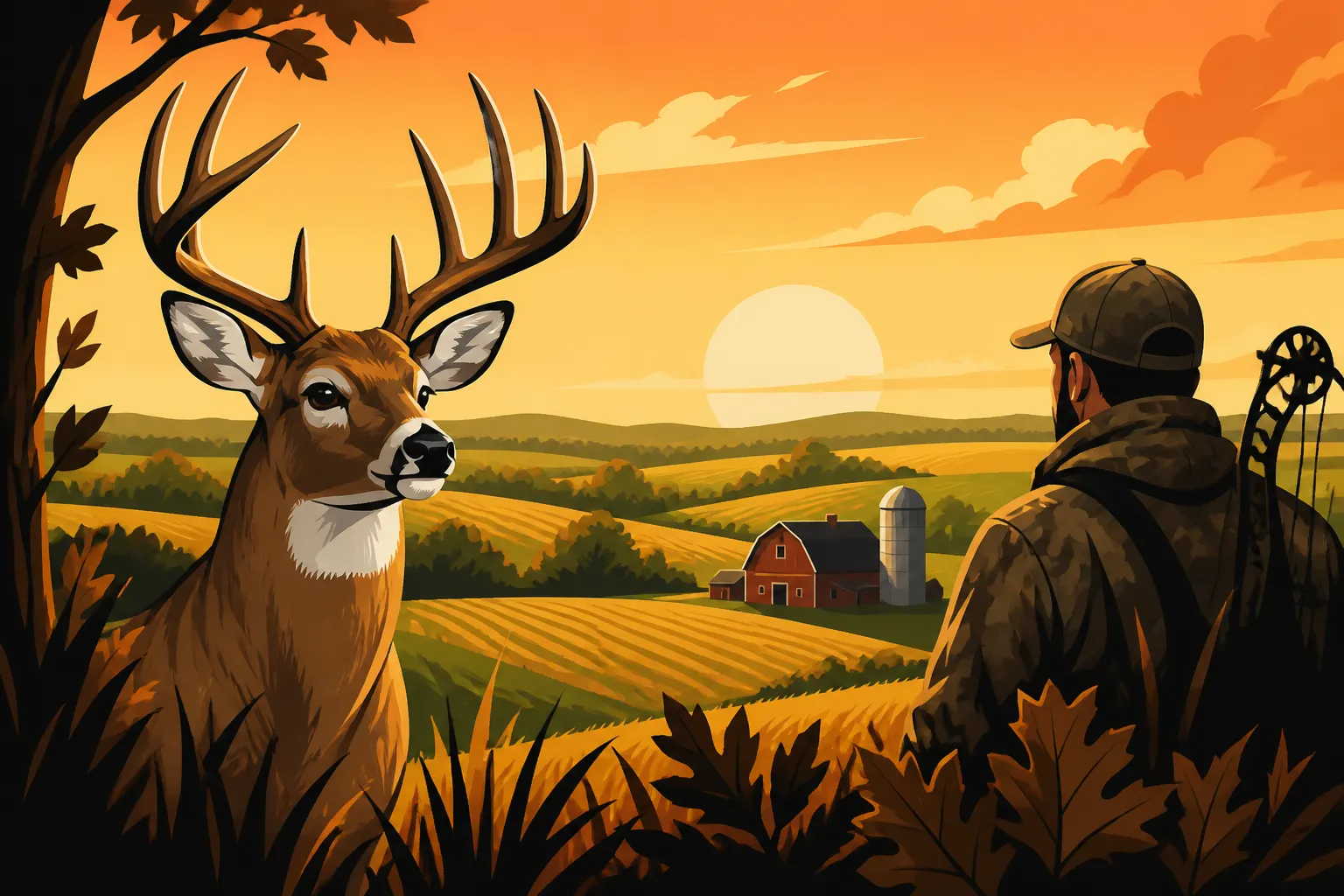
North Missouri is a world apart from the rugged, forested hills of the southern part of the state. Here, the landscape is defined by vast expanses of row crops – corn, soybeans, and wheat – interspersed with crucial pockets of timber, brushy fencerows, and winding creek bottoms. It’s a habitat that caters perfectly to whitetail deer, offering an abundance of high-energy food sources and sufficient cover for bedding and travel. But it's also a landscape that demands a keen understanding of how deer interact with these features, often in subtle ways that aren't immediately obvious to the uninitiated.
The Landscape of Big-Buck Country
Imagine driving through rolling hills checkered with agricultural fields that stretch for miles, occasionally broken by narrow strips of hardwoods, thick cedar groves, or brushy CRP (Conservation Reserve Program) fields. These timber blocks, even if seemingly small, are absolute magnets for deer, providing vital bedding areas and refuge from human activity. Fencerows, often overlooked, act as natural travel corridors, connecting larger timber blocks to food sources without forcing deer into open fields during daylight. Creek bottoms, with their dense vegetation and water sources, offer crucial concealment and thermal cover, especially during the colder months or when deer need to avoid pressure. Understanding these features and how they connect is the first step in unraveling the puzzle of North Missouri deer movement.
How Agriculture Shapes Deer Behavior
The sheer availability of high-quality food in North Missouri’s agricultural fields fundamentally alters deer behavior. Unlike deer in big woods country who might have to travel significant distances to find acorns or browse, these farm-country deer have an endless buffet at their disposal. This often means their daily routines revolve around shorter movements between dense bedding cover and nearby food sources. They can become highly nocturnal, especially once hunting pressure starts, only venturing into fields under the cover of darkness. However, during the rut, or during specific weather patterns like cold fronts, they might be coaxed out earlier or stay out later. Recognizing which crops are "hot" at different times of the year – standing corn in early season, harvested bean fields in late season, or winter wheat plots – is paramount. These crops don't just provide food; standing corn, for instance, offers incredible bedding and sanctuary cover, making it a formidable challenge to hunt.
Reading Aerial Maps and Topography
Before you ever set foot on a property, your best friend in North Missouri is a detailed aerial map. Tools like GoHunt provide invaluable satellite imagery that lets you zoom in and identify those critical timber blocks, winding fencerows, creek drainages, and even subtle changes in elevation that might create travel funnels. Look for where fingers of timber extend into crop fields, creating natural pinch points. Identify brushy draws or ditches that allow deer to move unseen from one woodlot to another. Pay close attention to property lines, as deer often use these boundaries as low-pressure travel routes, knowing that human activity might be restricted on one side. Understanding how topography, even slight elevation changes in this rolling landscape, can influence wind currents and thermals is also crucial for stand placement.
Scouting Strategies for Farm Country Whitetails
Scouting in North Missouri isn't just about finding deer sign; it's about understanding the nuances of their patterns in an ever-changing agricultural landscape. You're not looking for deer, you're looking for where deer will be based on food availability, cover, and pressure. This demands a year-round commitment, not just a few weeks before the season opens.
Early Season and Post-Season Reconnaissance
The period right after deer season closes, often in late December and January, is arguably the most valuable time to scout North Missouri. With no leaves on the trees and fields often harvested, the landscape truly lays bare its secrets. You can easily spot old rub lines, which often indicate traditional travel corridors used by mature bucks year after year. Identifying historical scrape lines, especially those along logging roads or field edges, can reveal prime locations for future setups. This is also the time to find unpressured bedding areas – dense cedar thickets, brushy draws, or even small, overlooked pockets of timber that might be ignored by other hunters. Look for subtle deer trails leading into and out of these areas. Taking note of these patterns helps predict movement for the following season, especially as you consider Where North Missouri Bucks Bed.
Leveraging Technology for Scouting
Modern hunting technology has revolutionized scouting in farm country. GPS apps on your phone, combined with detailed satellite imagery, allow you to mark potential stand locations, track your movements, and identify property boundaries with precision. Mapping tools, including those offered by GoHunt, allow you to layer different data sets, from topo maps to landowner information, helping you dissect a property from your couch. Trail cameras are indispensable. Deploy them strategically along fencerows, timber edges, and transition zones between bedding and feeding. They not only help inventory the deer herd but also provide critical intel on travel times and patterns, helping you determine if a buck is moving primarily during daylight or if he’s a strictly nocturnal phantom. Remember to check your cameras sparingly to minimize human disturbance.
Locating Key Food and Bedding Areas
In North Missouri, the food sources change throughout the year. Early season often finds deer drawn to lush alfalfa or clover fields, or acorns if timber is present. As fall progresses, standing corn becomes a major draw, offering both food and unparalleled cover. After the corn is harvested, deer will shift their focus to soybeans (especially those left behind), winter wheat, and any available mast crops. During the late season, remaining waste grain in harvested fields, or even small pockets of browse, become critical. Bedding areas are just as important. Look for thick, impenetrable cover like cedar thickets, dense willow bottoms along creeks, or even tall switchgrass fields. These provide security, thermal protection from the elements, and a place for deer to escape pressure. Bucks will often bed just inside the timber edge, offering them a vantage point to survey the open fields before stepping out. Understanding these dynamics is key to planning effective Entry Routes on Rolling Farm Ground.
Gaining Access to Private Land in North Missouri
Let's be real: North Missouri is predominantly private land. This isn't the Ozarks where public land abounds. The biggest hurdle for many hunters is simply finding a place to hunt, especially if you're chasing those legendary farm-country giants. Overcoming this often requires patience, persistence, and a healthy dose of good old-fashioned neighborliness.
The Art of Knocking on Doors
This might sound old-fashioned, but it’s still the most effective way to gain access in many parts of North Missouri. Don't just show up in your camo; dress respectably, be polite, and introduce yourself. Explain exactly what you're looking for – perhaps permission to bowhunt a specific timber block, or even just to walk for squirrels after deer season. Offer to help the landowner with chores, mend fences, or even assist with planting or harvesting. Sometimes, simply offering a portion of your harvest or bringing a thoughtful gift, like a local pie or some fresh eggs, can go a long way. Many landowners are hesitant because of bad past experiences with disrespectful hunters. Be the exception. Demonstrate responsibility, ask about their concerns, and be willing to abide by their rules, no matter how specific. Remember, it’s not just about getting permission; it’s about building a relationship. For more tips on this, check out Asking a Missouri Farmer for Permission.
Lease Agreements and Hunting Clubs
For those looking for more consistent, long-term access, a hunting lease might be the answer. Lease prices in North Missouri can vary wildly depending on the quality of the ground and proximity to trophy buck areas. While often expensive, a lease guarantees you exclusive access and allows you to implement long-term management strategies like food plots or hinge cutting for bedding cover. Hunting clubs are another option, where multiple hunters pool resources to lease larger tracts. The pros are shared costs and often a larger piece of ground to hunt. The cons can be navigating personalities and differing hunting styles. If you go this route, ensure clear rules are established upfront regarding guest policies, stand locations, and harvest limits to avoid conflicts.
Utilizing Public Land in a Private-Land Dominated Region
While private land dominates, there are still some gems of public hunting ground in North Missouri. These might be smaller Conservation Areas (CAs), Corp of Engineers land around major reservoirs, or even certain areas along the Missouri River. The key to hunting public land here is often to go where others won’t. This might mean walking significantly further from parking areas, navigating dense, overlooked cover, or focusing on areas with tricky access points. Deer on these tracts are often highly pressured, so hunting midweek, after an opener, or during inclement weather can increase your odds. Use your GoHunt app to scour maps for small, isolated timber blocks or hard-to-reach creek bottom thickets that other hunters might overlook. While they might not hold the same quantity of deer as some private lands, these pockets can still harbor mature bucks that have learned to evade pressure.
Effective Hunting Tactics for Farm Country Deer
Hunting North Missouri requires adaptable tactics that respect the unique movements of deer in an agricultural setting. What works in dense woods might not work here, and vice-versa. You need to be flexible and willing to adjust your strategy based on the specific field, the weather, and the current phase of the season.
Treestand and Ground Blind Placement
Stand placement is absolutely critical. For field edges, you’ll want to be set up well before first light, or stay until well after dark, especially if deer are largely nocturnal. Look for pinch points where timber extends into a field, or where a fencerow creates a narrow crossing. Creek bottoms are often excellent natural funnels. Always consider the wind direction, as thermals in rolling farm country can be tricky, often sinking into draws in the morning and rising in the afternoon. For morning hunts, place your stand on the bedding side of a food source, catching deer as they return to cover. For evenings, set up between bedding cover and an active food source. Ground blinds can be incredibly effective on field edges, offering excellent concealment, especially if brushed in effectively. A good strategy is to place them in corners of fields or where a timbered draw meets the open ground, capitalizing on deer's natural tendencies to follow cover. This approach is similar to Brushing In a Blind on a Field Edge.
Still-Hunting and Drives in Small Timber Blocks
While stand hunting dominates, still-hunting can be a highly effective tactic, especially in the smaller, isolated timber blocks common in North Missouri. Move slowly, quietly, taking a few steps then stopping to scan for movement. Focus on wind direction and thermal currents, always trying to keep the wind in your favor. This is not about covering ground quickly but about patiently picking apart pockets of cover. In larger timber blocks or dense CRP, small, organized deer drives with one or two other hunters can be very productive. Position standers at key escape routes or pinch points, while drivers slowly push through the cover, making just enough noise to encourage deer to move naturally. Communication is key, as is a clear understanding of the property boundaries and safety zones. For small tracts, two-person drives on small timber tracts can be particularly effective.
Calling and Decoying Strategies
During the rut, calling and decoying can be game-changers in North Missouri. Bucks in farm country, especially mature ones, are often aggressive and competitive due to higher deer densities and competition for does. Grunt calls can lure curious bucks into range, particularly during the pre-rut and early rut when they are actively seeking does. Rattling and Grunting in the Rut can also be very effective, mimicking a fight between two bucks and often bringing in dominant deer looking to assert their presence. For rattling, consider the environment: Rattling Volume for Thick Timber might be different than rattling in more open farm ground. Decoys, especially a buck decoy or a doe decoy, can seal the deal. Place a buck decoy facing away from your position, simulating a buck scent-checking or trailing a doe, which can challenge an approaching buck to come in for a confrontation. A doe decoy can lure in lonely bucks looking for a mate. Always consider the wind and position your decoy to offer an ethical shot as the deer approaches. Decoying a North Missouri Buck often yields great results.
Timing Your Hunt with the Missouri Rut
The rut is often the most anticipated time for deer hunters, and in North Missouri, it can be absolutely electric. Understanding its phases and how deer behavior shifts throughout this period is crucial for maximizing your chances at a mature buck.
The Pre-Rut and Early November Action
The pre-rut, typically in late October and extending into early November, is a fantastic time to be in the woods. This is when bucks start to get on their feet, actively scraping, rubbing, and scent-checking doe bedding areas. They're still somewhat predictable, often following established travel corridors between feeding and bedding, but with an increasing urgency to find receptive does. Mornings can be great as bucks will often cruise at first light. Focus your efforts around pinch points, fencerows, and primary scrape lines. This is a prime time for calling, as bucks are more responsive to grunts and light rattling. This phase, often called Hunting the Pre-Rut in Late October, can offer some of the best opportunities before the full chaos of the peak rut kicks in.
Peak Rut Week Strategies
For many hunters, the peak rut in Missouri, usually the second week of November and coinciding with the firearms portion, is the holy grail. This is when chasing is at its absolute peak, and bucks are often less cautious, driven by their urge to breed. All-day sits become highly effective, as bucks can be on their feet at any time of day, following does or chasing off rivals. During this intense period, aggressive calling and decoying can work wonders. Focus on areas that have a high concentration of does, as bucks will inevitably be nearby. Creek bottoms and draws that funnel deer movement between timber blocks and agricultural fields become high-traffic zones. Be patient, stay alert, and don't be afraid to try different calling sequences or decoy setups. This is the period many refer to as Hunting the Peak Rut Week in Missouri.
Post-Rut and Late Season Food Sources
After the intense breeding activity of the peak rut, bucks enter a recovery phase. They've lost significant weight and are focused on replenishing their energy reserves. This is when late-season food sources become paramount. Look for standing corn that hasn't been harvested yet, cut bean fields with waste grain, winter wheat, or even pockets of acorns if they're still available. Thermal cover, like thick cedar groves or south-facing slopes that catch sunlight, also becomes increasingly important as temperatures drop. Hunting during this time, especially during a cold front, can be very productive. Bucks will often move from thick bedding cover directly to food sources, often just before dark. This is a time to be patient, focus on food, and understand that deer might be moving on a more predictable pattern than during the frenetic peak rut.
Overcoming Challenges in North Missouri Hunting
Hunting North Missouri's big-buck country isn't without its unique set of challenges. From adapting to an ever-changing landscape to dealing with pressure, success often hinges on your ability to adapt and overcome.
Dealing with Hunting Pressure
North Missouri is known for its big bucks, and with that reputation comes significant hunting pressure, especially on public lands or smaller private tracts that are easily accessible. Deer in these areas become incredibly wary and often shift to a nocturnal pattern very quickly. To combat this, you need to think differently. Consider hunting during weekdays when pressure is typically lower. Go deeper into public land than most hunters are willing, or focus on overlooked pockets of cover adjacent to areas with heavy pressure. Finding Ground Others Walk Past is a critical skill here. Sometimes, simply walking an extra half-mile or navigating a particularly dense patch of thorns can put you into an unpressured deer sanctuary. Minimize your scent, use quiet approach and exit routes, and limit your time in a stand to avoid burning out a spot.
Adapting to Changing Crop Fields
One of the biggest variables in farm country is the constant change in agricultural fields. A standing cornfield offering perfect bedding and cover in early October can become a desolate, harvested stubble field overnight in November. You need to be aware of local farming activity and adapt your hunting strategy accordingly. For example, Hunting Standing Corn Before Harvest requires a stealthy approach and understanding that deer are likely bedding deep within. Once the combine rolls through and What Changes After the Beans Come Off, deer will shift their bedding to nearby timber blocks or dense CRP, and their feeding will focus on waste grain or other available food sources. This means your stand locations and approach routes will need to change, sometimes dramatically, within a matter of days. Stay informed about local harvest schedules and be prepared to move your setups.
Weather Impacts on Deer Movement
While weather influences deer everywhere, its impact in North Missouri farm country can be particularly pronounced. Cold fronts, especially those following a period of warm weather, can ignite deer movement, prompting bucks to get on their feet during daylight hours. High winds can make deer hesitant to move in open fields, pushing them into sheltered timber or draws. Rain can also impact movement, with deer often becoming active just before or after a steady shower. Subtle changes in thermals, especially in the rolling terrain, can dictate how deer approach and leave a field edge, making wind direction a crucial consideration for every sit. Pay close attention to the forecast, as it can be your best guide for timing your hunts in this dynamic environment.
Essential Gear and Logistics for Farm Country
Having the right gear and a solid plan for logistics can make all the difference when hunting North Missouri's big-buck country. From your weapon choice to how you handle your game, preparedness is key.
Recommended Rifle and Optics Setups
For firearms hunters, a reliable rifle chambered in a common deer caliber like .270, .308, or 6.5 Creedmoor is ideal. While shots in timber might be close, there are often opportunities for longer shots across open fields or draws, so accuracy at 150-250 yards is beneficial. Is a .243 Enough for Missouri Whitetails? is a common question, and for farm country, it certainly can be, but shot placement becomes even more critical. A quality rifle scope with good low-light gathering capabilities is a must, as deer often move at dawn and dusk. A rangefinder is practically non-negotiable for accurately gauging distances across varying terrain and open fields. Binoculars (8x or 10x) are also invaluable for scanning distant field edges or dense cover. For those hunting with a bow, ensure your setup is tuned and your broadheads are sharp for ethical shots on mature whitetails.
Clothing and Comfort for All-Day Sits
Missouri weather can be notoriously unpredictable, especially during deer season. One day it's 70 degrees, the next it's freezing rain. Layering is paramount to staying comfortable during long sits. Start with a moisture-wicking base layer, add insulating layers like fleece or down, and top it off with a windproof and waterproof outer shell. Good quality, insulated boots are essential for keeping your feet warm and dry, particularly during those frosty November mornings. Don't forget a warm hat and gloves. Scent control is also crucial in farm country where deer are often in close proximity to human activity and are extremely wary. Use scent-eliminating sprays, wash your hunting clothes in scent-free detergent, and store them in airtight containers. Being comfortable means you'll stay on stand longer, increasing your chances of success.
Field Dressing and Game Care Considerations
Early season hunts in North Missouri can still be quite warm, making quick and proper field dressing and cooling of your deer essential to prevent spoilage. Carry disposable gloves, a sharp knife, and game bags. Once the deer is down, gut it quickly to allow the carcass to cool. If temperatures are high, consider using ice in the body cavity during transport. For longer hauls or if you're alone, learning the "gutless method" can save you a lot of effort in breaking down the deer on the spot. Have a plan for getting your deer to a processor promptly, or be prepared to butcher it yourself. For more information, read up on Getting Deer Meat Cooled Quickly to ensure your hard-earned venison is taken care of.
| Rut Phase | Deer Behavior | Primary Tactics | Ideal Stand Locations | Calling/Decoy Effectiveness |
|---|---|---|---|---|
| Pre-Rut | Increased rubs/scrapes, cruising, seeking does. | Scouting trails, pinch points, light calling. | Fencerows, timber edges, staging areas near doe bedding. | Medium-High |
| Peak Rut | Active chasing, breeding, bucks less cautious. | All-day sits, aggressive calling, decoying. | Doe bedding areas, creek bottoms, major travel corridors. | High |
| Post-Rut | Bucks recovering, focusing on food. | Focus on food sources, thermal cover, patient sits. | Active food plots, waste grain fields, sunny timbered slopes. | Low-Medium |
| Late Season | Food and thermal cover critical, often nocturnal. | Hunt cold fronts, waste grain, thick bedding cover. | Remaining standing crops, dense cedar thickets. | Low |
Disclaimer
Hunting is an inherently dangerous activity. Always prioritize safety, follow all Missouri Department of Conservation regulations, and ensure you have proper training and permits before heading afield. The information provided here is for educational purposes and should not replace professional guidance or personal judgment.