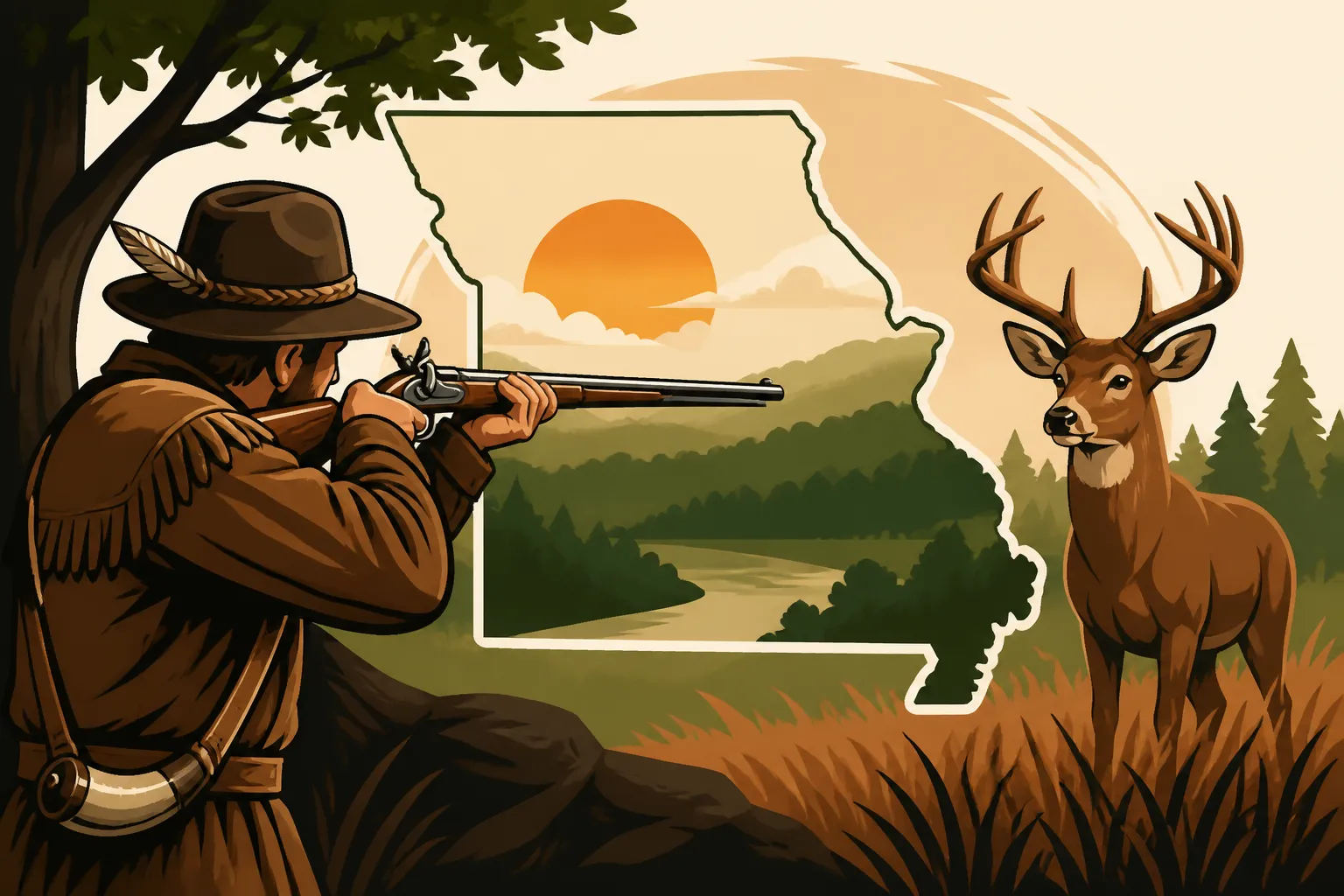
Muzzleloader Tactics in the Alternative Methods Portion
The crunch of frozen leaves underfoot, the biting wind whipping through bare timber, and the knowledge that every deer has seen it all before after the firearms season – that's the reality of Missouri's Alternative Methods Portion. It's a challenging time to be in the woods, but for those willing to embrace the unique demands, it offers a fantastic opportunity to tag a late-season deer. This comprehensive guide will equip you with the specialized muzzleloader tactics needed to find success when other hunters have packed it in.
Understanding Missouri's Alternative Methods Portion
The Alternative Methods Portion is a distinct deer hunting season in Missouri, deliberately designed to provide additional opportunities after the main firearms rush. It’s a period many hunters love for its quieter woods and the chance to chase deer when their patterns have settled a bit, or, conversely, have become incredibly wary.
Key Dates and Regulations for Muzzleloaders
Let's talk about the calendar first. Missouri's Alternative Methods Portion typically runs for a specific period in December, usually after the regular firearms season and the late antlerless portion. It’s a relatively short window, making preparation absolutely crucial. You’ll need a valid Missouri Deer Permits and How to Buy One for the portion you're hunting, whether it’s an antler-point-restricted (APR) or any-deer permit, depending on the county regulations and your permit type.
For muzzleloaders specifically, the rules are pretty straightforward but vital to know. You're typically allowed to use cap-and-ball muzzleloaders, as well as modern in-line muzzleloaders. Just be sure to double-check the current year's regulations on projectile types and powder limits, as these can sometimes see minor tweaks. It's always best to consult the Missouri Department of Conservation (MDC) regulations handbook directly or their website before you head afield. Remember, this portion is called "Alternative Methods" for a reason; it often includes other weapon types like crossbows and longbows, but our focus here is on the trusty muzzleloader.
Why the Alternative Methods Portion is Unique
This season isn't just about different dates; it’s about a completely different hunting experience compared to the early archery or even the November firearms portions. First, the weather is a huge factor. You're almost certainly going to encounter colder temperatures, and often, snow or ice. This impacts deer behavior, food sources, and even your ability to stay comfortable on stand.
Second, hunting pressure has usually plummeted. The woods, particularly on public ground, are significantly quieter. This can be a double-edged sword: less competition means more peaceful hunting, but the deer that are left have been educated by weeks, if not months, of human activity. They're jumpier, more nocturnal, and much more likely to avoid open areas during daylight.
Finally, deer behavior itself changes. The primary rut is long over, and bucks are no longer recklessly chasing does. Their focus has shifted entirely to survival: finding available food and secure bedding. This means their movements become more predictable and hinge heavily on late-season food sources. Understanding this transition is paramount for success. You’re no longer hoping to intercept a lovesick buck; you’re trying to pattern a wary survivor.
Essential Muzzleloader Gear for Missouri's Late Season
Having the right gear for the Alternative Methods Portion isn't just about comfort; it's about reliability and effectiveness in potentially harsh conditions. A misfire or a cold-induced shiver can easily ruin a hard-earned opportunity.
Choosing the Right Muzzleloader and Caliber
When it comes to muzzleloaders, you've got options. Many hunters in Missouri opt for modern in-line muzzleloaders from brands like CVA, Traditions, or Thompson/Center. These are generally more accurate, easier to load, and more weather-resistant than traditional side-lock or flintlock models. The .50 caliber is overwhelmingly the most popular choice for deer, and for good reason – it offers plenty of knockdown power for Missouri whitetails without excessive recoil. Some hunters prefer a .45 caliber, especially for flatter trajectories, but a .50 is a solid choice. The key is to be familiar with your specific firearm and practice with it extensively before the season. There’s a certain intimacy that comes with a muzzleloader; it's not a repeater, so every shot counts, and you need to trust your equipment implicitly. You'll want to review the Muzzleloader Calibers Legal in Missouri to ensure your choice is compliant.
Ammunition and Optics Considerations
For ammunition, focus on reliability and terminal performance. Modern sabot bullets, like those from Hornady or Barnes, are designed for excellent expansion and penetration, crucial for a clean kill. Pair these with reliable 209 primers – hot primers are essential for consistent ignition in cold, damp conditions. As for powder, stick with granular black powder substitutes like Pyrodex or Triple Seven, or even Blackhorn 209, as they tend to be less hygroscopic (meaning they absorb less moisture) and easier to clean. Always cap your muzzle to protect the bore from rain or snow.
Optics are a personal choice. Many traditionalists swear by open sights, and there's a certain charm to that. However, in low light, or if you anticipate longer shots (though "longer" with a muzzleloader is still much shorter than a centerfire rifle), a low-power scope can be a game-changer. A fixed 4x or a variable 1-4x or 2-7x scope is often ideal, providing enough magnification without narrowing your field of view too much in thick timber. Make sure your scope is waterproof and fogproof, as late-season conditions can quickly make cheap optics unusable. Don't forget to rangefind often – knowing your precise distance is critical with a muzzleloader's trajectory.
Cold Weather Clothing and Accessories
This cannot be overstated: staying warm and dry is paramount for effective late-season hunting. A multi-layered clothing system is your best friend. Start with a moisture-wicking base layer against your skin. Add insulating mid-layers, like fleece or down, and top it off with a waterproof and windproof outer shell. Brands like Sitka, KUIU, or even good quality budget options from Bass Pro Shops or Cabela's offer excellent cold-weather gear. Don't forget a warm hat, neck gaiter, and insulated, waterproof gloves or mittens. Consider bringing chemical hand and foot warmers – they can make a monumental difference in comfort during a long sit.
For your feet, invest in high-quality insulated, waterproof boots. You’ll be walking through damp leaves, potentially snow, and sitting for hours, so cold feet can end a hunt prematurely. A good pair of wool socks (or two thin pairs) is also essential. Sitting on a cold stand can drain your body heat quickly, so a thick foam pad or cushion for your stand seat is highly recommended. Remember, shivering not only makes you miserable but also compromises your accuracy. A warm hunter is a patient hunter, and patience is key to late-season success. For more tips on enduring the chill, check out our guide on Cold Weather Sitting Strategy.
Scouting and Locating Deer in Winter Conditions
By the time the Alternative Methods Portion rolls around, deer behavior has changed significantly. Pre-rut hotspots are long forgotten. Your scouting needs to reflect this shift, focusing on new priorities that dictate deer movement.
Interpreting Late-Season Food Sources
Food, food, food – that's the late-season mantra. Deer are in survival mode, trying to pack on calories to make it through winter. Natural food sources like acorns, if any are left, will still draw attention, especially white oak acorns which are less bitter. However, by December, these are often depleted. Your best bet will be to locate browse – woody stems, privet, honeysuckle, and cedars are all important late-season foods. Even certain dry grasses can provide sustenance.
But the real magnets are often agricultural fields. Standing corn fields, leftover soybean stubble, or even winter wheat fields are absolute goldmines. Deer will gravitate to these high-energy food sources, sometimes traveling significant distances. Pay close attention to cut crop fields for any residual grain. If you’re hunting public land, look for areas adjacent to private crop fields, or areas where the MDC has planted food plots. These can be critical concentration points. Scouting tools like GoHunt's mapping features can help you identify these agricultural areas and potential travel corridors from bedding.
Reading Fresh Sign in Snow and Frost
Snow or a heavy frost acts like a giant, fresh canvas, making it incredibly easy to read deer sign. Fresh tracks are your most valuable clue. Look for tracks leading from bedding areas (dense cedars, thickets, south-facing slopes offering thermal cover) to food sources. Notice the size of the tracks – you might be able to differentiate between does, younger bucks, and a mature buck. Follow fresh trails, paying attention to consistency. Are the tracks walking casually, or are they making a quick escape?
Look for fresh droppings, too. Dark, moist droppings indicate recent activity. Also, observe rubs and scrapes, though they will be less intense than during the rut. A fresh rub or a pawed-out scrape might indicate a buck is still marking his territory, or at least moving through that specific area. Freshly browsed twigs with ragged edges (deer don't have upper incisors, so they tear) are a sure sign of feeding. In frosty conditions, you might even see vapor trails from deer breath in the cold air if you’re up high enough, or disturbed frost on vegetation where they've moved through recently. This information is crucial for pinpointing where to focus your Still-Hunting After a Fresh Snow efforts.
Utilizing Topographical Features for Funnels
Deer are inherently lazy; they'll take the path of least resistance unless pressured. This makes topographical funnels incredibly important. Look for natural pinch points that concentrate deer movement between bedding and feeding areas. These include:
- Ridge Saddles and Benches: Deer will often travel along benches on hillsides or cross low points in ridges (saddles) rather than going over peaks. These can be prime ambush spots, especially if they connect two good bedding areas or a bedding area to food. Our guide on Hunting Missouri Ridge Saddles and Benches dives deeper into these areas.
- Creek Bottoms and Drainages: These offer natural travel corridors, especially where thick cover runs along them. Deer often use these to move undetected.
- Thick Cover Edges: The edge where dense cover meets more open timber or a field is a classic transition zone. Deer will often skirt these edges, entering fields or feeding areas just before dark.
- Timber Draws in Crop Country: In flat agricultural areas, even a small finger of timber or a brushy draw can act as a significant travel corridor for deer moving between woodlots and fields.
- Thermal Cover: South-facing slopes or thick stands of evergreens (like cedars) provide thermal cover, blocking wind and offering warmer bedding. Deer will seek these areas during cold snaps. Using a mapping app like GoHunt can help you visualize these features on public or private ground, making your scouting more efficient. You can also gain valuable insights from Reading Aerial Photos for Ozark Deer to identify these features from above.
Muzzleloader Hunting Tactics in the Field
With scouting done and gear dialed in, it's time to put those insights into action. Muzzleloader hunting in the late season demands a specific approach, favoring deliberate movements and strategic positioning.
Stand and Blind Placement for Cold Weather
Your stand or blind placement in the Alternative Methods Portion needs to prioritize comfort and concealment, especially since deer are extra wary. For treestands, focus on locations that offer natural wind breaks, like the leeward side of a ridge or a dense cluster of cedars. South-facing slopes that catch morning sunlight can also be much more bearable. Position yourself where you can see downwind or crosswind for maximum shot opportunities. Given the bare trees, a tree with substantial cover, like a thick cedar or a large oak with clinging leaves, is ideal.
Ground blinds are also incredibly effective in the late season, offering warmth and excellent concealment from the elements. Position them along field edges, brushy fencerows, or dense cover transition lines. Brush them in heavily with natural vegetation from the area to help them blend into the landscape, as detailed in our guide on Brushing In a Blind on a Field Edge. Make sure your shooting lanes are clear and you have a good field of view, but avoid cutting too much that it makes the blind obvious. Consider bringing a small, portable heater for a ground blind – the warmth can extend your sit significantly. Remember that deer after the firearms season are extremely sensitive to unnatural shapes, so breaking up the outline of your blind or stand is key.
Still-Hunting and Tracking in Winter
Still-hunting is a highly effective, yet often underutilized, tactic for muzzleloader hunters in the late season. With fewer leaves on the trees and potentially snow on the ground, visibility is often at its best. The crisp air can carry sound, but also dampen scent, making careful movement even more critical. The technique involves moving incredibly slowly, taking only a few steps, then stopping to scan and listen for several minutes. Think of it as stalking in slow motion. Focus your still-hunting efforts in and around bedding areas, or along known travel corridors between bedding and food.
If there's snow, tracking becomes an invaluable skill. Pick up a fresh track, ideally a large one, and follow it slowly and deliberately. Pay attention to how the deer is moving. Are the tracks widely spaced (running), or close together (walking calmly)? Is it meandering and browsing, or traveling purposefully? Use the terrain to your advantage: move slowly when you're visible, speed up slightly when you're behind a ridge or in a dip. Always assume the deer is just ahead of you. If you pick up on the track of a large buck, take your time and be ready. Our guide on Tracking a Deer in Ozark Rock can offer more specific advice for difficult terrain.
Patience and Shot Placement with a Muzzleloader
The single-shot nature of a muzzleloader amplifies the importance of patience and precise shot placement. Unlike a repeater, you don't get a quick follow-up shot if you miss or make a poor hit. This means you absolutely must wait for a perfect, ethical broadside or slightly quartering-away shot. Resist the urge to rush. Take a deep breath, settle your crosshairs or sights, and squeeze the trigger smoothly.
Practice shooting from various positions – sitting, kneeling, standing – because you never know what position you'll be in when that opportunity arises. Know your muzzleloader's effective range and stick to it. For many, that's often within 100-120 yards, especially in timber. If the deer is further, or the shot isn't ideal, let it walk. The ethical responsibility to make a clean kill is even greater with a muzzleloader. A high-quality rangefinder is essential to ensure you are within your firearm's effective range.
Overcoming Common Muzzleloader Challenges
Muzzleloaders, for all their charm and effectiveness, come with their own set of quirks, especially when hunting in the frigid, damp conditions of a Missouri December. Anticipating and preparing for these challenges can be the difference between success and frustration.
Dealing with Moisture and Cold Weather Malfunctions
Moisture is the arch-nemesis of a muzzleloader. Black powder and its substitutes are hygroscopic, meaning they readily absorb water, leading to misfires or hangfires. In cold, damp weather, this risk increases dramatically. To combat this, always keep your powder and primers in waterproof containers. When loading, try to do so in a sheltered spot, if possible, to prevent moisture from getting into the bore.
Once loaded, use a "muzzle cap" or a piece of electrical tape over the bore to prevent rain or snow from entering. For percussion caps or 209 primers, some hunters carry a small piece of inner tube rubber or specific primer covers to seal the breech, especially on traditional models. For in-lines, ensure the breech plug is tight and the firing pin channel is clear and lightly oiled. If it starts to rain or snow heavily, consider heading back to camp or finding solid shelter; a wet charge is a dead charge. If you experience a hangfire (a delayed ignition), keep the muzzle pointed safely downrange for at least 30-60 seconds, as it might still fire. Our guide on Hunting Deer With a Muzzleloader in Missouri provides more general tips.
Managing Limited Range and Reload Time
The biggest practical limitation of a muzzleloader is its relatively short effective range compared to modern centerfire rifles, and the time-consuming reload process. These factors demand a fundamentally different hunting strategy. You must get closer to your quarry. This means more meticulous scouting to identify precise travel corridors, tighter funnels, and primary feeding areas.
For still-hunting, this means perfecting your quiet movement and observation skills. For stand hunting, it means choosing locations that put you within 75-100 yards of where you expect deer to move. If you wound a deer, the inability to quickly reload for a follow-up shot is a serious concern. This is another reason why shot placement and waiting for the absolute best opportunity are non-negotiable. Don't take a poke shot hoping for the best; know your limits and respect them. This weapon teaches patience and discipline unlike any other.
Hunting Pressured Deer After the Firearms Season
Deer that have survived the regular firearms season are incredibly smart and skittish. They've learned to avoid open areas during daylight, move primarily at dawn and dusk, and stick to the thickest cover available. This is where your ability to Hunt Missouri Deer After Christmas comes into play. You won't find many deer casually strolling through open timber at high noon.
To succeed, you'll need to think like a pressured deer. Focus your efforts on dense thermal cover – cedar thickets, brushy creek bottoms, steep, south-facing slopes. These are where deer will bed during the day. Consider pushing deeper into areas that other hunters might overlook or deem too difficult to access. This is where a good mapping app like GoHunt really shines, allowing you to identify remote pockets of cover on public ground. Hunting the fringes of thick swamps or logging clearcuts can also pay off. Often, the biggest bucks will hole up in the smallest, nastiest pockets of cover, just off the beaten path. Be prepared to slow down, be extra stealthy, and be patient enough for a deer to eventually make a mistake.
Post-Harvest Considerations for Late-Season Success
Congratulations, you've connected with a Missouri whitetail using your muzzleloader in the challenging Alternative Methods Portion! Now the work begins to ensure that hard-won meat is handled properly.
Field Dressing and Cooling in Cold Weather
One of the distinct advantages of a late-season harvest is the cold weather. Unlike the sweltering heat of early archery season, the chill helps immensely with cooling the carcass. However, proper field dressing is still critical. Remove the entrails as quickly and cleanly as possible to allow the body cavity to cool. If temperatures are well below freezing, you might not need ice, but for anything above freezing, it's still a good idea to pack the cavity with snow or small bags of ice, especially if you have a long haul back to the truck. This helps draw out residual heat and prevent bacterial growth.
The goal is to get the deer cooled down as quickly as possible, but avoid freezing the exterior of the carcass while the interior remains warm. That can trap heat and spoil the meat. Hang the deer in a cool, shaded place, ideally where there’s a good air circulation. If you're fortunate enough to have a shed or garage, that's ideal. Even a sturdy tree branch will work. Consider using game bags to protect the meat from insects and dirt while it cools. Our detailed guide on Field Dressing and Cooling in Early-Season Heat offers general tips that can be adapted for cold weather, though the urgency for immediate cooling is less intense.
Tracking in Snow and Difficult Terrain
If you make a good shot with your muzzleloader, deer typically don't go far. However, if the shot wasn't perfect, or if the deer bolts into thick cover, tracking can be a challenge. Snow makes blood trailing significantly easier. Look for bright red arterial blood, frothy lung blood, or dark liver/gut blood, and note the consistency and volume. A steady stream usually indicates a good hit.
Even with snow, take your time. Mark the last spot you saw the deer and the last spot of blood. Use a small flag or ribbon to mark each blood trail sign as you go. If you lose the trail, expand your search in ever-widening circles. Deer, when hit, often follow the path of least resistance or head towards dense cover. Pay attention to changes in terrain – creek bottoms, thickets, or deep draws are common places for a wounded deer to try and hide. If you are hunting particularly rugged ground, like the Missouri Ozarks, then Recovering a Deer in Steep Ozark Ground might be a useful resource. If darkness falls before you find your deer, it's often best to back out and return at first light, especially if the temperatures are cold enough to prevent spoilage. This allows the deer to stiffen up and often makes recovery easier.
Disclaimer
Hunting is an activity that carries inherent risks. Always prioritize safety, adhere to all local, state, and federal regulations, and practice ethical hunting principles. The information provided in this guide is for informational purposes only and should not replace official hunting regulations or professional instruction. Always consult the Missouri Department of Conservation's official regulations before engaging in any hunting activities.