Slate and Glass Calls in Wet Weather
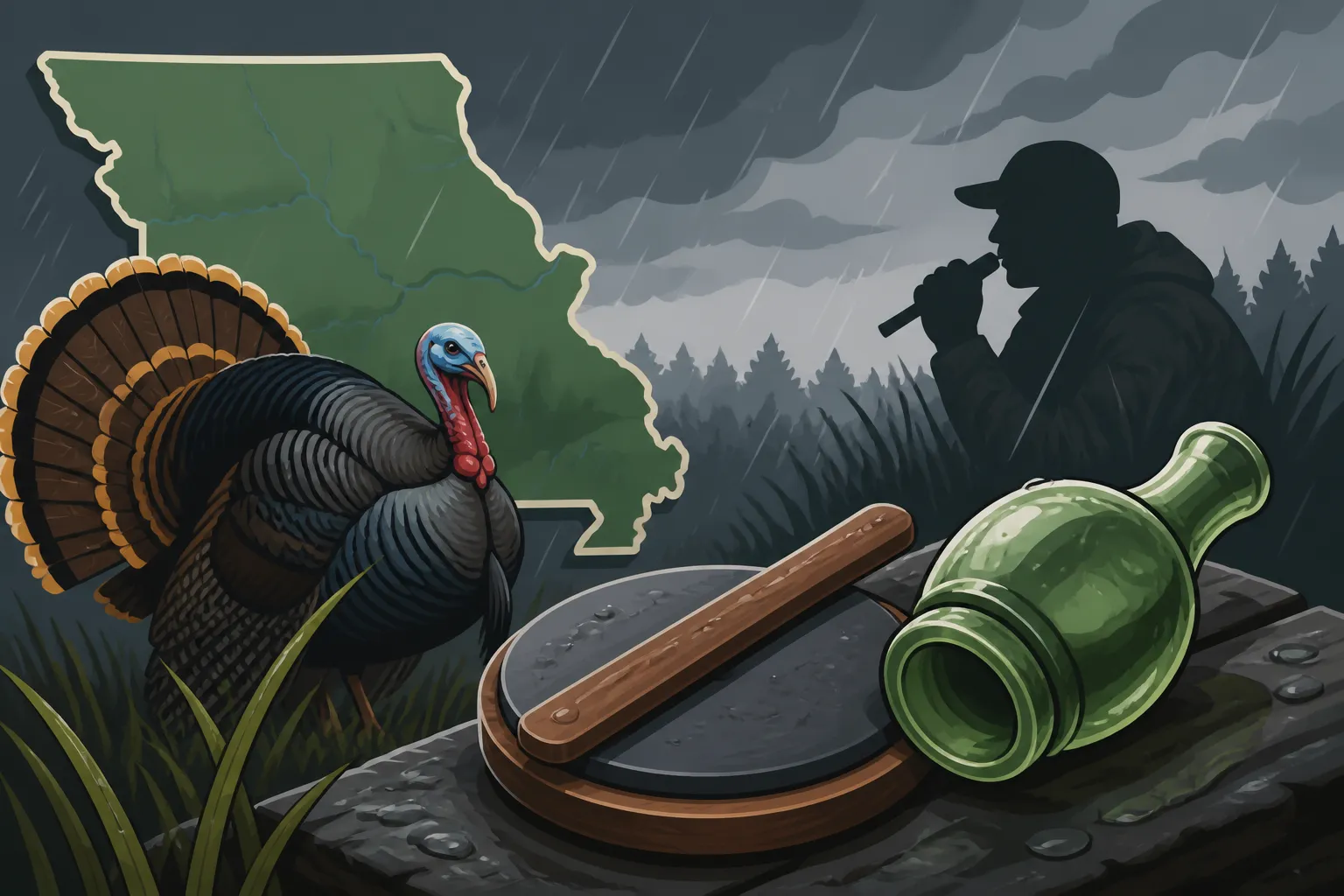
There's nothing quite as frustrating as waking up on a crisp Missouri spring morning, only to find the air heavy with moisture or, worse, a steady drizzle falling. You've got your favorite slate or glass call carefully packed, ready to sweet-talk a gobbler, but as soon as you try to make a sound, it's just a pathetic squeak or a dead silence. This guide is all about navigating those damp, challenging conditions so your friction calls don't let you down when a tom is just out of sight.
The Wet Weather Woes of Slate and Glass Calls
Many of us have a go-to slate or glass call. There’s something so satisfying about the realism you can achieve, the purrs, clucks, and yelps that just sound right when you’ve mastered them. But these calls, while fantastic in dry conditions, are incredibly vulnerable to moisture. It’s not just a minor inconvenience; it can completely silence your setup and leave you wondering why the turkeys aren't responding.
Friction Loss on the Playing Surface
The very magic of a pot call lies in the friction between the striker and the playing surface. Whether it's slate or glass, these materials need to be clean and relatively dry to produce consistent, realistic sounds. When moisture, even just high humidity, settles on the surface, it acts as a lubricant, drastically reducing the friction needed for the striker to "grab" and vibrate the pot.
Imagine trying to rub two pieces of sandpaper together when they're both slick with water. You're just going to slide, right? The same principle applies here. Your striker, whether wood or synthetic, can't get the necessary purchase on the wet call surface. This results in either a high-pitched, thin squeal that sounds anything but natural, or, even worse, absolutely no sound at all. It’s enough to make you pull your hair out when you know a gobbler is close.
Humidity's Impact on Sound Quality
Beyond just reducing friction, excessive humidity and actual rainfall can directly affect the quality of the sound your call produces. A properly conditioned slate or glass call in dry air produces sharp, clear notes with excellent volume and realistic tone. Introduce moisture, and those crisp sounds can become muffled, dull, or completely distorted. The moisture changes the way the sound waves resonate across the surface and through the pot.
This isn't just about volume; it’s about authenticity. Turkeys have incredible hearing, and they can discern subtle differences in calls. A flat, wet yelp might sound like an alarm or simply not appealing to a wary gobbler that has heard every hunter's trick in the book. Especially if you're trying to Call a Missouri Gobbler Off the Roost in the morning mist, a call that sounds off can send him flying in the opposite direction.
User Error in Slippery Conditions
Let’s be honest, it’s not always just the call’s fault. Wet weather can affect us too, leading to user error. When your hands are cold, wet, or just clammy from the humidity, maintaining the perfect grip and pressure on both the pot and the striker can become incredibly difficult. A slight slip of the striker, an uneven angle, or inconsistent pressure can all lead to poor sound production.
Hunting in the rain often means wearing gloves, which further reduces tactile feedback. You might think you're applying the right amount of pressure, but the wet conditions combined with your gear might be throwing your technique off. It's a double-whammy: the call isn't performing, and your ability to make it perform is also compromised. This is a common frustration, and it's important to acknowledge that sometimes the environment is just fighting against you.
Strategies for Using Friction Calls in Damp Weather
Just because the weather turns wet doesn't mean you have to abandon your favorite slate or glass call entirely. With a few smart strategies and some quick adjustments, you can often coax some decent sounds out of them, or at least keep them ready for a break in the weather.
Protecting Your Call in the Field
The absolute best defense against moisture is prevention. Keep your calls as dry as possible at all times. This sounds obvious, but it requires conscious effort in the field. Don’t just toss your call in an open pouch of your Turkey Vests and Seat Choices. Carry it in a sealed, waterproof bag or a dedicated, snug-fitting case. Some hunters even use small, hard-shell cases designed for electronics, providing excellent protection.
When you're actively calling, try to position yourself under some natural cover if possible – a thick pine tree, a dense cedar, or even just a large oak with a good canopy can make a huge difference. If you're Setting Up Against a White Oak, make sure the call is shielded from direct rain. If the ground is wet, never set your call directly on it. Use your knee, a small cloth, or even the brim of your hat to keep it elevated and dry. After each calling sequence, wipe down the surface and your striker with a dry cloth before returning it to its protective case. GoHunt articles often emphasize preparedness, and this is a prime example in the field.
Adapting Your Calling Technique
When moisture is present, you might need to adjust how you run your call. First, focus on keeping your striker dry. If your striker gets wet, it’s game over. Carry multiple strikers of different materials and ensure at least one is kept pristine for wet conditions. You can also try to "roughen up" the surface more frequently with sandpaper or a conditioning stone. This creates more texture, which can temporarily improve friction even with some moisture.
Your technique itself might need to change. Instead of long, sweeping strokes, try shorter, more deliberate motions. Apply slightly more pressure than usual, but be careful not to overdo it, as this can still lead to squeaks. Experiment with different parts of your striker tip – sometimes the very edge or a slightly different angle will find a drier spot on the call or provide enough bite to get a sound out. It's not ideal, but it's about making the best of a challenging situation.
Choosing the Right Striker for Wet Conditions
The striker you choose can make a significant difference in wet weather. Most hunters carry a variety of strikers for different tones, but in damp conditions, some materials perform better than others. Generally, a heavier, denser striker might be able to create more friction than a lighter one.
Here’s a quick comparison of common striker materials in wet conditions:
| Striker Material | Performance in Dry Weather | Performance in Wet Weather | Notes |
|---|---|---|---|
| Wood (e.g., Hickory) | Good all-around tone | Poor to Fair | Absorbent, loses friction easily when wet. |
| Dymondwood | Excellent, sharp sounds | Fair | Less absorbent than natural wood, but still suffers. |
| Carbon/Graphite | Good, unique tones | Good | Repels water better, maintains some friction. |
| Acrylic/Plastic | Good, crisp notes | Good to Excellent | Non-absorbent, often performs best in rain. |
| Aluminum | Less common, aggressive | Good to Excellent | Very durable, often less affected by moisture. |
For serious wet-weather hunting, an acrylic or carbon/graphite striker is often your best bet, as they don't absorb water like wood and can maintain more friction on a damp surface. Keep one of these specifically for rainy days, and ensure its tip is always conditioned and ready. Many experienced hunters will have a "rainy day" striker tucked away, knowing their primary wood striker will be next to useless.
Call Maintenance and Preparation for Moisture
The battle against wet weather for your friction calls starts long before you ever step foot in the timber. Proper maintenance and preparation can drastically improve their performance when the inevitable dampness sets in.
Pre-Hunt Waterproofing and Conditioning
Before the season even begins, think about how you can protect your calls. While you can't truly "waterproof" the playing surface of a slate or glass call without impacting its sound, you can certainly protect the pot itself. Some hunters will apply a light sealant to the wood pot's exterior (avoiding the playing surface and sound board) to prevent warping and water absorption into the wood, which can dull the sound.
More importantly, consistently condition your playing surface. For slate, this means regularly sanding with fine-grit sandpaper (around 120-220 grit) in one direction to create a textured, chalk-like finish. For glass or crystal, use a conditioning stone or even a Scotch-Brite pad to rough up the surface. This texture is what creates friction. The more consistent the texture, the better it will perform when damp. Always have a conditioning tool readily accessible in your gear & optics bag, even if you’re using a tool from brands found on GoHunt.
Drying and Care Post-Hunt
After a wet hunt, whether it was a light dew or a torrential downpour, proper drying and care are crucial to extending the life and performance of your calls. Never, ever put a wet call back into a sealed case or bag. This will trap moisture, leading to mildew, warping of wood components, and permanent damage to the playing surface.
Instead, take your calls out of their cases as soon as you get home. Wipe them down thoroughly with a dry cloth, then leave them out in a well-ventilated area to air dry completely. Avoid direct heat sources like radiators or open flames, as extreme heat can also cause warping or cracking. Once completely dry, re-condition the playing surface if needed, and then return them to their protective storage. This simple step can save your calls from irreversible damage.
Storage Tips for Longevity
Long-term storage is just as important as in-season care. Store your calls in a consistent, moderate environment – avoid attics, garages, or basements where temperature and humidity fluctuate wildly. A climate-controlled closet or cabinet is ideal. Keep them in their individual cases or pouches to prevent them from rubbing against each other, which can scratch surfaces or wear down strikers.
Consider storing strikers separately from the pot calls if they have rubber O-rings, as these can sometimes react with certain pot materials over long periods. Having a dedicated box or drawer for all your Turkey Calls Worth Carrying in Missouri will help keep them organized, protected, and ready for action when next spring rolls around, regardless of whether it's dry or dripping wet.
Alternative Calls for Truly Miserable Weather
While we love our friction calls, there are times when Mother Nature just won't cooperate, and trying to get a consistent sound from a slate or glass call in a downpour is a fool's errand. This is where having a backup plan with different call types becomes invaluable.
Mouth Calls Diaphragm Calls
Hands down, the absolute best call for wet weather is a mouth call, also known as a diaphragm call. These calls are completely impervious to moisture because they are used inside your mouth. You control the sound with your tongue and breath, and the reeds are protected from the elements. This means you can produce perfect yelps, clucks, and purrs whether it's bone dry or pouring rain.
Mouth calls also offer the distinct advantage of being hands-free, which is incredibly useful in any hunting scenario, but especially so in wet conditions where you might want to keep your hands tucked away for warmth or to keep your gun ready. They allow you to maintain stealth, make subtle calls, or even run-and-gun through thick cover while constantly calling. If you're going to hunt Missouri turkeys, especially when planning a Run-and-Gun Turkey Tactics in the Missouri Ozarks style hunt, always have several mouth calls in your vest.
Box Calls with Caveats
Box calls are another type of friction call, and they also suffer from wet weather, but sometimes to a slightly lesser degree than pot calls, depending on their construction. A well-made box call, especially those treated with wax or sealant on the outside, can resist moisture better than an open pot call. However, the lid and paddle surface still rely on friction, and a wet paddle rubbing against a wet box can quickly turn into a squealing mess.
If you absolutely must use a box call in damp conditions, keep it meticulously dry. Wipe it down frequently, protect it from direct rain, and ensure the paddle and lip are free of moisture. Some hunters will even carry a small piece of chalk to re-chalk the lid for better grip, although this is a short-term fix. It's not ideal, but in a pinch, a carefully managed box call can sometimes work where a pot call has completely failed.
Pot Call Alternatives with Different Surfaces
Even within the category of pot calls, there are surfaces that perform better in moisture. While slate and glass struggle, calls made with crystal or aluminum surfaces often hold up better. These materials are generally less absorbent and can maintain friction more effectively when damp. A crystal call, for instance, might still get slick in a downpour, but it might just require a more aggressive conditioning and a heavier striker to produce a sound, rather than completely shutting down.
If you know you'll be hunting in historically wet areas or during a rainy forecast, consider adding a crystal or aluminum pot call to your arsenal. They offer similar versatility to slate and glass but with a bit more resilience against the elements. Always keep them conditioned and carry an appropriate striker, perhaps an acrylic one, to maximize your chances of getting a gobbler to answer, even if the skies are grey and the woods are dripping.
| Call Type | Primary Advantages | Primary Disadvantages | Wet Weather Performance |
|---|---|---|---|
| Mouth/Diaphragm | Hands-free, versatile, realistic | Requires practice, can be finicky | Excellent |
| Box Call | Easy to learn, loud, versatile | Bulky, can lose realism quickly | Poor to Fair |
| Slate Call | Realistic purrs and clucks, soft | Very susceptible to moisture | Poor |
| Glass Call | Sharp yelps, good volume, clear | Very susceptible to moisture | Poor |
| Crystal Call | Loud, clear, slightly more robust | Still affected by heavy rain | Fair to Good |
| Aluminum Call | Abrasive, good for aggressive calls | Can be shrill if over-called | Good |
Ultimately, being prepared for Missouri's unpredictable spring weather means carrying a variety of calls. While your beloved slate or glass call might be your favorite for those perfect, crisp mornings, having a reliable mouth call or a more weather-resistant pot call as a backup will ensure you're never completely silenced by a little rain.
Disclaimer
This article is for general informational purposes only and does not constitute professional advice. Laws, prices and regulations vary by location and change over time. Consult a qualified professional for guidance on your specific situation.