Bone Saws Versus the Gutless Method
Every Missouri deer hunter faces that moment: the shot is good, the deer is down, and now the real work begins. Whether you're miles deep in the Mark Twain National Forest or just a short drag from the truck on a local conservation area, the question of how to efficiently and cleanly process your harvest is critical, especially when the mercury is still climbing in the early season. This guide will dive deep into two primary field dressing philosophies—the traditional bone saw method versus the increasingly popular gutless method—helping you decide which approach best suits your hunting style and the conditions you often encounter in the Show-Me State.
The Traditional Approach: Relying on the Bone Saw
For generations, the bone saw has been a staple in many hunters' field dressing kits. It's the tool that signals a commitment to a thorough, often more conventional, breakdown of an animal in the field. But like any tool, it has its strengths and weaknesses, and understanding them is key to deciding if it's right for your Missouri hunts.
When a Bone Saw Shines and When It Doesn't
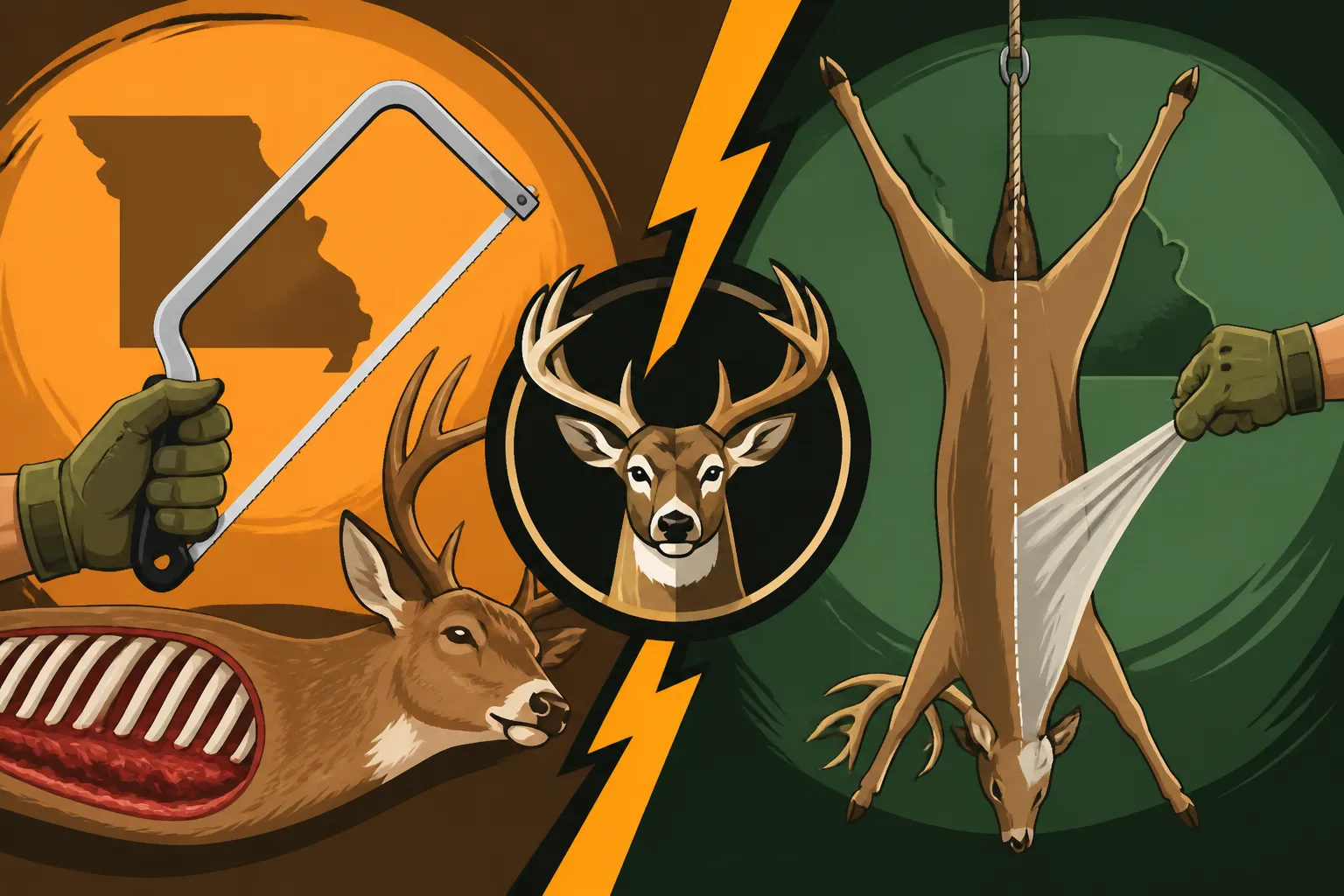
A bone saw truly shines when you're dealing with larger game or when your primary goal is to split the carcass down the middle for faster cooling or easier access to specific cuts. Picture this: you've just taken a magnificent buck during the November firearms portion, and it's a brisk 35 degrees. You're relatively close to your truck, maybe a quarter-mile drag, and you have the luxury of time and space. In this scenario, gutting the deer, splitting the sternum to open the chest cavity wide, and perhaps even splitting the pelvis for maximum air circulation, can be incredibly effective. The saw allows for clean, precise cuts through bone that even the sharpest knife struggles with, like when you're trying to separate the pelvic bone to get to the bladder and rectum cleanly. This method facilitates a rapid cool-down, which is paramount for meat quality, especially in Missouri's often unpredictable early-season warmth. You want to avoid that "gamey" taste, and quick cooling is your best defense.
However, the bone saw isn't always the hero. Imagine that same scenario, but it's 75 degrees during the archery opener, and you're a mile deep in rough Ozark terrain. Now, the thought of gutting an animal, dealing with the entrails, and then dragging or packing out an entire carcass—even a split one—becomes daunting. The saw itself adds weight to your pack, and using it can be messy, spraying bone dust and fluids. In thick brush or on uneven ground, getting good leverage for a clean saw cut can be a challenge. Plus, the extra time spent on the traditional gutting process means more exposure for the meat to warmth, dirt, and flies. For solo hunters far from the truck, the sheer physical effort of this method, especially in areas like the rocky hills found when Deer Hunting the Missouri Ozarks, can be a significant deterrent.
Essential Bone Saw Considerations for Missouri Hunters
If you decide to carry a bone saw, there are a few things to keep in mind specific to hunting in Missouri. First, consider the type of saw. You'll find compact, folding saws designed for hunters that are far more practical than a full-sized carpentry saw. These often have a coarse blade designed to rip through bone efficiently. Brands like Wyoming Saw or Gerber make excellent, lightweight options that can tuck into a pack without much fuss.
Blade maintenance is crucial. A dull saw is a dangerous and frustrating saw. While you might not sharpen it in the field, ensuring it's razor-sharp before you leave camp is essential. Carrying a small, rigid blade cover is also a good idea to protect both the blade and your pack contents.
When using a bone saw, cleanliness is a factor. You’re opening the body cavity, which means potential contact with stomach contents or other internal organs. While the goal is always a clean operation, the risk of contamination is higher than with methods that avoid disturbing the gut pile. Be prepared with plenty of paper towels or wipes, and consider wearing gloves. The process can be a bit more "gory," which some hunters prefer to avoid, especially if they're new to the activity or have a sensitive stomach. Remember, any method requires diligence to ensure your meat stays clean and uncontaminated. This is especially true if you are doing Field Dressing a Deer in Warm Weather.
The Modern Alternative: The Gutless Method
The gutless method has gained significant traction, especially among backcountry hunters and those who prioritize speed, cleanliness, and a lighter pack-out. It fundamentally changes how you approach breaking down a deer, leaving the internal organs largely undisturbed.
Understanding the Gutless Method's Core Principles
At its heart, the gutless method involves skinning and quartering the animal without ever opening the abdominal cavity. Instead of removing the guts, you leave them inside the carcass. This means less mess, no foul odors from ruptured intestines, and a much quicker process overall. The primary goal is to remove all the prime meat—the backstraps, tenderloins, quarters, and neck meat—and leave the bones and entrails behind. This method is particularly popular for hunters on Public Hunting Land in Missouri where long pack-outs are common, or when hunting in warm conditions where rapid meat cooling is absolutely critical.
The philosophy hinges on efficiency and minimizing effort where it's not strictly necessary for meat recovery. By not gutting, you eliminate a significant portion of the traditional field dressing process that can be time-consuming and messy. Instead, you focus directly on separating the muscle groups from the bone, wrapping them in Game Bags for Early Archery Heat, and getting them cooled down. This approach is a game-changer for those who find themselves having to pack an animal out alone or over challenging terrain, as described in the difficulties of Getting a Deer Out of a Hollow Alone.
Step-by-Step for Missouri Deer
Let's walk through how you might apply the gutless method to a typical Missouri whitetail.
- Positioning: First, roll the deer onto its side. You'll work one side at a time, then flip it.
- Skinning: Make an incision along the spine from the head to the tail on the top side. Then, make cuts around the base of the neck, and around the leg joints (just above the knee on the front, and above the hock on the back). Carefully begin to peel and cut the hide away from the meat. Work your way down towards the belly line, exposing the backstrap, shoulder, and ham.
- Front Shoulder Removal: Once the shoulder is exposed, you'll find it's not attached by bone to the rest of the skeleton. It's essentially a muscle group "floating" within the hide. Simply cut the connective tissue that holds it to the ribs and spine, freeing the entire shoulder.
- Backstrap Removal: Now, locate the backstrap running along the spine. Carefully cut along the top of the spine and then along the bottom of the backstrap, separating it from the ribs. Peel and cut this prime cut free.
- Rear Ham Removal: With the hide mostly off one side, access the large ham. You'll cut deep into the hip joint, carefully severing the ligaments and muscles that connect it. It's often easier to make cuts from the inside of the ham, working around the ball joint until it can be pried free.
- Flipping and Repeating: Once one side is completely de-boned (or quartered, if you prefer bone-in quarters), roll the deer over and repeat the entire process on the other side.
- Tenderloins (Optional but Recommended): The tenderloins are inside the body cavity, running along the underside of the spine. To access them without gutting, you can make a careful incision along the inside of the flank, reaching into the cavity to cut them free. This requires a steady hand and a good understanding of anatomy but is entirely doable without opening the main gut cavity.
- Neck Meat: Don't forget the neck meat! It's excellent for grinding or stew and can be carefully carved off the cervical vertebrae.
- Game Bags and Cooling: As soon as you remove a piece of meat, place it into a breathable game bag. This is critical for keeping it clean and allowing it to cool. Hang the bagged meat from a tree limb or bush to allow air circulation. This drastically improves the cool-down process compared to leaving meat on the ground. Game Bags for Early Archery Heat are specifically designed for this purpose.
Comparing the Two: Which Method Suits Your Hunt?
Choosing between the bone saw and gutless method isn't about one being inherently "better" than the other. It's about finding the best fit for your specific hunting scenario in Missouri.
Efficiency, Cleanliness, and Pack-Out Considerations
When it comes to efficiency, the gutless method often wins, particularly for single hunters or those operating in challenging terrain. Eliminating the gutting process significantly cuts down on the time spent with the carcass. This time saved is precious, especially during warmer hunting days where every minute counts in preserving meat quality. Imagine a Missouri bowhunting opener in September when temperatures can still hit the 80s; quickly getting the hide off and the meat into game bags can make all the difference in preventing spoilage. You can read more about meat care in such conditions in Field Dressing and Cooling in Early-Season Heat.
Cleanliness is another major factor. The traditional gutting method, while effective, can be quite messy. Ruptured intestines, stomach contents, and blood are all possibilities. While good technique minimizes this, the risk is always there. The gutless method, by leaving the internal organs intact, dramatically reduces the chance of contaminating your meat with gut fluids. This is a huge advantage for those who prioritize pristine meat handling.
For pack-out, the gutless method is undeniably superior, especially for public land hunting or when you're far from vehicle access. By leaving the heavy bones and guts behind, you significantly reduce the weight you need to carry. Instead of dragging an entire deer, you're packing out manageable portions of de-boned meat. This can turn a miserable multi-hour drag into a much more palatable trip with a good Packs for a Day on Public Land or Frame Packs for Hauling Meat. For those exploring remote corners of the Show-Me State, packing out meat in pieces is often the only realistic option.
| Feature | Bone Saw Method | Gutless Method |
|---|---|---|
| Effort (Field) | Moderate to High (gutting, sawing, dragging) | Low to Moderate (skinning, de-boning) |
| Effort (Pack-Out) | High (heavy carcass, full quarters) | Low (de-boned meat, lighter portions) |
| Speed | Slower (more steps, including gutting) | Faster (direct meat removal) |
| Cleanliness | Moderate (risk of gut contamination) | High (guts remain intact) |
| Gear Needed | Knife, Bone Saw, Rope/Drag | Knife, Game Bags, (Optional) Small Boning Knife |
| Best For | Close to vehicle, cold weather, larger game | Backcountry, warm weather, solo hunters |
| Meat Quality | Good (if cooled quickly) | Excellent (if handled clean and cooled fast) |
| Public Land | Less ideal for long pack-outs | Highly recommended for remote public land |
Gear Implications and Preparation
Your choice of method will directly influence the gear you need to carry.
For the Bone Saw Method:
You'll need a reliable hunting knife, of course, but also a good quality bone saw. Many hunters opt for a folding camp saw that can handle both wood and bone. A pair of rubber gloves is a must for hygiene. If you plan to drag the deer out, a sturdy drag rope is essential. You might also want a small tarp or plastic sheet to keep the meat clean while processing.
For the Gutless Method:
The critical piece of gear here, beyond a sharp hunting knife, is a set of good quality game bags. These are purpose-built, breathable bags that protect your meat from insects, dirt, and debris while allowing it to cool. Carrying a few different sizes is smart – smaller ones for backstraps and tenderloins, larger ones for quarters. Some hunters also carry a smaller, flexible boning knife in addition to their primary knife, as it can be more precise for separating muscle groups. A sturdy pack with a frame that can handle heavy, potentially bloody, meat is also key, as you'll be carrying those quarters out yourself.
Regardless of your chosen method, always have a first aid kit handy, especially when using sharp tools far from help. And before you even head out, take advantage of modern tools like GoHunt to scout your area. Analyzing aerial photos on GoHunt can help you identify potential game trails, dense cover where a deer might fall, and the easiest (or toughest) routes for a pack-out, influencing your field dressing strategy. You might discover a steep hollow that makes the gutless method far more appealing, or a relatively flat ridge line where a traditional drag would be manageable. Planning your entry routes and considering egress points on GoHunt before you set foot on public land can make all the difference, particularly when anticipating the need to Scouting Missouri Public Land Before Season. This foresight can even help you predict areas that might experience Hunting Pressure on Missouri Public Ground.
In conclusion, both the bone saw and the gutless method have their place in the Missouri hunter's toolkit. The traditional saw method offers a familiar, thorough approach, best suited for situations where distance and temperature are not major concerns. The gutless method provides a faster, cleaner, and lighter solution, ideal for remote hunts, warm weather, or when you need to quickly get your meat cooled and out of the woods. Spend some time practicing your chosen method, whether it's on a harvested animal or even just by visualizing the steps, so that when the moment comes, you're prepared to handle your hard-earned harvest responsibly and efficiently.
Disclaimer
This article is for general informational purposes only and does not constitute professional advice. Laws, prices and regulations vary by location and change over time. Consult a qualified professional for guidance on your specific situation.