Field Dressing Knives Worth Carrying
Every Missouri hunter has faced that moment: a successful harvest, a beautiful animal on the ground, and then the realization that the next crucial step is field dressing. It’s a messy, but necessary, part of the hunt, and having the right knife can make all the difference between a clean, efficient job and a frustrating, even dangerous, struggle. This guide is all about helping you understand what makes a great field dressing knife and how to choose one that will serve you reliably season after season in Missouri’s diverse hunting environments.
The Anatomy of a Good Field Dressing Knife
When you're out in the timber, whether you're deer hunting the Missouri Ozarks or stalking in the big-buck farm country of North Missouri, your knife is an extension of your hand. It needs to perform flawlessly under pressure, often in less-than-ideal conditions. Thinking about the components individually can help you understand why certain designs excel.
Blade Shape and Edge Retention
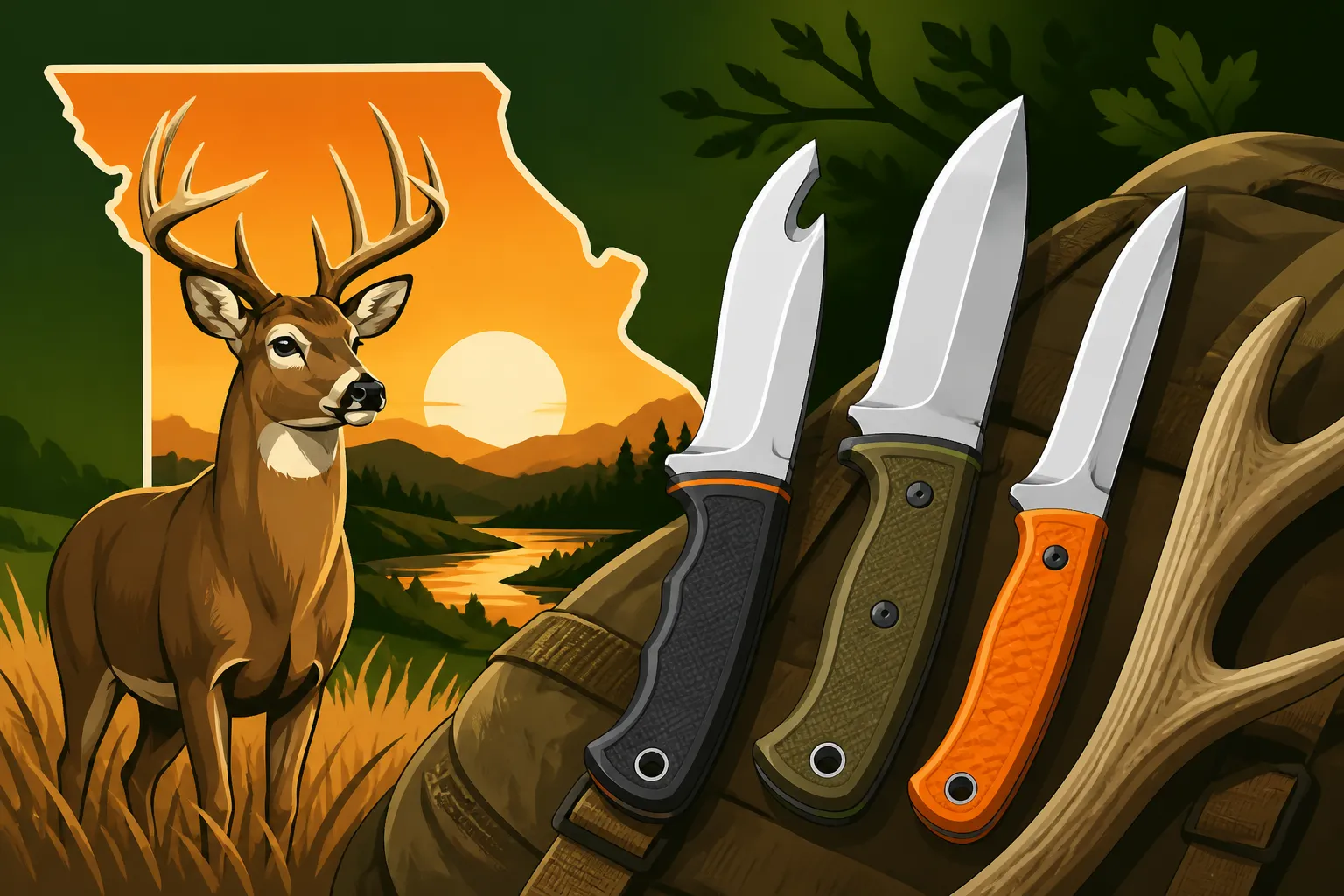
The blade is, of course, the heart of any knife. For field dressing, you're primarily looking for a blade that can make precise cuts, retain its sharpness through a fair amount of work, and be easy to clean. Many hunters instinctively gravitate towards a large, intimidating blade, but often, a shorter blade, around 3.5 to 4.5 inches, with a drop-point or gut hook profile, is far more practical and safe. A drop-point blade offers a strong, controllable tip for initial skinning cuts and plenty of belly for long, sweeping motions. The slight curve makes it excellent for separating hide from muscle without digging too deep.
Edge retention is paramount. Imagine being halfway through an animal and your knife starts to dull, making every cut harder and more dangerous. This is where good steel comes in, but also how the blade is ground. A well-designed blade will hold its edge through an entire deer without needing a touch-up, though carrying a small sharpener is never a bad idea. For detailed tasks like opening the cavity without puncturing organs, a fine, sharp tip is invaluable. Some knives even have a secondary, finer edge near the tip specifically for these delicate operations. When you're working quickly, especially when you're trying to get a deer out of a hollow alone, a reliable, sharp edge makes the process smoother and reduces the chance of contamination.
Handle Ergonomics and Grip Security
A knife's handle might seem secondary, but it's critical for safety and control, especially when your hands are cold, wet, or bloody. You want a handle that feels like it belongs in your hand, offering a secure, non-slip grip even when things get messy. Materials like textured rubber, G10, or even some stabilized woods can provide excellent traction. Avoid handles that are too thin, too slick, or have sharp edges that could create hot spots during prolonged use.
The shape of the handle also plays a huge role. Finger choils, a guard, and a pommel can help prevent your hand from slipping forward onto the blade or backward off the handle. A good handle allows for multiple grip positions – a strong grip for tough cuts, and a lighter, more precise grip for delicate work. Many hunters, myself included, have learned the hard way that a beautiful, slick handle is a liability in the field. When you're out there, trying to handle a large whitetail, the last thing you want is a knife that feels like it's going to slip. This is especially true if you're working in the cold, late-season conditions, or if you're trying to field dress quickly to start Getting Deer Meat Cooled Quickly before the meat starts to spoil.
Material Matters: Stainless Steel vs. Carbon Steel
The type of steel used for your knife blade is a fundamental decision that impacts edge retention, ease of sharpening, and corrosion resistance. Generally, you'll find field dressing knives made from either stainless steel or carbon steel, each with its own advantages and disadvantages for the Missouri hunter.
Stainless steels, often alloys like 440C, VG-10, S30V, or 154CM, are highly favored for their excellent corrosion resistance. This is a huge benefit when you're dealing with blood and moisture in the field. They don't rust easily, which simplifies cleanup and maintenance. However, many stainless steels can be a bit more challenging to sharpen to a razor-edge and might not hold that edge quite as long as some carbon steels, depending on the specific alloy and heat treatment. For the average hunter who wants a low-maintenance, reliable blade, a good quality stainless steel knife is often the best choice, requiring less fuss after a successful hunt.
Carbon steels, such as 1095 or O1 tool steel, are renowned for their superior edge retention and ease of sharpening. You can often get a screaming sharp edge on a carbon steel blade, and it tends to hold that edge through a lot of work. The trade-off is that carbon steel is much more susceptible to rust and staining. If you choose a carbon steel knife, you'll need to be diligent about cleaning it immediately after use, drying it thoroughly, and perhaps even applying a light coat of oil to prevent corrosion, especially if you're hunting in wet conditions or plan to store it for a while. For hunters who prioritize maximum sharpness and don't mind the extra maintenance, carbon steel can be an outstanding performer. Ultimately, both can be excellent choices, but understanding their characteristics helps you pick the right tool for your specific needs and habits.
Fixed Blades vs. Folders: Which is Right for You?
The debate between fixed blade and folding knives has raged among hunters for decades, and for good reason. Each style offers distinct advantages and drawbacks, particularly when it comes to the messy business of field dressing. The choice often comes down to personal preference, the type of hunting you do, and your priorities for safety and convenience.
The Enduring Reliability of Fixed Blades
Fixed blade knives are often considered the gold standard for field dressing, and for many good reasons. Without any moving parts, they are inherently stronger and more reliable than folders. There's no hinge to fail, no lock to jam, and no risk of the blade folding unexpectedly, which is a major safety concern when you're knee-deep in an animal. This robust construction makes them ideal for tougher tasks, like separating joints or if you needed to do some light chopping in an emergency. They're also typically easier to clean thoroughly, as blood and tissue can't get trapped in a locking mechanism or hinge, reducing the risk of contamination.
The full tang design, where the blade steel extends through the entire handle, provides maximum strength and balance. This translates to better control and less hand fatigue during prolonged use. For hunters who prioritize absolute dependability and ease of cleaning, especially if they anticipate heavier use or frequent field dressing, a quality fixed blade is usually the top recommendation. Brands like Benchmade and Outdoor Edge are known for their reliable fixed-blade hunting knives. While they might take up a bit more space on your belt or in your pack, the peace of mind they offer in critical moments is often worth the extra bulk. When you're faced with Recovering a Deer in Steep Ozark Ground or Getting a Deer Out of a Hollow Alone, the confidence a solid fixed blade provides is invaluable.
The Convenience and Compactness of Folding Knives
Folding knives, on the other hand, shine in their portability and convenience. They can be safely carried in a pocket or clipped to a belt without the need for a sheath, making them incredibly discreet and accessible. Modern folding knives feature highly advanced locking mechanisms – like liner locks, frame locks, or Axis locks – that offer surprising strength and security, significantly reducing the risk of accidental closure. They are a popular choice for everyday carry and can certainly handle field dressing tasks for smaller game or even deer, provided they are well-designed and maintained.
However, the inherent complexity of a folding mechanism does introduce potential vulnerabilities. The hinge and lock can become gunked up with blood, hair, and tissue, making them difficult to clean thoroughly in the field. This can lead to hygiene issues or even compromise the locking mechanism over time. While many hunters successfully use folders for field dressing, it requires more diligent cleaning and inspection to ensure safety and functionality. For a hunter who values minimal bulk and easy carry, and is meticulous about maintenance, a strong, well-designed folder from a reputable brand can be a good option for field dressing.
Hybrid and Specialty Knives
Beyond the traditional fixed blade and folder, the market has expanded to include hybrid designs and specialty knives tailored for specific field dressing challenges. You might encounter knives with interchangeable blades, for example. These systems allow you to carry one handle and switch out different blades – a robust drop-point for skinning, a gut hook for opening the cavity, or even a small saw for cutting through bone. The main advantage here is versatility and the ability to always have a razor-sharp edge by simply swapping a dull blade for a fresh one. This can be particularly appealing for folks who don't enjoy sharpening in the field or want specific tools for different stages of the process.
Another popular specialty is the dedicated gut hook tool, sometimes integrated into a blade or as a standalone tool. These are designed to open the abdominal cavity with minimal risk of puncturing intestines. While some hunters swear by them, others find them superfluous. For precise tasks like separating hide from meat, or when working in tight spots, a sharper, thinner blade usually performs better. When planning your gear, considering what a brand like GoHunt offers in terms of reviews and specific product types can help you find these niche solutions and understand how they fit into the broader spectrum of field dressing tools. Ultimately, the right specialty knife can make certain aspects of field dressing easier, but it rarely replaces the need for a solid, all-around utility blade.
Essential Features Beyond the Blade
A field dressing knife is more than just a sharp piece of steel; it's a tool designed for a specific, often demanding, job. While the blade and handle are paramount, several other features and considerations can significantly enhance your experience and safety in the field.
Gut Hooks and Saw Backs: Are They Necessary?
You'll often see hunting knives equipped with gut hooks or saw backs, and it's natural to wonder if these features are truly useful or just marketing gimmicks. A gut hook is a small, curved protrusion, usually on the back of the blade near the tip, designed to open the abdominal cavity without piercing the viscera. When used correctly, it can indeed be very efficient for making that initial cut, gliding just under the skin and muscle. This minimizes the risk of puncturing the stomach or intestines, which can contaminate the meat and make cleanup much more difficult. Many hunters find them incredibly useful, especially for larger game like deer, allowing for a swift and clean opening.
Saw backs, on the other hand, are less commonly used for field dressing itself. They typically consist of serrations on the spine of the blade. While they can be handy for cutting through small bones like the sternum or pelvis, many hunters prefer to use a dedicated bone saw for these tasks, as a saw-back blade can be awkward and less effective. Plus, the serrations can make the knife harder to clean and can sometimes snag on clothing or gear. For most Missouri deer hunters, a sharp, sturdy blade is sufficient for all the necessary cuts, and an actual bone saw is a more efficient tool for bone work. If you're on a multi-day trip or doing something like Butchering a Deer at Missouri Deer Camp where a saw isn't readily available, a saw back could have a niche utility, but it's far from essential.
Sheaths, Carrying, and Safety
A good knife is only as good as its sheath. The sheath is vital for protecting both the blade and, more importantly, you. A well-designed sheath will hold the knife securely, preventing it from falling out, yet allow for easy, one-handed drawing when needed. Materials like Kydex, high-quality leather, or heavy-duty nylon are common. Kydex offers excellent retention and is impervious to moisture, while leather can be more traditional and quieter.
When considering how you'll carry your knife, think about accessibility and comfort. Belt-mounted sheaths are common, but ensure they don't interfere with your pack straps or other gear. Some hunters prefer to carry their knives in a pack for extra security, especially if they are covering rough terrain like in the Ozark hills. The key is that the knife should be protected from the elements and your body, and you should be able to access it quickly and safely. Never just toss a bare knife into your pack, especially when hunting is done alone, as it can be a hazard to reach for it or damage other gear. Safety is paramount, and a quality sheath is your first line of defense. Boots and Packs for Ozark Country discusses the general gear for rugged terrain, and a secure knife sheath is definitely part of that essential safety equipment.
Maintenance and Sharpening in the Field
Even the best knife will eventually dull, and knowing how to maintain and sharpen it is a skill every hunter should possess. While you might not do a full reprofiling in the field, a quick touch-up can restore a working edge and make field dressing much safer and more efficient. Small, portable sharpening systems, such as ceramic rods, diamond plates, or even a fine sharpening steel, are excellent additions to your pack.
Regular cleaning is also non-negotiable. After field dressing, thoroughly clean your knife with soap and water, paying special attention to any crevices on the handle or around a folding mechanism. Dry it completely to prevent rust, especially if it’s carbon steel. Even stainless steel can develop pitting if left with blood and moisture for too long. A well-maintained knife not only performs better but also lasts longer. When you're dealing with Field Dressing a Deer in Warm Weather, swift and thorough cleaning is even more critical to prevent bacterial growth on the knife itself before you move to processing the meat. Consider taking a small brush along for scrubbing if your knife has intricate handle textures or a gut hook.
Choosing Your Perfect Field Dressing Companion for Missouri Conditions
Selecting the right field dressing knife isn't just about finding something sharp; it's about choosing a tool that perfectly aligns with your hunting style, the game you pursue, and the challenging conditions that Missouri can throw at you.
Matching Your Knife to Your Quarry and Terrain
Missouri offers an incredible variety of hunting opportunities, from deer and turkey to small game like rabbits and squirrels. The "best" knife for an elk hunt in the Rockies might be overkill for a squirrel in a hickory tree. For the majority of Missouri deer hunters, a blade length between 3.5 and 4.5 inches is a sweet spot – long enough for efficient work on a whitetail, yet short enough for control and precision. A sturdy fixed blade is often preferred for deer, especially if you anticipate working quickly or in cold conditions. When you're Bowhunting Missouri's Four-Month Archery Season, you might be dressing a deer in warm September weather, making cleanliness and quick work paramount, which a clean-cutting fixed blade excels at.
If you primarily hunt smaller game or fall turkeys, a slightly smaller, more delicate blade might be more appropriate. For example, a small fixed blade like a Nessmuk style or even a sharp folder could handle a rabbit or squirrel with ease. Consider the terrain too: if you're deep in the rugged Ozarks, where you're constantly climbing and scrambling, a lightweight, secure fixed blade in a bomb-proof sheath might be preferable to a bulkier option that could get in the way. In the open farm country of North Missouri, where you might have easier access to your vehicle, a slightly larger knife might be less of a concern. Think about what you're generally targeting and the environment you'll be in, and let that guide your selection.
Budgeting for Quality and Durability
Like any piece of hunting gear, field dressing knives range widely in price. It's tempting to grab the cheapest option, but when it comes to a tool that needs to be reliable and safe under stress, investing in quality pays dividends. A well-made knife from a reputable brand will use better steel, have superior heat treatment, and feature more ergonomic and durable handle materials. These factors contribute directly to edge retention, ease of sharpening, and overall longevity.
You don't necessarily need to break the bank for a good knife, but be wary of "bargain bin" options. A mid-range knife, perhaps in the 50-150 dollar range, will often provide an excellent balance of performance and value. Look for brands known for their hunting knives and check out reviews from other hunters. A knife is an investment that, with proper care, can last a lifetime, becoming a trusted companion on countless hunts. Spending a little more upfront can save you frustration, potential injury, and the need to replace a flimsy blade down the road. Tools like GoHunt can provide reviews and comparisons for various brands and models, helping you make an informed decision within your budget.
Personal Preference and Trial
Ultimately, the "best" field dressing knife is a highly personal choice. What works perfectly for one hunter might not feel right for another. The size of your hands, your grip strength, and even your personal aesthetics all play a role. Don't be afraid to handle different knives at a sporting goods store. See how they feel in your hand, how they balance, and if the grip is secure. If you can, talk to other experienced hunters about their preferred knives and why.
Sometimes, it takes a few seasons and a bit of trial and error to truly discover your ideal field dressing companion. You might start with a versatile fixed blade and later decide you prefer a gut hook or a smaller, dedicated caping knife for finer work. Keep in mind that a good knife, like any essential piece of gear for Missouri's Eleven-Day November Firearms Deer Season, will feel like an extension of yourself when you’re out in the woods. It should inspire confidence, not concern. Take your time, do your research, and choose a knife that you'll be proud to carry and rely on for many successful Missouri hunts to come.
Disclaimer
This article is for general informational purposes only and does not constitute professional advice. Laws, prices and regulations vary by location and change over time. Consult a qualified professional for guidance on your specific situation.