Where North Missouri Bucks Bed
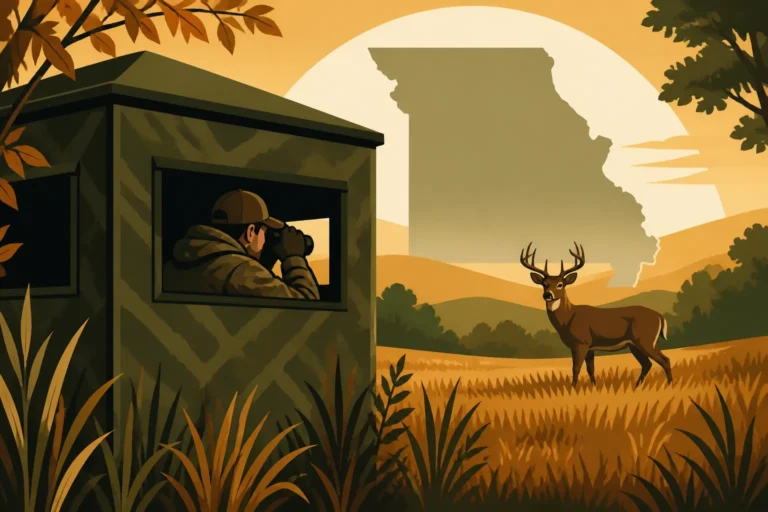
Finding those elusive big bucks in North Missouri can feel like a lifelong puzzle. They aren't just lounging around in the open fields; they're masters of concealment, disappearing into the subtle folds of the landscape. This guide is dedicated to pulling back the curtain on where North Missouri bucks truly bed, helping you decipher their preferred sanctuaries and ultimately, increasing your chances of a successful hunt.
Understanding the Unique Landscape of North Missouri Deer Bedding
North Missouri's deer habitat is distinctly different from the heavily timbered Ozarks. Here, it's a mosaic of expansive row crops, interspersed with timbered draws, brushy fencerows, and small woodlots. This creates a unique challenge and opportunity for deer hunters. Bucks in this agricultural heartland learn to adapt, using seemingly sparse cover to their advantage. Their bedding choices are heavily influenced by the need for security, thermal regulation, and proximity to abundant food sources. It's a game of hide-and-seek where the deer often have the upper hand, but with careful observation and an understanding of their patterns, you can gain an edge.
The Influence of Row Crops and Agricultural Features
When you think North Missouri, you likely picture endless corn and soybean fields, and you'd be right. These agricultural expanses aren't just food sources; they provide incredible bedding opportunities for bucks, especially during the early and mid-season. A mature cornfield, for instance, offers unparalleled security cover, often allowing deer to bed right in the middle of a section, completely out of sight from any road or vantage point. They can lie down, feel the wind, and hear anything approaching, all while being surrounded by their primary food source. Once the corn is chopped or the beans are harvested, this dynamic shifts dramatically, forcing deer to find new refuges.
However, it's not just the standing crops themselves. The edges of these fields, especially where they meet a brushy ditch or a small timber patch, become prime real estate. Bucks will often bed just inside the timber line, on the leeward side of the wind, keeping an eye on the open field. This allows them quick access to feed while offering immediate escape cover. Analyzing these transition areas is crucial; look for subtle benches or slight rises in elevation within the timber that offer a visual advantage over the surrounding area. Remember, a buck's bed is often chosen for strategic reasons, not just comfort.
Even after crops are harvested, the stubble fields can offer temporary bedding, particularly in areas with good topography or where there's still some residual cover. But the key is often the small, overlooked features within or adjacent to these fields. A small, overgrown grass waterway, a patch of thick weeds, or even a deep drainage ditch can hold a buck looking for a quick hiding spot, especially when pressured. Using digital mapping tools like GoHunt can help you pick out these subtle changes in elevation and cover that might be missed from a casual drive-by.
Timbered Draws and Creek Bottoms as Bedding Havens
While North Missouri might not have vast, contiguous forests, it certainly has its share of timbered draws, creeks, and river bottoms. These features are the lifelines of the landscape, providing crucial travel corridors and, more importantly, some of the most consistent bedding areas for mature bucks. These draws act as natural highways, allowing deer to move significant distances without exposing themselves in open fields. Bucks will often bed on the edges or even within the thickest parts of these draws, especially where two or more converge, creating a bottleneck or a "hub" of activity.
Within these draws, look for dense pockets of young timber, cedar thickets, or areas with heavy multi-flora rose and honeysuckle. These thorny, tangled messes are difficult for humans to navigate, which makes them highly attractive to bucks seeking security. They offer excellent visual obstruction and often hold moisture, making them cooler in early season and providing thermal cover in the late season. Bucks will often bed on points or subtle ridges that jut out into the draw, giving them a commanding view downwind and across the draw, while using the terrain to their advantage. Hunting a Timbered Draw in Row-Crop Country requires understanding how these linear features funnel deer.
Creek bottoms, especially those with steep banks, deadfalls, and areas of dense regeneration, also serve as prime bedding. The broken topography and varied vegetation offer excellent security. Bucks can bed high on a bank, overlooking the creek, or down in a dense pocket next to the water. The sound of running water can also help mask their movements or the sound of an approaching hunter. The key is to find the thickest, nastiest spots within these draws and creek beds – the places you really don't want to walk through. That's usually where the biggest bucks are making their beds.
Fencerows, Brushy Strips, and Small Woodlots
Don't underestimate the power of seemingly insignificant cover. In a fragmented agricultural landscape, isolated fencerows, brushy strips, and small woodlots can be absolute magnets for mature bucks. These linear pieces of cover might not look like much, but they provide critical travel routes and bedding spots, especially for bucks that have learned to avoid larger, more obvious areas. A dense fencerow choked with cedars, multi-flora rose, or even just a thick stand of mature hardwoods can offer enough visual obstruction and security for a buck to bed down, particularly if it's connected to a larger timber block or leads directly to a food source.
These linear cover strips are often overlooked by hunters who focus on bigger timber blocks or field edges. However, bucks know this and exploit these narrow sanctuaries. They can pop out of a fencerow, grab a quick bite to eat in a adjacent field, and slip back into cover almost unnoticed. When scouting, pay close attention to the intersection points of fencerows or where a fencerow widens into a small, dense woodlot. These pinch points and small cover patches are ideal for bedding and ambush hunting. Hunting a Missouri Fencerow Between Fields can be incredibly effective if you understand how bucks utilize these linear features.
Small woodlots, even just a few acres, especially those with dense undergrowth or some scattered evergreens like cedars, are also highly valuable. These woodlots often stand out like islands in a sea of fields and can hold surprisingly large deer. Bucks will often bed on the downwind side of these woodlots, providing them with advanced warning of anything approaching. They might also choose the highest point within the woodlot to give them a visual advantage. The key to hunting these areas is to approach them carefully, understanding the wind, and using mapping applications like GoHunt to identify any subtle terrain features or thicker sections within the woodlot that a buck might prefer.
Security, Wind, and Thermal Considerations in Bedding
A buck's decision on where to bed is rarely random. It's a calculated choice driven by primal instincts for survival. Security is paramount, but factors like wind direction and subtle thermal currents also play massive roles. Understanding these elements can help you predict exactly where a buck will be lying down on any given day, turning your scouting efforts into precision strikes rather than blind guesses. This intelligent decision-making by whitetails is what makes hunting them such a challenging and rewarding pursuit.
The Quest for Security Cover
At its core, a buck beds where it feels safest. This means finding cover that offers both visual obstruction and a sense of being protected from predators, including hunters. In North Missouri, this often translates to the thickest, nastiest stuff you can find. Think dense cedar groves that hold their needles year-round, making them impenetrable to the eye. Consider thickets of thorny multi-flora rose or honeysuckle, which create an almost impassable barrier. Even areas of young, regenerating timber that are so dense you can barely walk through them will be utilized. These are the spots where a buck can lie down and feel confident that nothing can sneak up on him unseen.
Beyond just physical cover, security also comes from elevation and terrain. A buck will often bed on a slight ridge or bench within a timbered draw, or on the leeward side of a hill, giving him an elevated view of his surroundings while being protected from direct winds. He might also choose a bed that gives him excellent scent detection downwind, allowing him to smell danger long before it sees him. This strategic positioning is critical. When you're scouting, actively look for these dense, elevated spots that offer a clear advantage. If it looks uncomfortable or too thick for you to easily navigate, it's probably perfect for a mature buck.
It’s also important to remember that security cover isn't just about what's there; it's about what isn't. Areas with low human activity, away from roads, trails, and heavy hunting pressure, automatically become more secure. Even a relatively sparse patch of timber can become a preferred bedding area if it receives almost no human disturbance. This is where using your mapping tools, like the public land layers on GoHunt, can help you identify those overlooked pockets of cover that might be just far enough off the beaten path to offer a buck the security he craves. Hunting Pressure on Missouri Public Ground often forces bucks into these less obvious, harder-to-reach places.
Using Wind to Their Advantage
Wind direction is arguably the single most important factor in a buck's bedding choice. A mature buck will almost always position himself so that he can smell danger approaching from downwind, while simultaneously being able to see anything approaching from upwind or across the wind. This creates a 360-degree security perimeter. In North Missouri's often rolling topography, this can be tricky, as wind can swirl and eddy, especially in draws and creek bottoms. However, the buck will still try to maximize his advantage.
Imagine a buck bedding on the side of a timbered ridge, halfway down. He'll typically face downhill, looking out over the open country or into the draw. The wind, coming from his back, will carry any scent of danger up the hill and behind him, allowing him to smell it. Anything approaching from downhill or across the draw will be in his line of sight. This strategy is called "quartering to the wind" or "wind at your back, eyes forward." Learning to read topographic maps and understanding how wind interacts with terrain is vital for predicting these bedding locations.
In open country, where terrain features are less pronounced, bucks will often bed in standing crops or dense fencerows, still using the wind. They'll position themselves with the wind at their back, facing the direction they expect danger to come from. This is why when the wind shifts, bucks will often shift their bedding location to maintain their advantage. As hunters, this means you need to be constantly aware of the wind. A good rule of thumb is that if the wind is wrong for your stand, it's probably wrong for the buck's bed, meaning he'll be somewhere else. Before you head out, check the wind and plan your approach, using tools like GoHunt that integrate wind direction into their mapping features.
Thermals in Rolling Terrain
While not as dramatic as in mountainous regions, thermals still play a significant role in North Missouri's rolling farm country. Thermals are air currents that rise as the ground heats up (updrafts) and fall as the ground cools (downdrafts). These shifts are most noticeable around dawn and dusk, but they can subtly influence deer movement and bedding throughout the day. In the morning, as the sun warms the land, air will rise from the valley floors and flow uphill. In the evening, as the sun sets and the air cools, it will sink from the ridges into the valleys.
Bucks instinctively understand these thermal shifts. In the early morning, a buck might bed high on a ridge or a bench, allowing the rising thermal to carry his scent uphill and behind him, while he watches the downhill approach. As the day progresses and the sun intensifies, he might drop lower into a cooler, shadier draw to avoid the heat, and again, use the wind and any subtle thermal currents for security. In the late afternoon, as thermals begin to fall, he might move higher again, positioning himself to catch the downhill scent of any approaching danger as he prepares to move to feed.
Understanding the interplay of wind and thermals is crucial. While wind is often the dominant factor, thermals can add a subtle layer of complexity, especially during calm periods or when the wind is light. For example, a buck bedding on a leeward slope might still get scent from a valley below as the morning thermals begin to rise. Being able to visualize these air currents on a topographical map, which you can do with features found on GoHunt, can help you fine-tune your approach and avoid bumping deer from their beds. Wind and Thermals in Ozark Hills is a concept that applies broadly to any rolling terrain, even North Missouri's.
Seasonal Shifts and Hunting Pressure on Bedding Habits
Deer, especially mature bucks, are incredibly adaptable creatures. Their bedding habits aren't static; they evolve throughout the year in response to changing environmental conditions, food availability, and perhaps most significantly, hunting pressure. Understanding these seasonal shifts is key to consistently finding bucks from early archery season through the late firearms portions. What works in September won't necessarily work in November or December.
Early Season to Mid-Season Adjustments
During the early archery season in September and early October, North Missouri bucks have a lot of lush, green cover. Standing corn offers prime bedding, and bucks will often choose thick areas within these fields or adjacent fencerows and draws that provide quick access to water and other food sources like soybeans or alfalfa. The focus is still heavily on security, but with abundant cover, they might not be as skittish. Their patterns are often predictable, moving from bed to food and back. Hunting Standing Corn Before Harvest is a classic early-season tactic precisely because bucks love to bed there.
As October progresses into the mid-season, two big changes occur: the rut begins to ramp up, and crops start coming out. The pre-rut and early rut period sees bucks on the move, actively searching for does. While they still need secure bedding, their daytime movements increase, and they might bed in less secure locations if it puts them closer to estrous does. However, the biggest shift comes when the corn and soybeans are harvested. Suddenly, vast expanses of security cover disappear. This forces deer to relocate to the remaining timbered draws, thicker fencerows, and small woodlots. What Changes After the Beans Come Off can dramatically alter where bucks bed, often pushing them into tighter, more defined cover.
During this transition, bucks will gravitate towards the densest remaining cover. Cedar thickets, multiflora rose patches, and areas of dense regenerating timber become hotbeds. They'll often shift their bedding closer to available food sources like acorns, brassicas, or any remaining browse in the timber. This mid-season period requires a re-evaluation of your scouting and a focus on these newly critical cover areas. Your scouting from summer might be irrelevant once the combines roll, emphasizing the need for ongoing reconnaissance, perhaps with updated satellite imagery through platforms like GoHunt.
The Impact of Hunting Pressure
Few things influence a buck's bedding habits more profoundly than hunting pressure. As the firearms season opens, and especially during the eleven-day November portion, bucks that once bedded in relatively accessible spots will retreat into the nastiest, most impenetrable cover they can find. This is where those seemingly insignificant brushy ditches, deep ravines, and thorny thickets become vital sanctuaries. They will bypass easier access points and stick to the thickest routes to and from their beds. Deer drives on public land or heavily hunted private ground will solidify these patterns.
On public lands, this means bucks will often bed much further away from access roads and parking areas, pushing into the deepest, hardest-to-reach corners of a conservation area. They will use topographical features to hide their movements and will only move during periods of low light. Even small, isolated pockets of cover that are a long walk from any entry point can hold a mature buck seeking refuge. This is why Scouting Missouri Public Land Before Season is so crucial – to identify these overlooked sanctuaries before the pressure ramps up.
For private ground hunters, if you have a neighboring property that gets hammered, those bucks will often pour onto your property seeking a safe haven, especially if you provide undisturbed bedding cover. Conversely, if your property sees a lot of pressure, those bucks will quickly learn to move elsewhere. This highlights the importance of creating and protecting secure bedding cover on your land. A buck's bed is his safe space, and when that space is repeatedly disturbed, he will find a new one.
Late Season Bedding Choices
As winter sets in, and especially after the main firearms seasons have passed, a buck's bedding priorities shift again. Now, thermal cover becomes extremely important. Dense evergreen cover like cedar thickets, or even a stand of mature pines (if you can find them in North Missouri), will be highly favored because they block wind and trap warmth. South-facing slopes that catch the most sunlight also become prime bedding areas, allowing bucks to soak up the sun's warmth on cold days.
Food availability also plays a critical role in late-season bedding. With most crops harvested and natural browse diminished, bucks will often bed very close to remaining food sources. This could be a standing patch of winter wheat, a late-season food plot, or even just areas where acorns are still available or persistent browse like honeysuckle and greenbrier. The closer they can bed to their food, the less energy they have to expend moving, which is crucial for survival in harsh winter conditions. Late-Season Food Sources for Whitetails directly influences these bedding patterns.
Hunting during the late antlerless or alternative methods portions often means focusing on these thermal cover areas and food sources. Bucks are often grouped up in bachelor groups or with does, and finding one can mean finding several. Approach these areas cautiously, always playing the wind and remembering that late-season deer are incredibly wary after months of hunting pressure. Utilize your mapping tools to identify south-facing slopes, dense evergreen stands, and nearby winter food sources, then plan a quiet, low-impact approach.
| Bedding Type | Key Characteristics | Buck Behavior & Hunter Approach |
|---|---|---|
| Standing Row Crops | Tall, dense visual cover; abundant food. | Beds deep inside, uses wind for security. Hunt edges, transition lines, or access points. |
| Timbered Draws | Linear cover, broken topography, often dense brush. | Travel corridors, security in thickest parts. Hunt pinch points, intersections, downwind side. |
| Fencerows/Brush Strips | Narrow, dense cover connecting larger areas. | Quick escape, close to food. Ambush points, careful still-hunting, low pressure. |
| Small Woodlots | Islands of timber in open fields, varied density. | Downwind bedding, higher points for observation. Approach with wind, scout subtle terrain. |
| Cedar Thickets | Dense evergreen, year-round thermal and visual cover. | Ultimate security, wind block. Ideal late-season. Aggressive still-hunting or well-placed stand. |
| South-Facing Slopes | Catches maximum sunlight, often with cover. | Thermal bedding in winter. Approaching from above on a cold, sunny day. |
Scouting Smart for North Missouri Bedding Areas
Knowing where bucks tend to bed is one thing, but pinpointing their actual beds is another challenge entirely. This requires a combination of high-tech tools, on-the-ground reconnaissance, and a deep understanding of deer behavior. Smart scouting isn't just about walking around in the woods; it's about systematically eliminating ground and focusing your efforts where they'll have the most impact. It’s about being efficient and stealthy in your approach, minimizing disturbance, and maximizing your insights into the deer's world.
Utilizing Digital Mapping and Aerial Imagery
Before you even step foot in the woods, the best place to start your scouting is often from your couch, with a good mapping application. Tools like GoHunt offer incredible detail through satellite imagery, topographical maps, and public/private land ownership layers. Start by identifying the main features: large crop fields, timber blocks, timbered draws, creek systems, and fencerows. Then, zoom in. Look for subtle changes in elevation, thicker patches of vegetation within larger timber, and linear strips of cover that connect these features.
Pay close attention to points where several features converge, creating natural pinch points or bottlenecks. These are often high-traffic areas, and bucks will bed nearby to take advantage of them. Look for dark green spots within lighter green timber on satellite imagery – these often indicate dense evergreen cover like cedars or thick regenerating hardwoods, prime bedding material. Also, study historical imagery if available; this can show you how cover has changed over time, revealing old field edges or clearcuts that are now thick bedding areas. Reading Aerial Photos for Ozark Deer (or North Missouri deer in this case) is a skill that saves countless hours.
Use the topographical lines to identify benches, subtle saddles, and ridge lines within draws or small hills. Mark these potential bedding areas as waypoints on your map. Also, mark potential entry and exit routes that allow you to approach these spots without blowing deer out. Consider prevailing winds and thermal flow for each potential bed you identify. A premium mapping subscription through GoHunt can often provide additional layers like recent aerial imagery, soil types, and even wind direction overlays that are invaluable for this kind of armchair scouting.
On-the-Ground Sign and Confirmation
Once you've done your digital homework, it's time for boots on the ground, but do it smartly. Your goal isn't to walk every square inch; it's to confirm your hypotheses from the maps and find fresh sign. Focus your efforts on the areas you identified as potential bedding cover. Walk the downwind sides of these areas, or use trails that provide a quiet approach. Look for actual buck beds – typically oval depressions in the leaves or grass, often with tracks leading in and out. If the bed is still warm or smells fresh, you know you're in a hot area.
Besides beds, look for other corroborating sign: rubs, scrapes, and fresh droppings. Large rubs on trees indicate a buck has been active in the area, and scrape lines often indicate travel routes to and from bedding. The size of tracks and droppings can give you an idea of the deer's age class. Pay particular attention to trails leading out of bedding areas towards food sources or water. These are your travel corridors, and knowing them helps you set up intelligently. Finding Sign in Big Timber is crucial, and that applies just as well to the smaller timber blocks and draws of North Missouri.
When scouting, always be mindful of your scent and noise. If you bump a buck from his bed, especially a mature one, you've taught him a valuable lesson about your presence. Try to scout when deer activity is naturally low, such as midday. If you're on public land, consider scouting during the off-season or just before archery opener, when pressure is lighter. This meticulous, stealthy approach to on-the-ground scouting, combined with robust digital mapping, will give you the most accurate picture of where those North Missouri bucks are making their beds.
Disclaimer
This article is for informational purposes only and does not constitute professional hunting advice. Always consult the Missouri Department of Conservation (MDC) regulations for the most current and accurate hunting laws, season dates, and permit requirements before heading into the field. Hunting involves inherent risks; always prioritize safety, follow ethical hunting practices, and respect wildlife and private property.