Reaping and Fanning Rules in Missouri
The rush of a gobbler charging in is electrifying, and aggressive tactics like reaping and fanning have certainly gained buzz in turkey hunting. Yet, this excitement often brings crucial questions about their legality and, more importantly, safety here in Missouri. This guide clarifies the Missouri Department of Conservation's (MDC) stance, addresses misconceptions, and outlines critical considerations for responsibly using these methods.
What Exactly are Turkey Reaping and Fanning?
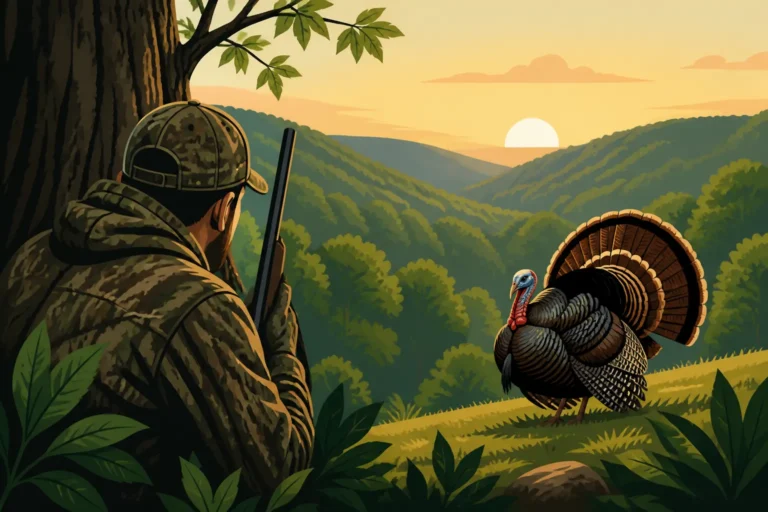
Before we dive into the rules, let's make sure we're all on the same page about what "reaping" or "fanning" actually means in the turkey woods. Essentially, it involves using a turkey fan – sometimes just the fan from a harvested bird, sometimes a full-body decoy that incorporates a real fan or a synthetic one – to actively crawl or move towards a gobbler. The hunter holds the fan or decoy in front of them, using it as camouflage to close the distance on a wary bird. The idea is to mimic a strutting gobbler or a receptive hen, drawing in the real bird who perceives the decoy as an intruder or a potential mate.
This tactic is a far cry from traditional turkey hunting, where you usually set up against a tree, call, and wait for the birds to come to you. Reaping is active, aggressive, and often incredibly effective at pulling in even the most hung-up gobblers. It taps into the bird's territorial instincts and dominance hierarchy, especially during the peak of the rut. The visual of another turkey suddenly appearing on the horizon can be enough to trigger a chase response from a dominant tom.
The Rise of a Controversial Tactic
The popularity of reaping and fanning has exploded in recent years, largely thanks to social media and hunting shows. Hunters see incredible footage of gobblers charging in from a distance, practically running over the hunter to confront the decoy. This high-octane, in-your-face hunting style is undeniably thrilling and, when successful, provides some truly unforgettable moments. It offers a solution to those notoriously tough, hang-up gobblers that just won't commit to a call. If you've spent countless hours trying to coax a bird off the ridge, only to watch him strut just out of range, the appeal of a tactic that brings the fight to him is undeniable.
However, with this surge in popularity has come significant controversy and concern, particularly regarding safety and ethical considerations. Many hunters, especially those accustomed to more traditional setups, view reaping with skepticism, questioning its "fair chase" aspect and, more importantly, the inherent risks involved. The very nature of actively moving towards game while concealed, especially when that concealment makes you look exactly like the animal being hunted, raises a lot of red flags in a landscape often shared by other hunters.
Missouri's Specific Stance on Reaping and Fanning
Now, let's get down to the nitty-gritty of what the Missouri Department of Conservation (MDC) actually says about reaping and fanning. You might be surprised to learn that, unlike some other states that have outright banned the practice, Missouri does not have a specific regulation that explicitly prohibits "reaping" or "fanning" while turkey hunting.
However, and this is a huge "however," the MDC strongly discourages these tactics, particularly if you are not hunting from within an enclosed blind. Their stance is rooted firmly in hunter safety, and it's something every hunter needs to take incredibly seriously. The primary concern is simple: misidentification. When you're crawling through the woods with a turkey fan or a full-body decoy held in front of you, you look an awful lot like a turkey. To another hunter, especially one who might be less experienced or simply has a lapse in judgment, seeing a "turkey" moving through the underbrush could lead to a tragic mistake.
While there isn't a direct "no fanning" rule for turkey season, general regulations regarding decoys and hunter conduct still apply. For example, during deer firearms seasons, there are specific rules about using turkey decoys. The MDC states that the use of a decoy that mimics a turkey, or parts thereof, by a hunter not in a blind, is illegal if the hunter is in an area open to firearms deer hunting or during the November portion of firearms deer season. This rule specifically does not apply to turkey hunting, which means using a turkey decoy outside a blind is generally permissible during turkey season. But again, permissibility doesn't equate to safety or endorsement.
Key Takeaways from MDC's Perspective:
- No Explicit Ban for Turkey Season: The MDC does not have a regulation specifically banning "reaping" or "fanning" during Missouri's spring or fall turkey seasons.
- Strong Safety Discouragement: They strongly advise against actively moving with a turkey decoy or fan, especially when not inside a ground blind.
- Misidentification Risk: The overwhelming concern is that another hunter could mistake you for a wild turkey.
- Ethical Considerations: Beyond safety, the MDC encourages ethical hunting practices that prioritize safety, fair chase, and positive public perception of hunting.
If you are considering these aggressive tactics, the safest and most responsible way to engage is from within a fully enclosed ground blind. This significantly reduces the risk of misidentification, as the hunter is completely concealed within the blind, and only the decoy is exposed. For information on setting up blinds safely, check out our guide on Ground Blinds on Crop Field Edges or even just using a blind in timber.
The Elephant in the Room: Hunter Safety
Let's be brutally honest: the biggest, most critical concern with reaping and fanning is hunter safety. It's not just about rules; it's about lives. Imagine you're out Hunting Turkeys in Ozark Hollows, focused, looking for movement. You see a flash of brown and red, a fan appearing over a rise, moving. Your brain registers "turkey." In a split second, a tragic mistake can happen.
Missouri's landscape, whether you're in the rolling hills of the Ozarks or the timbered draws of north Missouri, can be thick and unforgiving. Visibility is often limited. Combine that with the excitement of turkey season, the adrenaline, and the potential for multiple hunters in the same area, and you have a recipe for disaster if someone is actively trying to appear like a turkey. Even the most seasoned hunter can make a mistake under the right (or wrong) circumstances.
Consider these scenarios:
- Public Land Pressure: On crowded public hunting areas, especially during the busy opening days of spring season or the Youth Turkey Weekend Rules, the chances of encountering other hunters are significantly higher. Actively moving with a decoy in these areas is a massive gamble.
- Thick Cover: When Run-and-Gun Turkey Tactics in the Missouri Ozarks are common, hunters are often on the move. Reaping through thick brush or timber makes you incredibly difficult to identify as a human, even if you try to be cautious.
- Low Light Conditions: During early morning or late evening, visibility is naturally reduced. This amplifies the risk of misidentification. Remember, Missouri Turkey Shooting Hours begin 30 minutes before sunrise, meaning it can still be quite dim when the first shots are fired.
The MDC's emphasis on safety is not just a suggestion; it's a plea to prevent serious accidents. While the thrill of reaping can be immense, no turkey is worth risking a life for.
Ethical Debates and Responsible Hunting
Beyond safety, reaping and fanning also spark a fair amount of debate about ethics and "fair chase." Some argue that it's an overly aggressive tactic that removes the challenge and skill of traditional turkey hunting, while others believe it's simply another tool in the hunter's arsenal.
Here's a breakdown of common ethical points:
- Fair Chase: Does actively moving and mimicking a turkey to provoke a charge uphold the spirit of fair chase? Many argue that it does, as the hunter is still engaging with the animal on its terms, often needing skill to get into position and execute the shot. Others disagree, feeling it can be too exploitative.
- Pressuring Birds: Some believe that aggressive tactics like fanning can pressure birds too heavily, making them warier of decoys and calls in the future, especially on heavily hunted public land. This could impact other hunters who prefer more traditional methods like Calling a Missouri Gobbler Off the Roost or using stationary Decoy Placement for Pressured Birds.
- Public Perception: In an era where hunting is under constant scrutiny, tactics that appear overly aggressive or risky can reflect poorly on the entire hunting community. Maintaining a positive image of responsible, ethical hunting is crucial for the future of our sport.
Ultimately, the decision to engage in reaping or fanning is a personal one, but it must always be made with safety as the absolute top priority. If you do choose to try these methods, you have a heightened responsibility to ensure you are doing so in the safest possible manner, minimizing risks to yourself and others.
How to Practice Decoy Tactics Safely in Missouri
If you're determined to try these aggressive decoy tactics, here's how to do it as safely and responsibly as possible, adhering to the spirit of the MDC's recommendations:
Always Hunt from a Blind
This cannot be stressed enough. If you are going to use a turkey fan or full-body decoy in an active, mobile manner, you must do it from inside a fully enclosed ground blind. This creates a clear barrier between you and the decoy, making your position unambiguous to any other hunter in the area. The decoy is out in the open, but you are hidden. This is the single most effective way to mitigate the misidentification risk. Ensure your blind is fully set up, zipped, and brushed in to maximize concealment, especially if you're targeting those cagey gobblers in Turkey Tactics for Crop Country.
Scout for Isolated Locations
Before you even think about putting a fan in front of you, spend ample time scouting. Look for areas where you can reasonably expect to be the only hunter. This often means finding remote corners of public land or gaining permission on private tracts where you know no one else will be. Tools like GoHunt's mapping features can be invaluable for identifying secluded draws, timber blocks, or field edges that are far from common access points and other hunters. Utilize features that show property lines and public/private land boundaries to ensure you're aware of your surroundings and where other hunters might be. Remember, simply because you're in an isolated spot doesn't mean another hunter won't stumble in, but it dramatically reduces the odds.
Communicate with Your Hunting Partners
If you're hunting with a group, clear communication is paramount. Let everyone know your exact plan, what tactics you intend to use, and where you'll be. Consider using two-way radios, especially in dense terrain like that found when Hunting Missouri Ridge Saddles and Benches, to maintain contact. Establish clear safety zones and confirm everyone's locations before beginning any aggressive decoy work. This prevents friendly-fire incidents within your own party.
Gear Considerations and Visibility
Even when hunting from a blind, consider your attire when moving to and from your setup. While it's not always legally required for turkey hunting outside of certain overlapping seasons (check Missouri Hunter Orange Rules for specific scenarios, especially during concurrent deer portions), wearing a blaze orange vest or hat while walking in or out is a smart safety practice. You can easily remove it once you're safely tucked into your blind. Ensure your decoy is realistic enough to be effective but avoid anything that could be mistaken for a human in distress or an injured animal if seen from a distance.
Consider Alternatives
If the safety concerns of reaping and fanning still give you pause, remember that there are many other highly effective turkey hunting strategies that carry far less risk. Learning to truly master various calling techniques and understanding how to effectively set up traditional Decoy Setups for Pressured Gobblers can yield incredible results. Patience, skilled calling, and strategic positioning are the hallmarks of successful turkey hunting in Missouri, whether you're Roost Hunting Missouri Gobblers or waiting patiently for them to visit a strut zone. There's no shame in choosing the safer, more traditional path to success.
Missouri Turkey Reaping and Fanning at a Glance
| Factor | Traditional Decoy Hunting (Still Hunt) | Reaping/Fanning (Active Movement) |
|---|---|---|
| Legality | Generally legal and widely accepted in Missouri. | Not explicitly banned for turkey season, but strongly discouraged by MDC, especially outside a blind. |
| Safety Risk | Low, as hunter is stationary and concealed. | High, significant risk of misidentification by other hunters. |
| Effectiveness | Very effective with proper calling and setup; requires patience. | Can be highly effective for aggressive gobblers; often yields quick results. |
| Hunter Concealment | Full concealment (tree, blind, natural cover). | Decoy is the primary concealment; hunter is behind it. |
| Recommended Use | All turkey hunting scenarios. | Only from a fully enclosed ground blind in truly isolated areas. |
| Ethical Concerns | Generally few. | Raises ethical debate regarding fair chase and public perception. |
| Public Land Suitability | High, with proper scouting and safety. | Very Low; extremely risky duead to other hunters. |
Final Thoughts on Responsibility in the Turkey Woods
Turkey hunting in Missouri is a cherished tradition, offering exhilarating experiences and delicious wild game. As hunters, we have a collective responsibility to uphold the highest standards of safety and ethics. While the allure of aggressive tactics like reaping and fanning is undeniable, the risks associated with them, particularly the risk of misidentification, are simply too high to ignore.
The MDC's caution is not about taking away your fun; it's about keeping you and your fellow hunters safe. If you choose to engage in these methods, always prioritize safety above all else. Hunt from a blind, know your surroundings, and be absolutely certain of your target and what's beyond it. There are plenty of ways to enjoy a successful and memorable turkey season in Missouri without putting anyone at undue risk. Whether you're trying to figure out When Missouri Gobblers Go Quiet or perfecting your calls, remember that responsible hunting is always the best hunting.
Disclaimer
Always consult the latest official regulations from the Missouri Department of Conservation before engaging in any hunting activities. This guide is for informational purposes only and is not a substitute for understanding and adhering to all applicable laws and regulations.