Hunting Missouri Raccoons at Night
Many Missouri hunters find that the pursuit of game doesn't just stop when the sun dips below the horizon. In fact, for those interested in raccoons, that's often when the real adventure begins! Whether you're a farmer battling masked bandits in your cornfields, a landowner protecting your chicken coop, or simply a hunter seeking the unique challenge and camaraderie of a night in the woods with hounds, getting out after dark can be incredibly rewarding. But let's be honest, hunting at night, especially for a wily creature like a raccoon, comes with its own set of puzzles – from understanding the specific rules to having the right gear and knowing exactly where to set up. This comprehensive guide aims to illuminate the path, covering everything you need to successfully and legally hunt raccoons under the Missouri stars.
The Allure and Necessity of Night Hunting Raccoons in Missouri
Raccoons, with their intelligent eyes and dexterous paws, are an undeniable part of Missouri's wildlife landscape. While fascinating, their burgeoning populations often bring them into conflict with human interests, leading many to seek effective management strategies. Hunting, particularly at night, stands out as one of the most traditional and effective methods.
Why Raccoon Populations Need Management
Let's face it, if you've ever had your trash cans raided for the third time in a week or discovered a gaping hole in your sweet corn patch, you know the frustration a healthy raccoon population can cause. These clever critters are incredibly adaptable, thriving in both rural and urban environments. Their populations across Missouri are robust, thanks to their high reproductive rates and diverse diet. This abundance, while a testament to their resilience, often means they exert significant pressure on other wildlife, preying on bird nests, small mammals, and even young waterfowl. Beyond agricultural and property damage, raccoons can also be carriers of diseases like rabies and distemper, posing a risk to pets and, rarely, humans. So, for many, hunting isn't just a sport; it's a necessary step in wildlife management and nuisance control.
Why Nighttime is the Right Time for Raccoon Hunting
If you've spent any time observing raccoons, you'll quickly realize they are creatures of the night. Their peak activity—foraging, traveling, and interacting—occurs under the cover of darkness. This nocturnal nature is precisely why night hunting is so effective. Trying to hunt them during the day is often an exercise in futility, as they tend to be holed up in dens, hollow trees, or thick brush, snoozing away until dusk.
Hunting at night also offers a thermal advantage, especially during the warmer months of Missouri's hunting seasons. Cooler night temperatures are not only more comfortable for hunters but are also far better for working with dogs. Scents linger longer and aren't as quickly degraded by the sun, making it easier for hounds to pick up and follow a trail. Plus, the quiet of the night, often devoid of the hustle and bustle of daytime human activity, creates a unique, almost primal hunting experience. It's a different world out there when the stars are shining, and it's the raccoon's world that you're stepping into.
Understanding Missouri's Regulations for Night Furbearer Hunting
Before you even think about stepping foot into the woods after dark, it is absolutely crucial to understand Missouri's specific regulations for furbearer hunting. The Missouri Department of Conservation (MDC) sets clear guidelines, and ignorance of these rules is never an excuse.
Permit Requirements and Legal Seasons
First things first: you'll need to know the specifics of a Small Game Hunting Permit, as well as the rules around Missouri Furbearer Permit Rules to ensure you're squared away before hitting the woods. For Missouri residents, a Small Game Hunting Permit typically covers furbearers like raccoons. Non-residents will need to purchase a Nonresident Small Game Hunting Permit. These permits can be acquired easily online through the MDC website, via the MO Hunting app, or from any permit vendor.
The seasons for hunting furbearers, including raccoons, are clearly defined by the MDC and generally run from early November through late January. However, it's vital to check the current year's Wildlife Code of Missouri or the MDC website for the exact opening and closing dates, as these can be subject to minor changes annually. Additionally, certain methods or areas might have different rules, so always double-check.
Legal Shooting Hours, Methods, and Weapon Choices
One of the biggest differences when hunting raccoons, compared to deer or turkey, is the legality of hunting them at night. Yes, Missouri generally allows night hunting for furbearers, but there are strict stipulations, especially concerning artificial lights and weapon types. Understanding when and where you can legally use artificial lights is key, as the rules for night hunting vary. It’s always best to consult the MDC regulations, especially concerning Night Hunting Rules for Missouri Predators which often apply to furbearers like raccoons.
Artificial Lights: In most cases, artificial lights (like spotlights) may be used to locate raccoons, but often with restrictions on how they're cast or if they can be mounted to a vehicle. Generally, you cannot hunt from or cast a light from a motor vehicle, aircraft, or boat with the motor running. Check the specific wording each year, as rules can evolve.
Weapon Types: For raccoons, a variety of firearms are legal. Rimfire rifles, such as a .22LR or .17HMR, are popular choices due to their relatively low noise, accuracy, and appropriate power for raccoons. Shotguns, typically with smaller shot sizes (like #4, #5, or #6), are also effective, especially for treed raccoons or those on the ground. Muzzleloaders and archery equipment (including crossbows under Missouri rules) are also permitted. Just like with deer, knowing the Legal Firearms for Missouri Deer can give you a starting point for understanding what weapon types are generally permissible, though specific furbearer rules may differ.
Landowner Permissions: Whether you're hunting on public land or private, permission is paramount. On private land, you must have permission from the landowner. Even if hunting small game or furbearers, this is key. It's not just polite; it's the law. Understanding when Missouri Trespass Law Requires written permission or specific verbal consent is critical to avoid any legal troubles. Always err on the side of caution and secure clear permission before entering any private property.
Essential Gear and Strategic Setup for Night Hunters
Hunting raccoons at night presents unique challenges that daylight hunting simply doesn't. Having the right gear isn't just about comfort; it's about safety, efficiency, and ultimately, success.
Lighting the Way in the Dark
When the sun goes down, your most crucial piece of gear, besides your weapon, becomes your light source.
- Headlamps: These are non-negotiable. A good headlamp keeps your hands free for carrying your rifle, climbing, or managing your dogs. Look for models with adjustable brightness and, ideally, a red or green light option. Red light, in particular, helps preserve your natural night vision and is less likely to spook game or disturb other hunters. Make sure to carry extra batteries or a rechargeable unit.
- Spotlights: A powerful handheld spotlight is invaluable for scanning fields, illuminating treed raccoons from a distance, or checking thick brush. Some hunters prefer lights that can be mounted to a vehicle (where legal and stationary), while others opt for powerful LED or HID handheld units. Brands like Cyclops or Streamlight offer robust options for serious night hunters.
- Thermal and Night Vision Optics: While traditional lights are the standard, modern hunters sometimes explore advanced optics. Devices like thermal imagers or night vision binoculars, often featured by brands like GoHunt, can be incredibly effective for spotting wildlife in the dark without casting a visible light. However, be absolutely sure to verify the legality of hunting with these devices for raccoons in Missouri, as rules can change and vary by species.
Calling and Luring Techniques
Raccoons are naturally curious and opportunistic, making them susceptible to certain calls and attractants.
- Distress Calls: Electronic calls loaded with rabbit or bird distress sounds are often highly effective. Raccoons, being opportunistic predators, will investigate what they perceive as an easy meal. Mouth calls mimicking similar sounds can also work, requiring more skill but offering a hands-free option.
- Food Attractants: While you'll need to check the MDC regulations on baiting (especially for furbearers), certain food attractants, where legal, can lure raccoons into an area. Corn, sweet foods, or even fish scraps can be enticing. Remember to always check current baiting regulations, particularly if hunting on public land.
- Scent Control: While raccoons might not be as scent-sensitive as deer, masking your human odor is still a good practice. Use scent-eliminating sprays or wear carbon-lined clothing. The wind direction is always your friend (or foe) when calling or still-hunting, so pay close attention.
Weapon Choices for Nighttime Pursuit
Your choice of weapon will depend on your hunting style and the terrain.
- Rimfire Rifles: The .22LR is a classic choice for raccoons. It's quiet, accurate, and with proper shot placement, very effective. The .17HMR offers a flatter trajectory and more reach, which can be advantageous in open areas. These are excellent for dispatching treed raccoons with precision.
- Shotguns: A 12-gauge or 20-gauge shotgun loaded with small game loads (e.g., #4, #5, #6 shot) is highly versatile. It's great for close-range encounters, especially if a raccoon is on the ground or needs to be brought down from a tree. The wider pattern is forgiving in the dark or on moving targets.
- Pistols: A .22LR or .22 Magnum pistol can be a handy backup for dispatching treed animals quickly and humanely.
- Crossbows: For a silent approach, a crossbow can be a good option for ambush hunting, particularly if you're setting up near a known travel corridor or feeding area. Make sure your broadheads are sharp and suitable for the job.
Here's a quick comparison of common night hunting weapons for raccoons:
| Weapon Type | Pros | Cons | Ideal Scenario |
|---|---|---|---|
| .22LR Rifle | Quiet, accurate, inexpensive ammo | Limited range, less knockdown power | Treed raccoons, close-range shots in timber |
| .17HMR Rifle | Flat trajectory, good accuracy | Louder than .22LR, more expensive ammo | Longer shots across fields, precision headshots |
| Shotgun (small shot) | Versatile for moving targets, wider pattern | Louder, heavier to carry, less precise | Ground hunting, dogs baying up, multiple targets |
| Crossbow | Silent, no recoil, good for ambush | Limited range, slower follow-up shots | Ambush hunting, close-range setups |
| Handgun (.22/.22MAG) | Lightweight, compact | Shorter effective range, requires practice | Dispatching treed animals, backup weapon |
Canine Companions: The Coonhound Advantage
For many, hunting raccoons at night is synonymous with hunting with dogs. Running Hounds in Missouri for raccoons is a rich and rewarding experience, steeped in tradition.
- Breeds: Coonhounds like Blueticks, Redbones, Black and Tans, English, and Treeing Walkers are specifically bred and trained for this purpose. They possess incredible scenting abilities and the drive to track a raccoon for miles before treeing it.
- Training: A well-trained coonhound is a tremendous asset. Training starts young and focuses on scent discrimination, tracking, treeing, and obedience. These dogs need to be able to work independently but also respond to their handler, especially in the dark.
- Tracking Collars: An absolute necessity. GPS or radio-tracking collars allow you to follow your dog's progress in real-time and pinpoint their location, even when they're deep in dense timber or across a creek. Reputable brands like Garmin or SportDOG offer robust tracking systems that integrate well with mapping solutions from providers like GoHunt. Losing a valuable dog in the dark is every hound hunter's nightmare, so invest in good tracking gear.
Personal Safety and Navigation
Safety is paramount, especially when navigating unfamiliar terrain in the dark.
- GPS Devices and Apps: Essential for knowing exactly where you are and how to get back. Modern phone apps like GoHunt offer detailed mapping, property lines, and GPS tracking, making them invaluable tools. However, always carry a backup, like a dedicated GPS unit or a physical map and compass, in case your phone battery dies or signal is lost.
- First Aid Kit: Accidents can happen—a twisted ankle, a cut, a run-in with thorns. A basic first aid kit for both you and your dogs is a must-have.
- Proper Clothing: Layering is key for Missouri's often-changing weather. Dress for cooler night temperatures, but be prepared for exertion. Scent control is a plus. While hunter orange isn't usually required for furbearer hunting at night, consider a reflective vest or hat if you're concerned about visibility to other potential users of public land.
- Buddy System: Always hunt with a partner, especially at night. There's safety in numbers, and it's simply more enjoyable to share the experience.
Tactical Approaches for Successful Missouri Raccoon Hunting
Once you have your permits and gear in order, it's time to put a plan into action. Successful night hunting for raccoons in Missouri relies on good scouting, smart calling, and effective use of your canine companions.
Scouting for Raccoon Hotspots
Just like any other hunting, preparation is key. You can't just wander aimlessly in the dark and expect success.
- Water Sources: Raccoons are almost always found near water. Look for creeks, rivers, ponds, and even drainage ditches, especially those with timbered edges or heavy cover nearby. These act as travel corridors and provide essential hydration.
- Food Sources: Raccoons are omnivores with a diverse diet. Target areas with abundant food. This includes agricultural fields (especially corn and soybeans, even after harvest), oak flats loaded with acorns, and areas with persimmon trees or other fruit-bearing plants.
- Sign: Keep an eye out for fresh tracks in mud along waterways, scat (often containing berry seeds or corn kernels), and disturbed vegetation where they've been foraging. Den trees, typically hollow trees or abandoned buildings, are also good indicators of a raccoon presence. Using tools like GoHunt's mapping features can greatly assist in identifying these potential hotspots, helping you in Scouting Missouri Public Land Before Season or private tracts.
Still-Hunting and Calling Tactics
If you're hunting without dogs, or scouting a new area, still-hunting combined with calling can be very effective.
- Slow, Methodical Movement: Move incredibly slowly and quietly through likely areas, such as along creek bottoms or the edges of agricultural fields. Stop frequently to listen for any sounds of raccoons or other wildlife.
- Utilizing Distress Calls: Use your electronic or mouth calls to emit short, sharp distress calls (e.g., a rabbit in distress) every 10-15 minutes. Wait patiently after each series of calls. Raccoons are curious and will often come to investigate.
- Wind Direction is Your Friend: Always try to hunt with the wind in your face or quartering. Raccoons have a keen sense of smell, and you want to ensure your scent doesn't reach them before you do.
- Silence is Golden: Once you call, be absolutely silent. Listen for approaching footsteps, rustling in the leaves, or the distinctive "churr" or "growl" of a raccoon. Often, they'll approach cautiously, circling downwind to catch a scent. These tactics are similar to those used when Coyote Calling in Missouri Farm Country to attract predators, so adapting those skills can pay off.
Hunting with Hounds: A Time-Honored Tradition
For many, the true art of raccoon hunting lies in working with a well-trained pack of coonhounds.
- Releasing and Following: Turn your dogs loose in a promising area, often near water or a known travel corridor. Listen intently as they "strike" a track, their barks changing from a "chop" (on the trail) to a distinct "tree bark" when they've treed a raccoon.
- Using Tracking Collars: This is where those GPS or radio-tracking collars become indispensable. Follow your dog's progress on your handheld unit or phone app, navigating through the dark timber to their location.
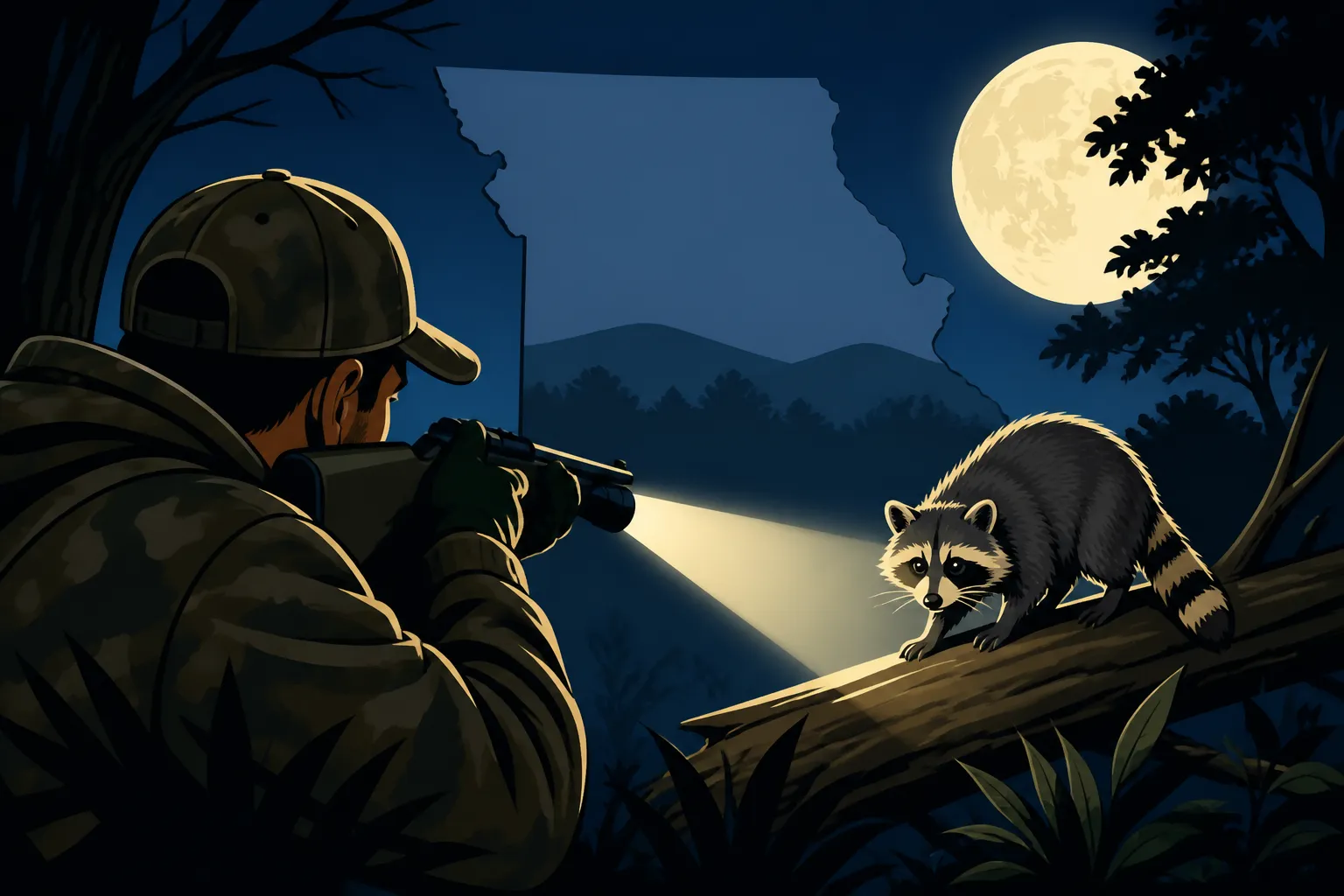
- Locating the Raccoon: Once at the tree, use your spotlight to scan the branches for the raccoon's tell-tale eyeshine. Sometimes, they'll be high up in the canopy, blending in perfectly. Be patient and systematic in your search.
- Dog Management and Dispatch: Once located, manage your dogs at the base of the tree. Many hunters will simply admire the work of their hounds and let the raccoon go, especially if not for nuisance control. If you intend to harvest, ensure you have a safe, clean shot.
Field Edge and Waterway Strategies
Raccoons are creatures of habit and often use established travel routes.
- Corridor Hunting: Raccoons frequently travel along creek banks, fencerows, and the edges of fields, especially where timber or dense cover meets open ground. These are prime areas to set up an ambush or slowly work with dogs.
- Agricultural Fields: Standing corn offers excellent cover and food, making it a raccoon magnet. Even after harvest, they will glean dropped grains. Setting up on the downwind side of a cornfield or beanfield and calling can often draw them out.
- River Bottoms: Missouri's extensive river and creek bottoms are raccoon highways. Hunting these areas, particularly near large hardwoods, can be very productive. For those interested in other furbearer management strategies, it's worth exploring methods like Trapping Furbearers in Winter as a complementary approach to hunting, often in similar habitats.
Remember, patience and persistence are key to successful night hunting. The thrill isn't just in the harvest but in the unique experience of being out in the Missouri wild after dark, observing the nocturnal world, and outsmarting a cunning opponent.
Disclaimer
Please note that hunting regulations, seasons, and permit requirements are subject to change. Always consult the latest Missouri Department of Conservation (MDC) official regulations before planning any hunting trip. This guide is for informational purposes only and does not supersede state law.