Missouri’s November Firearms Portion
That chill in the air, the crunch of leaves underfoot, and the eager anticipation… Missouri's November firearms deer season is a highlight for so many of us, but it can also bring its fair share of headaches. From navigating crowds on public land to understanding the ever-changing regulations and planning for peak rut activity, there's a lot to consider. This guide is here to walk you through everything you need to know to make your hunt successful, safe, and truly memorable.
Understanding Missouri's November Firearms Deer Season
For many, the November firearms portion of Missouri's deer season is the event of the year. It's the time when many deer hunters dust off their rifles, head to the woods, and hope to fill their freezer. But it's more than just grabbing a gun; there are specific dates, permit requirements, and weapon restrictions that everyone needs to be keenly aware of to ensure a legal and ethical hunt. Missing a detail here can quickly turn a dream hunt into a frustrating experience.
The Dates and Why They Matter
Missouri's November firearms portion is a fixed, 11-day season that typically starts the first Saturday after November 1st. These dates are absolutely critical to mark on your calendar because they represent a specific window of opportunity that you can't miss. Unlike the more flexible archery season or the various antlerless portions, the firearms season is a short sprint, and you need to make the most of every legal day.
Historically, the Missouri Department of Conservation (MDC) designed this 11-day window to coincide with a significant portion of the deer rut, which is the breeding season for whitetails. This timing is intentional, aiming to give hunters a chance when bucks are often most active and less cautious, increasing success rates across the state. Understanding that these dates are tied to natural deer behavior helps you plan your hunting strategy around when deer are most likely to be on the move, searching for does. If you're wondering Why the November Portion Runs Eleven Days, it's often a balancing act between hunter opportunity and deer management goals.
This specific timeframe also means increased hunter density, particularly on opening weekend. If you're heading to public land, expect company. This can affect deer movement, pushing them into thicker cover or making them more nocturnal. Being aware of this pressure can help you adjust your tactics, perhaps by walking further or focusing on overlooked pockets of cover. Knowing the exact dates allows you to plan vacation time, scout, and prepare your gear well in advance, setting you up for success rather than scrambling at the last minute.
Permit Requirements for the Firearms Portion
Before you even think about setting foot in the woods with your rifle, you absolutely must have the correct permits. Missouri has a straightforward but essential permit system, and getting it wrong can lead to serious legal trouble. For the November firearms portion, most hunters will need a Firearms Any-Deer Permit. This permit allows you to harvest one antlered deer (a buck with at least one antler three inches or longer) and one antlerless deer (a doe or a button buck).
Beyond the standard Firearms Any-Deer Permit, there are also Antlerless Deer Permits available, which can be purchased in specific counties depending on deer population goals. These permits allow you to take additional antlerless deer, which is a key part of the MDC's strategy for managing deer numbers in areas where populations are high. It's crucial to check the specific county regulations each year, as the availability of these extra antlerless permits can change. A great resource for all this information is the annual Missouri hunting regulations booklet, which you can find online or at any permit vendor. For a deeper dive into the permit system, you might want to read Missouri Deer Permits and How to Buy One.
Non-residents also need to be aware of their specific permit costs and rules, which are often different from resident permits. Planning ahead is key, as these can be a significant investment. Always remember to purchase your permits well in advance of the season, either online through the MDC website, via the MO Hunting app, or at a licensed vendor. Don't wait until opening morning to realize you're missing a tag! Having your permits in hand, signed, and ready to go is the first critical step to a successful and legal hunt.
Legal Firearms and Ammunition
Missouri has clear guidelines about what firearms and ammunition are legal for deer hunting during the November firearms portion. Generally, you're looking at centerfire rifles, shotguns, muzzleloaders, and handguns. However, the specifics matter, and it's vital to know the limitations to stay compliant. For example, certain calibers of rifles are universally accepted, but you should always confirm your chosen firearm meets the legal requirements for cartridge length and bullet type.
When it comes to shotguns, they must be 10 gauge, 12 gauge, 16 gauge, or 20 gauge and can only be loaded with slugs. You cannot use buckshot for deer hunting in Missouri during any portion. Muzzleloaders are also permitted and are a popular choice for their historical connection to hunting and unique challenge. They typically have caliber requirements as well, ensuring sufficient knockdown power. If you're leaning towards a handgun, it must be a centerfire pistol using expanding bullets, and there are minimum barrel length requirements. For a comprehensive look at your options, check out Rifle Setups for Missouri Timber and Fields and Legal Firearms for Missouri Deer.
The overarching principle is that the weapon and ammunition must be capable of quickly and humanely dispatching a deer. This means using expanding bullets for rifles and handguns, and slugs for shotguns. Prohibited weapons often include rimfire firearms, fully automatic weapons, and certain types of ammunition like tracer or full metal jacket rounds. Always double-check the current year's regulations booklet for any subtle changes or clarifications. It’s better to be overly cautious than to find yourself in a bind with a conservation agent in the field.
Navigating the Rut During Firearms Season
The November firearms season often coincides perfectly with the peak of the whitetail rut in Missouri. This is a double-edged sword: deer activity can be incredibly high, but so can hunter numbers. Understanding how the rut influences deer behavior and adapting your strategy accordingly is paramount to success. It's not just about being in the woods; it's about being in the right place at the right time, when bucks are focused on something other than avoiding hunters.
How the Rut Influences Deer Behavior
During the rut, a buck's primary focus shifts dramatically from food and survival to breeding. This biological imperative drives them to cover significant ground, often in daylight hours, searching for receptive does. You'll see increased scraping and rubbing activity, as bucks lay down scent to advertise their presence and dominance. Does, in turn, will be moving as well, either seeking out bucks or trying to avoid aggressive ones, and their movements are often tied to where they feel safest.
This heightened activity means traditional hunting wisdom, like focusing solely on food sources, might need to be adjusted. While deer still need to eat, a lovesick buck might cruise through areas he wouldn't typically frequent during other times of the year, driven by the scent of a doe. Understanding this biological drive is key to predicting their movements. A buck might spend more time scent-checking traditional doe bedding areas, travel corridors between thicker cover, or even open fields during daylight as he searches. The peak of the rut in Missouri usually falls right within this 11-day window, making it a prime time to be on stand, ready for action.
However, the rut can also make deer more unpredictable. Bucks can appear almost anywhere, at any time, sometimes seemingly out of nowhere. This is where patience and persistence truly pay off. Instead of just waiting for deer to come to a specific food plot, consider setting up on pinch points, saddles, or creek crossings that connect bedding and feeding areas, anticipating a cruising buck's path. These natural funnels become superhighways during the rut, as deer utilize the easiest routes while traveling.
Adjusting Your Strategy for Peak Activity
With bucks on the move and less cautious, hunters need to adjust their tactics to capitalize on this window. Instead of long, passive sits over a food source, consider more aggressive, mobile strategies. All-day sits can be incredibly effective during the rut, as bucks can be up and moving at any hour. I've had many successful hunts mid-day when other hunters have already left their stands to head back for lunch. The deer don't know it's lunch break!
Focus on terrain features that funnel deer movement. Ridge saddles, creek bottoms, draws, and narrow strips of timber between open fields are classic rut hunting locations. Bucks will often use these protected travel corridors to move from one area to another without exposing themselves too much. If you're hunting in rolling farm country, a timbered draw cutting through a field can be an absolute magnet for cruising bucks. On public lands, these strategic locations might see more pressure, so be prepared to walk further to find less disturbed areas. Hunting the Peak Rut Week in Missouri offers even more insights into maximizing your chances.
Consider hunting from a mobile setup, like a tree saddle or a lightweight hang-on stand, which allows you to quickly adapt to fresh sign or observed deer movement. For instance, if you get to your stand and see new scrapes pop up along a fenceline that wasn't there yesterday, being able to quickly move and set up within shooting range of that fresh activity can make all the difference. This adaptive approach is especially useful when trying to get away from other hunters on crowded areas.
Using Calls and Scents Effectively
During the rut, deer calls and scents can be incredibly effective, if used judiciously. Grunt calls can pique a buck's curiosity, mimicking the sound of another buck or a tending buck. Doe bleats can sometimes draw in a buck searching for a receptive mate. Rattling antlers, which simulate a fight between two bucks, can also be a powerful attractant, especially if done correctly and in the right cover. The key is to gauge the deer's response and adjust. Don't overcall; subtle, well-timed sequences are often more effective than loud, continuous calling.
Scents can also play a major role. Estrous doe urine can act as a powerful attractant, making a buck think a hot doe is in the area. Applying it to mock scrapes, scent wicks, or directly to your boots as you walk in can leave a compelling scent trail. Buck urine, used in moderation, can sometimes challenge a dominant buck or make a subordinate buck curious enough to investigate. It's not a magic bullet, but when combined with strategic stand placement and an understanding of deer movement, scents can certainly tip the odds in your favor.
However, a word of caution: when using calls and scents, always be mindful of wind direction. A buck responding to a call or scent will almost always try to circle downwind to get a whiff of what's there. If your scent is blowing directly to where you expect the deer to approach from, you'll likely spook them. Practice your calls to ensure they sound realistic, and experiment with different scent dispersal methods to see what works best in your specific hunting area. A well-placed decoy, like a buck or doe decoy, can also add another layer of realism to your setup, though this is often more effective on private land where deer are less pressured.
Public Land vs. Private Land Strategies
Missouri offers a fantastic amount of public hunting ground, from Conservation Areas to National Forest lands, but securing permission on private property is also a time-honored tradition. Each type of land presents its own unique challenges and opportunities, particularly during the high-pressure November firearms season. Knowing how to approach both is crucial for a successful season.
Hunting Pressure on Conservation Areas
Missouri's Conservation Areas (CAs) are a blessing for hunters without private land access, offering millions of acres across the state. However, during the November firearms season, these areas can experience significant hunting pressure. Opening weekend, especially, can feel more like a convention than a quiet hunt, with trucks lining parking lots and hunters walking in every direction. This pressure pushes deer into thicker cover, makes them more nocturnal, and generally makes them warier.
To succeed on public land during this time, you often need to outwork other hunters. This means walking further, getting into areas that others don't want to penetrate, or targeting overlooked pockets of cover that might seem insignificant but offer deer security. Steep hillsides, dense thickets, overgrown clearcuts, or even small, isolated timber blocks can hold deer escaping pressure. Having a good mapping app, like one that GoHunt offers, can be invaluable for identifying these less-pressured spots and navigating complex terrain. Looking at aerial maps to spot subtle changes in topography or vegetation that might deter other hunters is a smart move.
Another strategy is to hunt mid-week, after the initial opening weekend rush. Many hunters can only take off the first few days, so the woods tend to quiet down considerably by Tuesday or Wednesday. Deer might start to resume more natural movement patterns once the pressure subsides. Always remember to be extra cautious and visible on public land, especially with the high number of hunters present. Reading Public Hunting Land in Missouri will give you a broader understanding of your options.
Gaining Access to Private Farm Ground
Hunting private land often offers a completely different experience compared to public ground, typically with less pressure and potentially higher quality deer. However, securing permission can be a challenge. It's a relationship-based endeavor that requires respect, politeness, and a clear understanding of the landowner's expectations. Don't expect to just show up on opening morning and ask; start building relationships months in advance, well before hunting season.
Your best bet is to approach landowners in person, neatly dressed, and during a time when they're not busy (definitely not during planting or harvest season). Introduce yourself, explain your intentions, and be prepared to offer something in return, whether it's helping with chores, repairing fences, or sharing some of your harvest. Always bring a detailed map of their property, clearly outlining where you'd like to hunt and your proposed entry/exit points. Show them you're serious and respectful. Offering to bring proof of insurance can also sometimes seal the deal, as it shows you're responsible.
Once you have permission, treat their land like it's your own – or better. Be meticulous about closing gates, not disturbing livestock, staying away from residences, and cleaning up any trash. Communication is key; let them know when you'll be on their property and when you've left. A thoughtful thank-you gift at the end of the season, like some venison sausage or a gift certificate to a local restaurant, can go a long way in securing permission for future seasons. Remember, they don't have to let you hunt, so always be appreciative of the opportunity.
Scouting and Stand Placement Considerations
Regardless of whether you're on public or private land, thorough scouting is the cornerstone of success during the November firearms season. Even if you've hunted an area for years, deer patterns can change annually due to food availability, water sources, and hunting pressure. You need to be looking for fresh sign – rubs, scrapes, tracks, and droppings – to identify current deer activity. Pay close attention to travel corridors between known bedding and feeding areas. If you haven't done your homework, check out Scouting Missouri Public Land Before Season for tips.
When it comes to stand placement, consider the prevailing winds and thermals. During November, winds can be notoriously shifty, especially in hilly terrain. Always try to set up so your scent is blowing away from where you expect deer to approach. For treestand hunters, positioning your stand high enough to get above a deer's line of sight and scent cone is vital. Ensure you have clear shooting lanes, but don't over-trim, as too much disturbance can deter deer. Thinking about Treestand Setups in Hardwood Timber can help you refine your approach.
For ground blind users, ensure your blind is brushed in naturally and blends with the surroundings. Deer are incredibly perceptive, and a foreign object in their environment will stand out. Set up your blind well in advance of the season, if possible, to allow deer to get accustomed to its presence. Whether in a tree or on the ground, always have an escape route in mind for entering and exiting your stand without disturbing the area, especially during the morning and evening hours when deer are most active.
Essential Gear and Safety for the November Hunt
The November firearms season in Missouri brings a distinct shift in weather, demanding specific gear choices and an unwavering commitment to safety. From the required blaze orange to effective layering for cold weather and proper meat care, preparing your kit correctly is just as important as knowing where to hunt. Being unprepared can quickly turn an exciting day into a miserable, or even dangerous, one.
Hunter Orange Regulations You Can't Ignore
Safety is paramount during the firearms season, and Missouri's hunter orange requirements are non-negotiable. During the November firearms portion, all hunters (and anyone accompanying them) must wear an outer garment of hunter orange that is visibly worn on the upper body and head. This means a blaze orange hat and a vest or coat that is visibly orange. The MDC specifies that at least 400 square inches of the orange must be visible from all sides, and the head covering must be orange.
There are no exceptions for camouflage hunter orange; it must be solid, vibrant blaze orange. This requirement applies even if you're hunting on private land or are an archery hunter (unless you're in a completely enclosed blind). The reason for this rule is simple and life-saving: it makes you visible to other hunters, dramatically reducing the risk of accidental shootings. Never compromise on this. Your life, and the lives of others, depend on it. For more details on these vital regulations, consult Missouri Hunter Orange Rules.
Beyond the legal requirement, consider wearing even more orange than mandated, especially if you're still-hunting or moving through thick cover. The brighter and more visible you are, the safer everyone in the woods becomes. Ensure your orange clothing is in good condition, not faded, and that it isn't covered by backpacks or other gear. Taking hunter education is also a critical step for new hunters, and even experienced hunters can benefit from a refresher.
Cold Weather Clothing and Layering Systems
Missouri Novembers can be notoriously unpredictable, swinging from mild, sunny days to bitter cold, rain, or even early snow. Dressing appropriately is crucial for comfort and safety during long hours on stand. A good layering system is your best friend. Start with a moisture-wicking base layer against your skin to pull sweat away. Cotton is a big no-no, as it retains moisture and will make you cold.
Next, add an insulating mid-layer, such as fleece or down, to trap warmth. The thickness of this layer can be adjusted based on the expected temperature. Finally, your outer layer should be windproof and waterproof, protecting you from the elements. Look for quiet fabrics that won't spook deer as you move or raise your rifle. Don't forget insulated boots, a warm hat, and gloves or mittens – you lose a significant amount of heat from your head and extremities. Being prepared for Cold Weather Sitting Strategy can mean the difference between cutting your hunt short and sticking it out for that trophy buck.
It's always better to overdress slightly and shed layers if you get too warm than to be underdressed and shiver through your hunt. Hand warmers and foot warmers are also great additions to your kit, providing that extra boost of warmth on frigid mornings. Remember, comfort contributes to focus, and a focused hunter is a more successful hunter. Checking the detailed weather forecast, not just the general temperature, including wind chill and precipitation, is essential for planning your layers each day.
Field Dressing and Meat Care in November
Harvesting a deer is only half the battle; proper field dressing and meat care are essential to ensure the venison is high quality and safe to eat. While November generally brings cooler temperatures, it's still possible for warm spells to occur, and even cold weather can't compensate for neglecting basic meat hygiene. Your goal is to cool the carcass as quickly as possible.
Immediately after harvest, field dress the deer to remove the internal organs. This allows the body cavity to cool down rapidly and prevents bacterial growth that can taint the meat. If you're new to this, there are many excellent tutorials on the gutless method or traditional field dressing. Once field dressed, get the deer out of the woods and to a cooler location as soon as possible. If temperatures are above 40°F, you'll want to get the hide off and the meat on ice quickly, especially if you have a long drive home. A quality cooler and plenty of ice are vital.
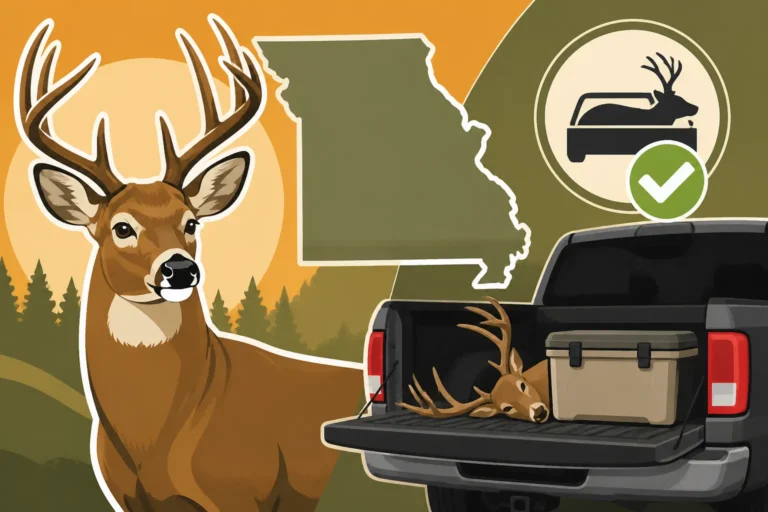
Even in cooler temperatures, don't let the deer just sit in the back of your truck for hours. Hang it up if you can, allowing air to circulate around the carcass, or place it on a tarp to keep it clean and off the hot pavement. Transporting your deer correctly helps prevent spoilage and ensures you have delicious venison to enjoy. Think about Field Dressing a Deer in Warm Weather or Getting Deer Meat Cooled Quickly if you're worried about those unseasonably warm November days.
Post-Harvest: Telecheck and Transporting Your Deer
Congratulations! You've successfully harvested a deer during Missouri's November firearms portion. But your responsibilities don't end there. The Missouri Department of Conservation has a mandatory reporting system called Telecheck, and there are specific rules for transporting your deer to ensure compliance and prevent the spread of diseases like Chronic Wasting Disease (CWD).
The Telecheck Process Step-by-Step
Telecheck is the MDC's electronic harvest reporting system, and it's mandatory for all deer (and turkey) harvested in Missouri. You must Telecheck your deer by 10 p.m. on the day of harvest. This system allows the MDC to gather vital data on harvest numbers, hunter success, and population trends, which in turn helps them make informed management decisions. It's a critical component of Missouri's deer management strategy. For a deeper dive into the exact process, read Telecheck Requirements After a Harvest.
Here's how it generally works:
- Notch Your Permit: Immediately after recovering your deer, notch your permit (either a paper permit or through the MO Hunting app) to invalidate it for another harvest. Make sure to notch the correct portion (antlered or antlerless) and date it.
- Access Telecheck: You can Telecheck your deer online at the MDC website or by calling a toll-free number provided in the regulations. Many hunters also use the MO Hunting app, which makes the process incredibly easy and convenient, often with the help of digital tools like those from GoHunt.
- Provide Information: You'll need to enter your permit number, the county of harvest, the date of harvest, and information about the deer (e.g., antlered or antlerless, sex).
- Receive Confirmation Number: Once successfully Telechecked, you'll receive a confirmation number. This number must be written on your permit or stored in your app. This confirmation number is your proof that the harvest has been legally reported.
Failing to Telecheck your deer, or doing so incorrectly, can result in fines and legal penalties. It's a simple process, but don't underestimate its importance. Having your confirmation number handy if a conservation agent stops you is crucial.
Rules for Transporting Your Harvest
Once your deer is Telechecked, you need to be aware of the rules regarding its transportation. You can transport your legally harvested and Telechecked deer throughout the state. However, if you plan to transport the carcass or certain parts of it out of Missouri, there are specific restrictions designed to prevent the spread of CWD. These rules primarily apply to the movement of certain high-risk parts.
Generally, you can only transport the following parts of a harvested deer out of Missouri: boned-out meat, quarters or other portions of meat with no part of the spinal column or head attached, antlers attached to a skull plate that has been cleaned of all muscle and brain tissue, and hides. Whole carcasses or heads with brain and spinal tissue attached are typically prohibited from being transported out of the state, especially from CWD-positive counties.
It’s always best to process your deer (either by yourself or at a commercial processor) before crossing state lines if you’re unsure. These regulations can change, so always consult the most current MDC regulations if you're planning an out-of-state trip. Being knowledgeable about Missouri Deer Transport Rules is a critical aspect of being a responsible hunter.
CWD Testing and Carcass Restrictions
Chronic Wasting Disease (CWD) is a serious concern for deer populations, and Missouri has implemented monitoring and testing programs. While mandatory CWD testing is no longer required in most of the state, the MDC still conducts voluntary surveillance and provides opportunities for hunters to have their deer tested. If you're hunting in a CWD Management Zone (which can change annually), there might be specific carcass transport restrictions, even within Missouri, to prevent the disease from spreading to new areas.
If you harvest a deer, especially in a county known to have CWD, consider participating in voluntary testing. The MDC often sets up voluntary CWD sampling stations during the November firearms season where you can drop off the head of your deer for testing. This helps the MDC monitor the prevalence and spread of the disease, which directly impacts future deer management strategies. Understanding CWD Sampling and Testing for Hunters is important for the health of Missouri's deer herd.
Always check the current regulations for any specific CWD-related rules, particularly if you're hunting in a county that has had confirmed cases of the disease. These rules are in place to protect the long-term health of our deer herd, and adhering to them is part of every ethical hunter's responsibility. By following all Telecheck, transport, and CWD guidelines, you contribute to sound wildlife management and ensure the sustainability of Missouri's incredible deer hunting tradition.
Disclaimer
The information provided in this guide is for general informational purposes only and does not constitute legal advice. Hunting regulations can change frequently. Always consult the most current Missouri Department of Conservation (MDC) hunting regulations booklet or website before engaging in any hunting activity. Failure to comply with all state and federal hunting laws may result in fines or penalties.