CWD Sampling and Testing for Hunters
It's a sinking feeling, isn't it? You've had a successful hunt, maybe tagged a beautiful Missouri whitetail, and then the thought creeps in: "What about CWD?" The regulations can feel like a maze, and the whole idea of your deer having Chronic Wasting Disease is unsettling. This guide is here to untangle the confusion surrounding CWD sampling and testing, empowering you as a Missouri hunter with the knowledge and steps to navigate the process confidently.
Understanding Chronic Wasting Disease and Its Impact
Let's be honest, hearing about Chronic Wasting Disease (CWD) can be scary. It's a serious concern for anyone who cares about Missouri's deer herd, and that's every hunter I know. It's a disease that doesn't just impact deer; it impacts our traditions, our management efforts, and the future of hunting in our state. Getting a handle on what it is and how it affects our wildlife is the first step toward understanding why sampling and testing are so crucial.
What is CWD and Why Should Hunters Care?
At its core, CWD is a neurological disease that affects cervids—animals like deer, elk, and moose. It's caused by abnormal proteins called prions, which slowly damage the brain and nervous system. Think of it like a very slow, always fatal degenerative disease. Infected animals gradually waste away, losing weight, developing neurological symptoms, and eventually dying. There's no cure, and it's always fatal for the animal. For us hunters, this isn't just about losing individual deer; it's about the potential long-term health and sustainability of our entire herd. A widespread CWD infection could decimate deer populations, change hunting opportunities, and fundamentally alter the landscape of deer hunting in Missouri. We care because we want healthy deer for future generations, and CWD poses a direct threat to that legacy.
One of the most concerning aspects of CWD is how it spreads. It can be transmitted directly through contact between animals, but also indirectly through the environment. Prions can be shed through saliva, urine, and feces, and they can persist in the soil for years, even decades. This means that a contaminated area can remain a source of infection long after an infected animal has passed through. This environmental persistence makes CWD incredibly challenging to manage and contain, which is why hunter vigilance and participation in sampling programs are so vital. It's not just about what we take home, but what we leave behind or spread unknowingly.
Missouri's Battle with CWD: A Brief History
Missouri's journey with CWD has been a tough one, marked by discovery, adaptation, and ongoing challenges. The disease first reared its head in the state back in 2010, found in captive deer facilities in Macon and Linn counties. That was a wake-up call, but the real game-changer came in 2012 when it was detected in a wild deer in Macon County. That confirmed our worst fears: CWD had jumped into our free-ranging herd. From there, the Missouri Department of Conservation (MDC) moved swiftly to implement surveillance and management strategies. The initial response involved setting up CWD Management Zones (CMZs), often around the initial detections, where specific rules for carcass transport and mandatory sampling were put in place. These zones have shifted and evolved over the years as more cases were identified and our understanding of the disease's spread grew.
The MDC has been on the front lines, working tirelessly to monitor, research, and manage CWD. This has involved extensive testing, public awareness campaigns, and adapting regulations to try and slow the spread. For a while, some counties had antler point restrictions (APRs) removed in an effort to encourage harvest of younger bucks, potentially reducing the spread. Understanding What Changed in Missouri Deer Rules for 2026 often involves CWD management, as the MDC is always refining its approach. It's an evolving situation, and every hunter plays a critical role in providing the data needed to make informed decisions.
The Latest on CWD Prevalence and Distribution in Missouri
CWD isn't static; its presence in Missouri is constantly being monitored and analyzed. The MDC conducts extensive surveillance annually, testing thousands of deer statewide. This isn't just a random effort; it's a strategic program designed to identify new areas of infection and track the prevalence (how common it is) in known CWD areas. The good news, if you can call it that, is that while CWD has spread to more counties since its initial detection, the overall prevalence rates remain relatively low in most parts of the state. However, certain areas, particularly in northeastern Missouri and parts of the Ozarks, show higher prevalence.
You can find detailed information, including maps showing confirmed CWD positive counties and prevalence rates, on the MDC's website. This data is invaluable for hunters to understand the risk in their hunting areas. Knowing How Many Missouri Counties Have CWD and where the hotspots are can help you make informed decisions about where you hunt and whether you should prioritize sampling your harvest. While the MDC recently made changes, like Why Missouri Removed the CWD Zone for certain areas, the focus remains on targeted surveillance and management in areas with confirmed cases. Your contribution to testing helps paint a clearer picture of the disease's footprint, informing critical management decisions moving forward.
Missouri's CWD Surveillance Program: What Hunters Need to Know
Alright, let's get down to the brass tacks of what you, as a hunter, need to understand about Missouri's CWD surveillance program. It's not about making hunting harder; it's about protecting the resource we all cherish. The rules are designed to gather critical data and prevent the accidental spread of the disease, and knowing them upfront can save you a headache later.
Mandatory vs. Voluntary Sampling: Knowing Your Role
This is often where the confusion sets in. Missouri's CWD sampling program includes both mandatory and voluntary components, and your role depends heavily on where and when you're hunting.
-
Mandatory Sampling: During specific opening weekends of the firearms deer season (usually the first two days of the November portion), mandatory sampling is required in designated CWD Management Zones. This means if you harvest a deer in one of these counties during those specific dates, you must present your deer (or its head) at an MDC CWD sampling station. The specific dates and counties can change year to year, so it's absolutely critical to check the current year's regulations before heading afield. Failing to comply can result in citations, so don't risk it! This focused effort allows the MDC to collect a large, representative sample in areas where CWD is known or suspected to be present.
-
Voluntary Sampling: Outside of the mandatory sampling weekends or in counties not designated as CWD Management Zones, hunter participation is voluntary but highly encouraged. You can take your harvested deer (specifically the head with at least 4-6 inches of neck attached) to a voluntary sampling station. These stations include select MDC offices, participating taxidermists, and meat processors. While not required by law, your voluntary participation provides invaluable data that helps the MDC track the disease's spread and prevalence across the entire state. Every sample helps build a more complete picture of Missouri CWD Prevalence Rates.
Knowing whether you're in a mandatory zone on a mandatory weekend is paramount. Always double-check the MDC's current deer regulations booklet or their website before your hunt. It's your responsibility to be informed.
Designated CWD Management Zones and Their Rules
CWD Management Zones (CMZs) are counties where CWD has been detected in wild deer, or where there's a heightened risk of detection due to proximity to infected areas. These zones are the focal points of the MDC's CWD management efforts, and as such, they often come with specific hunting regulations that differ from other parts of the state.
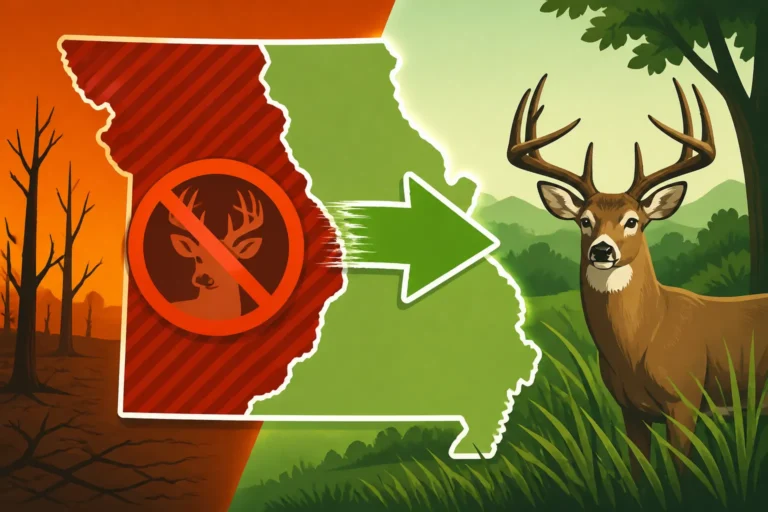
The primary rules you'll encounter in CMZs relate to carcass transport and mandatory sampling. For instance, if you harvest a deer in a CMZ, you generally cannot transport the whole carcass out of that county or an adjacent county. This restriction is designed to prevent infected carcass parts (especially the brain and spinal cord, where prions concentrate) from being moved to new areas and potentially spreading the disease. You can, however, transport specific parts like deboned meat, antlers attached to a skull cap (with no brain tissue), hides, or finished taxidermy products. This is critical for preventing Carcass Transport Rules Out of Missouri violations, even if you're just moving it to another county in Missouri.
It's vital to remember that these zones and their specific rules can be dynamic. The MDC constantly evaluates surveillance data and may add or remove counties from the CMZ list or adjust regulations as the disease picture changes. Always consult the most current Missouri Deer Hunting Regulations for the precise boundaries and requirements. A quick search on the MDC website or a look at the MO Hunting App before your season can save a lot of grief and ensure you're in compliance.
Carcass Transport Regulations to Prevent Spread
Transporting deer carcasses is one of the most significant ways CWD can spread, so Missouri has strict rules in place to mitigate this risk. These regulations are not arbitrary; they are based on scientific understanding of how prions travel and where they are most concentrated in a deer's body. The overarching goal is to prevent the movement of high-risk tissues (brain, spinal cord, lymph nodes) from CWD-positive areas to CWD-free areas.
Here's the gist of Missouri Deer Transport Rules:
- Within a CWD Management Zone: If you harvest a deer within a CWD Management Zone, you generally cannot transport the whole carcass outside of that zone or an immediately adjacent county without first having it sampled for CWD or processing it into low-risk parts. This is designed to contain any potential spread within the known risk area.
- Permitted Parts for Transport: You are allowed to transport certain low-risk parts anywhere in the state, even from a CMZ. These include:
- Deboned meat
- Antlers attached to a skull plate (skull cap) from which all brain and other nervous system tissue has been removed
- Hides or capes without the head or spinal column
- Teeth
- Finished taxidermy products
- Out-of-State Transport: If you plan to take your deer harvest out of Missouri, you must adhere to not only Missouri's regulations but also the regulations of your destination state. Many states have their own specific CWD carcass importation rules. It's your responsibility to check with the wildlife agency of the state you're traveling to before you leave Missouri. This is a crucial step to avoid legal issues and potential fines, and it’s a key part of responsible hunting to prevent spreading CWD to new regions.
Understanding these rules is essential for responsible hunting. Taking the time to process your deer appropriately or get it sampled before transport is a small effort that makes a huge difference in protecting the long-term health of our deer herd.
The Practicalities of CWD Sampling: A Step-by-Step Guide for Hunters
Okay, so you've harvested a deer, and you know you need to get it sampled. What now? It might sound intimidating, especially if it's your first time, but the process is actually pretty straightforward. The MDC has worked hard to make it as accessible as possible for hunters. Let's walk through the steps together.
Locating a CWD Sampling Station Near You
Finding a sampling station is the first hurdle, and thankfully, the MDC provides excellent resources to help. The best place to start is the MDC website. They typically have an interactive map or a searchable list of CWD sampling stations. These stations can include:
- MDC Offices: Many regional and local MDC offices serve as year-round or seasonal sampling locations.
- MDC CWD Sampling Sites: These are temporary sites, often set up during mandatory sampling weekends in CWD Management Zones, and they're typically well-staffed to handle a high volume of deer. You'll find these at Conservation Areas like August A. Busch Memorial CA or Weldon Spring CA during peak times.
- Participating Taxidermists and Meat Processors: Many local businesses partner with the MDC to offer voluntary sampling services. This is a fantastic option because you're likely already heading to one of these places anyway. For example, if you're hunting near Chillicothe, a local processor like GoHunt Taxidermy might be a participating location (note: this is a hypothetical example for brand placement, always verify current participants with MDC). This is where you might use a resource like GoHunt's mapping features if they integrate MDC's sampling station data, though the MDC's own site is the definitive source.
Before you head out, I highly recommend checking the MDC website for the most current list and operating hours of sampling stations in your specific hunting area. Times and locations can change, so a quick check before or during your hunt is always a good idea. This prevents you from driving all over creation with a deer head in the back of your truck, only to find the station closed.
The Sampling Process: What to Expect at the Station
Once you arrive at a sampling station, the process is usually quick and efficient. Here's what you can generally expect:
- Preparation: You'll need to bring the deer's head, with at least 4-6 inches of neck attached. Make sure it's clean and free of excessive dirt or debris. If you've already caped your deer, that's fine, as long as the necessary neck tissue is present. You'll also need your Telecheck confirmation number (from when you checked your deer in). This number is crucial for linking the sample to your specific harvest. Knowing Telecheck Requirements After a Harvest is important for this step.
- Arrival and Check-in: At a staffed station, you'll be greeted by MDC staff or volunteers. They'll ask for your Telecheck number and potentially your name and contact information.
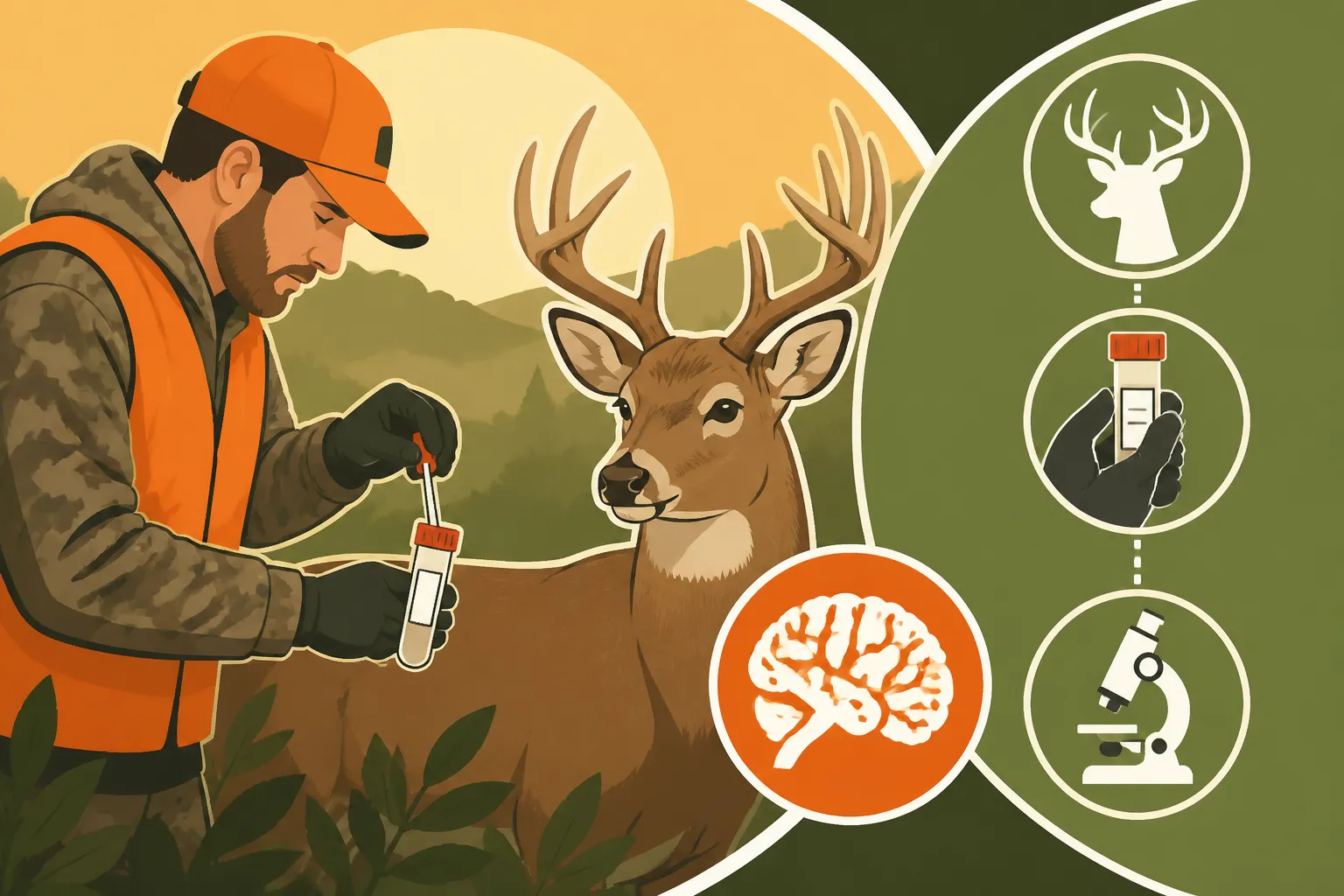
- The Sample Collection: A trained technician will then collect the sample. This typically involves removing lymph nodes from the deer's neck or a portion of the brainstem. It's a precise process, but generally takes only a few minutes. They'll use sterile tools and ensure the sample is properly labeled for submission to the lab. You don't need to do anything during this step except observe or wait.
- Completion: Once the sample is collected, you're free to go with the rest of your deer. The collected sample will then be sent to a specialized lab for testing. The staff will provide you with information on how to access your results later.
It's a really easy process, and the MDC staff are usually super friendly and happy to explain everything. Don't be shy about asking questions if you have them! They're there to help you comply and contribute to deer health.
Self-Sampling Options and How They Work
For hunters who can't make it to a staffed station or prefer to do it themselves, the MDC sometimes offers self-sampling options, although these are less common for CWD than for other biological collections. When available, self-sampling for CWD usually involves a drop-off system where you deposit the deer head and complete a form.
Here's how a typical self-sampling station might operate (always verify current options and instructions with the MDC):
- Locate a Self-Sampling Kiosk/Barrel: These are often unstaffed barrels or kiosks located at various points, especially in counties where CWD is a concern but full-time staffed stations aren't feasible.
- Prepare Your Deer Head: Just like with a staffed station, you'll need the deer's head with adequate neck tissue.
- Complete Information Form: At the kiosk, you'll find forms to fill out. This will require your Telecheck confirmation number, contact information, and details about your harvest (county, date, sex of deer). It’s absolutely critical to fill this out accurately so your sample can be properly linked and you can receive your results.
- Deposit the Head: Place the deer head (often in a bag provided or in your own secure bag) into the designated collection barrel or freezer. Ensure the form is attached securely to the head or submitted as instructed.
Self-sampling is a convenient option, but it places more responsibility on the hunter to follow instructions precisely. Proper labeling and accurate information are paramount for the sample to be useful. If you're unsure, it's always best to try and find a staffed station for your first time or consult the MDC directly.
Getting Your CWD Test Results and Understanding Them
After you've done your part and submitted a sample, the waiting game begins. It can feel like forever, wondering about the results of your deer. But getting those results and knowing how to interpret them is the final, crucial step in understanding your contribution to CWD management.
How to Access Your Deer's CWD Test Results
The MDC has streamlined the process for hunters to access their CWD test results. This is usually done online, which is a huge convenience.
- Online Portal: The primary method is through a dedicated CWD test results portal on the MDC website. You'll typically need your Telecheck confirmation number to look up your deer. This number is your unique identifier for that specific harvest, so make sure you keep it safe after you've telechecked your deer.
- Timeline: Results aren't instantaneous. It takes time for the samples to be transported to the lab, processed, and analyzed. During peak hunting seasons, especially after mandatory sampling weekends, there can be a backlog. The MDC generally aims to have results available within 4-6 weeks, but it can sometimes take longer. Be patient, and don't panic if they don't appear immediately.
- Email Notification (if opted in): In some cases, if you provided an email address at the sampling station, you might receive an email notification when your results are available. However, checking the online portal directly is usually the most reliable and proactive way to get your results.
It's always a good idea to bookmark the MDC's CWD results page so you can easily check back. Knowing Missouri CWD Testing Results Timeline helps set realistic expectations for when you can expect to see an update.
Interpreting the Results: Positive, Negative, or Inconclusive
When you finally look up your results, you'll typically see one of three outcomes:
- Negative: This is the result every hunter hopes for. A "negative" result means that CWD prions were not detected in the submitted sample. While no test is 100% foolproof and a negative result doesn't guarantee the animal was entirely CWD-free (especially if the disease was in its very early stages), it's the best outcome and indicates no detected infection. You can breathe a sigh of relief.
- Positive: A "positive" result means that CWD prions were detected in the sample. This confirms that the deer was infected with Chronic Wasting Disease. While this can be disheartening, it provides critical information for the MDC's surveillance efforts and helps inform management decisions in that area. If your deer tests positive, the MDC may contact you directly to discuss the findings and offer guidance.
- Inconclusive: Occasionally, a result might come back as "inconclusive." This usually means that the lab couldn't definitively confirm a positive or negative result. This could be due to the quality of the sample, issues during testing, or perhaps a very early stage of infection that wasn't clear. If you receive an inconclusive result, the MDC might request a new sample (if possible) or simply note it as an ambiguous case. It's rare, but it does happen.
Understanding these terms helps you make sense of what the lab is telling you about your harvested deer and the health of the local herd.
What to Do If Your Deer Tests Positive for CWD
Discovering your deer tested positive for CWD can be a tough pill to swallow. It's important to know what steps to take and what resources are available.
First and foremost, don't panic. The MDC will likely contact you if your deer tests positive. They will provide detailed information and guidance on what to do next. Generally, the recommendation is not to consume meat from a CWD-positive animal. While there have been no confirmed cases of CWD spreading to humans, public health agencies (like the CDC) and wildlife agencies (like the MDC) advise against eating meat from infected animals as a precautionary measure. It's a common sense approach to ensure safety, even with the unknown variables.
If you have already consumed some of the meat before receiving the positive result, don't despair. As mentioned, there's currently no evidence of CWD infecting humans. However, future consumption should be avoided. If you have remaining meat from a positive deer, the MDC will likely advise you on proper disposal methods. This usually involves double-bagging the meat and disposing of it in a lined landfill, to prevent any potential environmental contamination. They may also be able to answer specific questions you have, or you can check MDC's website on Where to Get a Missouri Deer CWD Tested for follow-up details. Your cooperation in these instances is vital for public health and ongoing CWD management.
| Result Status | Interpretation | Action for Hunter (MDC Recommended) |
|---|---|---|
| Negative | CWD not detected | Safe for consumption |
| Positive | CWD detected | Do NOT consume meat; dispose properly |
| Inconclusive | Cannot confirm | Generally advised not to consume meat as a precaution |
This table provides a quick reference for the actions to take based on your test results.
Why Your Participation Matters: Protecting Missouri's Deer Herd
It's easy to view CWD sampling as just another regulation, another hoop to jump through after a long day afield. But that couldn't be further from the truth. Your participation, whether mandatory or voluntary, is a direct, tangible contribution to the health of Missouri's deer herd and the future of hunting in our state. Every sample is a piece of the puzzle, and without hunter cooperation, the MDC would be flying blind.
The Importance of Hunter Cooperation in CWD Management
Imagine trying to fight a silent, invisible enemy without any intelligence. That's what CWD management would be like without hunters. You are literally the eyes and ears on the ground, the ones who bring in the samples that reveal where CWD is, how prevalent it is, and whether it's spreading. Without thousands of samples submitted each year, the MDC wouldn't have the data to:
- Identify New Outbreaks: Early detection is key to containing CWD. A hunter's sample from a new county could be the first indication that the disease has spread to a previously unaffected area, triggering focused management actions.
- Track Prevalence and Spread: Regular sampling allows the MDC to monitor Missouri CWD Prevalence Rates and observe trends over time. Is the disease increasing in certain areas? Is it stable? This data informs resource allocation and strategy.
- Evaluate Management Strategies: The MDC implements various strategies, from altered harvest regulations to public outreach. Hunter-submitted data helps them evaluate whether these strategies are working and adjust them as needed.
- Inform Public Health Decisions: While CWD hasn't crossed into humans, ongoing surveillance provides crucial information for public health agencies and helps ensure they have the most up-to-date information for any recommendations.
Think of it as a team effort. The MDC provides the science and the framework, but hunters provide the critical data points. Without your cooperation, the ability to effectively manage CWD in Missouri would be severely hampered, putting the entire deer population at greater risk.
Future Outlook: Ongoing Research and Management Efforts
The fight against CWD is a long game, and it's far from over. The MDC, along with researchers nationwide, is continuously engaged in studying the disease, refining testing methods, and developing more effective management strategies. This includes:
- Advanced Research: Scientists are constantly working to understand the nuances of CWD, including prion behavior, environmental persistence, and potential transmission pathways. This ongoing research informs Missouri's management decisions.
- Adaptive Management: CWD management isn't a one-size-fits-all approach. The MDC employs adaptive management, meaning they continuously evaluate the effectiveness of their strategies and adjust them based on new data and research findings. This might include changes to hunting regulations, carcass transport rules, or sampling efforts.
- Collaboration: Missouri works closely with other states and federal agencies like the USDA to share information, research, and best practices. CWD is a regional and national issue, and collaboration is essential for a coordinated response.
As hunters, staying informed about these efforts is part of our responsibility. The MDC often shares updates through its website, publications, and public meetings. Keeping an eye on these communications can provide valuable insight into the future direction of CWD management and how your role might evolve.
Beyond Sampling: Other Ways Hunters Can Help
While CWD sampling is incredibly important, your contribution to fighting CWD extends beyond just bringing in a deer head. There are several other ways you can help protect Missouri's deer herd:
- Report Sick Deer: If you ever see a deer exhibiting symptoms consistent with CWD (extreme weight loss, listlessness, neurological signs like stumbling or repetitive walking, excessive drooling), do not harvest it. Instead, immediately contact your local conservation agent or the MDC. This is a critical part of Reporting a Sick Animal in Missouri. They can investigate and, if necessary, collect a sample for testing without you having to be involved in the harvest.
- Practice Ethical Carcass Disposal: Always dispose of deer carcasses and parts properly. If you butcher your deer at home, double-bag the bones and other non-meat waste and dispose of them in a lined landfill. Never dump carcasses in fields or along roadsides, as this can potentially spread prions into the environment.
- Know Your Regulations: Staying up-to-date on all deer hunting regulations, especially those related to CWD Management Zones and carcass transport, is crucial. Regulations can change, so always check the latest MDC publications.
- Support Research and Management: Advocate for continued funding and support for CWD research and management efforts. Engage with the MDC and other conservation organizations.
- Clean Your Gear: While the risk of transmitting prions on gear is low, it's good practice to clean boots, vehicles, and tools that have come into contact with deer carcass parts, especially if you're moving between different hunting areas.
By taking these additional steps, you become an even stronger steward of Missouri's wildlife and a vital partner in the ongoing effort to manage and mitigate the threat of Chronic Wasting Disease. It's about more than just the hunt; it's about the heritage.
Disclaimer
The information provided in this guide is for general informational purposes only and is subject to change. While we strive to keep the content accurate and up-to-date, hunting regulations, CWD management zones, and testing procedures are determined and enforced by the Missouri Department of Conservation (MDC) and can be updated at any time. Hunters are solely responsible for understanding and complying with all current state and federal hunting laws and regulations. Always consult the official Missouri Department of Conservation website or current regulations booklet for the most accurate and up-to-date information before participating in any hunting activity.