Missouri Duck Season Dates by Zone
If you're anything like me, you've probably spent countless hours staring at the Missouri Department of Conservation (MDC) regulations, trying to decipher which duck season dates apply to your hunting spot. It can feel like navigating a maze, especially with the state's three distinct zones. This guide is here to clear up that confusion, breaking down Missouri's duck season dates by zone so you can plan your hunts with confidence and spend less time scratching your head and more time in the blind.
Understanding Missouri's Duck Zone System
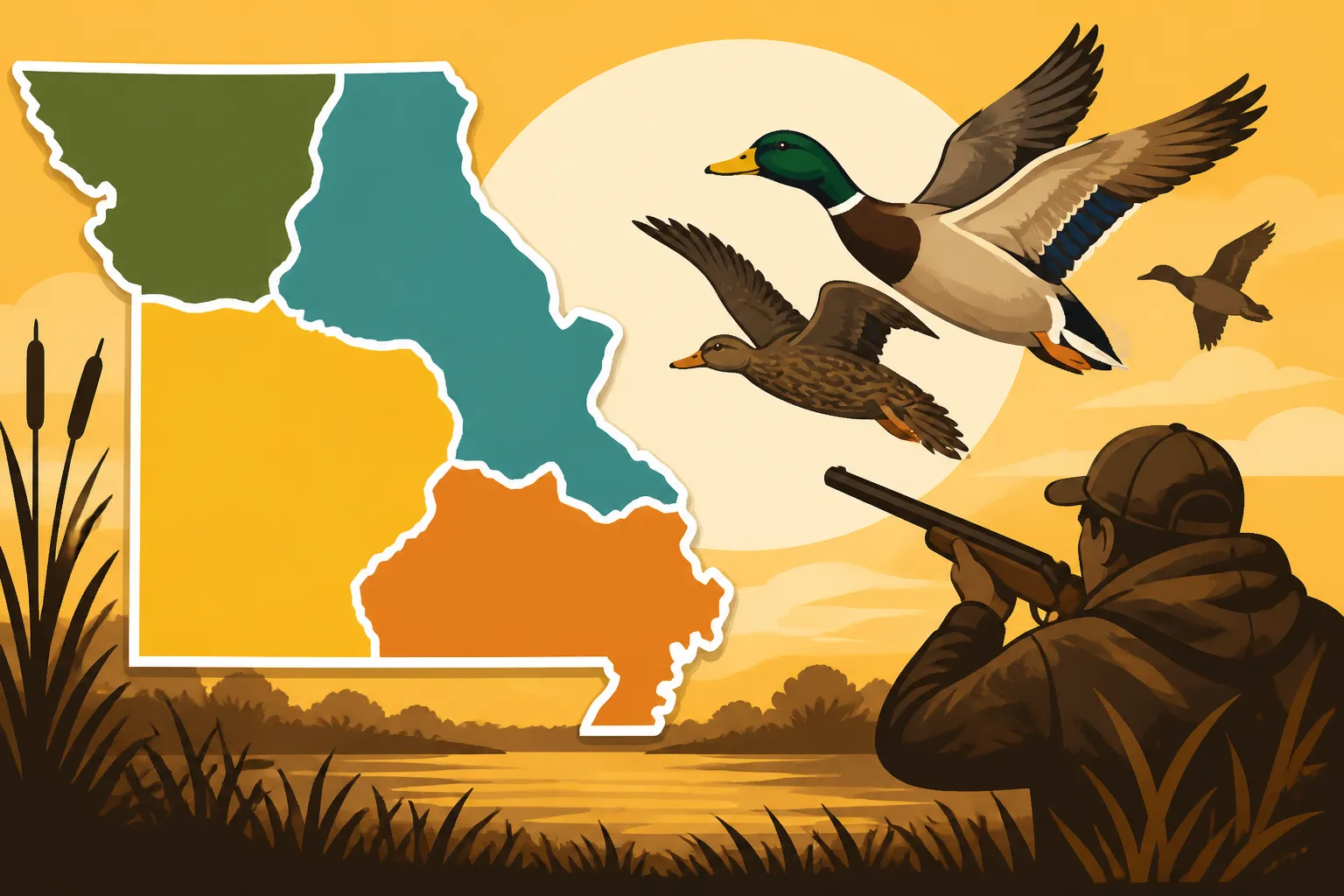
Missouri's approach to waterfowl seasons can seem a bit complicated at first glance, primarily because the state is carved into three distinct duck zones: North, Middle, and South. This isn't just a random تقسيم; it's a strategic decision by the Missouri Department of Conservation (MDC) to better align hunting seasons with the migratory patterns of ducks as they move down the Mississippi Flyway. For us hunters, this means your opening day and the overall length of your season will depend entirely on which of these zones your hunting grounds fall within. It's a system designed to maximize hunting opportunities while also managing the resource effectively across the state's diverse geography and waterfowl habitats.
The core idea is that ducks arrive and depart at different times in various parts of Missouri. The northern reaches of the state typically see birds earlier in the fall as they push down from Canada and the prairie pothole region. As winter progresses, these birds, along with later migrants, continue their journey southward, eventually concentrating in the middle and southern zones where open water and food sources might persist longer. Trying to have a single, statewide season would either open too early for southern hunters or close too soon for those in the north, missing prime opportunities. This zonal system is meant to optimize the timing for everyone, though it certainly requires a bit more homework from us.
Geographic Boundaries of Each Duck Zone
Pinpointing exactly where each zone begins and ends is crucial for any Missouri duck hunter. The MDC provides clear definitions, often using major highways, rivers, and county lines as boundaries. These aren't arbitrary lines on a map; they typically follow logical geographic or demographic divisions that make them easier for hunters to identify. Knowing these boundaries is your first step to understanding your local duck season. For instance, hunters near the Missouri River often find themselves at the transition point between zones, making it essential to double-check their specific location against the official regulations.
The North Zone generally encompasses the northernmost portion of the state. Its southern boundary typically runs along major east-west roadways or county lines, acting as a clear demarcation. Think of it as the prime early-season hunting ground where those first big pushes of teal and early mallards tend to arrive. If you're hunting north of Kansas City or St. Louis, chances are you're in the North Zone. Areas like Squaw Creek (now Loess Bluffs National Wildlife Refuge) or Fountain Grove Conservation Area are firmly in this zone.
Moving south, we hit the Middle Zone, which covers the vast central portion of Missouri. This zone's northern boundary borders the South Zone. This is often the longest season, designed to capture the bulk of the main migration as birds move through the state. It includes many of the state's well-known public waterfowl hunting areas that aren't in the far north or deep south. Think of areas around Columbia or even parts of the Lake of the Ozarks region falling into this zone.
Finally, the South Zone blankets the southernmost part of Missouri, including the bootheel and portions of the Ozark foothills. This zone typically has the latest opening and closing dates, as it's designed to coincide with late-season migrations and birds that might winter in Missouri before continuing further south. Hunters targeting late-season mallards in the famed flooded timber of the Bootheel will find themselves operating under South Zone regulations. Understanding these distinct zones is the foundation upon which you'll build your hunting plans. You can often find detailed maps in the annual waterfowl regulations booklet, or even use digital tools from services like GoHunt to visualize these boundaries directly on satellite imagery of your chosen hunting area.
Why Missouri Has Three Duck Zones
The decision to split Missouri into three duck zones is rooted in sound migratory bird management principles and a deep understanding of waterfowl movements through the Mississippi Flyway. It's not about making things complicated; it's about being effective. Ducks, unlike deer, don't stay put. They are constantly on the move, driven by weather patterns, food availability, and their biological imperative to migrate. A single statewide season simply wouldn't do justice to the varied arrival and departure times of these birds across a state as geographically diverse as Missouri.
Imagine if Missouri had just one season, set to capture the peak migration in the middle of the state. Hunters in the far north might miss out on the early birds that push through with the first cold fronts, and their season might close long before the last stragglers head south. Conversely, hunters in the deep South Zone would find the season opening far too early, with few birds having arrived yet, and perhaps closing before the final waves of wintering ducks have departed. The three-zone system allows the MDC to fine-tune the season dates for each region, maximizing the opportunity for hunters to encounter birds during their specific migratory windows. This also helps distribute hunting pressure, as different zones peak at different times, preventing overcrowding in one specific period. Ultimately, it’s about providing the best possible hunting experience while ensuring the long-term health of the waterfowl population that travels through Missouri's segment of the Mississippi Flyway. It's a balancing act, and these zones are a key part of that delicate equilibrium.
Missouri Duck Season Dates by Zone: The Breakdown
Alright, let's get down to brass tacks: the actual dates. Please keep in mind that these dates are subject to annual review and slight adjustments by the Missouri Department of Conservation (MDC), typically finalized in late summer or early fall for the upcoming season. While I'll provide examples based on the most recent complete seasons to illustrate the structure, it is absolutely critical for you to check the official MDC waterfowl regulations for the current hunting year before you ever step foot in the marsh or blind. Nothing is worse than getting all geared up, driving to your spot, and realizing you're either a week too early or a day too late.
The general structure, however, remains fairly consistent year to year. Each zone will have a specific opening day, a mid-season closure (a "split"), and then a reopening before a final closing day. These splits are designed to give birds a break from pressure and allow for staggered hunting opportunities. This also helps with hunter crowding, as some hunters may focus on the early portion, and others on the later. It’s a thoughtful approach that aims to distribute both the hunters and the harvest throughout the migration.
North Zone Duck Season Details
The North Zone is usually the first to open, aligning with the earliest push of migratory ducks through Missouri. This is typically where you'll find the first waves of green-winged teal, wigeon, and pintails making their appearance, often alongside resident mallards and wood ducks. The season often features a significant split, with an initial segment in late October/early November, followed by a closure, and then reopening for a longer, continuous stretch that carries into December. This structure is designed to capture both the early migration and the main body of birds as they move through.
For example, looking at the 2023-2024 season, the North Zone typically ran something like this: an opening weekend around the last Saturday in October, running for about 10-14 days. Then, there would be a closure for several days, perhaps even a full week or more. The season would then reopen around mid-November, continuing uninterrupted until early to mid-December. This allows hunters to experience both the fast-paced action of early season ducks and the often colder, more challenging but potentially rewarding hunting of the later migration. During the early part, birds are less wary, but numbers might be lower. By the second part, numbers can be very high, but the birds are much more educated. When you are looking at specific dates, use tools like GoHunt or the official MDC website to get exact dates. It's also worth noting that many managed wetland areas in the North Zone, such as Fountain Grove or Nodaway Valley Conservation Areas, see heavy pressure, especially during these prime opening periods. For more insights on this, you might find the article on Missouri North Duck Zone Dates helpful.
Middle Zone Duck Season Details
The Middle Zone tends to have the longest overall season length, strategically placed to overlap with the broad peak of the duck migration through the central part of the state. This zone is a sweet spot, seeing both early migrants that have already passed through the North Zone and later arrivals that will eventually winter further south. The season here often opens a bit later than the North Zone, typically in early November, and also features a split, but its second segment often runs well into December.
Again, using the 2023-2024 season as a guide, the Middle Zone might see its first portion open around the first Saturday in November, running for about 10-14 days. Following a closure, the season would then typically reopen in late November, potentially just after Thanksgiving, and continue through Christmas and even into the first few days of January. This extended second segment can offer fantastic late-season hunting opportunities, particularly for mallards and gadwall that have settled into agricultural fields and larger water bodies. The split often aligns with the major firearms deer season in Missouri, providing a slight reprieve for waterfowl. Planning your hunt around Missouri's November firearms deer season can sometimes influence how crowded the waterfowl spots are, too. This extended timeframe allows hunters flexibility, whether they prefer the relatively milder conditions of early November or the colder, often more productive hunts of late December.
South Zone Duck Season Details
The South Zone is the last to open and typically offers the latest closing dates, making it a prime destination for late-season hunting. This is where many ducks concentrate as winter truly sets in, seeking out open water, thermal refuges, and persistent food sources in the Bootheel and other southern regions. The season structure is geared towards these late-arriving and wintering birds, often pushing its second segment into January.
For example, based on the 2023-2024 framework, the South Zone might open around the third Saturday in November, running for a shorter initial period, perhaps 7-10 days. After a split, it would then reopen in early December and continue straight through until late January. This extended late-season period is a major draw for hunters looking to capitalize on large concentrations of ducks that have made their way down the flyway. Areas like Duck Creek Conservation Area and Ten Mile Pond Conservation Area are iconic South Zone destinations, known for their incredible late-season action. These later dates also mean hunters need to be prepared for potentially harsh winter weather, including ice, snow, and bitter cold. However, the reward can be phenomenal. You’ll definitely want to layer up and perhaps invest in quality Waders for Missouri Flooded Timber hunting if you plan on visiting these areas late in the season.
Special Waterfowl Seasons and Considerations
Beyond the main duck seasons, Missouri also offers special opportunities that cater to specific species or times of year. These seasons provide additional chances to get out in the field and broaden your waterfowl hunting experience, but they come with their own set of dates and regulations that are crucial to understand. It's not just about the general duck season; there are often bonus periods that can be incredibly productive if you're prepared.
One of the most popular special seasons is the early teal season, which allows hunters to target blue-winged and green-winged teal before the general duck season opens. These small, fast-flying ducks are early migrants, and their season is perfectly timed to intercept them as they pass through Missouri in September. Then, as the winter progresses and the main duck season winds down, the Light Goose Conservation Order kicks in. This special framework is designed to help manage overabundant snow, blue, and Ross's geese populations, offering extended hunting opportunities with more liberal methods.
Early Teal Season in September
The early teal season is a fantastic opportunity for Missouri waterfowl hunters to kick off their season, typically running for about 9-16 days in mid-September. This season is specifically for blue-winged, green-winged, and cinnamon teal, which are among the earliest migrants to pass through the state. If you love fast action and don't mind a bit of early fall heat and mosquitoes, this season is for you. Teal are incredibly quick and often fly in tight groups, making for challenging but rewarding shooting.
The appeal of the early teal season is that it provides a chance to hunt before the pressure of the main duck season begins. You're often hunting over shallower water, flooded fields, or smaller ponds that these little ducks frequent. The key is to distinguish teal from other duck species, as only teal are legal during this period. The MDC publishes identification guides, and it's essential to study them. Hunting the early teal can be a great way to warm up your shooting skills, scout new areas, and enjoy some beautiful early fall mornings in the marsh. For more specific details on this exciting opener, check out Missouri's September Teal Season.
Youth Waterfowl Hunting Days
Missouri is committed to fostering the next generation of hunters, and the youth waterfowl hunting days are a testament to that. These special days are held outside the regular duck season, often a weekend or two before the general opener in each zone, providing an exclusive opportunity for young hunters (typically 6-15 years old) to hunt ducks and geese with an adult mentor. The adult is prohibited from hunting ducks or geese during these youth portions, making it truly about the kids.
These youth days are invaluable for teaching ethical hunting practices, species identification, and waterfowling techniques in a less pressured environment. It's a chance to make memories and instill a love for the outdoors without the added competition of adult hunters. Plus, fewer boats and calls on the water can lead to some incredible hunting experiences for the youngsters. It’s an ideal time for a seasoned hunter to take a mentee out and pass on the traditions. The adult can call, set decoys, and help with retrieves, but the gun stays in the case for them. It’s truly a special opportunity designed to introduce new blood to the sport.
Light Goose Conservation Order
When the regular duck and goose seasons wind down, usually in late January or early February, Missouri hunters get a special extended opportunity to target snow, blue, and Ross's geese under the Light Goose Conservation Order. This isn't your typical hunting season; it's a management tool designed to help control the population of these geese, which have, in some areas, grown to unsustainable numbers that are damaging their Arctic breeding grounds.
During the Conservation Order, regulations are significantly relaxed. Hunters are often allowed to use unplugged shotguns (meaning more than three shells), electronic calls are permitted, and there are no daily bag or possession limits. This allows for highly effective hunting strategies, such as massive decoy spreads and continuous calling, to harvest large numbers of geese. It typically runs from early February through late March, spanning the spring migration when millions of these birds pass through Missouri. It’s a completely different kind of waterfowl hunting, often done in vast cut cornfields in northern Missouri, and it can be an unforgettable experience if you catch a big push of birds. Just remember, while the regulations are liberal, all federal and state licensing requirements, including the Missouri Federal Duck Stamp Requirement and Missouri HIP Registration for Migratory Birds, still apply.
Essential Regulations Beyond Dates
Knowing the duck season dates by zone is just one piece of the puzzle. To be a legal and responsible waterfowl hunter in Missouri, you need to be intimately familiar with a host of other regulations. These rules are put in place not to make your life harder, but to ensure fair chase, promote hunter safety, and, most importantly, conserve the migratory bird resource for future generations. Ignoring them can lead to hefty fines, permit revocations, and a black mark on our collective reputation as conservationists. It’s our responsibility to know and abide by these rules.
From daily bag limits and possession limits that dictate how many birds you can harvest and keep, to specific shooting hours that ensure ethical hunting, every detail matters. Waterfowl hunting also comes with unique federal requirements, like the Federal Duck Stamp, and state-specific needs, such as HIP registration and the use of non-toxic shot in certain areas. Overlooking any of these can quickly turn a successful hunt into a frustrating and costly encounter with a conservation agent. Taking the time to read the MDC's annual waterfowl regulations booklet cover-to-cover is non-negotiable for any serious duck hunter in Missouri. You can often access digital versions through the GoHunt app or directly from the MDC website, making it easier than ever to have the rules at your fingertips.
Daily Bag and Possession Limits
Understanding daily bag and possession limits is paramount for every duck hunter. These limits are set annually by the U.S. Fish and Wildlife Service, in cooperation with state agencies like the MDC, to manage waterfowl populations. The daily bag limit is the maximum number of ducks of certain species you can harvest in one day. This isn't just a total number; it often includes species-specific restrictions. For instance, out of your total duck bag limit, there might be sub-limits on mallards (especially hens), pintails, wood ducks, or canvasbacks. You need to know these nuances. For example, the total daily duck bag limit in Missouri is often six ducks, but that doesn't mean six of any duck. It might specify no more than four mallards (with often only two being hens), three wood ducks, two redheads, one pintail, or one canvasback, among other variations. These specific limits can change each year based on population surveys and habitat conditions.
The possession limit refers to the maximum number of legally harvested migratory game birds you can have on your person, in your vehicle, or stored at home. This limit is typically three times the daily bag limit. So, if your daily bag is six ducks, your possession limit would usually be eighteen. This rule is particularly important for hunters who may hunt multiple days or travel home with their birds. It prevents hunters from stockpiling an excessive number of birds over an extended period. Always check the current year's Missouri Duck Daily Bag Limit for the exact numbers and species-specific restrictions.
Shooting Hours and Hunter Orange
Adhering to legal shooting hours is a critical aspect of ethical and legal waterfowl hunting. For ducks and geese in Missouri, legal shooting hours typically begin one-half hour before sunrise and extend until sunset. This period is set to ensure fair chase, as hunting before or after these times would give hunters an unfair advantage in low light conditions, making accurate species identification difficult and increasing the risk of misidentification or even accidental shooting.
Using a reliable watch or, better yet, a hunting app that automatically adjusts for sunrise/sunset times based on your GPS location (many, including GoHunt, have this feature), is highly recommended. You'd be surprised how quickly those minutes before legal shooting light can tick away when you're setting decoys in the dark.
Regarding hunter orange, it’s essential to remember that while it's a mandatory requirement for deer and turkey firearms seasons in Missouri, it is not required for waterfowl hunting. In fact, wearing hunter orange in a duck blind would be counterproductive, as ducks and geese have excellent color vision and would easily spot you. Waterfowl hunters typically wear camouflage patterns that blend in with marsh, timber, or field environments. However, if you are also deer hunting during one of Missouri's overlapping deer seasons, like Bowhunting Through the Missouri Firearms Portion, and are in an area where firearms deer hunting is permitted, you would still need to follow the blaze orange requirements for deer hunters. Always consult the MDC regulations for specific details on hunter orange requirements, especially if hunting near other concurrent seasons.
Federal Duck Stamp and HIP Registration
Every waterfowl hunter in Missouri, whether resident or nonresident, is required to purchase and possess a valid Federal Migratory Bird Hunting and Conservation Stamp, commonly known as the Federal Duck Stamp. This isn't just another permit; it's a crucial piece of conservation funding. Ninety-eight cents of every dollar spent on a Federal Duck Stamp goes directly to acquire and protect wetland habitat and fund conservation efforts for the benefit of migratory birds and other wildlife. It's a small price to pay for the preservation of the very resource we love to hunt. You must sign the stamp across its face in ink to validate it.
In addition to the Federal Duck Stamp, all migratory bird hunters in Missouri (and nationally) must register with the Harvest Information Program (HIP) annually. This is usually done when you purchase your state hunting permits. HIP registration is a federal requirement and allows the U.S. Fish and Wildlife Service to collect harvest data from a sample of hunters. This data is vital for managing migratory bird populations and setting future hunting seasons and bag limits. It doesn't cost anything extra; it's just a quick survey about your previous year's hunting success (or lack thereof). You must carry proof of your HIP registration while hunting migratory birds. For more comprehensive information, refer to Missouri HIP Registration for Migratory Birds.
Non-Toxic Shot Requirements
For waterfowl hunting in Missouri, and indeed across the entire United States, the use of non-toxic shot is mandatory. This means lead shot is prohibited for hunting ducks, geese, coots, and other migratory birds. The ban on lead shot for waterfowl was implemented decades ago to protect waterfowl from lead poisoning, which can occur when birds ingest spent lead pellets from hunted areas. Lead is highly toxic to birds, causing paralysis, organ damage, and eventually death.
Common non-toxic shot alternatives include steel, bismuth, and various tungsten alloys. Each has its own characteristics in terms of density, cost, and ballistic performance. Steel shot is the most common and affordable, though it's lighter than lead, requiring larger shot sizes and faster velocities for comparable performance. Bismuth and tungsten alloys are denser, offering better performance but at a higher cost. It's crucial to use the correct non-toxic shot for your gauge and choke combination to ensure effective patterns and ethical harvests. Always double-check your ammunition to ensure it is marked as "non-toxic" before heading out. Furthermore, on many public hunting areas, particularly state-managed wetlands like Grand Pass or Eagle Bluffs Conservation Areas, all hunting (even for upland game or deer) may require non-toxic shot, not just waterfowl. Always verify local regulations for specific areas. You can often find specifics on Nontoxic Shot Rules on Missouri Wetlands.
Planning Your Hunt Around Zone Dates
Successfully planning your Missouri duck hunts requires more than just knowing the dates; it's about strategizing how to use those dates to your advantage. The zonal system offers unique opportunities and challenges that can be leveraged if you understand the migratory patterns and local conditions. A smart hunter thinks about not just when the season is open, but where the birds are likely to be, and how local conditions like water levels and food sources will influence their movements.
Whether you're targeting early-season teal, the main migration of mallards, or the late-season freeze-up birds, adapting your approach to the specific zone and time of year is key. This might mean scouting different areas, adjusting your calling techniques, or even changing your decoy spreads. Missouri offers a vast array of waterfowl habitats, from flooded timber and agricultural fields to large reservoirs and river bottoms, each with its own characteristics and peak hunting times. By integrating your knowledge of the zones with other critical factors, you can dramatically increase your chances of a successful hunt.
Scouting and Local Conditions
Scouting is the backbone of any successful waterfowl hunt, and it becomes even more critical when navigating Missouri's duck zones. Ducks are creatures of habit, but their habits are dictated by current conditions. What worked last year, or even last week, might not work today. This means constant vigilance and on-the-ground observation are key. For instance, if you're hunting in the North Zone in early November, you'll be looking for different types of feed and water than if you're in the South Zone in late December.
Factors like recent rainfall, river levels, and the status of agricultural harvests (especially corn and soybeans) all play a massive role. Flooded fields after a heavy rain can suddenly become prime feeding grounds, pulling birds away from traditional wetland areas. Conversely, a deep freeze can lock up shallow water, pushing birds to larger, deeper bodies of water or further south. Using aerial maps, checking online resources, and physically driving or walking potential areas are invaluable. Tools like GoHunt can help you overlay public land boundaries with satellite imagery, allowing you to identify potential food sources, water access, and roosting spots, making your scouting efforts more efficient, especially if you're new to an area or jumping zones. Always pay attention to localized reports or even traffic patterns around managed areas; sometimes the number of trucks at a boat ramp tells you a lot about current bird activity.
Migration Timing and Weather Patterns
The ebb and flow of duck migration are intrinsically linked to weather patterns, especially cold fronts. Understanding these dynamics is crucial for timing your hunts across Missouri's zones. The North Zone typically benefits from the first significant cold fronts pushing birds down from the north in late October and early November. These initial pushes can bring in large numbers of fresh, less wary birds.
As winter deepens, persistent cold weather further north will push more birds into the Middle and South Zones. A massive snowstorm in Iowa or Illinois can often signal an impending influx of ducks into Missouri a few days later. Hunters in the Middle Zone might experience peak migration in late November and early December, while the South Zone often shines from mid-December through January, especially after a series of hard freezes have locked up water in the northern parts of the state. Keeping a close eye on long-range weather forecasts, particularly tracking large-scale cold fronts, can help you decide which zone might be "hot" and when. Sometimes, it's worth delaying a hunt a few days to catch that big wave of new birds. This migratory dance is what makes waterfowl hunting so dynamic and rewarding; no two seasons are ever exactly alike, requiring constant adaptation. You can also research how Duck Migration Timing Through the Flyway works to better predict movements.
Decoy Spreads and Calling Strategies by Zone
The strategies you employ for decoy spreads and calling should evolve with the season and the zone you're hunting in. Early in the North Zone season, ducks are less pressured and more likely to respond to aggressive calling and relatively simple spreads. A few dozen decoys, perhaps a spinner, and some excited calling might be all it takes. As the season progresses, and birds become "call shy" or "decoy educated," a more subtle approach might be necessary. This means less calling, more realistic and natural decoy spreads, and paying meticulous attention to concealment.
For instance, hunting over a timber hole in the South Zone during late season often requires a very realistic, natural spread of mallard decoys, and very subtle, inviting calls rather than aggressive hail calls. Birds that have run the gauntlet of the entire flyway are incredibly wary. Conversely, during the middle of the season in the Middle Zone, you might find success with larger spreads, including a mix of mallards, pintails, and gadwall, with a variety of calls to attract diverse groups of birds. The type of water you're hunting—open water, flooded timber, or field—also dictates your spread. For example, Duck Calling in Timber Versus Open Water requires entirely different approaches. Always observe the birds: how are they reacting? Are they flaring from your spread? Are they ignoring your calls? Adjust accordingly. The best callers and decoy setters are those who can read the birds and adapt on the fly, recognizing that what worked an hour ago might not work now.
Summary of Missouri Duck Seasons by Zone
To help keep everything straight, here's a quick reference table outlining the typical structure of Missouri's duck season dates by zone. Remember, these are illustrative examples based on past seasons and you must always verify the current year's dates with the Missouri Department of Conservation before planning your hunt.
| Zone | Typical First Segment (Example) | Typical Split Closure (Example) | Typical Second Segment (Example) | General Characteristics |
|---|---|---|---|---|
| North Zone | Late Oct – Early Nov (~10-14 days) | Mid-Nov (~5-7 days) | Mid-Nov – Early Dec (~20-25 days) | First to open, targets early migrants, significant split. |
| Middle Zone | Early Nov – Mid-Nov (~10-14 days) | Mid-Nov – Late Nov (~5-10 days) | Late Nov – Early Jan (~30-35 days) | Longest overall season, targets main migration, often overlaps deer season. |
| South Zone | Mid-Nov – Late Nov (~7-10 days) | Late Nov – Early Dec (~5-7 days) | Early Dec – Late Jan (~40-45 days) | Latest opening and closing, targets late/wintering birds, longest continuous segment. |
| Early Teal | Mid-September (~9-16 days) | N/A | N/A | Statewide, specific for blue-winged, green-winged, and cinnamon teal. |
| Youth | Weekend prior to general opener | N/A | N/A | Separate youth-only days before general season in each zone. |
| Light Goose Conservation Order | Early Feb – Late March | N/A | N/A | Statewide, extended season for snow, blue, and Ross's geese, relaxed regulations. |
This table provides a snapshot of the season structure. Always refer to the official MDC regulations each year, especially for precise dates. You can also get more detailed information by looking into Missouri Waterfowl Seasons and Duck Zones.
Resources for Staying Up-to-Date
In the ever-changing world of waterfowl hunting, staying informed is just as important as having the right gear or the perfect call. Regulations can shift, season dates might be adjusted, and local conditions are constantly evolving. Relying on outdated information or hearsay is a recipe for frustration, or worse, legal trouble. Fortunately, the Missouri Department of Conservation (MDC) provides an abundance of resources to keep hunters in the loop.
From their comprehensive website to social media channels and specialized apps, there are numerous ways to access the most current information. Additionally, connecting with fellow hunters and local experts can offer invaluable real-time insights into bird movements and local conditions. The key is to be proactive in seeking out information and making it a regular part of your pre-season and in-season routine. Don't wait until opening day to discover a new rule or a shifted boundary.
Missouri Department of Conservation Official Channels
The absolute best and most reliable source for current Missouri duck season dates and all associated regulations is the Missouri Department of Conservation (MDC). Their official website, mdc.mo.gov, is a treasure trove of information. Here you will find the annual Waterfowl Hunting Regulations and Information booklet, available both as a downloadable PDF and often as interactive web pages. This booklet details all season dates by zone, bag limits, shooting hours, permit requirements, and special area rules. It's the definitive guide you need to consult every single year.
Beyond the website, the MDC also maintains an active presence on social media platforms like Facebook, X (formerly Twitter), and Instagram, where they often post updates, season reminders, and conservation news. They also offer a free MO Hunting app, which is incredibly useful. This app allows you to purchase permits, Telecheck your harvest, and often provides access to regulations and maps right from your phone. Make it a habit to check these official channels regularly, especially as the fall approaches, to ensure you have the most up-to-date information before you head afield. They are the ultimate authority, and their information is always the most accurate.
Online Scouting Tools and Communities
In today's digital age, online scouting tools and hunting communities have become indispensable resources for waterfowl hunters. While nothing replaces on-the-ground scouting, these digital aids can save you countless hours and provide insights you might otherwise miss. Apps and platforms like GoHunt, for example, offer detailed satellite imagery, property boundaries (including public lands like Conservation Areas and Mark Twain National Forest), and topographical maps. You can often mark potential hunting spots, track game movements (if using trail cameras), and even check weather forecasts, all within one platform. This is especially useful for exploring new areas or understanding access points on large public tracts.
Beyond the mapping features, online hunting forums and social media groups dedicated to Missouri waterfowl hunting can be great places to connect with other hunters, share information (within ethical boundaries, of course), and learn about general bird movements. While always be discerning about the information you receive from anonymous sources, these communities can provide a pulse on local conditions, such as recent migration pushes, water levels, or even common decoy strategies for specific areas. Just be mindful of sharing too much specific "spot burning" information, as we all want to preserve the quality of our public hunting grounds.
Keeping Track of Managed Area Drawings and Rules
For many of Missouri's premier waterfowl hunting opportunities, especially on highly managed conservation areas, it's not just about showing up on opening day. Many of these areas operate on a draw system, requiring hunters to apply in advance or participate in a daily morning drawing for access to blinds or hunting units. Understanding these processes and their specific dates is critical, particularly for popular spots like Grand Pass, Eagle Bluffs, or Duck Creek Conservation Area. Each managed area often has its own set of unique rules regarding check-in times, boat requirements, non-toxic shot zones, and even dog regulations.
The MDC website provides detailed brochures for each conservation area, which are a must-read if you plan on hunting these spots. These brochures outline everything from permitted hunting methods to vehicle access and specific draw procedures. Missing an application deadline or showing up unaware of a daily draw can mean missing out on a prime hunting spot. Utilizing resources like the MDC's managed hunt application system (often found through your GoHunt account or the MDC website) and regularly checking individual area pages for updates is crucial. These managed areas often offer some of the best waterfowl hunting in the state, but they demand diligent preparation and adherence to their specific operational rules. Knowing about Managed Hunt Draws on Missouri Wetlands can give you a significant advantage.
Disclaimer
Please remember that hunting regulations, season dates, and bag limits are subject to change. This guide provides general information and examples based on past seasons and common practices in Missouri. It is your sole responsibility to consult the most current and official Missouri Department of Conservation (MDC) regulations before participating in any hunting activity. Always verify all dates, limits, and rules for the current hunting season directly from the MDC's official publications. The author and publisher are not responsible for any errors or omissions, or for any adverse consequences resulting from the use of this information. Hunt safely, legally, and ethically.