North Missouri Versus Ozark Deer Density
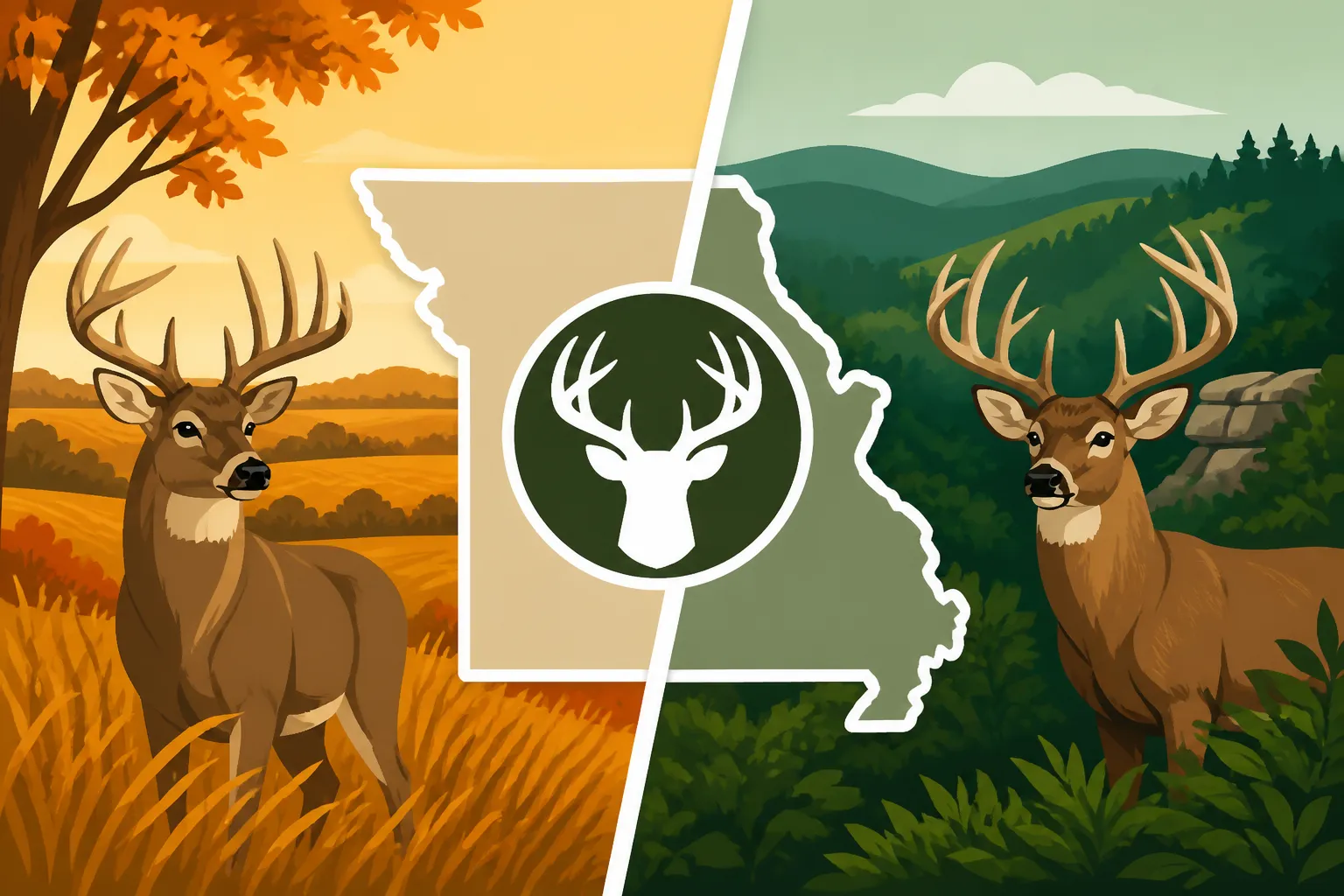
It's no secret that Missouri offers some fantastic deer hunting, but if you've ever spent time pursuing whitetails across the state, you've probably noticed a pretty dramatic difference between hunting north of the Missouri River and deep in the Ozarks. Hunters often scratch their heads wondering why deer numbers and even the size of the deer can vary so drastically. This guide will dive deep into the fascinating world of Missouri deer density, breaking down the unique factors that shape the whitetail populations in both the rich agricultural lands of northern Missouri and the rugged, timbered hills of the Ozarks, helping you refine your strategy no matter where you hunt.
Understanding Deer Density in North Missouri
When you talk about deer hunting in North Missouri, you're often talking about big bucks and high deer numbers. There's a reason for that, and it largely comes down to the landscape itself. It’s a completely different world from the southern part of the state, and understanding these differences is key to successful hunting.
The Influence of Agricultural Landscapes
North Missouri is defined by its fertile, black soil and vast expanses of row crops. Think endless fields of corn, soybeans, and winter wheat. This isn't just pretty scenery; it's a deer buffet. These agricultural fields provide an incredibly high-calorie diet for deer, which is fundamental to their health, body size, and antler development. Deer here don't have to travel far to find abundant food sources, leading to healthier animals that can really pack on the pounds and grow impressive racks.
While food is plentiful, continuous, vast tracts of timber can be a bit scarcer in some parts of the north compared to the Ozarks. What timber does exist, often in small blocks, creek bottoms, or along fencerows, becomes critical bedding cover. Deer will concentrate in these areas, especially during daylight hours, making their movement patterns more predictable between their bedding and feeding areas. Understanding where these northern giants choose to bed, even in fragmented cover, is paramount for success, as we often explore when discussing topics like Where North Missouri Bucks Bed. The pressure on these smaller timber blocks can be intense, so knowing how deer use them is essential.
Historical and Current Population Trends
Missouri's deer herd has come a long way from its meager beginnings in the early 20th century. North Missouri, with its fertile ground, played a significant role in this recovery. The explosion of modern agriculture provided the nutritional foundation for a burgeoning deer population. Deer numbers in many northern counties have historically been, and largely remain, higher than in the more rugged southern regions. The sheer carrying capacity of the land, driven by agricultural output, allows for a greater density of deer.
Current population estimates from the Missouri Department of Conservation (MDC) consistently show that many northern counties maintain some of the highest deer densities in the state. While there are always fluctuations due to weather, disease outbreaks like EHD, or changes in harvest regulations, the overall trend in North Missouri remains robust. To truly grasp the scale, it's worth diving into the Missouri Deer Population Estimate provided by the MDC each year, which showcases these regional disparities clearly. This higher density means more opportunities, but it also means deer can be more wary due to increased hunter encounters.
Antler Quality and Herd Health
The nutritional bounty of North Missouri translates directly into superior antler quality and overall herd health. Bucks have access to the minerals and proteins needed to maximize their genetic potential. While genetics play a role, a deer can only grow to its potential if it has the resources. In North Missouri, those resources are abundant. This is why you consistently see more Boone and Crockett and Pope and Young entries coming from the northern half of the state.
Even with the removal of antler point restrictions (APRs) in many counties, the healthier habitat and abundant food sources mean that bucks still often reach older age classes and express larger antlers. Hunters in these regions often focus on specific management strategies, understanding that quality forage helps maintain a robust and healthy herd. When we discuss counties known for producing monster deer, such as when we consider the Best Missouri Counties for Big Bucks, almost invariably, the conversation turns to North Missouri's agricultural belt. The combination of genetics, nutrition, and adequate age structure creates prime conditions for trophy potential.
Deer Density Dynamics in the Missouri Ozarks
Venturing south of the Missouri River into the Ozarks feels like stepping into a different state. The rolling hills give way to steep hollows, rocky bluffs, and vast expanses of timber. This landscape, while incredibly beautiful, presents a very different set of challenges and opportunities for deer and the hunters who pursue them.
The Rugged Terrain and Timbered Habitat
The Ozarks are characterized by deeply dissected terrain, rocky, often infertile soils, and mature oak-hickory forests. While these forests provide extensive cover, they don't offer the same rich, year-round food sources as northern crop fields. Deer in the Ozarks primarily rely on acorns in the fall, supplemented by various forms of browse, forbs, and limited agricultural plots scattered throughout the region. This dispersed and often less nutritious diet generally results in smaller-bodied deer with less impressive antler development compared to their northern counterparts.
The sheer amount of timber, while offering security, can make finding deer a challenge. Deer movement is often dictated by terrain features, thermals, and more subtle food sources. They utilize the deep hollows and ridgelines to travel, bed, and feed. Learning to interpret these natural features, such as by Reading an Ozark Hollow for Deer Movement, becomes crucial for understanding deer patterns in this vast, timbered environment. There are no easy field edges to watch here; it's about finding the deer in their natural, wild setting.
Factors Affecting Population Numbers in the South
The carrying capacity of the Ozark landscape is inherently lower than that of North Missouri. Less productive soil means fewer nutritious plants, which in turn supports fewer deer per square mile. Historically, this region faced challenges with overharvesting and unregulated hunting during the market hunting era, further impacting population recovery. While modern management has seen remarkable success, the biological limitations of the habitat still influence density.
Disease outbreaks also play a role, as they do everywhere. For instance, EHD Outbreaks in Missouri Deer can significantly impact local populations, and while not exclusive to the Ozarks, the slower recovery rate in less productive habitats can make their effects feel more pronounced. Furthermore, the extensive public land in the Ozarks, while fantastic for access, can lead to localized hunting pressure that can spread deer out and make them even more elusive. It's a testament to the resilience of the whitetail that they thrive in this beautiful but challenging environment.
Challenges and Opportunities for Hunters
Hunting in the Missouri Ozarks requires a different mindset and different tactics. You're typically dealing with lower deer densities, which means you might not see as many deer in a day. However, these deer are often wilder, more attuned to their environment, and can be incredibly rewarding to pursue. The vastness of public land, such as the Mark Twain National Forest or numerous Conservation Areas, offers incredible opportunities for solitude and true wilderness hunting.
Success often hinges on covering ground, still-hunting, and meticulous scouting to find those hidden pockets of activity. Food plots, where available, can be magnets, but often it's about identifying natural funnels, saddle features, water sources, and productive acorn flats. While the deer might not be as numerous or as large on average, the experience of Deer Hunting the Missouri Ozarks is an unparalleled adventure into rugged, natural beauty, demanding a deeper understanding of deer behavior in their wild habitat.
Key Differences and Management Implications
Understanding the distinct characteristics of deer populations in North Missouri versus the Ozarks isn't just academic; it directly impacts hunting strategies, management goals, and even how we perceive the overall health of Missouri's whitetail herd. The disparities are quite stark when you look at the raw data.
Nutritional Value and Body Condition
The most evident difference between North Missouri and Ozark deer lies in their physical attributes. Due to the rich, agricultural diet, North Missouri bucks consistently exhibit heavier body weights and larger antler development. It's not uncommon for mature northern bucks to weigh well over 200 pounds dressed, with impressive racks boasting greater mass and spread. This is a direct result of the high protein and carbohydrate intake from corn, soybeans, and alfalfa.
In contrast, Ozark deer, relying on a browse-heavy, timber-based diet, tend to be smaller-bodied and often possess more modest antler size. A mature Ozark buck might dress out closer to 150-180 pounds, and while they can certainly grow impressive antlers, it's generally less common to see the sheer mass and widespread typicality found in the north. This isn't a sign of an unhealthy herd in the Ozarks, but rather a reflection of the nutritional limitations of their environment. Comparing these regional differences often highlights the discussion about Ozark Deer Density Versus the North in state wildlife reports and hunting forums.
Habitat Characteristics and Deer Behavior
The contrasting habitats also foster different deer behaviors. In North Missouri's fragmented timber blocks and extensive fields, deer movement is often concentrated along pinch points, fencerows, and creek bottoms that connect bedding cover to feeding grounds. This makes patterning deer, particularly during the rut, somewhat more predictable, and strategies often revolve around static stand placements overlooking these travel corridors. Hunters can often locate highly productive areas for Hunting a Missouri Fencerow Between Fields.
Conversely, in the vast timber of the Ozarks, deer movements can be more expansive and less concentrated. They utilize the contours of the land, wind patterns, and the subtle availability of forage. Still-hunting, covering significant ground, and adapting to variable food sources are more effective tactics. Deer in the Ozarks often feel less pressure per acre due to the sheer size of the public land, but they are also masters of using the terrain to their advantage, making them exceptionally elusive. Their movements are a complex dance with the terrain and the elements.
Chronic Wasting Disease and Management Zones
Chronic Wasting Disease (CWD) is a significant concern across Missouri, but its prevalence and management strategies often reflect the regional deer densities. While CWD has been detected in both regions, the specific distribution and intensity can vary. The Missouri Department of Conservation (MDC) has implemented rigorous CWD surveillance and management efforts, which have seen changes over time, including the removal of some CWD Management Zones. Understanding how Chronic Wasting Disease in Missouri Deer impacts different regions is vital for hunters, especially concerning carcass transport and mandatory sampling rules.
The higher deer densities in North Missouri can, in theory, create conditions where CWD might spread more readily if not managed aggressively. However, the Ozarks also have their challenges, particularly with the movement of deer across large, unfragmented landscapes. GoHunt, and similar platforms that provide localized harvest data and CWD information, can be invaluable for hunters to stay informed about specific county regulations and prevalence rates, helping them make informed decisions about hunting locations and carcass handling.
Hunting Strategies Tailored to Regional Densities
Recognizing the fundamental differences in deer density and habitat between North Missouri and the Ozarks is more than just trivia; it's the foundation for developing effective hunting strategies. What works brilliantly in a cornfield edge might be completely fruitless in a timbered hollow, and vice-versa.
North Missouri Tactics for Higher Density
With higher deer densities and concentrated food sources, North Missouri hunting often revolves around strategic stand placement near agricultural fields, timber fringes, and natural funnels. Identifying bedding areas, even small timber blocks, and setting up along the travel routes to and from feeding fields is a classic and highly effective approach. During the rut, these high-density areas can be explosive, with bucks actively cruising for does. Hunters often find success by focusing on transition lines where different habitats meet.
Scouting is paramount here, not just for deer sign, but for understanding crop rotation, field access, and how deer use the limited cover. Utilizing tools like onX Hunt or GoHunt to analyze aerial photos can reveal subtle funnels, pinch points, and cover that might otherwise be overlooked. Techniques like setting up Ground Blinds on Crop Field Edges are common, allowing hunters to capitalize on deer movement during low-light conditions. The objective is to intercept deer moving between their secure bedding sites and the abundant food sources.
Ozark Approaches for Lower Density Deer
Hunting the Ozarks demands a more adaptable and often more mobile approach. With lower densities, simply sitting and waiting in one spot might not be as productive. Covering ground, often called still-hunting or still-trailing, becomes a highly effective strategy. This involves moving slowly and deliberately through the timber, pausing frequently to glass ahead and listen. The focus shifts from intercepting deer to actively finding them.
Identifying key terrain features like ridge saddles, benches above creeks, and secluded hollows where deer might travel or bed down is critical. Acorn production can be inconsistent, so scouting for current mast crops or other late-season food sources like green browse becomes essential. This type of hunting requires physical endurance and a keen understanding of wind and thermals, which play a huge role in how deer navigate the steep, broken terrain. Extensive preparation, including thorough Scouting Missouri Public Land Before Season, is non-negotiable for consistent success in these rugged lands.
Interpreting Harvest Data and Hunter Success
Hunter success rates naturally reflect deer density. While the MDC provides a comprehensive Missouri Harvest Report annually, breaking down harvests by county and season, it’s important to interpret this data with regional context. Counties in North Missouri often show higher overall deer harvests due to their greater deer populations and higher hunter numbers. This doesn't necessarily mean hunting is "easier," but rather that the opportunity for encounters can be greater.
In the Ozarks, harvest numbers per county might be lower, but this doesn't diminish the quality of the hunting experience. Success here might be measured not just in deer harvested, but in the challenge overcome and the knowledge gained about truly wild whitetails. GoHunt data, which often compiles detailed harvest statistics and hunter observations, can help you understand localized trends and tailor your expectations. It allows hunters to make informed decisions, whether they're seeking high-volume opportunities in the north or the rewarding challenge of a mature Ozark buck.
The choice between North Missouri's high-density, agriculture-influenced hunting and the Ozarks' challenging, wilderness-style pursuit often comes down to personal preference and the type of experience a hunter seeks. Both offer incredible opportunities within Missouri's diverse deer hunting landscape.
| Feature / Metric | North Missouri Deer | Ozark Deer |
|---|---|---|
| Primary Food Source | Corn, soybeans, alfalfa, winter wheat, natural browse | Acorns, various browse, forbs, limited agriculture |
| Typical Body Size | Larger, heavier (180-250+ lbs dressed) | Smaller (120-180 lbs dressed) |
| Antler Potential | Higher, more mass, wider spreads | More modest, can still be good, often less mass |
| Deer Density | Higher | Lower |
| Habitat Type | Agricultural fields, fragmented timber blocks, creek bottoms | Vast oak-hickory forests, steep hollows, rocky ridges |
| Hunter Tactics | Static stands on field edges, pinch points, funnels | Mobile (still-hunting), covering ground, terrain-based setups |
| Hunting Pressure | Can be high in smaller timber blocks and popular areas | Dispersed over vast public lands, but still present |
| CWD Prevalence | Varies by county, active surveillance | Varies by county, active surveillance |
Disclaimer
Please remember that hunting regulations, seasons, and local conditions can change. Always consult the most current Missouri Department of Conservation (MDC) regulations and local area rules before planning any hunting trip. This information is for educational purposes and should not replace official guidelines.