Ozark Deer Density Versus the North
When you set out to deer hunt in Missouri, one of the first questions that often crosses a hunter's mind is where to go. Do you head for the rolling, fertile farmlands of North Missouri, or do you dive into the rugged, timbered hills of the Ozarks? This guide aims to clear up the age-old debate about deer density in these two distinct regions, helping you understand the inherent differences and how they might impact your hunting strategy.
North Missouri Versus Ozark Deer: A Fundamental Divide
Missouri is a fantastic state for deer hunting, offering diverse landscapes that provide unique challenges and rewards. However, the deer populations and the character of the hunt itself vary dramatically between the northern agricultural belt and the southern Ozark plateau. It's not just a subtle difference; it's a fundamental divide that shapes everything from antler size to typical deer behavior.
The Abundance of North Missouri's Agrarian Landscape
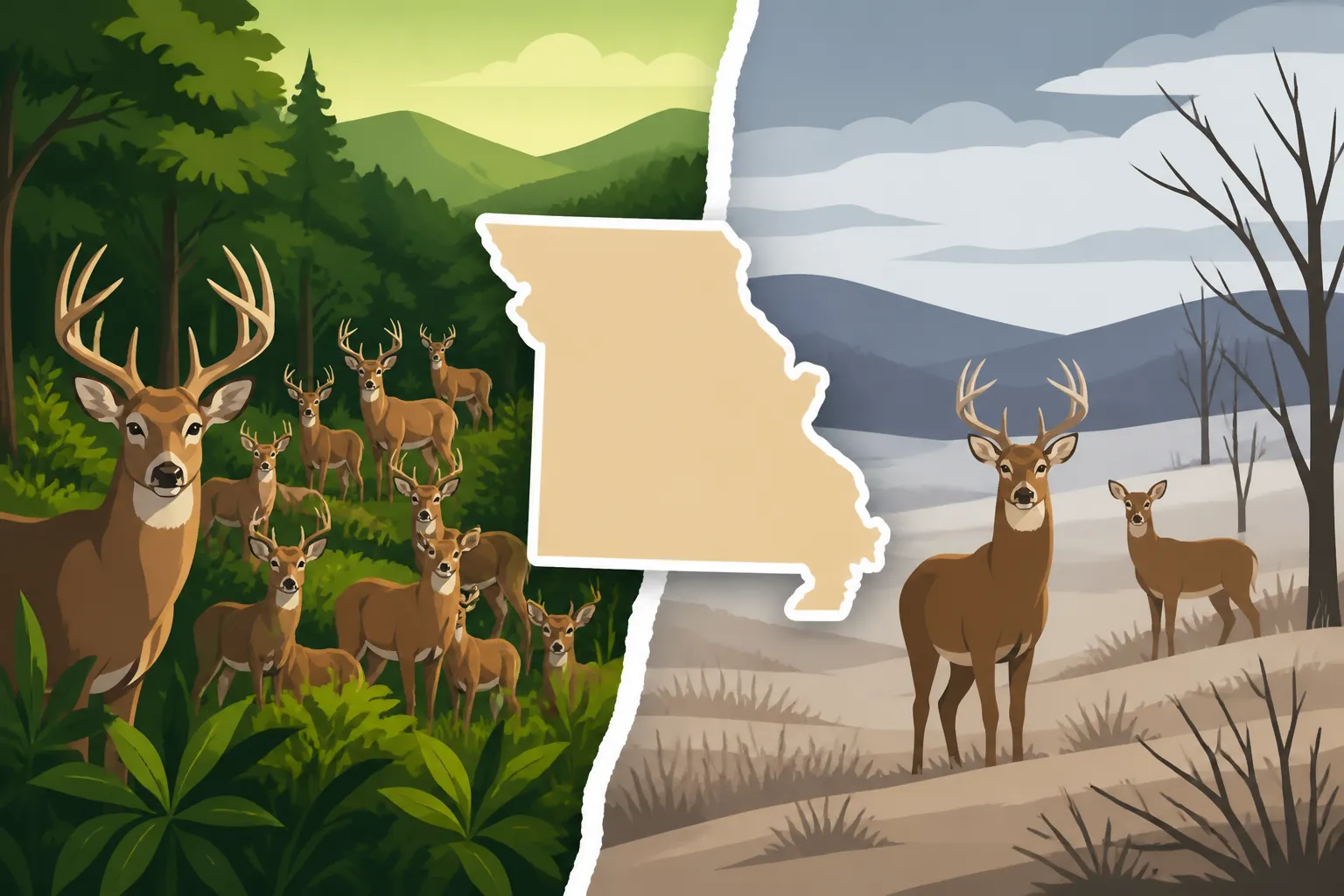
North Missouri, particularly the region north of the Missouri River, is synonymous with agricultural abundance. Here, vast tracts of row crops like corn, soybeans, and alfalfa dominate the landscape, interspersed with timbered river bottoms, fencerows, and smaller woodlots. This rich environment provides whitetails with an incredible buffet of high-energy, nutrient-dense food sources for most of the year.
The result is generally higher deer densities and, perhaps more famously, a consistent track record of producing larger-bodied deer with impressive antler growth. Bucks in North Missouri often reach their genetic potential faster, thanks to readily available protein and minerals. You'll find deer here that are heavier and often carry more impressive racks compared to their southern counterparts. Hunters often describe seeing more deer in a single sit in these areas, particularly near prime food sources. The challenge here often isn't finding deer, but finding a mature buck that has eluded the significant hunting pressure this region can also experience.
The Rugged Realities of Ozark Deer Hunting
Venture south into the Missouri Ozarks, and the landscape transforms into a breathtaking, yet challenging, expanse of hardwood timber, deep hollows, and rocky ridges. This is a country defined by its vastness, its elevation changes, and its relative lack of intense agriculture. The primary food sources for deer here are acorns, various forms of browse, and what little cultivated land exists in the valleys or on small private parcels.
Consequently, deer densities in the Ozarks are typically lower than in North Missouri. The habitat, while extensive, is less fertile, and the natural food supply can be less consistent, especially during drought years. Deer in the Ozarks tend to be smaller in body size, and while trophy bucks certainly exist, they generally aren't as prevalent as in the agricultural areas. The deer here are often harder-earned, requiring more physical effort, a deeper understanding of topography, and a keen eye for subtle sign in big timber. Deer Hunting the Missouri Ozarks is a pursuit that tests your endurance and your woodsmanship, and it's where you learn the true meaning of covering ground.
Understanding the Drivers Behind the Numbers
The differences in deer density and quality aren't random; they're direct consequences of geology, historical land use, and habitat. Understanding these underlying factors is key to appreciating why these two regions hunt so differently.
Habitat and Food Sources: A Stark Contrast
The most significant factor driving the disparity in deer density and antler quality is habitat and, more specifically, food availability and nutrition. North Missouri sits on deep, rich topsoil deposited over millennia, making it ideal for large-scale agriculture. This translates directly into a high-calorie, high-protein diet for deer. Imagine a deer in a soybean field versus one scrounging for acorns in a rocky hollow; the nutritional intake is worlds apart. This superior nutrition supports higher fawn survival rates, faster growth, and robust health, leading to more deer and bigger deer.
In the Ozarks, the geology is older, rockier, and the soils are generally thinner and less fertile. While the timber provides cover and acorns during mast years, it's a boom-and-bust food source. When acorns are scarce, deer rely more heavily on browse, which is often less nutritious. This environment can't support the same density of deer, nor can it typically produce the same size of deer, simply because the nutritional foundation isn't there. Hunters who understand this will often focus their efforts around any limited agriculture or highly productive oak flats, carefully studying Reading Aerial Photos for Ozark Deer to identify potential hotspots.
Land Use, Pressure, and Public vs. Private Dynamics
Another crucial difference lies in land ownership and hunting pressure. North Missouri is predominantly private land, often owned by farmers who manage large tracts. While some of these lands are leased for hunting, a good portion is privately managed by families or small groups, which can lead to more controlled hunting pressure and a better age structure for bucks. When you can regulate harvest and provide consistent food, you create conditions for deer to mature. Finding access can be challenging, but securing a spot often comes with the potential for higher success rates given the inherent deer numbers. For those looking to gain an edge, platforms like GoHunt can sometimes offer insights into land boundaries and potential access points, helping you navigate the patchwork of ownership.
The Ozarks, on the other hand, boast vast expanses of public land, including portions of the Mark Twain National Forest and numerous Conservation Areas. While this offers incredible accessibility, it also means that deer often experience consistent hunting pressure across wide areas. Public land deer tend to be warier, move more, and are less likely to stick to predictable patterns, especially once the season opens. Hunting on public ground here often requires more strenuous effort, deeper walks, and a willingness to explore Finding Ground Others Walk Past to escape the crowds. The deer might be less numerous, but outsmarting one on its home turf in the rugged Ozarks can be an immensely satisfying challenge.
CWD and Management Strategies
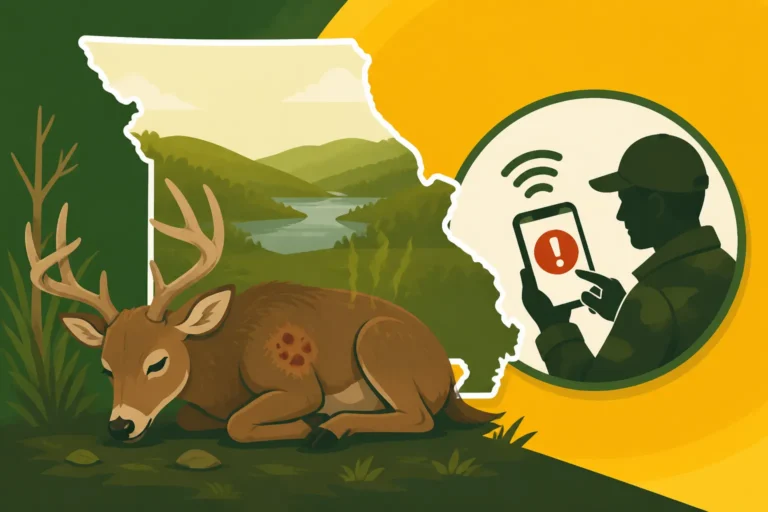
While not the primary driver of the density difference, Chronic Wasting Disease (CWD) and subsequent management strategies have become a factor in certain areas of Missouri, affecting deer populations in both regions to varying degrees. CWD is a neurological disease that is always fatal to deer and elk, and its presence has led to specific regulations and testing efforts.
In some CWD management zones, particularly in areas with higher deer densities, managers may encourage increased harvest of antlerless deer to help slow the spread of the disease. This can locally impact deer numbers. While CWD is a concern statewide, its long-term effects on overall regional deer density compared to the fundamental habitat differences are still unfolding. It's always wise to stay informed about Chronic Wasting Disease in Missouri Deer and any specific county regulations before your hunt. The Missouri Department of Conservation (MDC) continuously monitors the disease and updates regulations, which hunters can often track through online resources like GoHunt's news aggregators or the MDC's official channels.
| Feature | North Missouri Deer Hunting | Missouri Ozarks Deer Hunting |
|---|---|---|
| Deer Density | Generally Higher | Generally Lower |
| Antler Quality | Higher potential for large antlers (nutrition) | Good potential, but often smaller average (less nutrition) |
| Primary Habitat | Croplands, timbered draws, river bottoms, fencerows | Hardwood timber, rocky ridges, deep hollows |
| Terrain | Rolling hills, often flatter, agricultural | Steep, rugged, broken topography |
| Land Ownership | Predominantly private, significant agriculture | More public land, national forest, less agriculture |
| Hunting Style | Stand hunting near food/cover, less ground covered | Mobile hunting, still-hunting, covering more ground |
| Challenge | Finding mature deer on pressured land, securing access | Physical endurance, finding scattered deer, woodsmanship |
Practical Implications for Your Hunt
Knowing the differences in deer density and habitat is one thing; applying that knowledge to your actual hunting strategy is another. How you approach a hunt in the Ozarks will be vastly different from how you tackle a big-buck farm in the north.
Adapting Your Scouting and Strategy
Effective scouting is paramount, regardless of where you hunt, but the methods differ. In North Missouri, your scouting might heavily involve glassing agricultural fields from a distance, identifying pinch points between bedding cover and feeding areas, and looking for concentrations of sign along timbered edges. Where North Missouri Bucks Bed is often close to food, allowing for relatively predictable patterns. You're often looking for high-traffic corridors and distinct funnels that lead deer to and from those rich food sources. Trail cameras can be incredibly effective for pattern specific bucks using these routes.
In the Ozarks, scouting becomes much more about covering ground and interpreting subtle clues. Deer are often more spread out, and their movements are less tied to a single food plot. You'll be looking for oak flats in mast years, checking creek bottoms for tracks, and deciphering rub and scrape lines on remote ridges. Hanging a Stand on a Ridge Saddle or finding a subtle bench above a hollow can be key. It's about finding those less-pressured pockets of timber where deer feel secure. This is where detailed topographic maps, GPS devices, or robust hunting apps like GoHunt's mapping features become invaluable for marking potential travel routes, bedding areas, and overlooked sanctuaries.
Equipment and Effort: Matching the Terrain
Your gear choices and the physical effort required will also vary. Hunting North Missouri might involve more time in stationary treestands or well-brushed ground blinds overlooking fields. Your focus might be on comfortable, warm clothing for long sits, and optics that can perform well for longer-range glassing across open fields. Optics for Missouri Deer Hunting that provide clear images at dawn and dusk become critical.
For the Ozarks, durability and mobility are king. You'll likely be hiking miles over steep, rocky terrain, often carrying your stand on your back if you're not still-hunting. Boots and Packs for Ozark Country that are comfortable and capable of handling rugged conditions are non-negotiable. Lighter, more mobile treestands or saddle hunting setups are often favored for rapid deployment and quick repositioning. The physical demand of Ozark hunting is higher, requiring a different level of fitness and preparation. Consider what gear you'll need for Getting a Deer Out of a Hollow Alone if you're successful deep in the timber.
Patience and Persistence: The Ozark Hunter's Virtue
Finally, the mental game of hunting shifts. In North Missouri, with higher deer densities, you might expect more deer sightings. The challenge might be passing up smaller bucks, or outwitting a mature animal that has grown accustomed to human presence. The opportunities might come more frequently.
In the Ozarks, patience and persistence are true virtues. You might go hours, even days, without seeing a deer, but when you do, it's often a significant encounter. Success often comes from grinding it out, covering ground methodically, and trusting your woodsmanship. Learning to Still-Hunting a Missouri Ozark Hollow or focusing on Hunting Missouri Ridge Saddles and Benches requires a different level of focus and a deeper connection to the wildness of the landscape. While the numbers might be lower, the sense of accomplishment from harvesting an Ozark deer, especially a mature buck, is incredibly rewarding precisely because of the effort and skill it demanded.
Disclaimer
This article is for general informational purposes only and does not constitute professional advice. Laws, prices and regulations vary by location and change over time. Consult a qualified professional for guidance on your specific situation.