Duck Migration Timing Through the Flyway
There’s nothing quite as frustrating for a Missouri duck hunter as meticulously planning a trip, only to arrive at your favorite wetland or river bottom and find it eerily quiet, the ducks having either not shown up yet or already pushed through. It feels like a constant battle against the calendar and the skies, trying to guess when those waves of migrating waterfowl will finally dark out the horizon. This guide is here to shed some light on the intricate dance of duck migration through the famed Mississippi Flyway, focusing on the specific timing and factors that influence when ducks arrive and depart from our beloved Missouri waters, helping you anticipate those peak periods.
Understanding the Mississippi Flyway's Role in Missouri
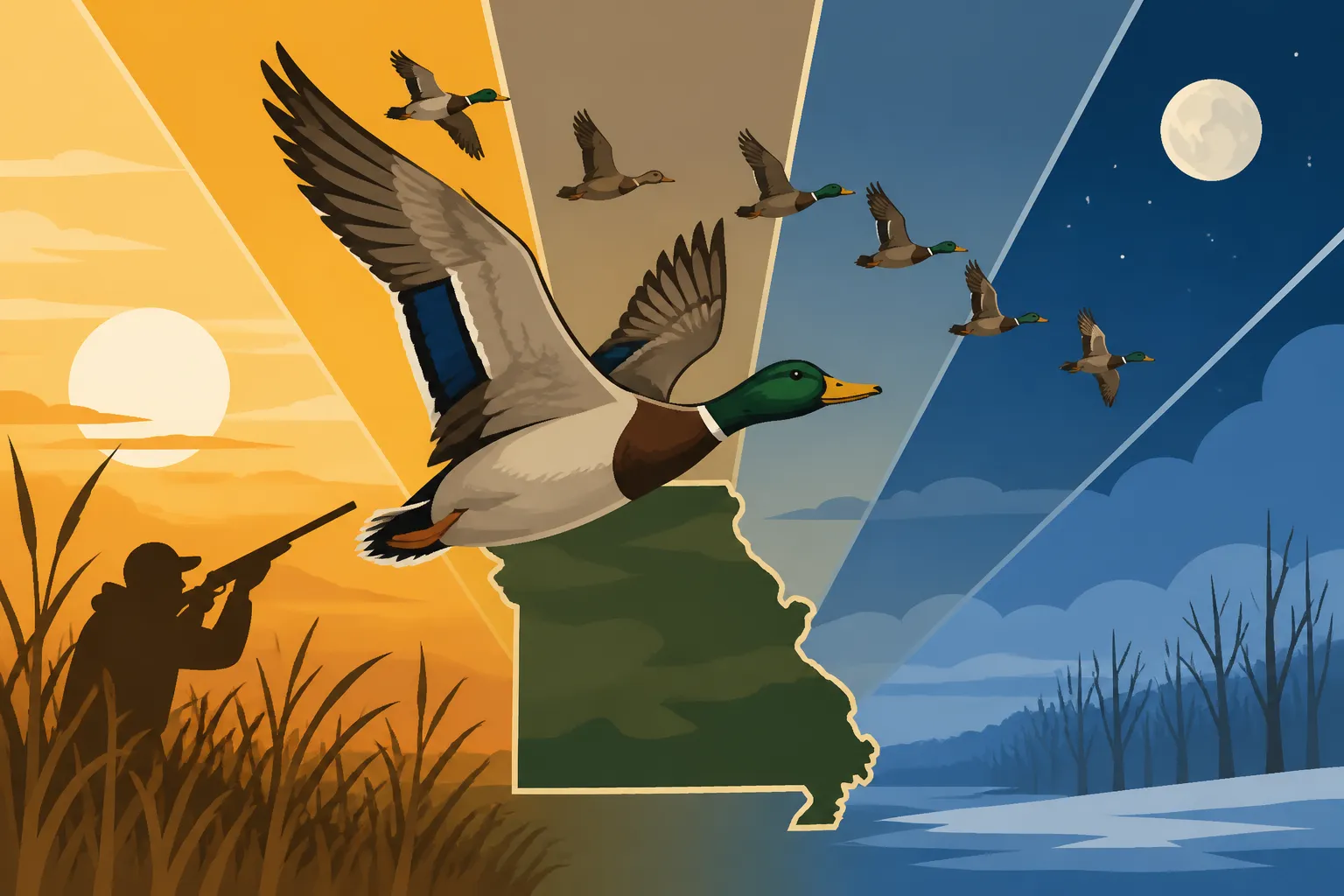
Missouri isn't just another state on the map; it's a pivotal corridor in the grand design of the Mississippi Flyway. For duck hunters, this means we're situated in a critical pathway that literally funnels birds from vast breeding grounds in Canada and the northern United States down to their wintering havens in the southern states and beyond. Trying to understand duck migration timing here is less about a fixed schedule and more about interpreting a complex interplay of environmental cues that push birds our way.
What the Flyway Means for Missouri Hunters
Think of the Mississippi Flyway as a massive, aerial highway. Missouri sits right in the middle, a crucial rest stop and feeding ground for millions of ducks, geese, and other migratory birds. This geographic sweet spot means we get a diverse array of species passing through, from fast-flying teal to hardy mallards and elusive canvasbacks. The sheer volume of birds that can potentially visit our state is astounding, but it also means their arrival isn't always uniform. Birds originating from Saskatchewan might follow a slightly different timetable than those from Manitoba or North Dakota. This wide array of origins is precisely what makes predicting their movement challenging, yet endlessly fascinating, for dedicated hunters.
The reality on the ground, or rather, in the air, is that Missouri acts as both a temporary layover and, for many birds, a comfortable winter residence if conditions allow. Our rich agricultural lands, extensive river systems like the Mississippi and Missouri, and numerous managed wetlands offer irresistible resources. So, while some birds might just pass through on a strong north wind, many others will set down, refuel, and stay for weeks or even months, depending on how welcoming our environment remains. This diversity in behavior makes understanding the full scope of the flyway crucial for anyone planning a successful hunting season.
Key Factors Influencing Migration Timing
When those ducks decide to pack their bags and head south isn't a simple decision; it's a calculation based on several powerful environmental cues. The biggest driver, without a doubt, is the weather. A severe cold front sweeping down from Canada, especially one that brings freezing temperatures and ice formation, is like a giant invisible hand pushing birds south. When lakes and marshes start to lock up with ice in the Dakotas or even Iowa, ducks have to move to find open water and food. That's when we in Missouri start seeing those incredible pushes of new birds.
But it’s not just about the freeze-up. Food availability plays a massive role too. If corn and bean fields are still standing ripe for the picking up north, ducks might linger longer, even through some colder weather. Conversely, if those food sources are depleted or covered in snow, they'll move faster. Water levels in our own wetlands and river bottoms also dictate whether ducks decide to stop or keep flying. A dry marsh or a flooded river can either attract or deter birds. Finally, hunting pressure up north can also push birds down. If they're constantly being shot at in Minnesota, they might be more inclined to continue their journey south to find less disturbed areas. It’s this constant dance between weather, food, and pressure that makes every season unique, and often, frustratingly unpredictable.
Early Season Ducks: Teal and Early Arrivers
Before the traditional duck season even kicks off, Missouri often gets a sneak peek at the migration with the arrival of our earliest feathered visitors: the teal. These small, fast-flying ducks are often the first harbingers of the southbound movement, offering a unique and exciting hunting opportunity that often precedes the main event. Understanding their habits can give you a jump start on the waterfowl season.
The September Teal Rush
If you've ever experienced Missouri's September teal season, you know it's a special kind of thrill. Blue-winged teal are usually the first to show up, often arriving in late August and peaking in September. These birds are true marathon flyers, often migrating through Missouri on their way to distant wintering grounds in Central and South America. They aren't going to stick around if the weather turns cold quickly; they'll push right through. Green-winged teal tend to come a bit later, sometimes overlapping with the first few weeks of the main duck season, and they are generally a bit more resilient to cooler temperatures than their blue-winged cousins.
A strong early cold snap can really concentrate these birds in our state, especially on shallow, emergent wetlands and along the slower backwaters of our major rivers. Conservation Areas like Eagle Bluffs near Columbia or Four Rivers down south are often hotspots for teal. They love feeding on the tiny seeds and invertebrates found in shallow water, so areas that manage for early drawdowns or have naturally receding water levels tend to be prime. Many hunters find themselves focused on Hunting Teal in September, and it's a great way to kick off the waterfowl season, even if the main duck season is still weeks away.
First Waves of Wood Ducks and Mallards
Beyond the teal, the early part of the traditional duck season, often in late October, sees an influx of local wood ducks and the very first pushes of mallards and gadwalls from adjacent states. These aren't the truly massive flights that will come with bitter cold, but they are crucial for providing early-season action. Our resident wood duck population, always a beautiful bird to harvest, will be bolstered by woodies migrating down from states just north of us. They love flooded timber and woody swamps, making some of our Ozark and river bottom areas excellent spots for them.
The initial mallard arrivals are often somewhat sporadic. You might see small groups of greenheads and hens moving in during mild cold fronts, but they tend to be scattered across available wetlands and feed heavily in freshly cut corn fields. These early mallards are still relatively "dumb" compared to their later-season, pressure-wary counterparts, offering some fantastic opportunities. You'll often find these birds staging on smaller bodies of water or in quieter corners of larger managed areas before the big crunch of hunters arrives. Knowing that these birds are moving through during this period can even influence other hunting pursuits; it’s not uncommon for deer hunters Hunting the Missouri Rut in Early November to report seeing the first good flights of ducks overhead as they sit in their treestands.
The Peak Migration: Mid-Season Mallards and Divers
This is the time every duck hunter lives for—the heart of the season when the sky can truly open up, and wave after wave of ducks descend upon Missouri. The mid-season is synonymous with significant weather changes and the arrival of the bulk of the flyway’s population, particularly the highly sought-after mallards and the unique challenge of diver ducks.
Cold Fronts and the Main Mallard Migration
The real showstopper for Missouri duck hunting almost always revolves around sustained, severe cold fronts hitting the northern states and Canadian prairies. We're talking about those brutal arctic blasts that freeze over entire provinces and states above us. When that ice starts to form, it’s a non-negotiable eviction notice for ducks. This is when the major mallard migration begins, typically kicking off in late October and truly peaking throughout November and into early December. Hunters eagerly track the weather reports from North Dakota, Minnesota, and Manitoba, knowing that an impending freeze there often means a bounty in Missouri.
During these peak migration events, it’s not just single birds or small family groups you’ll see. You'll witness massive V-formations, sometimes thousands strong, filling the sky, all headed south. These birds are often exhausted and hungry, making them more susceptible to well-placed decoys and effective calling. This is the period when Missouri's premier managed wetlands and expansive river bottoms truly shine, acting as magnets for these newly arrived birds. For hunters, it’s an exhilarating time, often requiring quick decisions and careful scouting to intercept these fresh migrants. You might use resources like GoHunt to track larger regional weather patterns and predict these pushes, giving you an edge on identifying prime hunting windows.
Diver Ducks and Reservoir Movement
While mallards dominate the flooded timber and shallow fields, diver ducks like scaup (bluebills), canvasbacks, redheads, and ring-necked ducks have their own distinct migratory patterns and preferred habitats. These birds typically follow the freeze-up on larger, deeper bodies of water, such as the Great Lakes and northern reservoirs. As these northern waters become unusable, divers will push south, often showing up in Missouri on our large reservoirs and major river systems.
Their migration timing often mirrors the mallard push but might extend slightly later into the season as bigger lakes take longer to freeze. Targeting divers requires a different approach than puddle ducks, often involving open-water spreads and different boat setups. Missouri’s big impoundments like Truman Lake, Lake of the Ozarks, and Table Rock Lake, along with sections of the Mississippi and Missouri Rivers, can hold significant numbers of these birds. It's a fantastic experience to see a flock of canvasbacks cup their wings over a large spread. Understanding where these birds typically land and feed, and what weather cues them to move, is key for success. You might look for insights into Diver Ducks on Missouri Reservoirs to specifically target these fascinating birds.
Late Season Ducks: Winter Holdouts and Geese
As the calendar turns towards winter, the duck migration picture in Missouri shifts again. Many birds have settled into their wintering grounds further south, but a significant population will choose to stay in Missouri, provided conditions remain hospitable. This late season hunting presents its own set of challenges and rewards, often overlapping with the arrival of other large waterfowl species.
The Wintering Mallards and Refuges
For many years, Missouri has served as a primary wintering ground for a substantial number of mallards. If we experience mild winters with consistent open water and abundant food sources, these birds will often stay put, sometimes through the entire duck season. These "resident" wintering mallards, however, are notoriously difficult to hunt. They've seen it all; they're educated, wary, and will flare at the slightest hint of anything unnatural. They often retreat to large, protected refuges during the day, flying out to feed in agricultural fields under the cover of darkness.
Hunting these late-season mallards requires exceptional stealth, impeccable concealment, and a deep understanding of their movements between roosting and feeding areas. Access to private land with reliable food sources becomes critical, as does identifying those lesser-pressured areas on public ground, perhaps deeper within the timber. Hunting Sloughs Late in the Season can be incredibly productive, as these smaller, often overlooked pockets of water can hold birds trying to escape pressure. These birds know the game, and outsmarting them is one of the greatest satisfactions in duck hunting.
Geese and Late-Season Waterfowl
As duck numbers can sometimes wane in the very late season, especially during prolonged freezes, goose hunting often picks up the slack. While not ducks, Canada geese, snow geese, and white-fronted geese often follow similar migration patterns through the flyway, though they are generally much hardier and more tolerant of colder temperatures. Canada geese, in particular, have seen incredible Missouri Canada Goose Growth over the years, with both resident and migratory populations offering ample opportunities.
Goose migration timing can extend well into winter, sometimes past the end of duck season, as long as open fields for feeding and open water for roosting are available. Often, the truly bitter cold fronts that finally push out the last of the ducks will bring in new waves of geese. Field hunting for geese in cut corn or bean fields is a popular late-season pursuit, often requiring large decoy spreads and layout blinds. Even when the duck hunting is slow, the chance to chase a flock of honkers overhead provides a thrilling alternative, keeping waterfowl hunters engaged right up until the season closes. A tool like GoHunt can be invaluable for pinpointing large concentrations of birds, whether ducks or geese, as they move into or out of different Missouri Duck Zone Boundaries based on food and weather conditions. Staying current on Wetland Habitat and Duck Numbers can also help you understand where birds might be concentrating throughout the late season.
Here’s a quick overview of typical migration timing for some key Missouri duck species:
| Species | Early Arrivals (Missouri) | Peak Migration (Missouri) | Late Season/Wintering (Missouri) | Preferred Habitat Type |
|---|---|---|---|---|
| Blue-winged Teal | Mid-August – Early Sept | September | Very Rare | Shallow marshes, mudflats, emergent vegetation |
| Green-winged Teal | Late September – Early Oct | October – Early November | Some winter in mild conditions | Shallow marshes, flooded timber, agricultural fields |
| Wood Duck | Resident – Early Sept | Late Sept – Mid-October | Some in extreme south MO | Flooded timber, wooded swamps, small rivers |
| Gadwall | Late Sept – Early Oct | October – Mid-November | Common in mild winters | Open marshes, shallow reservoirs, agricultural fields |
| Northern Shoveler | Early October | Mid-October – Late November | Some in mild winters | Open marshes, sewage lagoons, shallow reservoirs |
| Mallard | Early October | Late October – Mid-December | Abundant, main wintering duck | Flooded timber, agricultural fields, large wetlands |
| Northern Pintail | Early October | Late October – Mid-November | Some in mild winters | Open marshes, flooded fields, shallow ponds |
| Canvasback | Mid-October | November – Early December | Less common, some winter | Large, deep lakes, reservoirs, major river channels |
| Scaup (Bluebill) | Mid-October | November – Mid-December | Common on large open water | Large lakes, reservoirs, major river channels |
| Redhead | Mid-October | November – Early December | Less common, some winter | Large lakes, reservoirs, major river channels, coastal |
It's clear that understanding duck migration is an ongoing learning process, heavily dependent on current weather, habitat conditions, and hunting pressure. While you can't control these factors, being informed allows you to adjust your strategy, whether that means heading out for Scouting Missouri Public Land Before Season to check water levels and food sources, or knowing when to hold off for that next big push from the north. Every season brings new challenges and new opportunities to witness the incredible journey of these migratory birds through the heartland of Missouri.
Disclaimer
This article is for general informational purposes only and does not constitute professional advice. Laws, prices and regulations vary by location and change over time. Consult a qualified professional for guidance on your specific situation.