Missouri Wildlife Violation Penalties
It's an unfortunate truth that sometimes, despite our best intentions, or perhaps due to a moment of lapse or misunderstanding, hunters can find themselves on the wrong side of Missouri's wildlife regulations. The confusion around what constitutes a violation, and more importantly, the severe consequences that can follow, leaves many good folks feeling anxious and unsure. This comprehensive guide is here to shed light on Missouri's wildlife violation penalties, helping you understand the rules, the repercussions, and how to stay clear of trouble.
Understanding Missouri's Wildlife Violation System
Hunting in Missouri is a privilege, not an inherent right, and with that privilege comes a significant responsibility to understand and abide by the state's wildlife laws. When violations occur, whether intentional or accidental, the Missouri Department of Conservation (MDC) and local law enforcement take them very seriously. These aren't just minor infractions; they impact the health of our wildlife populations and the integrity of the hunting tradition we all cherish. Many hunters might wonder what truly happens when someone steps over the line, especially with all the talk about wildlife enforcement. If you've ever had questions about reporting a suspicious activity, you can find helpful information on Reporting a Poacher in Missouri. It's crucial for the entire hunting community to be vigilant and informed.
Common Misconceptions About Violations
One of the biggest pitfalls I've seen over the years is the widespread misconception that wildlife violations are "no big deal" or that "nobody ever gets caught." This simply isn't true. Modern conservation agents are highly trained, well-equipped, and dedicated to their work. They patrol vast areas, utilize advanced technology, and often rely on tips from concerned citizens. The idea that a quick glance at the regulations is enough, or that a minor mistake will just be overlooked, can lead to serious legal troubles. Furthermore, the defense of "I didn't know" rarely holds up in court. Every hunter is expected to know the laws governing their chosen pursuit.
Another common misunderstanding is that all wildlife violations are treated equally. This couldn't be further from the truth. There's a significant difference between, say, forgetting to sign your permit and intentionally poaching a trophy buck out of season. The system is designed to differentiate between these acts, though even minor infractions can accumulate and lead to more severe outcomes. It's about respecting the resource and the laws put in place to protect it for everyone.
The Importance of Knowing the Rules
Ultimately, the onus is on each individual hunter to educate themselves about Missouri's hunting regulations. The MDC goes to great lengths to make these rules accessible, publishing annual summary booklets, maintaining a comprehensive website, and even developing user-friendly mobile apps. Tools like the GoHunt app can be incredibly useful for quickly checking season dates, bag limits, and specific regulations right from your phone while you're in the field, helping you avoid common missteps.
Staying informed means regularly checking for updates, as regulations can change from year to year. For instance, understanding the different permit requirements and how to properly acquire them is fundamental, as outlined in guides like Missouri Deer Permits and How to Buy One. This diligence isn't just about avoiding penalties; it's about being a responsible, ethical hunter who respects wildlife and contributes to its sustainable management. Ignorance is no defense, and a proactive approach to understanding the rules can save you a lot of headache, heartache, and expense down the road.
Types of Penalties and Their Severity
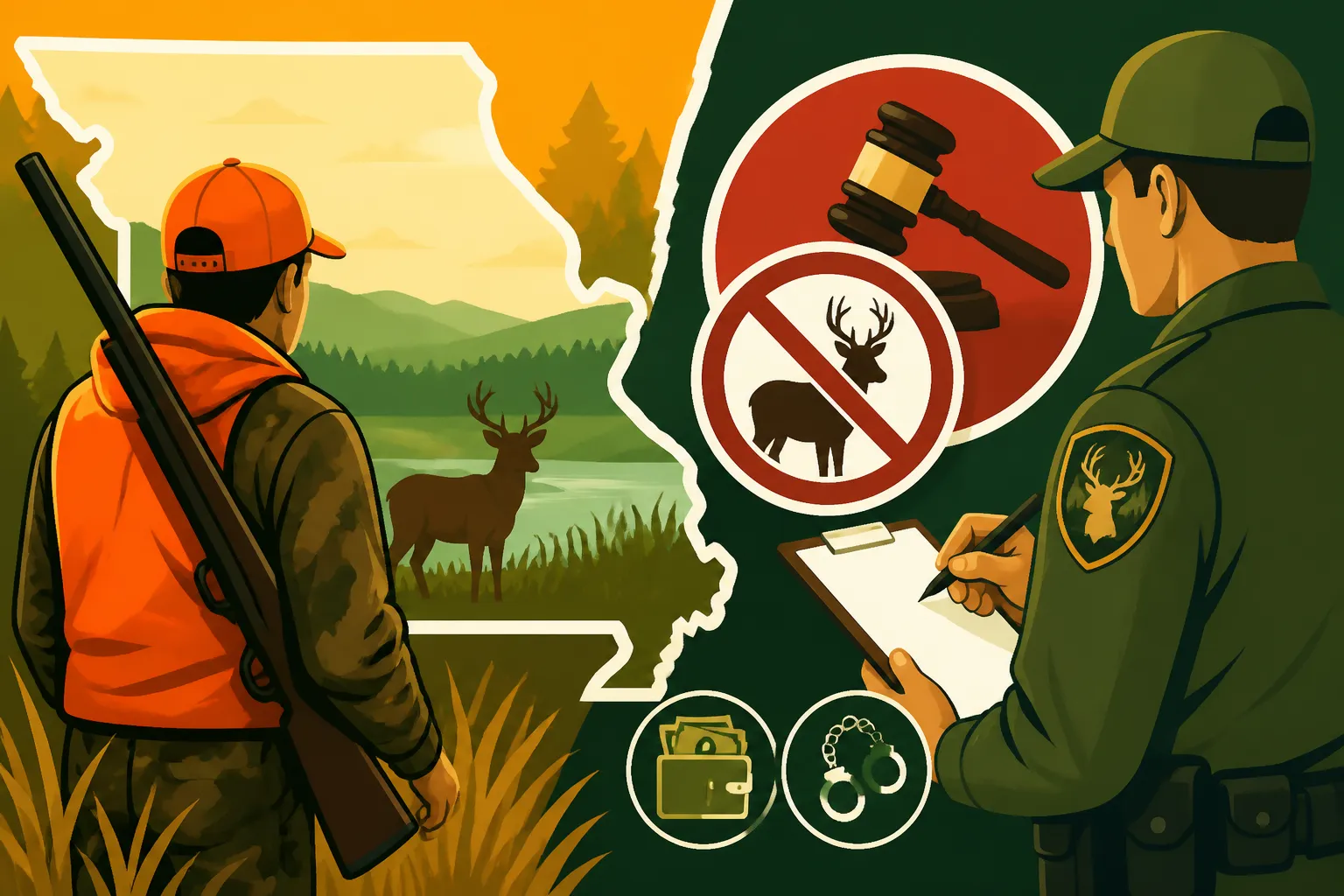
When a wildlife violation occurs in Missouri, the consequences can range from a simple warning for minor infractions to significant fines, license revocations, restitution payments, and even jail time for more serious offenses. The severity of the penalty is directly tied to the nature of the violation, the species involved, and whether it's a first-time offense or a repeat issue. It's not just a slap on the wrist; these penalties are designed to deter illegal activity and protect our state's natural heritage.
Fines and Court Costs
The most immediate and common penalty for many wildlife violations is a monetary fine. These fines can vary widely. For a relatively minor offense, such as failing to properly tag an animal immediately after harvest or a small game bag limit infraction, you might be looking at a fine of a couple hundred dollars. However, for more serious violations, like hunting out of season for big game or possessing illegally taken wildlife, fines can quickly escalate into the thousands.
It's also important to remember that these fines are almost always accompanied by court costs. These are separate fees imposed by the judicial system, and they can add a substantial amount to your overall penalty, sometimes hundreds of dollars on top of the fine itself. Repeat offenders typically face significantly higher fines, demonstrating that the system is designed to get tougher with those who show a pattern of disrespect for wildlife laws. The financial hit alone can be a harsh lesson, making it clear that shortcuts or carelessness are never worth it.
License Revocation and Point Systems
Beyond monetary penalties, one of the most impactful consequences for hunters is the potential loss of hunting privileges. Missouri operates on a point system for certain violations, where accumulating a certain number of points can lead to the suspension or outright revocation of your hunting and fishing licenses. The duration of this suspension can vary, from a year or two for lesser offenses to many years, or even permanently, for egregious violations.
Imagine having your deer or turkey hunting privileges revoked for several seasons; it’s a devastating blow for anyone who cherishes time in the woods. The MDC maintains these records, and a license revocation means you cannot legally hunt any species in Missouri for the specified period. Understanding regulations like Missouri Hunter Education and Orange Rules and complying with them is not just about safety, but also about protecting your long-term access to the outdoors. It's a clear signal that the state takes these infractions seriously, valuing the integrity of its wildlife management above individual convenience.
Restitution for Poached Wildlife
Perhaps one of the most under-discussed, yet financially significant, penalties is restitution. This isn't a fine, but rather a payment made to the state to compensate for the market or conservation value of the illegally taken animal. The idea is that wildlife belongs to all the citizens of Missouri, and when an animal is poached, the poacher must pay for the loss to the public trust.
Restitution values are set by law and can be quite substantial, especially for big game. For instance, illegally taking a white-tailed deer can come with a restitution fee of $1,000, and for a trophy buck, that figure can climb much higher, sometimes thousands of dollars depending on the Boone and Crockett score. A wild turkey, a cherished bird for many hunters, carries a restitution value of $500. And if you were to illegally take one of Missouri's majestic elk, you'd be looking at a restitution fee of at least $2,500, often much more. These costs are in addition to any fines, court costs, and potential jail time, truly making poaching an incredibly expensive mistake.
Here's a look at some common restitution values in Missouri:
| Species | Minimum Restitution Value (as of recent regulations) | Notes |
|---|---|---|
| White-tailed Deer | $1,000 | Significantly higher for trophy animals based on antler score. |
| Wild Turkey | $500 | |
| Elk | $2,500 | Can be much higher for bulls, often $5,000 or more. |
| Black Bear | $2,500 | Can be significantly higher depending on circumstances. |
| Migratory Game Birds | $50 – $100 per bird | Includes ducks, geese, doves, etc., varies by species. |
| River Otter / Bobcat | $250 | Specific to furbearers often trapped illegally. |
| Any species on endangered list | Variable, typically very high | Reflects the extreme rarity and conservation effort for the species. |
Felony vs. Misdemeanor Violations
Understanding the distinction between a misdemeanor and a felony wildlife violation in Missouri is absolutely critical, because the legal ramifications are vastly different. While a misdemeanor might result in fines and a temporary loss of privileges, a felony offense carries the weight of potential state prison time, significant financial penalties, and a much longer-lasting impact on your life. It's not just about what you did, but the scale and intent behind it.
Misdemeanor Offenses
Most common wildlife violations fall into the category of misdemeanors. These are still serious, but typically involve less severe harm to wildlife populations or less malicious intent. Examples of common misdemeanor offenses include hunting without the proper permit, failure to telecheck a harvested animal within the required timeframe, minor bag limit infractions for species like squirrels or rabbits, or hunting deer during prohibited hours in specific portions, even if you are aware of Missouri Deer Season Portions Explained.
Penalties for misdemeanors usually involve substantial fines, ranging from hundreds to a few thousand dollars, plus court costs. You could also face a temporary suspension of your hunting and fishing privileges, often for a period of one to five years, depending on the number and nature of the offenses. While jail time is possible for some misdemeanors, it's typically shorter than for felonies and often only applies to repeat offenders or in cases where there are aggravating circumstances. These offenses are a stern reminder that even seemingly small lapses in judgment or knowledge can carry significant legal and financial consequences.
Felony Offenses and Aggravated Poaching
Felony wildlife violations, on the other hand, represent the most severe category of offenses and are treated with the utmost seriousness by Missouri law. These are not minor mistakes; they often involve a clear disregard for conservation laws, significant harm to wildlife, or commercial intent. Examples of felony wildlife violations include:
- Taking multiple deer or turkeys far beyond the legal limit.
- The illegal taking of a trophy white-tailed deer, elk, or bear. Missouri has very strict rules regarding the taking of species like our recently reintroduced elk, which are covered extensively in topics such as Missouri's Resident-Only Elk Lottery.
- Commercial poaching, where illegally taken wildlife or parts (like antlers) are sold for profit.
- Hunting while your privileges are already revoked for a previous serious offense.
- Assaulting or obstructing a conservation agent in the line of duty.
The penalties for felony wildlife violations are severe. They can include significant fines reaching into the tens of thousands of dollars, substantial state prison sentences (which can be several years), and lengthy or even permanent revocation of all hunting and fishing privileges in Missouri. The restitution values for illegally taken animals, particularly big game like White-Tailed Deer Across Missouri or Missouri's Restored Wild Turkey Flock, are also at their highest for felony cases. It's a stark reality that felony convictions carry a lifetime of repercussions, impacting not just your hunting future but your entire legal record, employment opportunities, and civil liberties. Using resources like GoHunt or consistently checking the MDC regulations can help hunters avoid inadvertently straying into such serious territory by keeping them well-informed about all applicable laws.
Consequences Beyond the Initial Punishment
While the immediate fines, license revocations, and potential jail time are certainly impactful, the consequences of a wildlife violation in Missouri often extend far beyond the initial legal judgment. These longer-term impacts can affect your ability to hunt in other states, tarnish your reputation, and diminish the standing of ethical hunters everywhere. It's a ripple effect that touches many aspects of a hunter's life and the broader conservation community.
Inter-State Compacts and Reciprocity
One of the most significant long-term consequences for hunters is the potential for their Missouri violation to affect their hunting privileges in other states. Missouri is a member of the Wildlife Violator Compact, an agreement among most states in the U.S. that recognizes license suspensions and revocations issued by member states. This means that if your hunting privileges are suspended in Missouri due to a violation, those same privileges can, and often will, be suspended in nearly all other member states as well.
Imagine planning a dream elk hunt in Colorado or a deer hunt in Kansas, only to find out your Missouri violation prevents you from obtaining a non-resident license. This compact ensures that individuals who violate wildlife laws cannot simply move to another state or hunt across state lines to avoid penalties. It’s a powerful tool for conservation, and it means that a single mistake in Missouri can effectively bar you from hunting legally across most of the country for the duration of your suspension. It's a sobering thought that underscores the seriousness of adhering to regulations wherever you pursue game.
Damage to Reputation and Ethical Hunting
Beyond the legal and financial repercussions, a wildlife violation can inflict significant damage on a hunter's personal reputation and, by extension, on the public perception of hunting itself. In tight-knit hunting communities, news of a violation, especially poaching, travels fast. This can lead to ostracism, loss of trust among peers, and a black mark that's hard to erase. Hunting is a tradition built on ethics, respect for wildlife, and adherence to fair chase principles. When someone breaks those rules, it not only harms the resource but also undermines the credibility of all ethical hunters.
Moreover, every instance of illegal hunting fuels the arguments of anti-hunting groups and makes it harder for legitimate hunters to advocate for their sport. It creates a negative stereotype that overshadows the countless hours, dollars, and efforts that ethical hunters contribute to conservation. Participating in local traditions like Missouri Deer Camp Traditions fosters a sense of community and shared values, and being known for a violation can severely impact your standing within those groups. Staying compliant and acting as a responsible steward of the land, even when navigating areas with heavy Hunting Pressure on Missouri Public Ground, is crucial not only for your own peace of mind but for the future of hunting in Missouri and beyond.
Disclaimer
Please note: The information provided in this guide is for general informational purposes only and does not constitute legal advice. Wildlife laws and penalties can change, and interpretations may vary. It is always recommended to consult the official Missouri Department of Conservation regulations directly or seek legal counsel for specific situations.