Camping on Missouri Conservation Areas
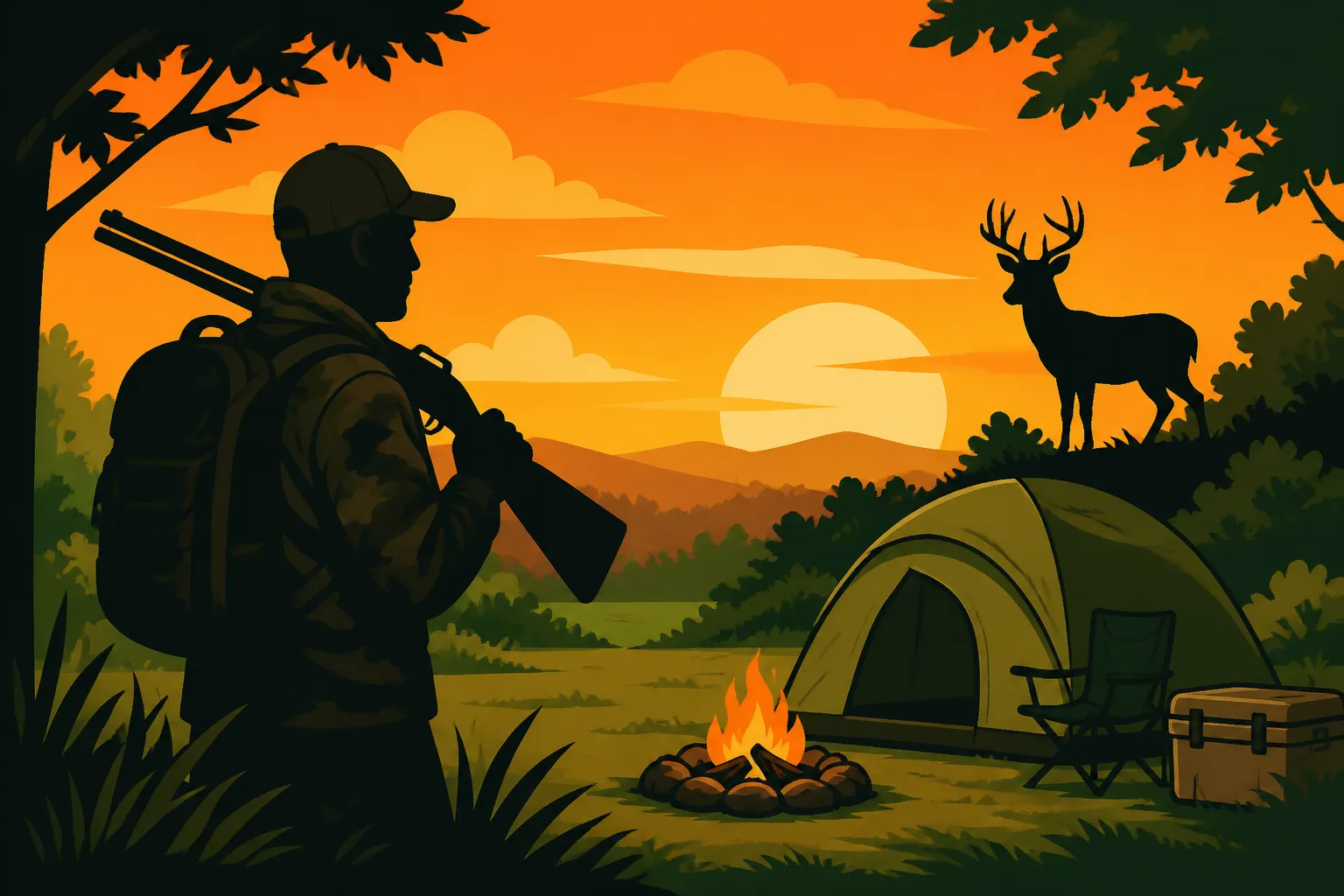
The desire to spend more time outdoors, especially when you're geared up for a hunt, often extends beyond just the daylight hours. There's a certain appeal to waking up on the very land you plan to hunt, coffee steaming as the woods slowly come alive around you. But figuring out where you can actually camp on Missouri Conservation Areas, and what rules apply, can feel like navigating a maze. It’s not always as straightforward as pitching a tent anywhere you please. This comprehensive guide is here to demystify camping on Missouri CAs, helping you find a legal spot to lay your head and get ready for your next adventure.
Understanding Missouri Conservation Areas and Camping
Missouri boasts an incredible network of Conservation Areas, managed by the Missouri Department of Conservation (MDC), offering a wealth of opportunities for hunting, fishing, and general outdoor recreation. These lands are a public treasure, bought and maintained largely through the dedicated sales tax for conservation. However, unlike some federal lands, camping on CAs comes with specific guidelines that are crucial to understand before you pack your sleeping bag.
What Makes CAs Different for Camping?
Conservation Areas aren't generally designed as traditional campgrounds with amenities you might find in a state park or private facility. Their primary purpose is wildlife management, habitat restoration, and providing public access for hunting, fishing, and wildlife viewing. This focus means that while camping is often permitted, it’s usually in a more primitive, "leave no trace" style. You won't typically find designated campsites with hookups for RVs, showers, or even flush toilets on most CAs. Instead, expect a more rustic experience where self-sufficiency is key. The rules vary from area to area, reflecting the specific management goals and ecological sensitivities of each CA. It’s a good idea to remember that you're a guest in nature's home, and the goal is to minimize your impact.
When you're comparing a CA to, say, a developed campground at a state park, the differences become immediately clear. State parks are often geared towards recreation with more amenities and structured sites. Conservation Areas, on the other hand, are more about the wild experience. This distinction is vital, especially when you're planning your trip and packing your gear. Expect quiet, solitude, and direct access to hunting grounds, but don't expect the comforts of home. For many hunters, this primitive nature is exactly the draw, allowing them to truly immerse themselves in the hunting experience.
The "Developed" vs. "Undeveloped" Campsite Distinction
When the MDC talks about camping on Conservation Areas, they often refer to "developed" and "undeveloped" sites, and understanding the difference is key to a hassle-free trip.
-
Developed Campsites: On some larger CAs, or those with more frequent public use, you might find what the MDC considers a "developed" campsite. Now, don't let the word "developed" fool you too much. These usually aren't much more than a cleared spot with a gravel pad, a picnic table, and perhaps a fire ring. They might have a vault toilet nearby, but potable water and electricity are extremely rare. These sites are typically marked on CA maps and might even be numbered. They offer a bit more structure and often imply a slightly higher level of use, so you might not be completely alone. They're a great option for those who want a defined space without being too far off the beaten path, and they're usually easier to find, especially for those who are new to camping on CAs.
-
Undeveloped (Primitive) Camping: This is the most common form of camping allowed on Missouri CAs. It means you can essentially pitch your tent in any suitable spot, provided you're adhering to specific rules regarding distance from roads, water, and managed fields. There are no picnic tables, no fire rings (unless you bring your own portable one), and certainly no restrooms. You are truly roughing it, which means packing in and packing out everything, including your waste. This option offers the most solitude and allows you to set up camp closer to your intended hunting grounds, making those early morning walks to the stand much shorter. This is the quintessential backcountry experience that many seasoned hunters crave. While it offers freedom, it also demands more responsibility and preparation.
Here's a quick overview of what to expect:
| Feature | Developed Campsite (CA) | Primitive/Undeveloped Camping (CA) |
|---|---|---|
| Amenities | Often includes picnic table, fire ring, gravel pad. | None; completely self-sufficient. |
| Restrooms | May have a vault toilet nearby. | No facilities; "leave no trace" waste disposal. |
| Water | Generally no potable water; bring your own. | No potable water; bring your own or filter/treat. |
| Designation | Marked on maps, sometimes numbered, specific parking. | No specific sites; find a suitable, legal spot. |
| Privacy | May have other campers nearby, still generally quiet. | High degree of solitude, can be remote. |
| Access | Often near main access roads or parking areas. | Can be deeper into the CA, requiring longer walks from vehicle. |
| Vehicle Access | Designated parking, usually walk-in from parking area. | Designated parking, typically longer hike to site. |
Navigating the Rules: Permits, Stays, and Group Sizes
Missouri Conservation Areas are public land, but they aren't without rules. These regulations are in place to ensure the sustainability of the resources, minimize user conflict, and preserve the quality of the outdoor experience for everyone. Understanding them is paramount to a successful and legal camping trip.
Permit Requirements for Camping
Good news for most campers: a special camping permit is generally NOT required for primitive camping on Missouri Conservation Areas. That's right, you don't typically need to register your intent to camp or pay a specific fee just for pitching a tent. However, this ease of access comes with the expectation that you are fully aware of and adhere to the general CA regulations and any specific rules for the area you're visiting. It’s always a good idea to possess a valid Missouri Combination Hunting and Fishing Permit if you're engaging in those activities, as it supports conservation efforts and makes you a legitimate user of these lands.
There are exceptions, though! Some very specific CAs or designated "developed" campgrounds might require a small fee or a self-service permit available on-site. These are rare but exist, so always check the individual area's brochure or online page. For example, some CAs that host target shooting ranges might have a range-use permit, but that's separate from camping. The primary rule of thumb is: if you're just pitching a tent for a night or two while Hunting North Missouri's Big-Buck Farm Country or Deer Hunting the Missouri Ozarks, you're likely fine without a specific camping permit.
Length of Stay and Camp Setup
The MDC has specific rules about how long you can legally camp on a Conservation Area to prevent long-term residency and ensure fair access for all. Generally, primitive camping is allowed for a maximum of 14 consecutive nights at any one location. After 14 nights, you must move your camp at least one mile from the previous site. This rule is put in place to prevent environmental degradation from prolonged use and to ensure that public lands remain accessible to the wider community.
What constitutes a "camp"? This isn't just about your tent. It includes any temporary shelter, vehicles used for sleeping, and the immediate area around your setup. The idea is that your camp should be temporary and minimally intrusive. When setting up, think about where you're placing your tent. Avoid sensitive areas like stream banks, wetlands, or recently planted fields. It's also important to be mindful of managed areas. You might be near a Managed Hunt Draws on Missouri Wetlands, and setting up too close could interfere with operations. If you're planning on utilizing a Ground Blinds on Crop Field Edges, be sure your camping setup doesn't interfere with field management.
Group Size and Impact
The wilderness experience on a CA is often about solitude and quiet reflection, so large group camping is generally discouraged for primitive sites. While there isn't always a hard-and-fast number for "too many" people, common sense and a respect for other users should prevail. A small group of friends or a family camping together is usually fine. However, organizing a large gathering or setting up multiple tents in a way that suggests a semi-permanent installation could lead to issues.
The greater the number of people, the greater the impact on the environment. This is where Leave No Trace principles on conservation areas become incredibly important. With a larger group, it's easier to compact soil, damage vegetation, and create more waste. Always pack out everything you pack in, and perhaps even a little more. Bury human waste properly, pack out all toilet paper, and make sure campfires are completely extinguished. If you're part of a larger hunting party, consider splitting into smaller, separate camp setups to minimize your footprint and maintain the quiet ambiance for other users and wildlife. Remember, you're there to enjoy nature, not to impose upon it.
Finding Designated Camping Spots on CAs
One of the biggest hurdles for hunters looking to camp on CAs is simply finding where it's allowed and where a good spot might be. It's not like every CA has big signs pointing to "Camp Here." It often requires a bit of research and digital scouting, but the tools are readily available.
Using the Missouri Conservation Atlas
The Missouri Conservation Atlas is your absolute best friend when it comes to locating camping opportunities on CAs. This incredibly detailed online and physical resource provides maps for every Conservation Area in the state. When you pull up a map for a specific CA, look for symbols indicating camping. These often appear as a small tent icon.
The atlas will distinguish between areas where primitive camping is allowed generally and those few CAs that might have a more defined, albeit still rustic, developed camping area. Pay close attention to the legend on the map. Sometimes, the camping symbol might be accompanied by notes about specific restrictions, like "no vehicles" or "walk-in only." Using the interactive online version of the atlas is fantastic because you can zoom in, toggle layers, and get a much better feel for the terrain, access roads, and proximity to your desired hunting spots. It can help you visualize Scouting Missouri Public Land Before Season and identify potential camp locations. This pre-trip scouting saves a lot of time and frustration once you're on the ground.
Reading Area Brochures and Online Resources
Beyond the atlas, every Missouri Conservation Area typically has its own dedicated page on the MDC website, and many also offer downloadable area-specific brochures. These are critical documents. An Missouri Area Brochures and Local Rules often provides a wealth of information not immediately apparent on the general atlas map.
These brochures will detail:
- Specific Camping Rules: Are there any unique restrictions for this CA? For example, some might prohibit fires, or only allow camping in certain zones.
- Designated Spots: If there are any developed campsites, they'll be clearly marked here.
- Access Points: Information on parking lots, access roads, and trails that lead to prime camping spots.
- Prohibited Activities: Things like target shooting or dog training might be restricted in certain areas or during specific seasons, which could impact your camping experience.
Before heading out, download and even print the brochure for your target CA. Having it handy, especially in areas with limited cell service, can be a real lifesaver if you have questions or encounter an unexpected situation. Checking these resources diligently will help ensure you're compliant with Camping Rules on Conservation Areas.
Tools for Scouting Camping Locations
In today's digital age, hunters have powerful tools at their fingertips that go beyond the basic paper map. Applications like onX Hunt and GoHunt can revolutionize how you scout and plan your camping spots on CAs.
-
onX Hunt: This mapping application is incredibly popular among hunters for good reason. It features detailed satellite imagery, topo maps, and crucially, land ownership layers. For Missouri CAs, onX Hunt allows you to clearly see the boundaries of the Conservation Area, pinpoint potential flat spots for a tent, and visualize access roads and trails. You can mark waypoints for possible camp locations, measure distances, and check public land boundaries. The ability to see your precise location on the map, even without cell service (by downloading maps beforehand), is invaluable when you're deep in the timber looking for that perfect, secluded camp spot. It can show you precisely where you are in relation to water, roads, and other features that might have camping restrictions. For hunters, its value in onX Layers for Missouri Land Status is immense.
-
GoHunt: While often focused on western big game, GoHunt's mapping features and scouting tools can still be beneficial for planning trips, especially for understanding topography and potential hideaways on CAs. Its satellite imagery and 3D terrain views can help you identify secluded benches or ridges that might make for excellent, discreet camping spots, particularly in the more rugged Ozark CAs. While not as universally adopted for Missouri hunting as onX, it's another powerful tool in the digital scout's arsenal.
Using these apps in conjunction with the official MDC atlas and brochures provides the most comprehensive approach to finding and vetting your camping spot before you even set foot on the ground. This minimizes surprises and maximizes your hunting and camping enjoyment.
Types of Camping Experiences on Missouri CAs
The diverse landscapes of Missouri's Conservation Areas offer a range of camping experiences, from truly getting back to basics to having a few minimal comforts. Choosing the right type depends on your comfort level, gear, and what you want to get out of your trip.
Primitive Camping: Roughing It in the Backcountry
For many hunters, primitive camping is the ideal way to fully immerse themselves in the wild Missouri landscape. This is where you truly "rough it," packing everything you need on your back and leaving absolutely no trace behind. You're likely hiking a good distance from your vehicle into the heart of the CA, searching for a secluded spot away from trails and roads.
When primitive camping, you'll need to be entirely self-sufficient. This means carrying all your water, or at least a reliable filter or purification tablets. Your shelter will be a lightweight tent, hammock, or even just a tarp. Cooking is often done on a small, portable stove, or with a very carefully managed, small fire (where permitted). The beauty of primitive camping lies in its simplicity and the deep connection it fosters with nature. Imagine waking up to a chorus of songbirds, stepping out of your tent, and being immediately surrounded by the sounds and smells of the Missouri woods, ready to embark on a Still-Hunting a Missouri Ozark Hollow. There are no picnic tables or established fire rings, so you truly create your own space. This type of camping requires more planning, especially around food storage to deter wildlife, and waste management. You need to be prepared for all weather conditions, as there's no car nearby to retreat to in a sudden downpour. It's an adventure, certainly, but incredibly rewarding for those seeking solitude and a genuine wild experience.
Basic Campsites: A Step Up
While still far from a full-service campground, a handful of Missouri Conservation Areas offer what can be described as "basic campsites." These are often just a step up from primitive but can make a big difference for those who prefer a little more structure or are camping with families. You might find a cleared gravel pad for your tent, a simple picnic table, and perhaps a metal fire ring. These sites are typically located near main access roads or parking areas, making them much easier to reach.
The biggest advantage of a basic campsite is often the presence of a vault toilet. While not glamorous, it's certainly more convenient than digging a cathole for human waste, especially in high-traffic areas or during wet weather. These sites are usually clearly marked on CA maps and might even have signage at the entrance. They can be a great option for a weekend deer hunt if you're pulling a small trailer or a pop-up camper, as long as the site can accommodate it. However, always remember that potable water is still a rarity, so plan to bring your own ample supply. These sites are also more likely to see other campers, especially during popular hunting seasons like Missouri's Eleven-Day November Firearms Deer Season, so don't expect complete solitude. However, they offer a good balance of access, minimal amenities, and a wild feel without demanding full backcountry self-sufficiency.
Camping Near Water: Considerations for River and Lake Access
Missouri is crisscrossed with beautiful rivers and dotted with lakes, and many CAs offer direct access to these waterways. Camping near water can be incredibly appealing, especially for those who enjoy fishing alongside their hunting pursuits. However, it comes with its own set of considerations and rules.
When camping along rivers like the Missouri River or the Current River, it's crucial to understand land ownership. While a Conservation Area might border a river, the river bank itself, especially on major navigable rivers, can sometimes be managed by other entities, like the Army Corps of Engineers, or be considered private land up to the high-water mark. Always consult your maps (like onX Hunt) to confirm you're on CA land. Camping too close to the water can also lead to issues with flooding, erosion, and disturbing wildlife that relies on riparian habitats. The MDC generally advises setting up camp a good distance back from the immediate shoreline, not only for environmental reasons but also for your own safety from sudden rises in water levels. If you're planning to hunt Flooded Timber Duck Hunting in Missouri, your camping strategy might need to be flexible depending on water levels. If you're planning on Hunting Missouri River Sandbars for Ducks, camping on a sandbar might be tempting, but check specific regulations as some sandbars could be designated as private or have strict no-camping rules. Always err on the side of caution and prioritize the health of the waterway.
Essential Gear and Best Practices for CA Camping
Camping on Missouri Conservation Areas means being prepared, especially given the range of primitive options available. Having the right gear and adopting sound best practices will make your trip safer, more enjoyable, and more respectful of the land.
Gear for Primitive and Developed Camping
While the level of amenities differs, certain gear is essential for any type of camping on a CA.
For shelter, a reliable tent, hammock, or tarp is key. Choose something appropriate for the season and expected weather. Even in fair weather, a sudden Missouri thunderstorm can pop up quickly. For sleeping, a good sleeping bag rated for the lowest expected temperatures and a comfortable sleeping pad are crucial for warmth and rest.
Cooking will vary. For primitive camping, a lightweight backpacking stove and fuel are indispensable. For basic campsites, a portable grill or even a small cast-iron Dutch oven can expand your meal options, but always ensure you have a safe way to manage any fire, even if a ring is present. Don't forget your cooking pots, utensils, and biodegradable soap for cleanup.
Water is perhaps the most critical item. Since potable water is rarely available, you must bring plenty of your own or have a reliable water filter/purifier for natural sources. A large water jug for basic campsites and smaller bottles or a hydration reservoir for primitive hikes are both good ideas.
Safety and navigation are paramount. Always carry a first-aid kit, a headlamp or flashlight with extra batteries, and a knife. For navigation, a physical map (like from The Missouri Conservation Atlas) and a compass are non-negotiable backups, even if you're using a GPS device or phone app like onX Hunt. Consider a power bank to keep your electronics charged. If you're venturing deep, a personal locator beacon (PLB) or satellite messenger can provide peace of mind in areas without cell service. Don't forget your Missouri Hunter Education and Orange Rules compliant clothing if you'll be hunting!
Leave No Trace Principles on Conservation Areas
Adhering to Leave No Trace principles isn't just a suggestion; it's a fundamental responsibility when camping on public lands, especially on CAs where resource protection is paramount.
- Plan Ahead and Prepare: Research your CA thoroughly. Know the rules, weather, and potential hazards. Pack appropriate gear and enough food and water. Having a plan for Getting Deer Meat Cooled Quickly if you harvest early in the season is critical.
- Travel and Camp on Durable Surfaces: Stick to existing trails and designated campsites. When primitive camping, choose a spot that won't be damaged by your presence—think dry, flat ground away from sensitive vegetation or stream banks. Avoid creating new paths.
- Dispose of Waste Properly: Pack out everything you pack in. This includes all trash, food scraps, and even things you might think are biodegradable like orange peels or apple cores, which take a long time to break down and can attract wildlife. For human waste, dig a cathole 6-8 inches deep and at least 200 feet from water, trails, and campsites. Pack out all toilet paper.
- Leave What You Find: Do not disturb cultural or historical sites. Avoid collecting natural objects like rocks, plants, or antlers (unless you're shed hunting and legally permitted). Let others enjoy the area as you found it.
- Minimize Campfire Impacts: Use established fire rings where available. If primitive camping, only build a fire where permitted and when conditions are safe (low fire danger). Keep fires small. Use only dead and downed wood that can be broken by hand. Never cut live trees. Ensure your fire is completely out and cold to the touch before leaving it, using water to douse it thoroughly.
- Respect Wildlife: Observe wildlife from a distance. Never feed animals, as it can habituate them to humans and lead to dangerous encounters. Store food and scented items securely, preferably in bear-resistant containers or hung from a tree, even if bears are rare in your specific CA, as other critters like raccoons are common. Black Bears Returning to Missouri means caution is becoming more important.
- Be Considerate of Other Visitors: Camp away from others and trails to preserve solitude. Keep noise levels down. Avoid bright lights, especially at night, as they can disturb others' experience and wildlife.
Respecting Other Users and Wildlife
Camping on a Conservation Area means you're sharing the space with a wide array of other users and, of course, the wildlife that calls it home. Being a good steward means being respectful. This means keeping your campsite neat and tidy, not just for the environment but also to avoid attracting curious animals. Secure your food, especially if you're Field Dressing and Cooling in Early-Season Heat, to keep it safe from scavengers.
Noise discipline is paramount. Many hunters value the quiet of the woods, and excessive noise from music, loud conversations, or generators (if allowed for specific RVs, which is rare) can ruin another person's experience and stress out wildlife. If you're bringing a hunting dog, ensure it's under control at all times, especially when not actively engaged in hunting activity, and adhere to Dog Training on Conservation Areas rules. Remember, many people visit CAs for quiet contemplation and wildlife observation, not just hunting. By following these guidelines, you contribute to a positive experience for everyone and help preserve these incredible resources for future generations.
Disclaimer
This article is for general informational purposes only and does not constitute professional advice. Laws, prices and regulations vary by location and change over time. Consult a qualified professional for guidance on your specific situation.