Missouri State Park Hunting Status
It can be incredibly frustrating to scout what looks like prime hunting ground, only to realize it's part of a state park and largely off-limits. Many hunters, especially those new to the Show-Me State or unfamiliar with its unique public land structure, often wonder about the hunting status of Missouri's beautiful state parks. This guide will clarify when, where, and under what specific circumstances hunting might be possible in these areas, and more importantly, where to focus your efforts for reliable public land hunting access.
The Landscape of Missouri's Public Lands
Missouri is blessed with a wealth of public land, but understanding the different categories and their respective rules is absolutely crucial for any hunter. The distinctions between state parks and other public hunting grounds are perhaps the most misunderstood, leading to a lot of wasted scouting time and potential disappointment.
Conservation Areas vs. State Parks: A Key Distinction
When you first glance at a map of Missouri, you might see vast green swaths that look like perfect places to chase deer or turkeys. Often, these areas are either run by the Missouri Department of Conservation (MDC) or the Missouri Department of Natural Resources (DNR). This is where the core confusion often begins. Both manage public land for recreation, but their primary missions and, therefore, their rules, differ significantly regarding hunting.
MDC's mission is deeply rooted in managing the state's fish, forest, and wildlife resources, with a strong emphasis on providing hunting, fishing, and trapping opportunities. Their Conservation Areas are designed and managed with these activities in mind, making them the backbone of public hunting in Missouri. They acquire land, implement habitat management practices, and establish rules specifically to support healthy game populations and hunter access. You can find comprehensive details about these lands in Missouri Conservation Areas Explained.
On the flip side, Missouri State Parks, managed by the DNR, have a different primary focus. Their mandate is to preserve and interpret the state's most outstanding natural, cultural, and recreational resources for the enjoyment of all citizens. This often means prioritizing hiking, camping, historical preservation, and general outdoor recreation over hunting. While hunting can be a form of recreation, the DNR typically views it as a secondary, often incompatible, activity with their core mission and the high volume of non-hunting visitors these parks often see.
The Role of the Missouri Department of Conservation (MDC)
The MDC is funded primarily by a dedicated sales tax, which allows it to operate a comprehensive system of wildlife management. This agency is truly a hunter's best friend in Missouri, as its existence and funding are directly tied to conservation efforts that benefit game species and provide access for hunters. From acquiring thousands of acres of land annually to conducting population surveys and managing specific habitats for quail, deer, turkeys, and waterfowl, the MDC's work directly translates into hunting opportunities.
Their vast network of Conservation Areas (CAs) spans the entire state, offering everything from sprawling Ozark timber tracts to prime north Missouri row-crop edges. These areas are designed with hunters in mind, often featuring designated parking lots, signage, and specific regulations that balance public access with wildlife management goals. When you're looking for Public Hunting Land in Missouri, the MDC's CAs should always be at the top of your list.
The MDC also handles all the permitting and regulation for hunting, fishing, and trapping statewide, regardless of whether you're on public or private land. They are the authoritative source for season dates, bag limits, weapon restrictions, and permit purchases. Their entire operational model supports sustainable hunting and ensures that future generations will have the chance to enjoy Missouri's rich outdoor heritage.
The Missouri Department of Natural Resources (DNR) and State Parks
The DNR, in contrast to the MDC, manages Missouri's State Parks system with a focus on recreation, conservation of natural and cultural resources, and historical preservation. Imagine the popular Ha Ha Tonka State Park with its castle ruins and scenic trails, or Johnson's Shut-Ins State Park known for its unique geological formations and swimming. These parks are typically bustling with hikers, picnickers, and sightseers, especially on weekends.
Because of this intense recreational use and the DNR's specific mandate, open hunting is generally not compatible with their primary objectives for state parks. The safety concerns alone, with so many non-hunters frequently using trails and facilities, make widespread hunting a difficult proposition. The DNR's role is to ensure these spaces are accessible and safe for a wide variety of activities, and hunting, while a legitimate outdoor pursuit, often conflicts with the passive recreational uses that define many state parks.
This doesn't mean the DNR is anti-hunting, but rather that hunting isn't typically part of the core offerings for these specific public lands. For hunters, this translates into a need to seek out specific, managed opportunities within state parks, rather than expecting open access like on a Conservation Area. Understanding this difference is key to avoiding frustration and effectively planning your hunts.
Understanding Hunting Opportunities in Missouri State Parks
Now that we've established the different roles of the MDC and DNR, let's dive into what that means for actually putting boots on the ground in a Missouri State Park with a hunting implement. The short answer for most state parks is: you can't. But there are important nuances to explore.
General Rules: Most State Parks Are Closed to Hunting
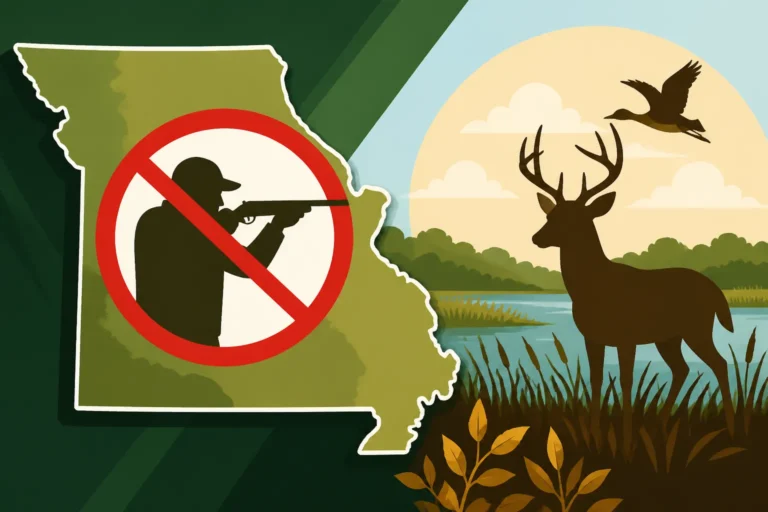
The default status for the vast majority of Missouri State Parks is simple: no hunting. This can be a real disappointment for hunters who see beautiful timber, thickets, or field edges within park boundaries and envision a great spot for a deer stand or a turkey ambush. It's easy to look at a map, see a large block of public land, and assume it's fair game. However, with state parks, that assumption is almost always incorrect.
The reasoning behind these closures is multi-faceted. First and foremost is public safety. State parks, especially those closer to population centers, see very heavy non-hunting visitor traffic. The idea of allowing firearms or archery equipment in areas frequented by families, joggers, and casual hikers presents an untenable safety risk and a management nightmare for park staff. Even with specific zones, the potential for an accident or a conflict with non-hunters is too high.
Beyond safety, the DNR prioritizes a different kind of visitor experience. Many people visit state parks for quiet reflection, wildlife viewing, or simply to enjoy nature without the presence of hunting activity. Introducing hunting could significantly detract from this experience for a large segment of the park's user base. The focus is on preserving a natural atmosphere where wildlife can be observed, not harvested, during most of the year.
Exceptions to the Rule: Limited Managed Hunts
While general hunting is a no-go, there are very specific, tightly controlled exceptions to the rule: managed hunts. These are not open-access opportunities but rather highly structured events often designed to address specific wildlife management needs, such as overpopulation of deer within park boundaries that might be damaging sensitive ecosystems or creating public safety hazards (like deer-vehicle collisions on park roads).
These managed hunts are typically lottery-based and occur on very limited dates, often outside of peak park visitor seasons. They are usually focused on deer and occasionally turkey, with strict rules on weapons, hunting zones, and hunter numbers. The goal isn't to provide broad recreational hunting, but to use regulated hunting as a management tool. The experience of participating in a managed hunt within a state park is vastly different from a typical hunting outing on a Conservation Area.
Think of it less like an open season and more like a specific, temporary assignment to help manage wildlife populations under careful supervision. These hunts are meticulously planned by the MDC in cooperation with the DNR to ensure safety, minimize disruption to other park users, and achieve specific biological objectives. They are rare, highly sought-after, and require a commitment to understanding and following every single rule.
Finding Managed Hunts on State Park Properties
So, how does one even begin to find these elusive state park managed hunts? They are certainly not advertised with big banners. Your primary resource will be the Missouri Department of Conservation's website. The MDC compiles and publishes information on all managed hunts across the state, which includes those occasionally held on state park properties. You'll need to regularly check their "Managed Deer Hunts" or "Managed Turkey Hunts" sections.
The application periods for these hunts are often well in advance of the actual hunt dates, sometimes months out. It requires a proactive approach and a fair bit of patience. You'll submit an application, usually online, and then wait to see if you're drawn in the lottery. Because these opportunities are so limited and often provide access to areas with lower hunting pressure, the odds of being drawn can be quite low, especially for prime hunts. You can find more information about these application timelines by looking up Missouri Managed Deer Hunt Application Dates.
When one of these hunts is announced, the MDC provides a detailed hunt-specific brochure or information packet. This document will cover everything from the exact dates, legal weapons, check-in procedures, specific hunting boundaries within the park, and any unique rules (e.g., antler-point restrictions, antlerless-only, specific exit times). It's not enough to simply know you've been drawn; you need to thoroughly digest every piece of information to ensure you comply with the stringent requirements.
Practicalities and Considerations for State Park Hunting
Let's say you're one of the fortunate few to draw a tag for a state park managed hunt. What does that experience actually entail, and what do you need to be mindful of? It's definitely not your typical run-and-gun public land outing.
Safety and Public Use Concerns
Participating in a managed hunt within a state park means that safety and an acute awareness of other public users become absolutely paramount. While the park is likely closed to general recreation during your specific hunt dates and times, you might still encounter park staff, maintenance crews, or even hikers who missed the closure notices. The responsibility to identify your target and know what's beyond it is always critical in hunting, but it takes on an even higher level of importance in these semi-public environments.
Managed hunts often have highly defined hunting zones, sometimes even requiring hunters to stay within a visual boundary or specific GPS coordinates. The type of weapon allowed might be restricted to archery, crossbows, or muzzleloaders, specifically to reduce noise or projectile range. You might also have designated entry and exit points and strict shooting hours that differ from general state regulations. All these measures are put in place to ensure the safety of all individuals within or near the park boundaries during the hunt.
As a hunter, your conduct during such a hunt is a direct reflection on all hunters. Adhering to every rule, being courteous to any non-hunters you might encounter, and practicing impeccable ethics are not just good practices—they are essential to maintaining these limited opportunities for the hunting community. A single incident could jeopardize future managed hunts in state parks.
Permit Requirements and Specific Regulations
Beyond your standard Missouri hunting permits (which are always required), managed hunts in state parks will come with their own set of additional permit requirements and regulations. First, you'll need the specific permit awarded through the MDC's lottery draw for that particular park and hunt. This permit is usually non-transferable and tied directly to you.
Often, these hunts might be antlerless-only or have very specific antler point restrictions, tailored to the park's deer management goals. You might be required to check in at a central location each morning and check out each evening, reporting your harvest directly to park or MDC staff. This level of oversight ensures accurate harvest data and allows officials to monitor hunter activity. Furthermore, there may be unique rules around carcass transport, especially concerning Chronic Wasting Disease (CWD) if the park is in or near a CWD management zone. Always double-check Missouri Deer Transport Rules for the most current information.
It’s not uncommon for managed hunts to have special rules regarding field dressing, cooling harvested game, or even specific vehicle access. The overall goal is to maintain the park's integrity while allowing for necessary wildlife management. Ignorance of any specific rule is no excuse, and violations can carry severe penalties, including revocation of hunting privileges.
Gear and Tactics for Restricted Environments
Hunting in a state park, even during a managed hunt, often requires a different approach to gear and tactics compared to wide-open public land. Since these areas usually have high human activity and smaller huntable footprints, deer and turkeys can be incredibly wary and educated. Stealth and mobility are key. Instead of a large, heavy treestand, consider a lightweight saddle hunting setup or a mobile lock-on stand with climbing sticks. If a ground blind is allowed, ensure it's well-brushed in and set up far in advance, if possible.
Focus on compact, quiet gear. Your calls should be subtle, and your movements deliberate. Since you might be hunting in smaller, perhaps segmented, parcels within a larger park, understanding subtle travel corridors, thick cover, and pinch points becomes even more critical. Deer might be bedding in areas completely off-limits to hunting and only moving through designated hunt zones during low-light hours. Consider using digital mapping tools like onX Hunt to identify these boundaries precisely and mark potential ambush points.
Scouting is paramount, but must also be done within the specific rules of the managed hunt and the park's general regulations. Often, pre-hunt scouting might be restricted to specific dates or only foot traffic. When you do scout, look for natural funnels, unpressured bedding areas that might be close to huntable zones, and any hidden food sources that might attract deer or turkeys away from the more visible, heavily used parts of the park. It's a game of precision and patience.
Where to Find Reliable Public Hunting in Missouri
Given the limited nature of state park hunting, it's far more productive for most hunters to focus their efforts on the vast and diverse public lands explicitly managed for hunting. Missouri offers incredible opportunities if you know where to look.
Missouri Conservation Areas: Your Primary Resource
As we discussed earlier, Missouri Conservation Areas (CAs) are the crown jewels of public hunting in the state. From the Bootheel to the Iowa border, the MDC manages hundreds of thousands of acres designed to provide diverse habitats and hunting experiences. Whether you're chasing whitetails, pursuing spring gobblers, or hunting small game like rabbits and squirrels, there's likely a Conservation Area that fits your needs.
These areas range from small, walk-in only tracts of timber to massive, multi-use areas with managed wetlands for waterfowl. The MDC actively manages these lands through timber stand improvement, prescribed burns, food plot plantings, and wetland manipulation, all of which benefit game species and, by extension, hunters. This proactive management makes CAs incredibly productive for a variety of hunting interests.
To effectively utilize CAs, you absolutely need resources like The Missouri Conservation Atlas (available digitally and in print) and digital mapping apps such as onX Hunt. These tools allow you to identify boundaries, understand terrain, locate access points, and even find specific regulations for each area. Many CAs have detailed area brochures online that outline specific rules for that property, which can vary greatly from one CA to another.
Mark Twain National Forest: Vast Wilderness Opportunities
For those who crave a more expansive, rugged, and less-pressured hunting experience, the Mark Twain National Forest (MTNF) is an absolute treasure. Spanning over 1.5 million acres primarily in the Ozark region, it offers a true big-woods hunting challenge. Here, you won't find many food plots or perfectly manicured trails; instead, you'll encounter steep hollows, rocky ridges, and vast stretches of hardwood timber.
Hunting the MTNF is a different beast altogether. It requires a greater commitment to scouting, navigation, and physical endurance. Deer densities might be lower than in some agricultural areas, but the opportunity to pursue mature bucks and unpressured turkeys in a wilderness-like setting is unparalleled. It's the kind of place where you can truly get away from the crowds, especially if you're willing to hike deep into its vastness. Learn more about hunting this incredible resource in Mark Twain National Forest Hunting.
While the MTNF doesn't have the same intensive game management as CAs, its sheer size and diverse habitat provide ample opportunities. Hunters often focus on finding ridge saddles, benches above creeks, and transition zones between different timber types. Understanding wind and thermals is critical in this hilly terrain. A reliable GPS or a robust mapping app like onX Hunt is essential for navigating its vast, often unmarked, reaches.
Other Public Lands: Corps, Refuges, and River Access
Beyond CAs and the MTNF, Missouri offers several other categories of public land with varying hunting opportunities. The U.S. Army Corps of Engineers manages large tracts of land around major reservoirs like Truman Lake, Stockton Lake, and Lake of the Ozarks. Much of this land is open to public hunting, often consisting of timbered fringes, old fields, and shoreline habitat. Regulations for Corps land are usually found through the respective lake offices or often listed within MDC's Conservation Atlas.
National Wildlife Refuges, such as Loess Bluffs (formerly Squaw Creek) or Mingo National Wildlife Refuge, offer incredible waterfowl hunting and sometimes limited deer or turkey opportunities, often through managed draws. These areas are specifically managed for migratory birds and other wildlife, and access is usually highly controlled and seasonal. If you're into waterfowl, these refuges, along with MDC's managed wetlands, are critical. You can get more information about these specific areas in Missouri National Wildlife Refuges and Managed Hunt Draws on Missouri Wetlands.
Additionally, Missouri's major rivers – the Mississippi and the Missouri – offer unique public access opportunities, particularly for waterfowl and small game on islands and sandbars. These areas are often overlooked but can provide fantastic hunting for those willing to put in the effort for boat access. Always be aware of property lines along the river, as private land often borders these public waterways.
Strategic Planning for Public Land Hunters
Successful public land hunting in Missouri, regardless of the specific area, comes down to meticulous planning, smart use of technology, and a deep understanding of animal behavior in pressured environments. Don't just show up and expect success; approach it like a chess match.
The Value of Scouting and Digital Tools
In today's hunting world, effective scouting is a blend of boots-on-the-ground effort and sophisticated digital tools. While walking the woods will always be irreplaceable for finding fresh sign, knowing where to walk is hugely informed by technology. Apps like onX Hunt are game-changers, allowing you to instantly identify property boundaries, see landowner names, analyze topography, and identify potential funnels or bedding areas from the comfort of your home. You can learn more about this by reading Scouting With the Missouri Conservation Atlas.
Before you even step foot in an area, you can use these apps to study aerial photos, identify subtle terrain features that might concentrate deer movement, mark potential water sources, and pinpoint remote access points. You can overlay different land classifications, find county lines, and even see recent satellite imagery that reveals changes in vegetation or crop rotations. This digital groundwork saves countless hours and directs your physical scouting to the most promising areas.
Once on the ground, your phone with a loaded map becomes an invaluable navigation tool, helping you stay on public land, mark fresh sign, and create precise waypoints for your stand or blind locations. This combination of pre-season digital reconnaissance and in-season physical scouting dramatically increases your chances of success and safety.
Understanding Hunting Pressure and Finding Solitude
One of the biggest frustrations for public land hunters is encountering other people. Parking lots full of trucks, well-worn trails, and pushed-out game are common realities. However, with a strategic approach, you can often find solitude and unpressured animals, even on popular public ground. The key is understanding human behavior as much as deer or turkey behavior.
Most hunters won't walk more than a half-mile to a mile from their vehicle. This means that if you're willing to go deeper, cross a creek, or climb that steep ridge that others avoid, you significantly increase your chances of finding areas where game animals feel safer. Look for natural barriers like deep draws, thick briar patches, or areas of downed timber that deter casual hunters. These "nasty" spots are often sanctuaries for mature animals. The article Finding Ground Others Walk Past offers more insights into this strategy.
Another tactic is to hunt mid-week or during less popular portions of the season. While opening day of firearms deer season or the first week of spring turkey season will always be crowded, opportunities exist during the late archery season, post-rut firearms portions, or mid-week outings. Sometimes, hunting smaller, overlooked tracts of public land, or areas adjacent to large blocks of private land, can also yield surprising results.
Navigating Regulations Across Different Land Types
Missouri's diverse hunting landscape means that regulations can vary significantly from one property type to another, and even between individual Conservation Areas. What's legal on one piece of public land might be strictly forbidden on another. This complexity is why it's absolutely crucial to do your homework for every single area you intend to hunt.
Always check the specific regulations for the particular Conservation Area, National Forest district, Corps of Engineers land, or other public property you plan to visit. The MDC website is your best friend here, providing detailed area brochures for most CAs. These brochures will outline specific rules regarding allowed weapons, blind and stand placement, vehicle access, camping, and even temporary closures. Failing to read and understand these rules can lead to citations, fines, and a ruined hunt. It's often discussed in detail in Reading a Missouri Area Brochure.
For federal lands like the Mark Twain National Forest or National Wildlife Refuges, you might also need to consult their specific websites for additional federal regulations that overlay state rules. Don't assume that because your state permit is valid, all hunting methods or activities are universally allowed. A few minutes of research before you go can save you a lot of headache and ensure you're hunting legally and ethically.
Making the Most of Missouri's Diverse Opportunities
Missouri is a fantastic state for hunters, offering a rich tapestry of landscapes and game. While state park hunting is extremely limited, the wealth of other public lands ensures that opportunities abound for those willing to learn and adapt.
Embracing Different Hunting Methods
Don't limit yourself to just one hunting method or season. By expanding your horizons, you can unlock more public land opportunities and extend your time in the woods. Missouri's archery season, for instance, is incredibly generous, running for months. Exploring Bowhunting Missouri's Four-Month Archery Season can give you access to areas that are too crowded during firearms seasons, or even extend your hunting into early January when few others are out.
Consider trying muzzleloader hunting during the Alternative Methods portion, which often falls after the general firearms season, potentially allowing you to hunt in less pressured conditions. For small game, the seasons are long and often overlap with deer and turkey seasons, providing an excellent way to introduce new hunters to the field or simply enjoy a relaxing day in the woods. Waterfowl hunting on the state's numerous wetlands and rivers offers a completely different challenge and skillset, but rewards with incredible action.
Each method comes with its own learning curve, but embracing variety will make you a more versatile and successful hunter, capable of adapting to different terrains, game behaviors, and hunting pressure scenarios found across Missouri's public lands.
Respecting the Resource and Other Users
As public land hunters, we are stewards of a shared resource. Our actions reflect not just on ourselves, but on the entire hunting community. Always practice ethical hunting: know your target, ensure a clean kill, and retrieve all game. Follow all game laws to the letter, even when no one else is around.
Beyond game laws, be a respectful user of the land. Pack out everything you pack in, and if you can, pick up a little extra trash left by others. Leave no trace of your presence. Be courteous and understanding toward other outdoor enthusiasts, whether they are hikers, birdwatchers, or mountain bikers. A simple nod, a friendly greeting, or a shared trail can go a long way in fostering positive relationships between hunters and the broader outdoor community. This mutual respect helps ensure continued access and support for hunting on public lands.
Remember that public land is everyone's land, and we all have a role to play in preserving it and ensuring that diverse recreational opportunities can coexist peacefully.
Continuous Learning and Adaptation
The most successful hunters are those who are constantly learning and adapting. Wildlife populations fluctuate, habitat changes, regulations evolve, and game animals themselves become more educated to hunting pressure. What worked last year might not work this year. Embrace the challenge of understanding these shifts.
Stay informed by regularly checking the MDC's website for rule changes and season updates. Read harvest reports to understand population trends. Spend time studying maps, exploring new areas, and analyzing your past hunts to identify what went right and what went wrong. The beauty of hunting public land in Missouri is that it offers a lifetime of learning and exploration. Each outing, whether successful or not, is an opportunity to deepen your knowledge, hone your skills, and connect more deeply with the natural world.
The journey of becoming a proficient public land hunter in Missouri is a rewarding one, filled with challenges and triumphs. By focusing on the abundant Conservation Areas and National Forests, utilizing modern tools, and approaching the hunt with respect and a continuous learning mindset, you'll discover a wealth of incredible opportunities waiting for you in the Show-Me State.
Disclaimer
This article is for general informational purposes only and does not constitute professional advice. Laws, prices and regulations vary by location and change over time. Consult a qualified professional for guidance on your specific situation.