The Seven Wilderness Areas by Name
For many Missouri hunters, the call of the wild often leads them to familiar conservation areas or trusted private land. But there's a different, more primal experience waiting for those willing to venture deeper: the state's federally designated Wilderness Areas. These unique landscapes, mostly nestled within the Mark Twain National Forest, present both immense challenges and incredible rewards, demanding a shift in your usual hunting approach. This guide will walk you through what these areas are, name each of Missouri's seven wilderness gems, and help you understand how to plan a successful hunt in these truly wild places.
Understanding Missouri's Wilderness Areas
When you hear "wilderness area," it might conjure images of distant national parks, but Missouri has its own tracts of designated wilderness right here in the Ozarks. These aren't just large pieces of public land; they're managed under the strict guidelines of the Wilderness Act of 1964, which protects them from development, motorized vehicles, and even most forms of mechanized transport. This means no ATVs, no chainsaws, and often, even mountain bikes are prohibited. It’s an intentional effort to preserve areas where the "hand of man has not remained."
The Philosophy Behind Wilderness Designation
The core idea of a wilderness area is to provide an opportunity for solitude and a primitive form of recreation, including hunting. It's about experiencing nature on its own terms, where your success hinges on your own two feet, your map and compass (or a reliable GPS app like onX Hunt), and your ability to adapt to truly wild conditions. Unlike other public lands where logging, road construction, or habitat manipulation might occur, these areas are largely left to natural processes. This translates into dense, often difficult-to-navigate terrain, but also a sense of peace and an absence of human pressure that can be incredibly appealing to hunters seeking a deeper connection to the outdoors.
What Wilderness Means for Hunters
For you, the hunter, this designation translates into a few key realities. First, you're looking at walk-in access only. Every step you take, every piece of gear you carry, and every animal you harvest will be moved by your own power. This significantly reduces hunting pressure in the interior, pushing many casual hunters to the fringes. Second, the habitat might feel "unmanaged" compared to some conservation areas. You won't find perfectly manicured food plots or recent clear-cuts designed to boost deer numbers. Instead, you'll encounter mature timber, thick undergrowth, and a landscape shaped by natural forces. This requires different scouting techniques and a keen understanding of how game uses such environments. Think about elevation changes, water sources, and natural funnels, not necessarily man-made pinch points.
A Deep Dive into Each of Missouri's Seven Wilderness Areas
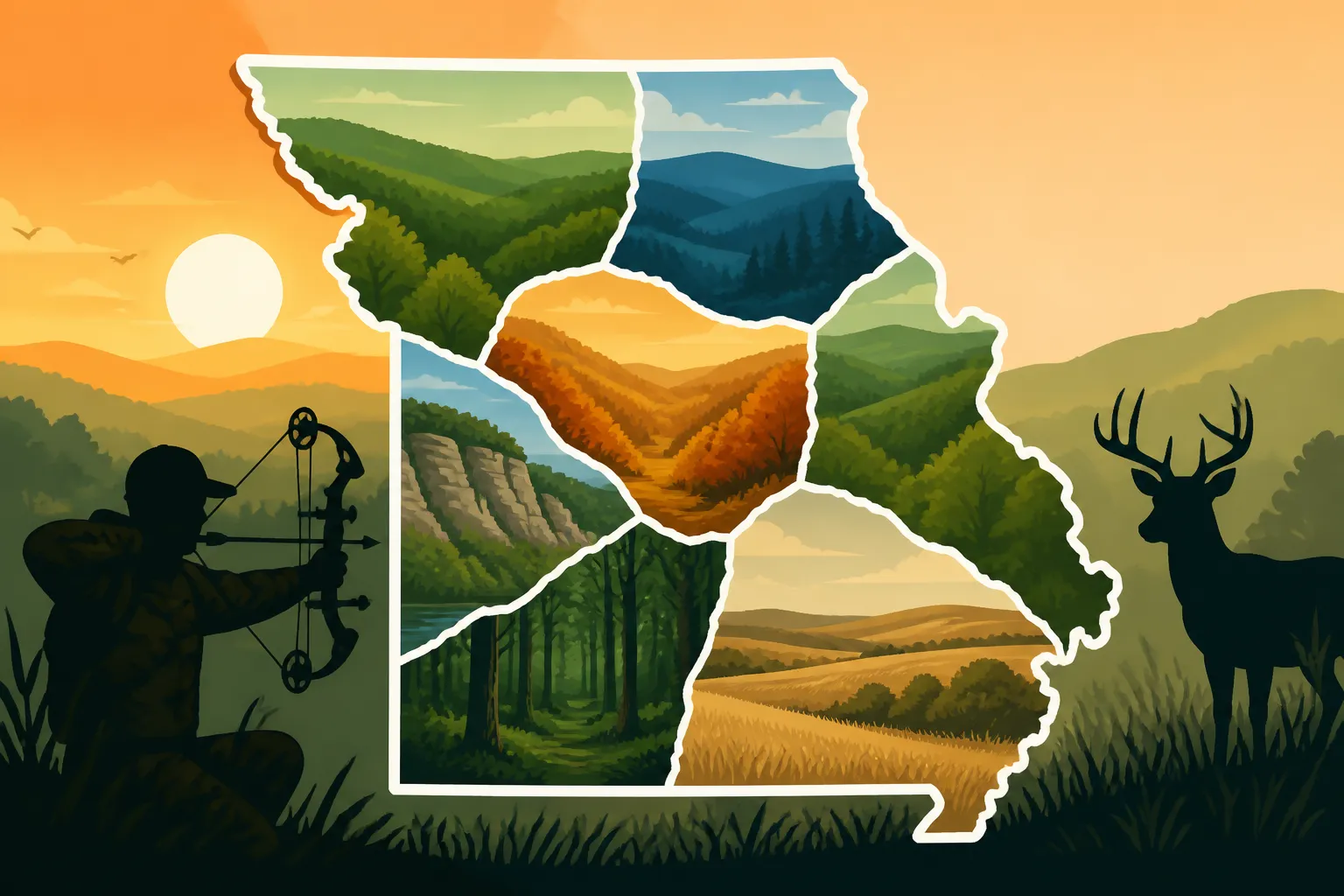
Missouri proudly hosts seven distinct Wilderness Areas, all located within the sprawling Mark Twain National Forest. Each offers its own unique challenges and character, but they all share that defining "wilderness" feel. Understanding their specific features is key to planning a productive hunt. Here are the seven by name:
| Wilderness Area | County/Counties | Approximate Acreage | Primary Game | Key Characteristics |
|---|---|---|---|---|
| Bell Mountain Wilderness | Iron | 9,000 | Deer, Turkey | Steep slopes, rocky outcrops, remote feel |
| Blair Creek Wilderness | Oregon | 4,000 | Deer, Turkey | Rugged hills, dense timber, Eleven Point River nearby |
| Devil's Backbone Wilderness | Ozark | 6,000 | Deer, Turkey | High ridges, deep valleys, small caves |
| Hercules-Glades Wilderness | Taney | 12,000 | Deer, Turkey | Open glades, mature forests, steep terrain |
| Irish Wilderness | Oregon | 16,000 | Deer, Turkey, Bear | Extremely rugged, deep canyons, isolated |
| Paddy Creek Wilderness | Texas | 7,000 | Deer, Turkey | Clear streams, old growth forests, varied topography |
| Piney Creek Wilderness | Barry | 8,000 | Deer, Turkey | Rocky bluffs, diverse forests, quiet solitude |
Bell Mountain Wilderness
Located in Iron County, the Hunting Bell Mountain Wilderness offers roughly 9,000 acres of rugged Ozark beauty. This area is characterized by incredibly steep slopes, dramatic rock outcrops, and a dense forest canopy. It's a place where you'll gain and lose elevation quickly, making for physically demanding hunts. Deer and turkey are the primary game, and their movements are heavily dictated by the topography. You'll often find deer using saddles and benches to traverse the steep hillsides, making these natural features prime spots for stand placement. The challenge here is the sheer effort required to get deep and to recover an animal from the drainages.
Blair Creek Wilderness
Nestled in Oregon County, the Blair Creek Wilderness, about 4,000 acres, provides a slightly smaller, yet equally rugged, experience. It's defined by steep hillsides and a heavily timbered landscape, with the proximity of the Eleven Point National Scenic River adding to its wild feel. While you won't be hunting in the river, its presence influences the surrounding ecosystem. This area is a fantastic spot for solitude, and for hunters willing to put in the legwork, it can hold some excellent deer and turkey. The dense timber means visibility can be limited, so still-hunting or carefully choosing your stand locations with good shooting lanes becomes paramount.
Devil's Backbone Wilderness
In Ozark County, the 6,000-acre Devil's Backbone Wilderness lives up to its name with its prominent high ridges and deep, winding valleys. This unique geological feature creates natural travel corridors and bedding areas that deer and turkey readily exploit. There are even small caves and rock shelters that game animals use for protection. Hunting here requires a good understanding of Wind and Thermals in Ozark Hills, as the dramatic elevation changes can make swirling winds a constant factor. Learning to use the terrain to your advantage, especially by hunting benches and draws, will be key to success.
Hercules-Glades Wilderness
Perhaps one of the most well-known of Missouri's wilderness areas, Deer Hunting Hercules-Glades Wilderness spans approximately 12,000 acres in Taney County. What sets Hercules-Glades apart are its distinctive open glades interspersed with mature oak and hickory forests. These glades, often south-facing, provide critical wintering habitat and diverse forage, while the surrounding timber offers cover and mast crops. Hunting here means adapting to varied terrain, from the relatively open glades to dense timber and steep, rocky bluffs. It's a fantastic spot for both deer and turkey, but the popularity means you might need to walk a bit further to find true solitude, especially early in the season.
Irish Wilderness
At a substantial 16,000 acres in Oregon County, the Hunting the Irish Wilderness on Foot is Missouri's largest and arguably most challenging wilderness area. Characterized by incredibly rugged terrain, deep canyons carved by streams, and a feeling of profound isolation, this is not a place for the faint of heart. While deer and turkey are present, this remote area also sees the occasional black bear. Hunting here is a true backcountry experience, demanding excellent physical conditioning, superior navigation skills, and a strong will. Expect to spend multiple days deep in the woods, far from any roads or marked trails. It’s an ideal location for those seeking to truly get away from it all and test their mettle against the wild.
Paddy Creek Wilderness
Located in Texas County, the Hunting Paddy Creek Wilderness encompasses about 7,000 acres, known for its clear, spring-fed streams and stands of old-growth timber. The topography here is varied, with hills and hollows that provide diverse habitat for deer and turkey. The presence of perennial water sources can be a magnet for game, especially during dry periods. This wilderness area offers a slightly different feel than some of the more intensely rocky or glade-dominated areas, with a focus on stream corridors and the dense timber along their banks. Patience and quiet movement, perhaps even Still-Hunting a Missouri Ozark Hollow, will be your allies here.
Piney Creek Wilderness
Finally, in Barry County, the Piney Creek Wilderness offers around 8,000 acres of tranquil solitude. Marked by rocky bluffs, diverse forest types, and a general sense of quietude, it's a superb place to escape the hustle and bustle. Deer and turkey thrive in the varied habitat, which includes everything from cedar thickets to hardwood ridges. The challenges here are similar to the other areas: rugged terrain and the necessity of self-reliance. This area can be particularly rewarding for the hunter who enjoys spending time in the woods, soaking in the natural environment, rather than just focusing on the harvest.
Hunting Strategies and Considerations in Wilderness Areas
Hunting in a wilderness area isn't just about showing up with your gear; it's about a mindset, a level of preparation, and a deep respect for the primitive nature of these places. Your usual tactics might need a serious overhaul.
Embrace the "No Road" Philosophy
The biggest mental shift you'll need to make is the complete absence of roads, even primitive ones, once you step beyond the boundary. This means you will be walking, and walking a lot. The deeper you go, the less human pressure you'll likely encounter, which can concentrate game in specific, harder-to-reach pockets. Consider this an advantage, but be realistic about your physical capabilities. Can you pack out a deer from three miles deep in steep terrain? Planning your extraction method before you even start hunting is crucial. This often means breaking down an animal into manageable pieces for multiple trips, or having a hunting partner to share the load.
Scouting for Success in Untamed Landscapes
Scouting these areas is different. You won't be driving around looking for fresh tracks on gravel roads. Instead, you'll rely heavily on topographical maps, aerial imagery, and good old-fashioned boot leather. Before you even set foot in the woods, use resources like the Missouri Conservation Atlas or online mapping tools like onX Hunt to identify potential travel corridors, bedding areas, water sources, and natural funnels. Look for subtle terrain features like benches on steep hillsides, saddles between ridges, and draws that funnel game. These are often highlighted in great detail when you zoom in on high-resolution satellite imagery, which can be invaluable when Reading Aerial Photos for Ozark Deer. Once on the ground, focus on finding older sign and understanding the pattern of deer movement, rather than just fresh tracks, since you're looking for consistent use over time.
Gear Up for the Backcountry
Your gear needs to be robust, reliable, and functional. Since everything comes in and out on your back, weight is a critical factor. Boots and Packs for Ozark Country should be at the top of your list; reliable, broken-in boots are non-negotiable for navigating rocky, steep terrain. A quality backpack, ideally one capable of hauling meat, is essential. Think about layering your clothing to adapt to changing Ozark weather, and always carry sufficient water or a reliable filtration system. Navigation tools are paramount; a GPS unit or a smartphone with a downloaded map (like onX Hunt, which works without cell service once maps are downloaded) is critical, along with a compass and paper map as a backup. Remember, you might be out of cell service for your entire hunt, so don't rely on it.
Planning Your Wilderness Hunt in Missouri
A successful wilderness hunt starts long before you ever set foot in the woods. Meticulous planning will not only increase your chances of success but also ensure your safety and enjoyment of the experience.
Pre-Trip Research and Preparation
Start by thoroughly researching the specific wilderness area you intend to hunt. Look up official Mark Twain National Forest maps and area-specific brochures. These often detail boundary lines, permitted activities, and any unique regulations for that particular area. Understand the topography – how steep are the climbs? Are there perennial water sources? What kind of timber dominates the landscape? This information will influence your physical training, gear choices, and even your hunting strategy. Also, consider the time of year you'll be hunting. Early season means warmer temperatures and thicker foliage, while late season can bring cold and sparse cover, which might require different tactics. Scouting Missouri Public Land Before Season is invaluable, even if it's just a day trip to get a feel for the terrain.
Navigation and Safety Protocols
Navigation in wilderness areas can be tricky, even for experienced hunters. The lack of trails and often dense canopy can make it easy to get disoriented. As mentioned, a dedicated GPS device or a smartphone app like onX Hunt with offline maps is your best friend. Mark your vehicle's location, critical trail junctions, and any key terrain features. Always tell someone exactly where you're going and when you expect to return. Carry a small first-aid kit, a headlamp, fire-starting materials, and an emergency shelter. Even a simple space blanket can make a huge difference if you find yourself unexpectedly spending a night out. Remember, assistance will be hours away, not minutes.
Respecting the Wilderness Ethic
Hunting in a wilderness area carries a greater responsibility to minimize your impact. This means practicing "Leave No Trace" principles to the extreme. Pack out everything you pack in, including spent shell casings, food wrappers, and anything else. Avoid cutting live trees for blinds or stands; if you need cover, use natural materials sparingly or bring a lightweight ground blind. When field dressing, spread the guts out to decompose naturally or carry them out if regulations or personal preference dictate. The goal is for the next person to experience the area as if no one had been there before them. This respect for the land is not just a rule; it's a core part of the wilderness hunting experience. If you’re considering Camping in Mark Twain National Forest as part of your wilderness hunt, familiarize yourself with dispersed camping regulations to ensure you’re doing it properly and leaving no trace.
Disclaimer
This article is for general informational purposes only and does not constitute professional advice. Laws, prices and regulations vary by location and change over time. Consult a qualified professional for guidance on your specific situation.