Deer Hunting the Missouri Ozarks
If you've ever tried to hunt deer in Missouri's Ozarks, you know the feeling: mile after mile of steep, rocky hills, thick timber, and hollows that seem to swallow sound and light. It's a gorgeous, rugged landscape, but it can be incredibly intimidating and frustrating when you're trying to find and harvest a whitetail. This comprehensive guide is designed to cut through that confusion, equipping you with the knowledge and tactics to successfully pursue deer in this challenging, yet rewarding, environment.
Understanding the Ozark Landscape for Deer Hunting
Hunting the Missouri Ozarks isn't like hunting the flat farmlands of north Missouri or the rolling hills of the central part of the state. The very ground beneath your feet, and the canopy above, creates a unique set of challenges and opportunities that demand a different approach. Without a solid grasp of this terrain, you're essentially walking blind.
The Unique Terrain and Cover
The Ozarks are defined by their ancient, eroded mountains, which manifest as a seemingly endless series of steep ridges and deep, winding hollows. Picture it: you climb one ridge, only to see three more rising in front of you. The ground is often a rocky mosaic, making silent movement a true art form. This geological makeup influences everything from deer travel to how you approach your stand.
Forest cover is predominantly oak-hickory timber, which means a critical food source in the form of acorns when they're dropping. However, you'll also find dense stands of cedar glades, especially on south-facing slopes, providing crucial thermal and escape cover for deer during harsh weather or when pressured. These thickets can be almost impenetrable, offering deer a safe haven where they can disappear in an instant. Navigating these varied cover types requires constant awareness and adaptability, as deer utilize them differently throughout the day and the season. It’s a completely different puzzle than trying to predict deer movement along a fencerow between two crop fields.
Food Sources and Water Availability
While the Ozarks might seem rugged and sparse, they're not devoid of food. Acorns are the undisputed king of fall and early winter deer diets here. When the white oaks, red oaks, and pin oaks start dropping their bounty, deer will concentrate heavily in those areas, often overlooking other food sources. Learning to identify productive oak stands, especially those that have dropped in prior years, is paramount.
Beyond acorns, deer in the Ozarks rely on a variety of browse – the tender shoots and leaves of woody plants. You'll often find deer browsing on honeysuckle, greenbrier, and various forbs in small clearings or along logging roads. Old logging cuts, burned areas, or clear-cuts can become deer magnets due to the regeneration of young, nutritious growth. Water sources are equally important, especially during dry periods. Spring-fed creeks, small seepages along hollows, and isolated ponds can become focal points for deer activity. During late season, these water sources, coupled with dense thermal cover, can be the key to finding deer. A well-placed trail camera on a secluded water source can provide invaluable information.
Deer Behavior and Movement in the Ozarks
Understanding how deer move through this particular landscape is perhaps the single most important factor for success. They aren't just wandering aimlessly; their movements are dictated by the topography, cover, and their inherent need for safety and sustenance.
How Terrain Dictates Deer Travel
Ozark whitetails are masters of their environment, and they use the ridges, hollows, and benches to their advantage. Instead of straight lines, deer often travel in contours, following paths of least resistance. Ridge saddles, which are low points along a ridge line connecting two higher elevations, act as natural funnels, concentrating deer movement as they transition between hollows or different feeding areas. Similarly, benches – relatively flat strips of land that break the slope of a hill – provide easy travel routes and often hold bedding areas. Deer will use these to traverse a steep hillside without expending excessive energy.
Deep draws and creek bottoms also serve as natural highways, especially when providing good cover. Bucks, particularly during the rut, will use these features to cruise for does, staying concealed in the thickets and undulating terrain. These natural corridors become critical pinch points where you can intercept deer movement. Understanding how the wind and thermals in Ozark hills influence deer travel is equally crucial. As the sun rises, warm air pushes up from the hollows, and in the evening, cool air descends. Deer are acutely aware of these air currents and will use them to scent check ahead or detect predators. Ignoring this can quickly blow your hunt.
Seasonal Patterns and Rut Activity
Just like anywhere else, deer behavior in the Ozarks shifts with the seasons, but the challenging terrain can make these shifts even more pronounced. In the early archery season, deer are still largely on summer patterns, focused on reliable food sources and water. They'll frequent productive oak flats where acorns are beginning to drop, or they might be found browsing in lush, secluded clearings. As the weather cools and pressure builds, they become more nocturnal and seek denser cover.
When the pre-rut kicks in during late October and early November, bucks start to become more active, rubbing trees and making scrapes. This is when those ridge saddles and benches really heat up as bucks begin to search for does. During the peak rut week in Missouri, all bets are off, and bucks might be seen chasing does at any time of day, often utilizing the thickest cover the Ozarks have to offer for their pursuits. This is a prime time to be in a stand overlooking a travel corridor between known bedding and feeding areas. Later in the season, after the main rut, deer shift their focus back to food and thermal cover. Standing corn or unharvested fields, if available on the fringes of the Ozarks, become magnets, but deep in the timber, they'll seek out remaining acorns or sheltered cedar thickets for warmth and security.
Scouting Strategies for Ozark Whitetails
Scouting in the Ozarks is not for the faint of heart, but it is absolutely essential. You can't just drive around in your truck and find deer sign like you might in farm country. This requires boots on the ground, patience, and the right tools.
Pre-Season Scouting on Public and Private Land
Before the season even begins, your most valuable tools will be detailed topographical maps and aerial imagery. Digital tools like GoHunt and onX Hunt are incredibly useful here, allowing you to meticulously study the terrain from your couch. Look for those subtle benches, defined ridge lines, creek drainages, and areas where cover changes abruptly. These are all potential deer magnets. Identify potential bedding areas (often dense cedar thickets on south-facing slopes for warmth, or north-facing slopes for cooling) and feeding areas (oak flats, clearings).
Once you've done your digital homework, it's time for boots-on-the-ground scouting. This means literally walking the ground, often during the late winter or early spring when vegetation is minimal. This allows you to easily see old trails, rubs, and scrapes that might be hidden by summer foliage. Pay close attention to subtle deer trails – they often follow the path of least resistance, much like humans. Find those natural pinch points where multiple trails converge, or where terrain forces deer into a narrow corridor. The physical challenge of traversing steep ground is real, but it’s the only way to truly understand the land and uncover those hidden gems. You'll quickly learn how much walking Missouri quail country entails, so prepare your legs!
Interpreting Deer Sign in Rocky Timber
Reading deer sign in the Ozarks can be a bit different. On rocky, hard-packed ground, tracks might be faint or non-existent. Instead, you'll need to look for other clues. Rubs on smaller trees might be the most obvious indicators of buck activity, but don't just look for size; look for clusters and lines of rubs that indicate a buck's travel route. Scrapes, while less defined on rocky ground, will still show disturbed earth and an overhanging branch (licking branch) that deer scent mark.
You'll need to train your eye to spot subtle trails weaving through thick brush, or where deer have pushed through dense cover. Pay attention to droppings – fresh droppings can tell you where deer have recently been feeding or bedding. Look for "day beds" in thickets where deer might spend the middle of the day, especially if they offer good visibility downwind or into a hollow. Don't be discouraged if you don't find massive, obvious sign; sometimes, the best sign in the Ozarks is subtle and requires a keen eye and persistent searching. This deep understanding of deer behavior helps inform your strategy for scouting Missouri public land before season.
Effective Hunting Tactics for Ozark Terrain
Once you've understood the landscape and scouted for sign, it's time to put a plan into action. The tactics you employ will heavily depend on the specific terrain you're hunting, the time of year, and your preferred method.
Treestand and Saddle Hunting in Steep Country
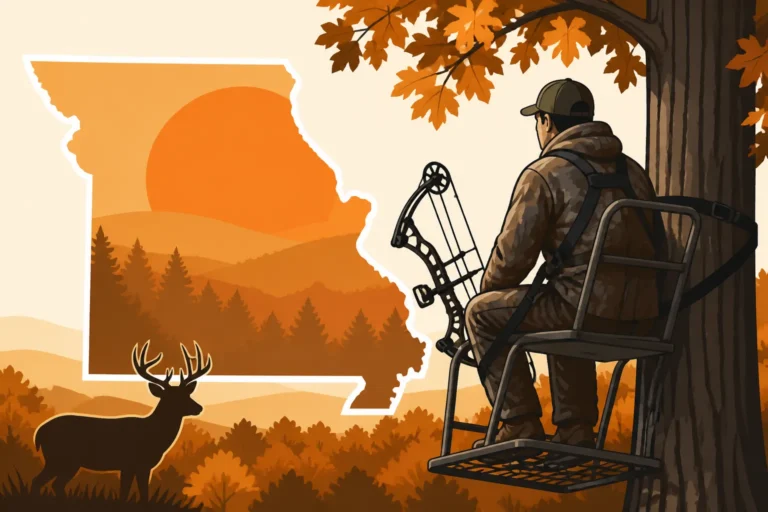
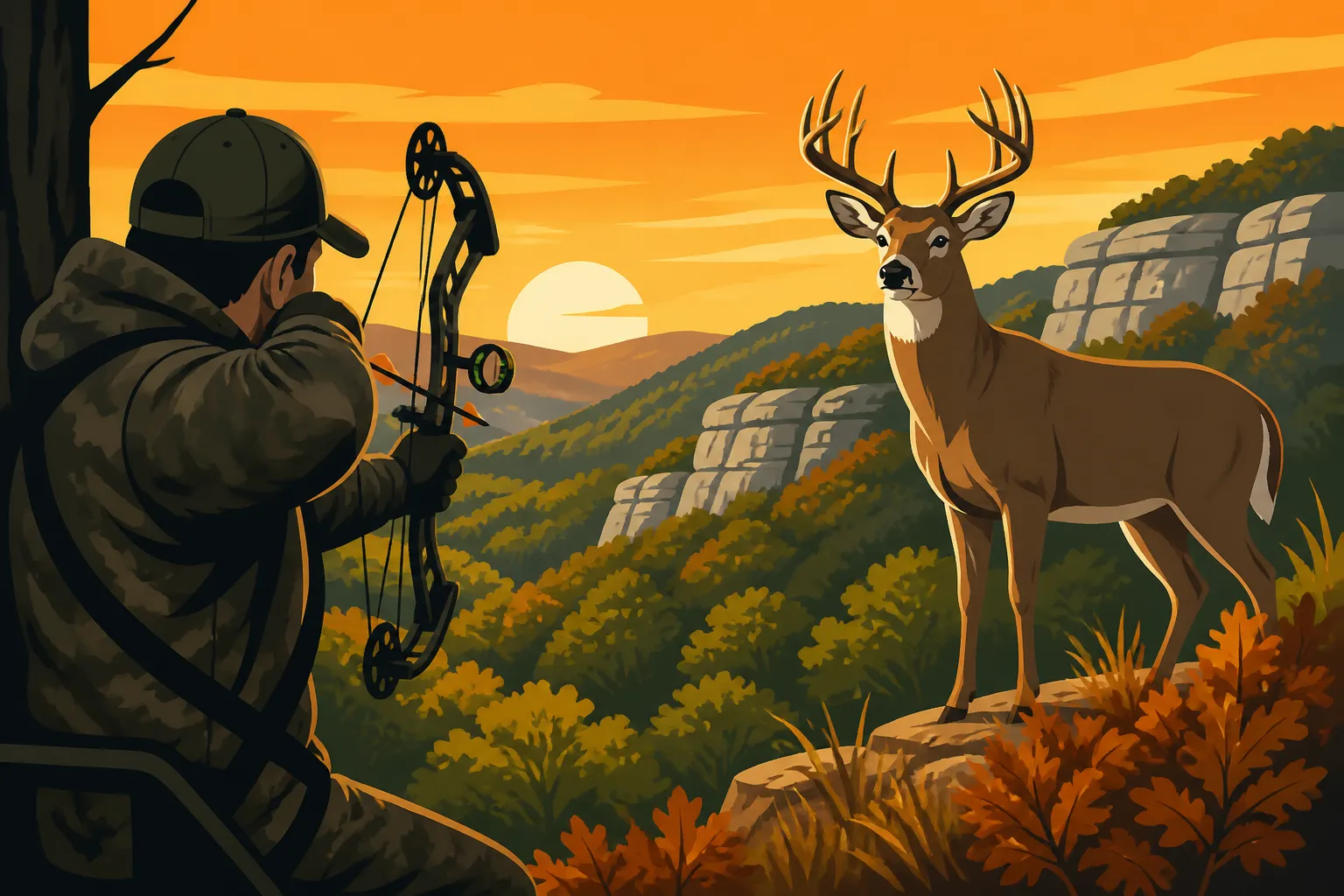
For many Ozark deer hunters, elevated positions are key to success. Treestands offer a vantage point over the thick cover and allow you to see deer moving through the understory. The steep terrain actually offers an advantage here; sometimes, a stand placed only 15-20 feet high on a steep hillside can put you eye-level with deer on an adjacent bench or ridge. Focus your setups on natural funnels: ridge saddles that connect two timber blocks, benches that offer easier travel, or points where a hollow narrows into a natural pinch point. Mobile setups, like hang-on stands with climbing sticks or saddle hunting rigs, are incredibly popular because they allow you to adapt to changing conditions and deer movement. You can pick up your gear and move it several hundred yards if the sign dictates, rather than being committed to a single, static location. Remember that when hanging a stand on a ridge saddle, you're looking for that subtle dip in elevation that deer will naturally gravitate towards.
Safety is paramount, especially on steep, uneven ground. Always use a full-body harness, and always maintain three points of contact when climbing. Lifelines are non-negotiable for hang-on stands. The last thing you want is a fall in a remote Ozark hollow. Being proficient with a mobile setup means you can quickly get into a good spot that you scouted, even if it's off the beaten path, and still have a safe, effective hunting platform.
Still-Hunting and Ground Blind Approaches
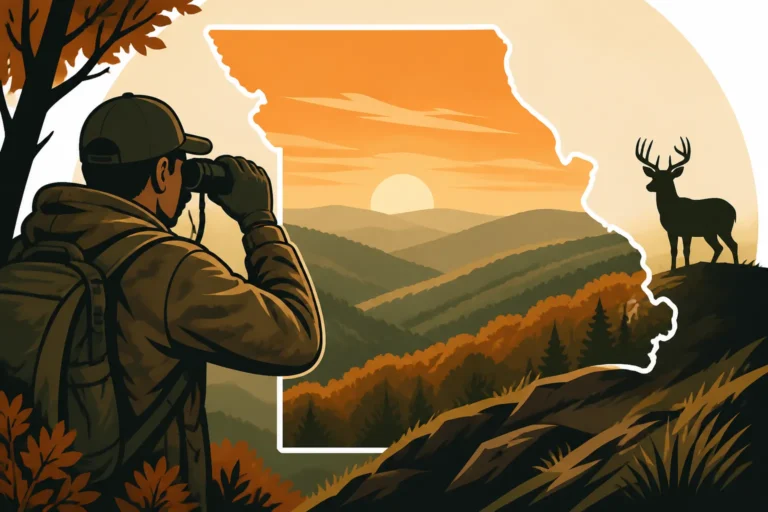
While treestands are effective, the Ozarks also lend themselves beautifully to still-hunting – the art of slow, deliberate movement through the woods. This is especially true during the firearms season or later in archery season when leaves are down and visibility improves. Move at a snail's pace, stopping often to scan the woods ahead of you. Use your binoculars to pick apart thickets and search for horizontal lines that don't belong (the back or leg of a deer). Focus on areas with good cover and subtle changes in elevation, using the terrain to break up your silhouette. When still-hunting a Missouri Ozark hollow, use the contours of the land to your advantage, moving quietly along benches or just below ridge lines, always paying attention to the wind.
Ground blinds can also be effective, particularly on the edges of small clearings, food plots, or in very thick cedar glades where a treestand isn't feasible. The key is to brush them in naturally so they blend seamlessly with the environment. They offer excellent concealment, keep you warm and dry, and can be a great option for introducing new hunters or kids to the sport. Just ensure your entry and exit routes don't spook deer approaching your setup. Utilizing a ground blind on Missouri public land can be tricky due to regulations, so always check the specific area's rules before deployment.
Gear and Equipment for Ozark Deer Hunting
The rugged nature of the Ozarks demands gear that can stand up to the challenge. Don't skimp on quality here; your comfort, safety, and success often hinge on having the right tools for the job.
Footwear and Clothing for Rugged Conditions
Your feet will take a beating in the Ozarks, so investing in high-quality, supportive boots is non-negotiable. Look for boots with excellent ankle support to prevent twists and turns on rocky, uneven terrain. Waterproofing is crucial, as you'll likely encounter wet leaves, creek crossings, and potential snow or ice. Brands like Kenetrek or Crispi are popular among serious mountain hunters, but even a good pair of sturdy Danner or Irish Setter boots can make a world of difference. Your feet are your engine; take care of them.
Layering your clothing is another must-do. Missouri weather can be notoriously unpredictable, especially during the fall. A crisp 30-degree morning can quickly turn into a 60-degree afternoon after a strenuous hike up a ridge. Start with a moisture-wicking base layer, add insulating mid-layers (fleece or down), and top it off with a quiet, windproof, and waterproof outer shell. This allows you to add or shed layers as your activity level or the temperature changes, keeping you comfortable and preventing overheating or chilling. And, of course, during the firearms portions, remember Missouri's 400-square-inch orange rule; make sure you have enough blaze orange visible from all directions.
Optics, Weapons, and Other Essentials
When it comes to optics, binoculars are incredibly useful for picking apart distant hillsides or dense thickets. An 8x or 10x power is generally sufficient. A reliable rangefinder is also critical, especially in the broken terrain where judging distance can be difficult. You'll want to accurately range those shots, whether you're using a rifle or a bow.
For firearms, a versatile caliber like a .270, .308, or 6.5 Creedmoor is more than adequate for Missouri whitetails. Shorter barrels can be an advantage in thick timber, allowing for easier maneuverability. Bowhunters often favor a balanced setup that's not too heavy for long treks. Fixed-blade broadheads are popular for their reliability, though mechanicals also perform well with good shot placement. Don't forget the importance of a good backpack. When selecting boots and packs for Ozark country, choose one that's comfortable for carrying your essentials for a day in the woods, and robust enough to haul out game meat if you're successful. A small bone saw, game bags, and a good field dressing knife are invaluable for getting your deer processed quickly and efficiently, especially if you're alone and deep in a hollow.
Navigating Public Land and Access in the Ozarks
Much of the Ozarks offers vast tracts of public hunting land, primarily through the Mark Twain National Forest and numerous Conservation Areas. Understanding how to access and utilize these resources is vital for any serious Ozark hunter.
Hunting Mark Twain National Forest and Conservation Areas
The Mark Twain National Forest encompasses over 1.5 million acres of land across 29 counties in southern and central Missouri, providing an incredible amount of opportunity for the intrepid hunter. This is truly big woods hunting, where you can walk for miles without seeing another soul, if you know where to go. Familiarize yourself with the various ranger districts and specific rules for each. While deer densities might not be as high as in some agricultural areas, the potential for encountering a mature, unpressured buck is very real. These areas often require deeper penetration and more effort, which naturally filters out a lot of the hunting pressure. For more detailed information, checking out resources on Mark Twain National Forest Hunting can be incredibly helpful.
In addition to the National Forest, the Missouri Department of Conservation (MDC) manages a significant number of Conservation Areas (CAs) throughout the Ozarks. These CAs vary in size and often offer different habitats, from timber to glades and even some open fields. Each CA typically has specific regulations, so always consult the area brochure on the MDC website or app before you hunt. Many of these areas are well-marked and provide parking, but the best hunting often requires walking well beyond the typical roadside access points. Some Ozark CAs, like Peck Ranch, are also home to the state's growing elk herd, though elk hunting is by special lottery only. Scouting Missouri Ozark public land worth walking means getting away from the road, deep into the timber.
Respecting Private Land and Seeking Permission
While public land abounds, some of the best hunting opportunities can still be found on private land. However, this requires diligent effort and strict adherence to Missouri's trespass and permission laws. In Missouri, you must have permission to hunt on private land. It's not enough for the land to simply not be "posted." The best practice is to always get written permission, especially if you plan to hunt extensively.
Knocking on doors and building relationships with landowners can unlock access to properties that see little to no hunting pressure. Many farmers and landowners are happy to allow hunting, especially if deer are causing crop damage or they simply enjoy having respectful hunters on their property. Be polite, offer to help with chores, and always follow through on your promises. Knowing how to approach landowners and understand Getting Private Land Permission in Missouri is a skill that pays dividends. Always leave gates as you found them, don't litter, and show immense respect for their property. A small gift of venison after a successful hunt can go a long way in fostering a lasting relationship.
Overcoming Common Ozark Hunting Challenges
The Ozarks are beautiful, but they certainly don't make it easy on deer hunters. Being prepared for the unique challenges can turn potential setbacks into successes.
Dealing with Steep Grades and Physical Demands
Let's be honest: hunting in the Ozarks is a workout. The relentless steep grades and rocky terrain can quickly wear you down if you're not physically prepared. Start an exercise routine months before the season, focusing on cardio and leg strength. Hiking with a weighted pack can simulate the experience of carrying gear, and hopefully, a deer, out of a hollow. Don't underestimate the energy drain these hills will impose.
The real test comes after a successful harvest. Getting a deer out of a deep hollow or off a steep ridge can be one of the most physically demanding parts of the hunt. If you're alone, quartering the animal is often the most practical solution. Invest in a good game cart if the terrain allows, but often, a strong back and a good pack frame are your best friends. Knowing how to efficiently field dress and butcher an animal in the field is a critical skill for Getting a Deer Out of a Hollow Alone. Take breaks, stay hydrated, and don't push yourself to exhaustion. Remember, safety always comes first, even after the shot.
Understanding Hunting Pressure and Finding Seclusion
Even on vast public land tracts like Mark Twain, popular access points can see significant hunting pressure, especially on opening weekends. Deer quickly learn to avoid these areas and seek refuge in the thickest, most remote sections of the forest. Your strategy should involve actively trying to find ground others walk past. This often means walking farther than most people are willing to, or targeting areas with less obvious access.
Study aerial maps for fingers of timber that extend far from roads, or for pockets of unappealing, dense cover that most hunters avoid. These are often the places where mature bucks will retreat to when pressure builds. Hunting mid-week or targeting the less popular late-season portions can also drastically reduce the number of other hunters you encounter. Learning to read an Ozark hollow for deer movement and finding those less-traveled routes is crucial for consistent success. If you put in the extra miles and climb those extra ridges, you'll be surprised at the pockets of seclusion and quality deer you can find, even on heavily hunted public land.
| Feature | North Missouri Farm Country | Missouri Ozarks |
|---|---|---|
| Terrain | Rolling hills, flat agricultural fields, timber blocks | Steep, rocky ridges and hollows, broken topography |
| Cover | Crop fields, fencerows, small timber blocks, brushy draws | Dense oak-hickory timber, thick cedar glades, rocky glades |
| Primary Food | Corn, soybeans, alfalfa, small food plots | Acorns (oaks are critical), various browse, limited clearings |
| Deer Density | Generally higher deer density, especially near agriculture | Lower overall density, but potential for mature, less pressured bucks |
| Hunting Style | Stand hunting over food, field edges, funnels between fields | Mobile stand/saddle hunting, still-hunting, glassing |
| Scouting | Identifying crop rotations, field edges, easy-to-spot trails | Extensive boots-on-ground, topo/aerial maps for terrain features |
| Physical Demand | Moderate, can involve long walks but generally flatter terrain | High, significant elevation changes, rocky ground, demanding retrieves |
| Access | Mix of private land (often leased), scattered public areas | Vast tracts of public land (Mark Twain NF, CAs), some private |
Disclaimer
The information provided in this guide is for general informational purposes only and is not intended as legal advice. Hunting regulations, seasons, and permit requirements are subject to change. Always consult the most current Missouri Department of Conservation (MDC) regulations before planning any hunting trip. It is the hunter's responsibility to know and follow all applicable state and federal laws.