Public Hunting Ground Near Springfield
If you're a hunter living near Springfield, Missouri, you know the struggle: finding reliable public hunting ground that isn't already crawling with people can feel like a genuine challenge. It's easy to get discouraged when you look at a map and see a sea of private land, wondering where on earth you can even put your boots on the ground. This guide is here to cut through that frustration, offering a detailed look at the public hunting opportunities within striking distance of Springfield and how to make the most of them, even when faced with competition.
Navigating the Challenges of Hunting Near Springfield
Living near a city like Springfield offers a lot of conveniences, but for hunters, it often means facing a dense population and the inevitable pressure that comes with it on public lands. It's a reality we all contend with, and it can make finding a quiet spot to pursue game feel like a wild goose chase.
The Quest for Accessible Public Land
Many hunters in the Springfield area feel the pinch of limited and often crowded public access. You might spend hours driving, only to pull into a parking lot already full of trucks, signaling that your intended hunting spot is likely already occupied. This isn't just frustrating; it can severely impact your hunting strategy and success. The ideal public land offers solitude, good habitat, and minimal signs of other hunters, but near a population center, that's a tall order. The challenge isn't just finding public land, but finding quality public land that offers a genuine hunting experience without feeling like a parade. It takes a bit more effort, and often, a willingness to walk further than most.
When you're trying to figure out where to even start, the sheer scale of the task can be overwhelming. Is it better to drive an hour, or try to find a smaller, closer spot that might be overlooked? What kind of game can you realistically expect to find? These are the questions that plague hunters in urban-adjacent areas. The key is to understand the different types of public land available and to match your expectations and effort to what each area offers. Don't go into a smaller, easily accessible conservation area expecting a remote backcountry experience. However, don't dismiss those smaller tracts entirely, as they can sometimes hold overlooked gems.
Understanding Missouri's Public Land Offerings
Missouri is fortunate to have a robust public land system, primarily managed by the Missouri Department of Conservation (MDC) through its network of Conservation Areas (CAs). These areas vary greatly in size, terrain, and primary game species. Some CAs are expansive tracts of timber and fields, while others might be smaller, more specialized units focused on waterfowl or prairie restoration. Beyond the MDC lands, you also have portions of the Mark Twain National Forest to the south and east, offering a completely different scale of hunting experience. Understanding the nuances of each type of public land is crucial for hunters near Springfield.
Conservation Areas often have detailed area regulations that go beyond statewide rules, so it's always smart to check the specific brochure for any area you plan to hunt. You can usually find these on the MDC website or through The Missouri Conservation Atlas. These rules might dictate things like vehicle access, specific hunting methods, or even what kind of blinds are allowed. Mark Twain National Forest, on the other hand, operates under federal regulations, which can differ from state rules, especially regarding camping and motor vehicle use. It's a good idea to know the basics of Mark Twain National Forest Hunting before you venture too deep. Knowing these differences upfront can save you a headache and ensure you're hunting legally and responsibly.
Key Public Hunting Areas Within a Short Drive of Springfield
When you're based in Springfield, you have a few distinct types of public hunting ground within a reasonable drive, each with its own character and opportunities. From smaller, more accessible Conservation Areas to the vastness of the National Forest, there's a range of options if you know where to look.
Conservation Areas: Your Closest Bets
For many Springfield hunters, the MDC Conservation Areas are the go-to. While they often see pressure, they also offer varied habitat and management for a range of species.
-
Bois D'Arc Conservation Area: Located just west of Springfield in Greene and Lawrence counties, Bois D'Arc is a diverse area offering timber, old fields, and some wetland units. It's a popular spot for deer, turkey, and various small game. Because of its proximity to Springfield, it will see hunting pressure, especially on opening weekends. The key here is to use mapping tools like onX Hunt to identify less accessible corners, pinch points between timber and fields, or areas requiring a longer walk. I've had success pushing deeper into the timber blocks away from easy road access, often finding pockets of deer that haven't been disturbed. Look for subtle topography changes, like benches or small draws, that funnel deer movement. This area is generally open to archery, firearms, and alternative methods during their respective seasons.
-
Busiek State Forest and Wildlife Area: Heading south of Springfield into Christian and Stone counties, you'll find Busiek. This area offers a much more rugged, Ozark-like terrain compared to Bois D'Arc, with steep hollows, rocky ridges, and dense cedar thickets. It's a fantastic spot for Deer Hunting the Missouri Ozarks and turkey hunting, though the challenging terrain makes for tough walks. The effort, however, often pays off with fewer hunters willing to tackle the steep climbs and descents. Water sources in the hollows can be great places to focus during dry periods, as can the limited flat areas on ridge tops. Be prepared for a physically demanding hunt and ensure you have sturdy Boots and Packs for Ozark Country. The hunting here is truly an immersive Ozark experience.
-
Fellows Lake Conservation Area: This smaller CA is very close to Springfield, north of the city in Greene County, and surrounds parts of Fellows Lake. It’s primarily timbered with some open areas, and while it offers deer and turkey hunting, its smaller size and urban adjacency mean very high pressure. It’s not ideal for those seeking solitude, but for a quick scouting trip or a short hunt on an unpredictable weekday, it can sometimes produce. Successful hunters here often focus on early morning or late evening hunts, and pay close attention to wind direction to avoid broadcasting their presence. Hunting Pressure on Missouri Public Ground is a major factor here, so being discreet and understanding local deer movements is paramount.
Larger Tracts and National Forest Opportunities
If you're willing to drive a bit further, the Mark Twain National Forest opens up a world of more expansive hunting opportunities.
The Mark Twain National Forest isn't a single contiguous block but rather a collection of districts and units spread across southern Missouri. For hunters near Springfield, the units in Christian, Douglas, Ozark, Stone, and Taney counties are the most accessible. These areas offer vast expanses of timber, making them excellent for deer and turkey, and providing a more remote hunting experience than most Conservation Areas. The sheer scale means you can often find solitude if you're willing to walk a mile or more from a trailhead. Still-Hunting a Missouri Ozark Hollow or focusing on Hunting Missouri Ridge Saddles and Benches can be highly effective here.
One of the biggest advantages of the Mark Twain is the ability to truly get away from other people. You'll encounter rugged topography, so physical fitness is important. However, the reward is often a less pressured animal that behaves more naturally. Using a tool like onX Hunt becomes incredibly valuable in the National Forest, not just for property lines, but for navigating the complex topography and identifying potential bottlenecks or bedding areas that are far from roads. You can literally spend days exploring without seeing another hunter if you pick your spots carefully.
Strategic Approaches to Hunting Public Ground Near Springfield
Successfully hunting public land near a major population center like Springfield requires a strategic mindset. You can't just show up and expect animals to be waiting. It demands diligent scouting, smart use of technology, and an understanding of how to adapt your tactics to the terrain and pressure.
Scouting and Digital Tools
Effective scouting is the bedrock of successful public land hunting, especially in high-pressure areas. It's not just about finding fresh sign; it's about understanding the lay of the land, predicting animal movement, and identifying spots other hunters might overlook.
Before you even step foot in the woods, immerse yourself in digital scouting. Tools like onX Hunt are game-changers for public land hunters. You can spend hours poring over aerial imagery, topographic maps, and public land boundaries right from your couch. Look for subtle features: changes in timber type, hidden food sources like oak flats, dense bedding cover, and natural funnels like narrow creek bottoms or saddles between ridges. Pay close attention to how elevation changes might create thermal currents, especially in the Ozarks where Wind and Thermals in Ozark Hills play a huge role in deer movement and your scent dispersion. Identifying these potential hotspots digitally allows you to focus your precious on-the-ground scouting time more efficiently.
Once you have a few promising spots marked on your digital map, it's time for boots on the ground. Walk those areas, even in the off-season. Look for old rubs, scrapes, well-worn trails, and natural cover. Don't be afraid to walk deep, even if it feels like a long hike. Often, the best spots are a half-mile or more from any easy access point. This is where you might also use a platform like GoHunt to research general game patterns or habitat types for a given region, helping you refine your search parameters even further. Combine this with the detailed mapping capabilities of onX Hunt, and you have a powerful scouting combination that can lead to discovering those overlooked honey holes.
Tackling Different Game and Terrain
The public lands around Springfield offer diverse opportunities, but each species and terrain type demands a tailored approach.
For whitetail deer, the terrain will largely dictate your strategy. In the rolling timber of the Mark Twain National Forest or the steeper portions of Busiek, understanding topography is everything. Deer will often travel along contour lines, use saddles to cross ridges, and bed on benches or thick points overlooking hollows. Setting up a Treestand Setups in Hardwood Timber in a funnel or near a natural food source like an oak flat can be incredibly effective. Consider trying Still-Hunting a Missouri Ozark Hollow if you prefer to move slowly and quietly, covering ground where deer naturally travel. Near agricultural fields, even on public land, deer will often stage in timbered draws or fencerows before entering fields to feed. Knowing Late-Season Food Sources for Whitetails can be critical as the season progresses.
Wild turkeys also thrive in these timbered landscapes. In spring, focus on ridge tops at dawn, listening for gobblers sounding off the roost. Once they hit the ground, they'll often work their way down into hollows or along creek beds. Calling a Missouri Gobbler Off the Roost requires patience and an understanding of their morning routine. For fall turkeys, finding flocks is key. Breaking them up and then calling them back together, or using subtle clucks and purrs to bring them into range, can work well. The dense timber and varied terrain mean you'll need to be mobile and adaptable.
Small game like squirrels and rabbits are abundant on many of these areas. For squirrels, find the mature oak and hickory stands, especially during early archery season when the nuts are dropping. You can often locate them by listening for their chattering or the sound of nut cuttings hitting the leaves. Squirrel Hunting in Hickories can be a fantastic, low-pressure way to spend a morning. Rabbit hunting often focuses on brush piles, briar thickets, and field edges, especially after a frost knocks down some of the heavier cover. Many Conservation Areas that might be busy with deer hunters during November can offer surprisingly good small game hunting with minimal competition at other times.
Dealing with Hunting Pressure
Public land near any city, including Springfield, is going to see hunting pressure. It's a fact of life. But don't let that deter you; instead, let it inform your strategy.
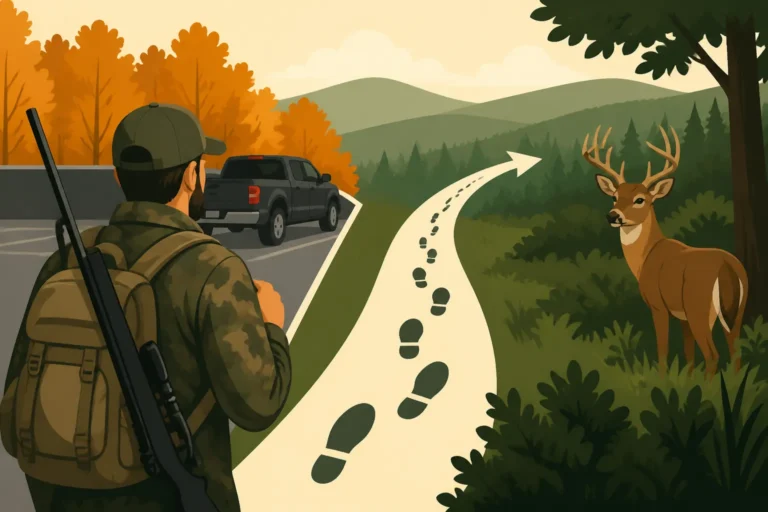
The most common advice for dealing with pressure is to walk further. Most hunters will stick to areas within a quarter to a half-mile of parking lots or easy access points. By pushing deeper into the property, especially on larger CAs or within the National Forest, you dramatically increase your chances of finding undisturbed game. This might mean an extra 30-45 minutes of walking in the dark to your stand, but the quiet woods you find there can be worth every step. Consider using a mountain bike to cover ground on old logging roads or trails quickly, then ditching it to walk the last distance into your spot.
Another strategy is to hunt during off-peak times. Mid-week hunts, especially during the middle of the day, see significantly less pressure than opening weekends or early mornings/late evenings on Saturdays and Sundays. Many hunters leave by mid-morning, opening up areas for those willing to stay out longer. The Missouri Conservation Areas Explained provide general rules but often individual area brochures give more specific details on what to expect. During the Missouri's November Firearms Portion, pressure is intense, but it often tapers off significantly in the later days of the season.
Finally, focus on overlooked habitat types. Everyone looks for the perfect oak flat or food plot edge. But what about the dense, thorny cedar thicket on a steep north-facing slope? Or a tangled river bottom that's a nightmare to navigate? Deer, especially mature bucks, will often seek refuge in these nastier, less inviting spots when pressured. While it might not be comfortable hunting, these areas often hold the most unpressured animals. Learn to read aerial photos to identify these areas where others might shy away, and you could find yourself with a true gem of a hunting spot.
| Hunting Area | Primary Game | Terrain Type | Proximity to Springfield | Typical Pressure | Notes |
|---|---|---|---|---|---|
| Bois D'Arc Conservation Area | Deer, Turkey, Small Game | Mixed timber, fields, some wetlands | Close (15-20 min) | High | Diverse, requires walking to escape crowds. |
| Busiek State Forest & Wildlife Area | Deer, Turkey, Small Game | Rugged Ozark timber, steep hollows | Moderate (30-40 min) | Moderate-High | Physically demanding, but offers solitude. |
| Fellows Lake Conservation Area | Deer, Turkey | Timbered, around lake | Very Close (10-15 min) | Very High | Smaller, best for quick, strategic weekday hunts. |
| Mark Twain National Forest (Local Units) | Deer, Turkey, Small Game | Vast Ozark timber, ridges, hollows | Moderate (45-60+ min) | Low-Moderate | Requires driving, but offers true backcountry. |
Disclaimer
This article is for general informational purposes only and does not constitute professional advice. Laws, prices and regulations vary by location and change over time. Consult a qualified professional for guidance on your specific situation.