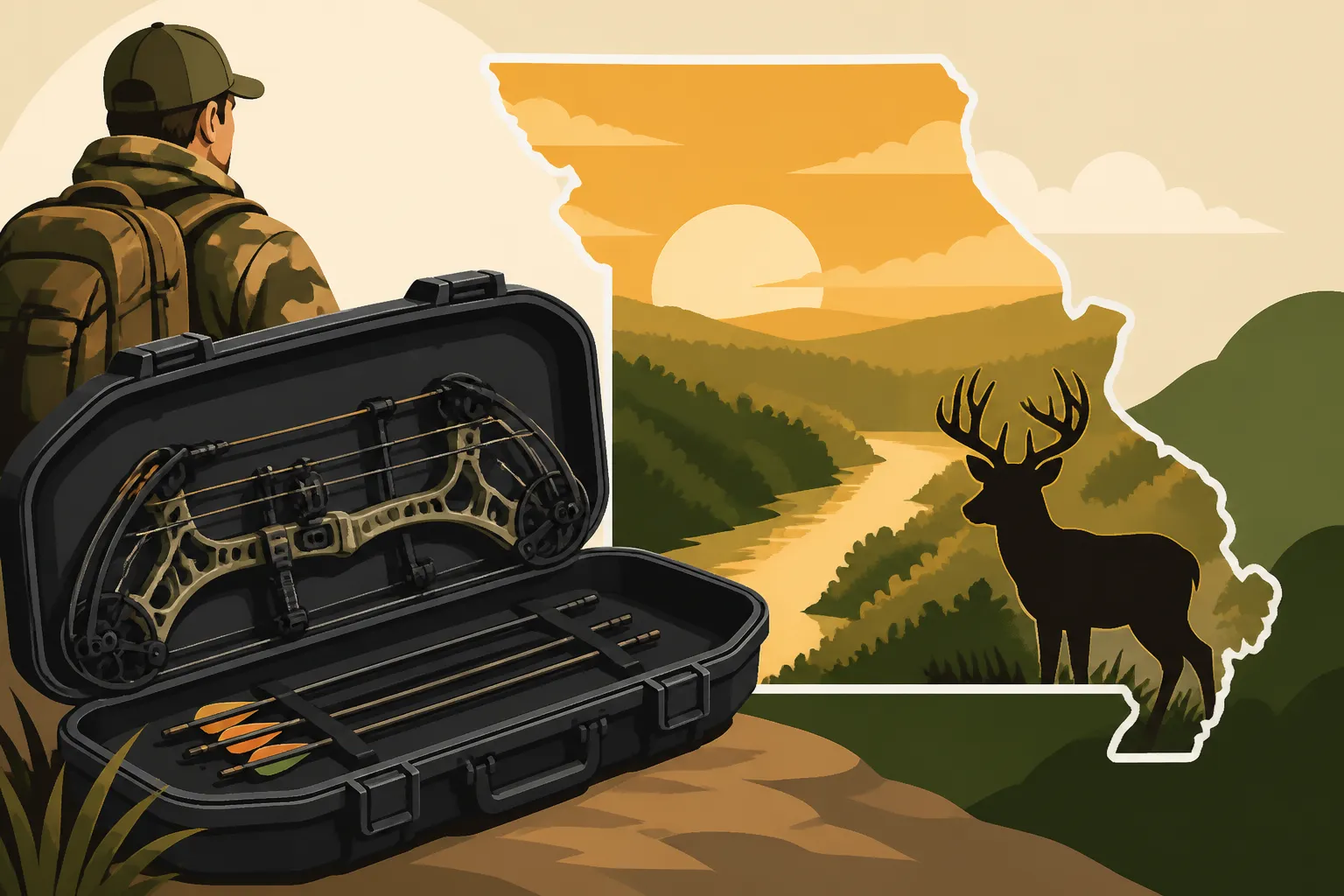
Bow Cases for Travel to Missouri
Traveling to hunt in Missouri often involves a lot of gear, and for archers, the bow is arguably the most critical piece. Protecting that investment from bumps, scratches, and the rigors of the road (or air) is paramount, but figuring out the best way to transport it can feel overwhelming. This comprehensive guide will walk you through the various bow case options, essential features, and specific considerations for safely getting your archery setup to your favorite Missouri deer woods.
Understanding Different Types of Bow Cases for Travel
When you're packing up for a hunt in the Show-Me State, your choice of bow case isn't just about aesthetics; it's about the level of protection and convenience you need. There's a spectrum of options out there, each with its own advantages and ideal uses, whether you're just driving across the county or flying in from out of state.
Soft Cases: Lightweight and Convenient for Short Hops
Soft bow cases are often the first type of case an archer acquires. They're typically made from durable fabric like Cordura or nylon, often with some padding, and usually feature a zipper closure. The big draw here is their light weight and flexibility. If you're simply tossing your bow in the back seat of your truck for a quick drive to a local public land spot or a friend's private ground, a soft case is incredibly handy.
However, this convenience comes with a trade-off. While a soft case might protect against minor scrapes and dust, it offers minimal protection against hard impacts or crushing forces. Dropping a heavy piece of gear on it, or having other items shift against it during travel, could easily damage delicate components like sights, rests, or even the bow limbs themselves. They're great for keeping your bow clean and organized, but they shouldn't be your first choice for situations where your bow might get jostled significantly.
Hard Cases: Maximum Protection for Rough Journeys
Hard bow cases are the heavy-duty champions of bow protection. Constructed from rugged plastics, aluminum, or composite materials, these cases are designed to withstand serious abuse. Many hard cases feature custom foam inserts that are shaped to cradle your specific bow model, along with extra compartments for arrows, releases, and other accessories. The closure mechanisms are usually robust latches, sometimes reinforced with key locks or padlock points.
These cases are ideal for anyone making a longer journey, especially if your bow will be exposed to variable conditions. Think about the rough roads heading into remote areas of the Mark Twain National Forest, or the constant vibrations of a truck bed over hundreds of miles. For air travel, a hard case is almost always a non-negotiable requirement. While they are heavier and bulkier, the peace of mind they offer in terms of protecting your valuable equipment is often worth the extra effort. They truly become indispensable when you're headed to hunt Deer Hunting the Missouri Ozarks or traveling far for a specific season.
Hybrid Cases: A Blend of Both Worlds
Some manufacturers offer hybrid cases that attempt to bridge the gap between soft and hard cases. These might have a semi-rigid exterior, often with a fabric covering, but reinforced panels or an internal frame that provides more structural integrity than a purely soft case. They often strike a balance, offering more protection than a soft case without the full bulk and weight of a hard case.
Hybrid cases can be a good compromise for hunters who need more protection than a soft case offers but don't want to commit to the full heft of a hard case. They might be suitable for regional road trips where you're loading and unloading your vehicle yourself and can control how the case is handled. However, for maximum peace of mind, especially with more delicate bows or when entrusting your gear to baggage handlers, a dedicated hard case is still generally the superior option.
Key Features to Look For in a Quality Travel Bow Case
Choosing the right bow case involves more than just picking a type; you need to consider the specific features that will best serve your hunting adventures in Missouri. From safeguarding against impacts to keeping your gear organized, these details make a big difference.
Impact Protection and Durability
The primary function of any bow case is protection. For soft cases, look for thick, high-density foam padding that completely surrounds the bow. Check the stitching and zipper quality, as these are common failure points. For hard cases, the material itself is key. High-grade molded plastics, often found in cases from companies known for rugged outdoor gear, offer excellent crush resistance. Look for cases that can withstand significant weight or impact without flexing or deforming.
Many premium hard cases feature a tongue-and-groove or O-ring seal around the lid. This is crucial for keeping out moisture and dust, which can be a real concern when driving through dusty farm roads in North Missouri or encountering an unexpected downpour in the Ozarks. A good seal also helps with pressure equalization during air travel, preventing damage from changes in cabin pressure. Inside, the foam should be dense and customizable. Layers of pluck foam or pre-cut inserts allow you to tailor the fit precisely to your bow, ensuring it doesn't shift around during transit.
Security and Locking Mechanisms
Security is non-negotiable, especially if your bow will ever be out of your sight. Most cases, even some soft ones, will have a lockable zipper or a small padlock loop. Hard cases typically come with robust latches, and many offer integrated key locks or reinforced padlock points. For air travel, TSA-approved locks are a must. These allow security personnel to inspect your case without damaging it or your bow.
Consider how easily the case could be opened or tampered with. A flimsy zipper or a weak latch is an invitation for trouble. Look for metal components rather than plastic for critical locking points. If you're storing your bow in a camp setting or leaving it in a vehicle overnight, having multiple, strong locking points provides an extra layer of deterrence against theft. You've invested a lot in your Bow Setups for Missouri Whitetails, so protecting that investment needs to be a top priority.
Internal Storage and Organization
A good bow case doesn't just hold your bow; it helps you organize all the vital accessories that go with it. Look for cases with dedicated compartments or pockets for arrows, a release aid, broadheads, extra string, an Allen wrench set, and perhaps even a small rangefinder. Some cases offer arrow tubes built into the lid or base, keeping your fletchings from getting crushed.
A well-organized case means you spend less time fumbling for gear and more time focused on the hunt. Imagine needing to change a broadhead in the field before Hunting the Missouri Rut in Early November – having your tools readily accessible in your case is a game-changer. For serious hunters, finding a case that can comfortably fit multiple sets of arrows, like a quiver with both hunting and practice arrows, is a significant advantage. Some archers even dedicate a small section for their Bow Sights for Timber Shots or their Broadheads for Timber Shots.
Portability and Travel Convenience
How easy is the case to carry? This might seem like a minor point until you're lugging it through an airport or across a field to your truck. Look for comfortable, ergonomic handles. Wheels are a huge plus on hard cases, especially larger ones, as they significantly reduce the strain of transport.
Consider the dimensions of the case. Will it fit in the trunk of your car, or do you have a truck bed that can accommodate it? If you're flying, always check airline specific regulations for oversize baggage and bow cases well in advance. Some airlines have strict size and weight limits, and exceeding them can lead to unexpected fees or even refusal to transport your gear. Researching these details ahead of time, perhaps even using resources like GoHunt forums where other hunters share their travel experiences, can save you a lot of headache at the airport.
Transporting Your Bow by Vehicle in Missouri
The vast majority of Missouri hunting trips involve vehicle travel, whether it's a short drive down the road or a multi-hour journey across the state. Understanding how to best secure your bow during these trips is crucial for preventing damage.
Securing Your Bow in a Truck Bed
If you're like many Missouri hunters, your truck is your primary mode of transport. The bed of a pickup truck offers ample space, but it also exposes your gear to the elements and potential bouncing. A hard case is highly recommended here. Ensure the case is securely tied down with ratchet straps or bungee cords to prevent it from sliding around, especially if you're navigating rough gravel roads common on public land.
Protect your case (and its contents) from rain, dust, and road grime by placing it under a tonneau cover or a camper shell. If you don't have one, even a heavy-duty tarp secured tightly can offer some protection. Remember that temperature fluctuations can impact your bow's strings and other components, so avoid leaving it exposed to direct sunlight for extended periods on hot days. A quick check of the forecast before heading out to Scouting Missouri Public Land Before Season can help you plan accordingly.
Keeping Your Bow Safe in the Vehicle Cabin
For those with SUVs, cars, or limited truck bed space, the vehicle cabin is often the go-to. A soft case might suffice here if you can guarantee it won't be crushed by other gear. However, even in the cabin, sudden stops, turns, or accidents can send unsecured items flying. Always position your bow case in a way that minimizes movement and prevents it from being impacted by other items.
The back seat or a spacious trunk can work well. If using the back seat, consider running a seatbelt through the case's handle or over a secured bag to keep it from shifting. For smaller cases, the floorboard behind the front seats can offer a snug fit. While a soft case is less protective against blunt force, it does offer a layer against incidental bumps against interior components, which is certainly better than no case at all.
Utilizing Trailers and Cargo Haulers
Some hunters with larger setups or those hauling ATVs might use trailers or enclosed cargo haulers. These offer excellent protection from the elements, but securing your bow case inside is still vital. Just as in a truck bed, tie-downs are your friend. Ensure the case is not free to slide or bounce, as repetitive vibrations can be just as damaging as a single hard impact.
If your trailer or cargo hauler is uninsulated, be mindful of extreme temperatures. Direct sunlight on a dark trailer can create oven-like conditions inside, which is terrible for strings, cams, and glues on your fletchings. Conversely, extremely cold temperatures can make plastic components brittle. Using a heavy blanket over the case or adding insulation to your hauler can mitigate some of these temperature extremes, especially during a long haul to Hunting North Missouri's Big-Buck Farm Country.
Air Travel Considerations for Missouri Hunts
Flying with a bow can feel like navigating a minefield of regulations, but with proper planning, it's entirely doable. Many Missouri hunters travel out of state for hunts, and many non-residents fly into our state for a shot at a Show-Me State whitetail.
Airline Regulations and TSA Requirements
This is where a heavy-duty hard case becomes virtually mandatory. Airlines classify bows as "sporting equipment" and usually require them to be checked as baggage. Each airline will have specific rules regarding dimensions, weight, and how the bow must be packed. Always check your specific airline's website well in advance of your travel date, as these rules can change.
The Transportation Security Administration (TSA) also has strict guidelines for firearms and archery equipment. Bows must be transported in a hard-sided case, and all components (bow, arrows, release, broadheads) must be secured within that case. Broadheads, in particular, must be sheathed or contained in a way that prevents them from cutting through the case or injuring baggage handlers. Your case must be locked with a TSA-recognized lock, which allows security personnel to open it for inspection without you being present. For an easy way to verify these rules, online communities or even dedicated gear review sites like GoHunt often feature updated discussions on what different airlines and the TSA require.
Labeling and Identification
Lost luggage is every traveler's nightmare, and losing a bow case filled with expensive hunting gear is even worse. Ensure your bow case is clearly labeled with your name, phone number, and destination address both externally and internally. A bright, distinctive luggage tag can help identify your case on the baggage carousel.
Consider taking a photo of your bow and its contents before you check it. This can be invaluable if you need to file a claim for damage or loss. When you pick up your case at the destination, always do a quick visual inspection for any signs of tampering or damage before leaving the airport. If you notice anything amiss, report it immediately to the airline. Remember, checking your Missouri Deer Permits and How to Buy One and having all your hunting licenses readily available is also a good idea when traveling, as you'll likely need to present them upon arrival if you are a non-resident.
Packing Accessories and Ammunition
While your bow is in the hard case, think about how you'll pack the rest of your archery accessories. Arrows should be bundled and secured or placed in dedicated arrow tubes within the case. Broadheads must be in a protective container, separate from the arrows themselves, to prevent them from damaging the case or posing a safety hazard.
| Item Type | Recommended Packing Location | Specific Considerations |
|---|---|---|
| Bow | Hard-sided, locked bow case | Secured foam inserts, limbs protected, strings relaxed |
| Arrows | Within bow case (tubes/holders) | Fletchings protected, nocks secured |
| Broadheads | Within bow case (separate container) | Sheathed, in a solid, puncture-proof box |
| Release Aid | Within bow case (padded compartment) | Protected from impacts, easily accessible |
| Sights/Rest | On bow (if hard case foam fits) or separate in case | Padded, zero verification after travel is crucial |
| Tools | Within bow case (dedicated pocket) | Allen wrenches, string wax, small repair kit |
| Permits/Tags | Carry-on bag (securely on your person) | Do NOT check these; always keep important documents with you |
Any small, delicate items like rangefinders or binoculars are often better off in your carry-on luggage where they can be personally supervised. While not an issue for archery, if you were also carrying ammunition for a different weapon (though not in the same trip as your bow, of course), those have their own very specific TSA requirements and cannot be in the same case as a firearm.
When you arrive in Missouri, the first thing to do after collecting your bow case is to inspect your bow thoroughly. Check for any shifts in the sight, damage to the strings or cables, or any other issues that might have occurred during transit. A quick shot at a practice target, if possible, is always a good idea to confirm your zero before you head out into the timber or to your favorite treestand setup for a Bowhunting Missouri's Four-Month Archery Season hunt.
Disclaimer
This article is for general informational purposes only and does not constitute professional advice. Laws, prices and regulations vary by location and change over time. Consult a qualified professional for guidance on your specific situation.