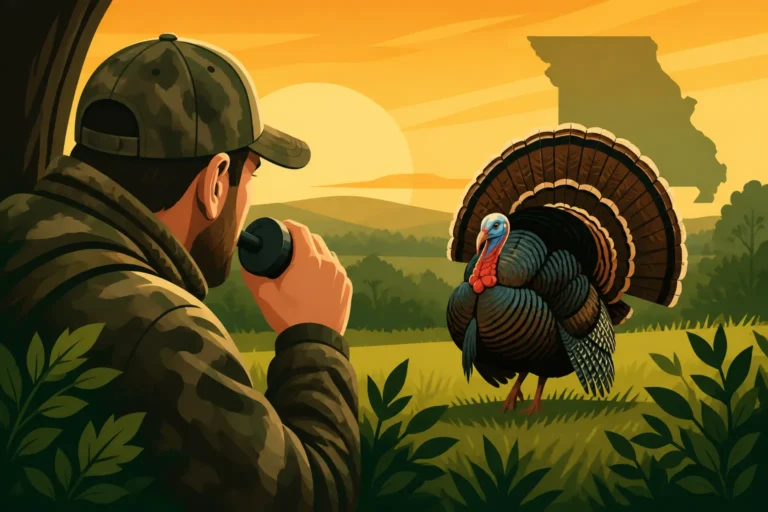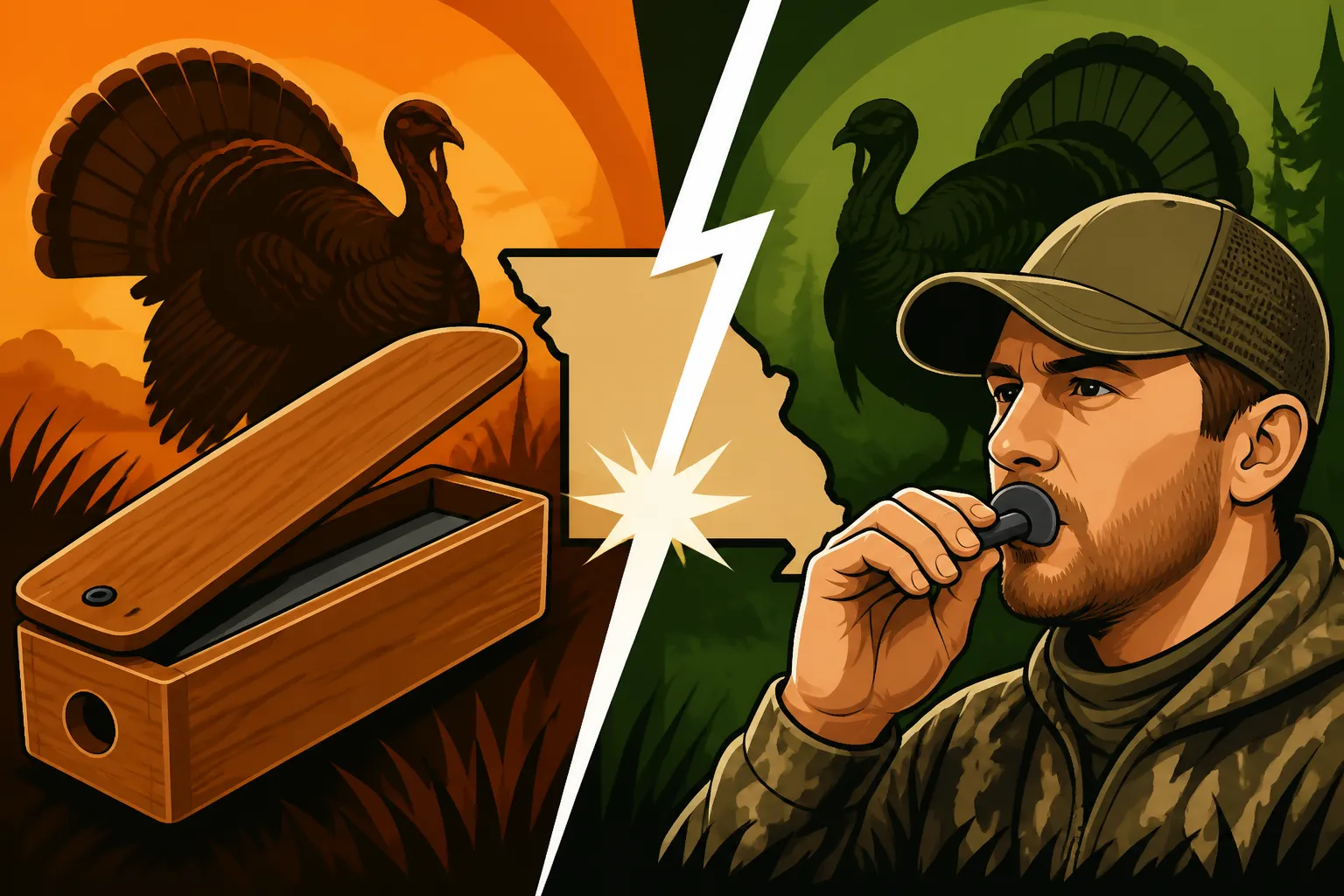
Box Calls Versus Mouth Calls
One of the biggest head-scratchers for any Missouri turkey hunter, whether you're a seasoned veteran or just starting out, is deciding which call to trust when that crucial moment arrives. It’s not just about making noise; it’s about making the right noise, at the right time, to fool a bird that's heard every trick in the book. This guide will walk you through the distinct advantages and challenges of two of the most popular and effective turkey calls: the classic box call and the versatile mouth call. We'll explore how each works, when to use them, and how to master them for success in Missouri's turkey woods.
Understanding Box Calls: The Mechanics and Appeal
There's a reason the box call has remained a steadfast companion for generations of turkey hunters. It's an accessible, reliable tool that produces some incredibly realistic turkey sounds, making it a favorite for many, especially when trying to reach out to distant gobblers across a ridge or draw.
How a Box Call Works Its Magic
At its core, a box call is a simple friction call. It consists of a resonant wooden box, typically with a hinged lid or paddle. When you draw the paddle across the finely chalked lip of the box, the friction creates vibrations that amplify into realistic turkey vocalizations. The beauty of it lies in its mechanical nature; the movement is fairly intuitive, and the sound production is quite consistent once you get the hang of it. You can achieve a wide array of calls, from soft purrs and clucks to aggressive cuts and yelps, simply by varying the pressure, speed, and angle of the paddle. For example, a slow, light draw across the edge might give you a soft tree yelp, while a quick, firm snap across the paddle creates those sharp, excited cuts that can really fire up a tom.
The choice of wood in a box call can also subtly influence its tone. Different woods like cedar, mahogany, or even exotic species will each have their unique resonance and sound profile. This is where personal preference really comes into play. You might find that one particular box call just "sings" to you, producing the exact rasp or clear note you're looking for. Many hunters swear by a well-made box call, treating it almost like a musical instrument. It's a tactile experience, and the connection you feel to the call, listening to the wood resonate, is part of its undeniable appeal.
Pros and Cons of Carrying a Box Call
Box calls come with a distinct set of advantages, particularly for certain hunting scenarios. One of their biggest strengths is their volume and carrying power. When you need to reach a gobbler that's a long way off, perhaps across a river bottom or trying to locate birds on a sprawling public land tract like those found in the Mark Twain National Forest, a box call can cut through wind and timber with authority. They are also generally very user-friendly, especially for beginners. The learning curve to produce basic, effective turkey sounds is much shallower compared to a mouth call, meaning you can get out in the woods sooner with confidence. The sounds are often rich and authentic, mimicking the natural vocalizations of a hen with remarkable accuracy.
However, box calls aren't without their drawbacks. The most obvious is that they require two hands to operate. This can be a significant disadvantage when a gobbler suddenly appears, requiring you to drop your call and shoulder your gun quickly. They are also bulkier than mouth calls, taking up more space in your vest. While some are very durable, they can be susceptible to moisture. Rain can ruin the chalking surface, making the call squeak or seize up entirely, which is a major issue during those unpredictable spring Missouri showers. Furthermore, consistent chalking is essential for optimal performance, adding another small maintenance task to your routine. If you're comparing gear on a site like GoHunt, you'll see a variety of designs, some of which try to mitigate these issues with water-resistant materials or more compact profiles.
Delving into Mouth Calls: Reeds and Resilience
For many experienced turkey hunters, the mouth call, or diaphragm call, is the ultimate tool. Its hands-free operation and incredible versatility make it indispensable for close-quarters work and run-and-gun tactics in the timber.
The Intricacies of Mouth Call Operation
Mouth calls are small, horseshoe-shaped frames holding one or more latex reeds stretched tightly across them. To operate a mouth call, you place it in the roof of your mouth, with the open end facing forward. Air from your lungs is then pushed over the reeds, and by varying the pressure, the shape of your tongue, and the tightness of your lips, you manipulate the reeds to produce turkey sounds. It's an incredibly nuanced instrument. A slight shift in tongue position can change a yelp into a cluck, or add the desired rasp to a cutting sequence.
The number and cut of the reeds also play a huge role in the sound. Single-reed calls are often easier for beginners and produce clearer, higher-pitched sounds, great for soft purrs and clucks. Double-reed calls add more rasp and depth, while triple-reed calls offer even more volume and aggressive tones, perfect for cutting and loud yelps. Some reeds are "ghost cut" or "batwing cut," which are specific shapes designed to create unique sounds and make certain vocalizations easier. The learning curve for a mouth call can be quite steep, demanding significant practice to achieve consistent, realistic sounds. Many hunters describe the initial experience as frustrating, with plenty of squeaks and squawks before they get that perfect yelp. But once mastered, the mouth call offers an unparalleled level of control and hands-free freedom that no other call can match.
Advantages and Challenges of Mouth Calls
The most significant advantage of a mouth call is its hands-free operation. This cannot be overstated in turkey hunting. When a gobbler is suddenly committed and closing the distance, you don't want to be fumbling with a call. With a mouth call, you can keep your gun shouldered, ready for the shot, while still making soft clucks or purrs to keep the bird engaged. This is particularly crucial when Hunting the Peak Rut Week in Missouri or dealing with a wary tom that needs constant reassurance. Their small size makes them incredibly portable; you can carry several different calls with varying tones in a small pocket without adding bulk to your vest. They are also weatherproof, performing consistently whether it's bone dry or raining cats and dogs, which is a huge bonus during unpredictable spring weather.
However, the learning curve is undoubtedly the biggest hurdle for mouth calls. Producing consistent, realistic sounds takes dedication and practice. Many new hunters struggle with breath control, tongue placement, and preventing "blow-out" notes—those high-pitched, unnatural squeals that can spook a gobbler instantly. They can also be uncomfortable in the mouth for extended periods, especially when you're first getting used to them. Hygiene is another consideration; mouth calls need regular cleaning to prevent bacteria buildup, which can affect both performance and health. Despite these challenges, the hands-free capability and versatility make mouth calls a primary choice for serious turkey hunters. Exploring options on sites like GoHunt, you'll find a wide variety of mouth calls with different reed configurations, each designed for specific sounds, so you can really fine-tune your setup.
When to Reach for Each: Situational Strategies
Deciding between a box call and a mouth call often comes down to the specific hunting situation you find yourself in. Both have their moments to shine, and understanding these scenarios can dramatically increase your success rate in Missouri's turkey woods.
Initial Location and Breaking the Roost
When you're trying to locate a gobbler at first light, or if you're attempting to call a bird off the roost, a box call is often your best friend. Its superior volume and projection allow you to send loud, clear yelps across long distances, cutting through the morning silence or the rustle of leaves. Imagine you're standing on the edge of a large timber block in Northern Missouri, trying to wake up a bird still perched in an old oak tree. A series of loud yelps from a box call can often elicit that booming shock gobble you're hoping for. This is where the ability to really reach out and touch a bird vocally is critical.
Once you get a response, the box call can continue to be effective for drawing that bird closer, especially if he's still a good distance away. You can mimic excited hen yelps and cuts, building anticipation and coaxing him down from his roost and into your setup. However, as the bird gets closer, you might find the box call's volume to be a bit too much. A gobbler within 50-75 yards might perceive loud calls as unnatural or even aggressive, particularly if he's been pressured. For breaking up a fall turkey flock, a box call could also be used initially to locate, but then softer calls would be required to bring them back. This transition point is often where a different call might become more effective, or where you begin to tone down your box call's enthusiasm.
Close Quarters and Hands-Free Hunting
For those tense, close-quarters encounters when a gobbler is within sight or rapidly approaching, a mouth call truly shines. The hands-free operation means you can keep your shotgun mounted and ready while still making subtle, convincing vocalizations. Picture this: you've got a longbeard strutting at 40 yards, just inside the timber line. He's looking for the hen, but he's a little hesitant. A soft cluck or purr from your mouth call can be just enough to tip him over the edge and commit, bringing him into easy range without you having to drop your gun. This is invaluable when the action heats up, as every second counts.
Mouth calls are also ideal for Run-and-Gun Turkey Tactics in the Missouri Ozarks. When you're actively moving through the woods, stopping to call from different locations, the ability to quickly make calls without setting anything down is a huge advantage. You can cover more ground, call more frequently, and adapt to changing situations on the fly. Furthermore, for very soft, intricate sounds like purrs, whines, and delicate clucks—which are often key to finishing wary, pressured birds—mouth calls offer a level of finesse that's hard to replicate with a box call. These subtle sounds can be the secret weapon when Decoy Placement for Pressured Birds isn't quite doing the trick, making the gobbler believe a real hen is just out of sight, content and ready.
| Feature | Box Call | Mouth Call (Diaphragm) |
|---|---|---|
| Operation | Two-handed, friction-based | Hands-free, breath/tongue control |
| Volume | High, excellent for long distance | Variable, from subtle to loud |
| Learning Curve | Relatively easy for basic sounds | Steep, requires significant practice |
| Portability | Bulky, takes up vest space | Small, fits in pocket |
| Weather Impact | Prone to issues in rain/moisture | Weatherproof, consistent performance |
| Sound Variety | Realistic yelps, cuts, clucks, purrs | Full range of turkey vocalizations, great finesse |
| Close-Range Finesse | Can be too loud, less subtle | Excellent for soft, finishing calls |
| Speed of Use | Quick, once paddle is in position | Instant, no fumbling with equipment |
| Maintenance | Chalking required, keep dry | Regular cleaning for hygiene and performance |
Mastering Both: Practice Makes Perfect
While you might gravitate towards one type of call over the other, true mastery of turkey hunting in Missouri often involves proficiency with both a box call and a mouth call. They complement each other beautifully, providing a versatile arsenal for any situation the spring woods throw at you.
The Art of Practice and Consistency
Just like any skill, becoming proficient with turkey calls takes consistent practice. For box calls, focus on developing a smooth, consistent rhythm for your yelps and cuts. Experiment with different pressures and speeds to understand the full range of sounds your call can produce. Pay attention to the chalk; ensuring it's always in good condition is critical for optimal sound. For mouth calls, this journey can be more challenging but incredibly rewarding. Start by focusing on basic yelps and clucks. Work on controlling your breath and tongue position until the sounds are clear and consistent. Record yourself and compare your calls to actual turkey vocalizations – there are many fantastic resources available online and through outfitters like GoHunt that can help you calibrate your ear. Don't get discouraged by initial squeaks; every accomplished mouth caller has been there.
Practice isn't just about making sounds; it's about understanding when to make them and what they communicate. Spend time listening to actual turkeys in the wild. Pay attention to the cadence of a hen's yelp, the urgency of a cut, or the softness of a tree yelp when Calling a Missouri Gobbler Off the Roost. The goal isn't just to make the sound, but to embody the intention behind it. Consistency is key; a perfectly realistic but inconsistent series of calls might still make a gobbler wary. Work on smooth transitions between different calls and maintaining an authentic rhythm.
Combining Calls for Ultimate Versatility
The real power often lies in knowing how to combine both call types. Many hunters will start their morning by using a loud box call to locate a gobbler. Once the bird responds and begins to move in, they might switch to a mouth call for those critical finishing touches. This allows them to maintain constant communication, keeping the bird interested, all while staying ready for the shot. Imagine you're hunting a ridge saddle in the Ozarks; you use your box call to get a distant gobbler talking, then as he closes the distance, you switch to a subtle mouth call from your blind or treestand, keeping your movement minimal. This strategy can be especially effective on heavily hunted public lands where turkeys are more cautious.
Having both types of calls also gives you a backup plan. If your box call gets wet, or if your mouth call starts giving you trouble, you have another reliable option. Furthermore, some turkeys respond better to certain tones or styles of calling. By carrying both, you increase your chances of finding the exact sound that resonates with that particular gobbler. It's about being prepared for any scenario, from long-range location calls to enticing a tom at spitting distance. Remember, the goal is to sound as much like a real hen as possible, and sometimes, that means using the right tool for the job. Exploring different Turkey Calls Worth Carrying in Missouri will show you the immense range of options available, and a smart hunter will leverage them all.
Disclaimer
This article is for general informational purposes only and does not constitute professional advice. Laws, prices and regulations vary by location and change over time. Consult a qualified professional for guidance on your specific situation.