Frame Packs for Hauling Meat
There’s a moment every Missouri deer hunter faces that can quickly turn triumph into torture: the long haul out. You’ve put in the scouting, spent countless hours on stand, and finally, your tag is filled. But now, that beautiful animal, whether it’s a hefty Ozark ridge runner or a North Missouri crop-country bruiser, suddenly feels like it weighs twice as much as it did just minutes ago. Dragging a whole deer out of a deep hollow, across a mile of standing timber, or through a muddy creek bottom is a back-breaking, spirit-crushing task that can make you second-guess your next hunt. This guide is all about making that hard work manageable by focusing on one piece of gear that can truly save your hunt (and your back): the frame pack designed specifically for hauling meat. We’re going to dive into why these packs are indispensable, what features truly matter, and how to use them effectively when you're deep in the Missouri woods.
The Undeniable Need for a Frame Pack in Missouri
Let’s be honest, Missouri isn't exactly known for its easy-to-access hunting grounds. Whether you're navigating the rugged, often remote terrain of the Ozarks or pushing through dense fencerows and creek bottoms in northern farm country, getting a harvested animal back to the truck can be an epic undertaking. A good frame pack isn't just a luxury; it's a necessity that transforms what could be an impossible chore into a challenging but achievable task.
The Reality of Missouri's Diverse Terrain
Think about it: you’re hunting deep in the Mark Twain National Forest Hunting, perhaps miles from the nearest road, and you’ve dropped a buck in a steep, rocky ravine. Or maybe you're out on public land in North Missouri, where timbered draws cut through vast agricultural fields, and that deer went down right in the middle of a quarter-section of standing beans. Are you really going to try and drag a 150-pound deer all that way? The answer, for most experienced hunters, is a resounding no.
Missouri’s varied landscapes, from the sharp inclines and tangled undergrowth of the Deer Hunting the Missouri Ozarks to the heavy mud and thick cover of river bottomlands, present unique challenges. Hauling a deer out whole is often not only impractical due to the terrain but can also be detrimental to the meat quality, especially during warmer early-season hunts. Quartering or boning out your animal on the spot is often the smartest, most efficient, and most ethical way to proceed. Once you've done that, you need a way to transport that heavy, awkward load, and that’s where a purpose-built frame pack shines. It's the difference between an exhausting, painful crawl and a strenuous but steady march out of the woods. Just imagine if you've had to contend with Recovering a Deer in Steep Ozark Ground; having the right gear makes all the difference.
Why a Daypack Just Won't Cut It
Many hunters start out thinking their trusty daypack, the one they use for Packs for a Day on Public Land and carrying snacks and water, will suffice for hauling meat. And they are almost always quickly, painfully, proven wrong. A typical daypack, even a larger internal frame model, simply isn't designed to handle the weight, bulk, and irregular shape of boned-out deer quarters.
The key differences lie in weight distribution and stability. Daypacks tend to carry weight high and away from your back, or they sag and pull awkwardly, putting immense strain on your shoulders and lower back. They lack the rigid structure to prevent heavy loads from shifting, which can throw you off balance, especially on uneven ground. Trying to cram bloody game bags into a small, soft-sided pack is a recipe for a messy, uncomfortable, and potentially unsafe hike out. You’ll end up with a pack that feels like a sack of potatoes, bouncing and pulling with every step. Trust me, I've seen more than one hunter hobble back to the truck, utterly defeated, vowing never to attempt that again without proper gear.
Essential Features of a Reliable Meat Hauling Frame Pack
Choosing the right frame pack can feel overwhelming with all the options out there, but when you break it down, a few core features truly separate the contenders from the pretenders. These are the elements that ensure your pack can handle the grueling task of hauling heavy meat out of the Missouri backcountry.
Frame Design and Materials
The heart of any good meat-hauling pack is its frame. You’re looking for a rigid, robust structure that can bear significant weight without deforming or transferring all that load directly to your spine. Historically, external frames were the go-to, but modern innovations have brought about excellent hybrid and external frame designs that offer the best of both worlds – the load-carrying capacity of an external frame with the closer-to-body feel of an internal frame.
Look for frames made from high-quality aluminum or, for those who value weight savings above all else, carbon fiber. Aluminum frames are durable and can withstand significant abuse, though they might be a bit heavier. Carbon fiber offers incredible strength-to-weight ratios but typically comes at a higher price point. The frame’s rigidity is crucial; it acts as a chassis that keeps the load stable. A flimsy frame under a heavy load will flex and shift, causing discomfort and instability, which is the last thing you want when you’re tired and on uneven ground. Ensure the frame is designed for adjustability, allowing you to tailor the fit to your specific torso length and shoulder width. This personalization is key for ergonomic weight distribution.
Load Shelf and Compression System
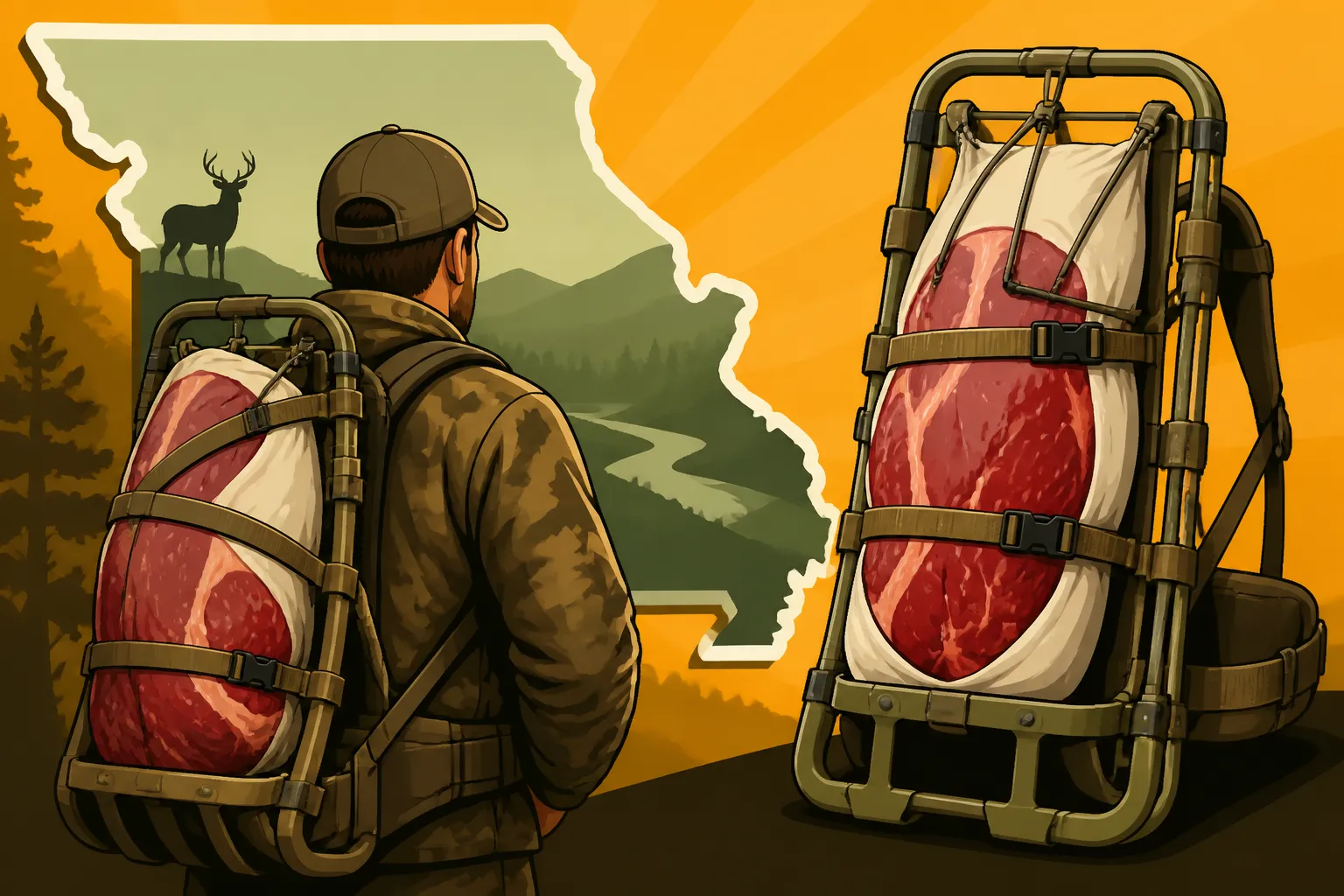
This is arguably the most critical feature for a dedicated meat-hauling pack. A load shelf is a platform, usually integrated into the lower part of the frame, designed to hold large, heavy, awkward items – like boned-out deer quarters – directly against the frame and close to your back. The pack bag often detaches or expands to create space for this external load.
Coupled with the load shelf is a robust compression system. These are a series of heavy-duty straps, often with durable buckles, that cinch down and secure the meat (usually placed in game bags) tightly to the frame. A good compression system prevents the meat from shifting, sagging, or swinging, which can quickly throw you off balance, especially when Tracking a Deer in Ozark Rock or navigating thick timber. Imagine trying to walk down a steep slope, and your 80-pound meat load starts swaying independently – it’s a recipe for a nasty fall. Brands like GoHunt often highlight packs with exceptionally well-designed load shelves and compression straps, understanding their importance for serious backcountry hunters. Without these features, you're essentially trying to lash meat to your back, which is rarely effective or comfortable.
Suspension System and Comfort
Even the most rigid frame won't do you much good if the suspension system isn't up to snuff. This includes the shoulder straps, hip belt, and back panel. The goal of a good suspension system is to transfer the majority of the weight from your shoulders to your hips, where your body is better equipped to carry it.
Look for thickly padded, anatomically shaped shoulder straps that are adjustable for both height and angle. The hip belt should be substantial, well-padded, and wide enough to distribute pressure comfortably across your pelvis. It should hug your hips without digging in, and ideally, it will be designed to articulate slightly with your body's movement. A well-ventilated back panel is also a huge plus, especially for early-season hunts when temperatures are still warm. Mesh or air channels can help reduce sweat build-up, keeping you more comfortable on that long walk out. The ability to adjust the pack for your torso length is non-negotiable for proper weight transfer and comfort. A pack that's too long or too short for your frame will never carry comfortably, no matter how much padding it has. When you're facing a long, solitary trip like Getting a Deer Out of a Hollow Alone, comfort is paramount.
Practical Considerations for Missouri Hunters
Beyond the fundamental design, there are several practical aspects to consider when choosing a frame pack for hunting in Missouri. These details can make a real difference in your overall experience and the longevity of your gear.
Capacity and Modularity
How much capacity do you truly need? For boned-out deer meat, you’re looking at significant weight but not necessarily huge volume if you’re efficient. A mature Missouri whitetail can yield anywhere from 60 to over 100 pounds of boned-out meat, depending on the animal's size. Many quality frame packs are designed with modularity in mind. This often means the pack bag can be expanded, compressed, or even completely removed, leaving just the frame and load shelf for a minimalist meat haul.
Consider whether you want a pack that primarily functions as a daypack with the ability to haul meat, or a dedicated meat hauler that can also carry some day-hunting essentials. For a long-tail hunt where you might be packing in gear and then packing out meat, a modular system is incredibly versatile. You can carry your stand, calls, water, and emergency gear in the main bag, and then, after the shot, compress the bag or remove it entirely to lash your meat to the frame’s load shelf. This adaptability ensures you’re prepared for whatever the hunt throws at you without carrying excess bulk when not needed. GoHunt often showcases packs with versatile modular designs suitable for various hunting scenarios.
Durability and Weather Resistance
Missouri weather is notoriously unpredictable. One minute it's a beautiful, crisp autumn day, the next, a cold front rolls in with driving Rain Gear for an Ozark Downpour. Your pack needs to be tough enough to handle abuse and protect your valuable cargo.
Look for packs made from durable, high-denier fabrics like Cordura (e.g., 500D or 1000D). These materials are resistant to abrasions from brush, punctures from sharp bone fragments, and general wear and tear that comes with heavy use in rugged environments. Pay attention to stitching – reinforce stress points are crucial. Heavy-duty zippers and robust buckles are also essential; a failed zipper on a main compartment or a broken buckle on a compression strap can quickly become a serious problem miles from the truck. While few packs are truly waterproof, good water resistance (often achieved through DWR coatings and taped seams) is highly desirable to keep your meat and gear dry. Some hunters also use dry bags or thick plastic liners inside their game bags for an extra layer of protection, especially for early season meat care.
Pre-Season Prep and Practice
Don't let the first time you put a heavy load in your new frame pack be when you're standing over a downed deer. Pre-season preparation is critical for maximizing the effectiveness and comfort of your pack.
Start by properly fitting the pack to your body. Most high-quality packs come with instructions for adjusting torso length, hip belt, and shoulder strap angles. Take the time to dial this in. Once fitted, practice packing it with realistic weight. Fill several game bags with sand, rocks, or even sacks of dog food to simulate the weight and bulk of boned-out quarters. Load the pack, cinch down the compression straps, and go for a hike, ideally on varied terrain similar to where you hunt. Pay attention to how the pack carries, where pressure points might be, and how stable the load feels. Adjust as needed. This practice not only helps you fine-tune the fit but also builds your strength and confidence for when the real moment arrives. It’s also a great time to experiment with different loading techniques and carrying positions. It's much better to discover a hot spot on your hip belt during a practice hike than when you’re utterly exhausted, trying to get a deer out during Field Dressing and Cooling in Early-Season Heat. Consider utilizing tools like the GoHunt app to record your practice routes and distances, helping you gauge your endurance with heavy loads.
Field Dressing, Packing, and Care for Your Pack
Once you’ve invested in a quality frame pack, understanding how to use it effectively in the field and properly maintain it afterward will ensure it serves you well for many hunting seasons to come.
Boning Out and Loading Your Pack
The efficiency of your field dressing significantly impacts how easily and comfortably you can pack out your meat. For large game like deer, especially when deep in the woods, boning out is often the preferred method. This involves removing the major muscle groups (quarters, backstraps, tenderloins) from the bone, which dramatically reduces weight and makes the meat more pliable for packing. Make sure to use clean game bags to protect the meat from dirt, insects, and debris. Bone Saws Versus the Gutless Method can save you valuable time and energy, especially if you’re doing it alone.
When loading your pack, think heavy-to-light and close-to-back. The heaviest items (the boned-out meat) should be placed closest to your spine and centered vertically, roughly between your shoulder blades and the top of your hips. This keeps the center of gravity stable and allows your strong core muscles and hips to bear the load. Secure the meat tightly to the frame’s load shelf using those crucial compression straps. Then, pack lighter, bulkier items (like your empty daypack, extra layers, or water bladder) around and above the meat. The goal is a solid, non-shifting load that feels like an extension of your body, not a separate, swaying mass.
Carrying Techniques and Trail Tactics
Hauling a heavy pack is a workout, no matter how good your gear is. Proper carrying techniques can prevent injury and make the experience more bearable.
Take short, steady steps, especially on uneven or steep terrain. Lean slightly forward from your hips, allowing the pack’s weight to distribute naturally over your core. Engage your core muscles to help stabilize your body and the load. If you use trekking poles, they can be a game-changer for heavy hauls, providing extra stability and taking some of the strain off your knees and back, particularly on descents. Don't be afraid to take frequent, short breaks. Drop the pack, stretch, rehydrate, and check your pack's fit. It's much better to take a few extra minutes resting than to push too hard and risk injury or exhaustion. When navigating tricky sections like blowdowns or creek crossings, take your time, plan your steps, and use extra caution. A slip or fall with a heavy pack can be dangerous.
Cleaning and Maintaining Your Investment
Your frame pack just carried a load of raw meat. It's likely to be covered in blood, dirt, and sweat. Proper cleaning and maintenance are essential for hygiene, odor control, and extending the life of your pack.
As soon as possible after your hunt, unload the pack and remove any game bags. If your pack bag is removable, take it off the frame. Use a hose or shower to rinse off all blood and dirt from both the frame and the fabric components. For stubborn stains or odors, a mild, scent-free detergent or specialized gear cleaner can be used, often with a soft brush. Pay extra attention to zippers and buckles, ensuring they are free of debris. Never put your pack in a washing machine or dryer, as this can damage the frame, fabric, and coatings. Once clean, hang your pack in a well-ventilated area, preferably out of direct sunlight, to air dry completely. Ensure it's bone-dry before storing it to prevent mildew and unpleasant odors. Periodically inspect all straps, buckles, and seams for signs of wear and tear, and address any issues promptly. A well-cared-for frame pack will be ready to serve you reliably for many successful Missouri hunting seasons.
Disclaimer
This article is for general informational purposes only and does not constitute professional advice. Laws, prices and regulations vary by location and change over time. Consult a qualified professional for guidance on your specific situation.