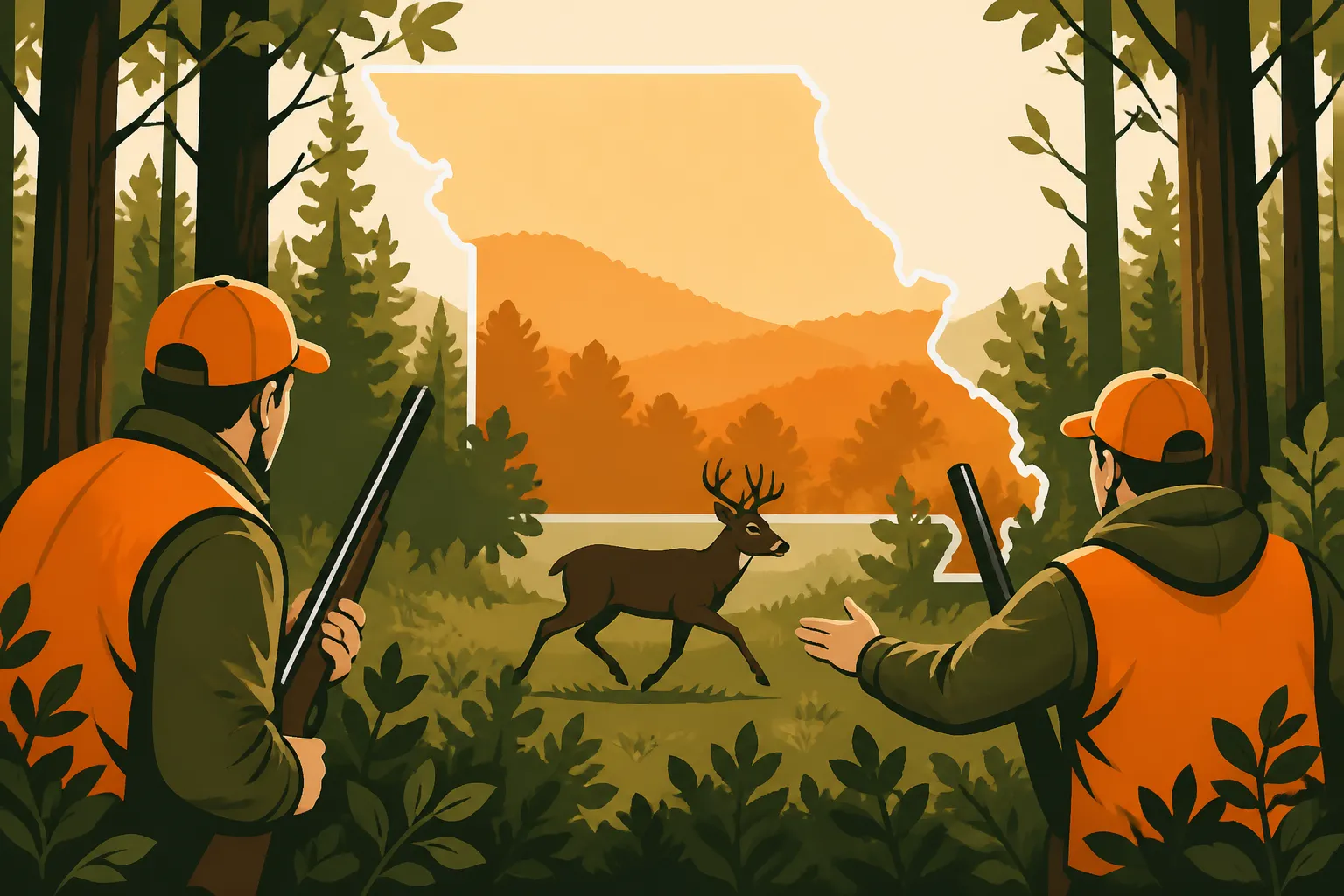
Two-Person Drives on Small Timber Tracts
Hunting small pockets of timber in Missouri can feel like a game of hide-and-seek where the deer always win. It’s frustrating when you know a big buck is using that little woodlot as a sanctuary, but every time you try to still-hunt it, he ghosts out the back before you even get close. This guide is all about turning those frustrating small tracts into successful hunting grounds using a strategic two-person deer drive.
Understanding the Dynamics of Small Timber Tracts in Missouri
Missouri is a patchwork quilt of agriculture and timber, especially in the northern and central parts of the state. While we all dream of endless acres of public land or sprawling private timber, the reality for many hunters, especially those with limited access, often involves small, isolated woodlots. These can be anything from a 10-acre block of oaks tucked into a bend of a creek to a narrow sliver of timber bordering a crop field or even an old, overgrown fencerow.
The big challenge with these small tracts is their size. Deer, being the intelligent creatures they are, quickly learn that these little pockets of cover offer sanctuary. They know they can quickly slip out of sight, often undetected, when pressure mounts. You might think a small woodlot isn't worth the effort, but that's precisely where many mature bucks will lay up during daylight hours, especially once the main firearms season kicks in and pressure increases on larger timber blocks. They’ll use these spots for bedding down, chewing their cud, and observing their surroundings without feeling exposed. The moment they sense danger, they're gone, often taking a well-worn escape route you didn't even know existed. This is particularly true if the woodlot is surrounded by open fields, where a quick dash into cover is their best defense.
The dense undergrowth, briar thickets, and downed trees that often characterize these smaller areas make them difficult to navigate quietly as a lone hunter. Every snapped twig or rustle of leaves telegraphs your presence, giving a savvy whitetail ample warning. That's why a lone hunter often feels defeated, pushing deer out the backside of a cover before they even know what happened.
Planning Your Two-Person Drive for Success
The key to successfully hunting these compact timber tracts isn't brute force or luck; it's smart planning and coordinated effort. A two-person drive, executed thoughtfully, can be incredibly effective at nudging deer out of their comfort zones and into predictable shooting lanes.
Meticulous Scouting and Mapping
Before you ever step foot in that timber with a rifle or bow, you need to understand the terrain and the deer's likely movements. This isn't just about showing up on opening day. Take the time to really study the area. What are the dominant tree species? Where are the densest thickets? Are there any natural funnels like creek beds, drainage ditches, or old logging roads that deer habitually use? Look for obvious escape routes – those well-worn trails leading out of the timber towards another block of cover, a brushy fencerow, or even across a field to a more substantial bedding area.
Tools like GoHunt's mapping features can be invaluable here. You can identify property lines, topography, and aerial imagery to pinpoint potential bedding cover, escape routes, and blocking positions. Pay close attention to the wind direction. Wind is king in deer hunting, and in small areas, it's even more critical. You want the deer to move naturally with the wind, or at least not immediately scent the blocker. Consider thermals as well; in hilly Ozark country, deer will often move with the rising or falling air currents. Understanding these elements beforehand will inform every decision you make during the drive.
Defining Roles: The Driver and the Blocker
A successful two-person drive hinges on clearly defined roles and trust. One person acts as the "driver," slowly pushing through the cover, while the other is the "blocker" or "stander," positioned to intercept deer as they try to escape.
The driver's job is not to sprint through the woods making as much noise as possible. Instead, think of them as a patient shepherd. Their pace should be slow and deliberate, designed to encourage deer to move, not to panic them into a full-blown sprint that might carry them past the blocker too quickly or in an unpredictable direction. The driver should move through the densest cover, kicking briar patches and walking along deer trails, making just enough noise to keep the deer guessing. They are also looking for deer that might try to circle back or slip out undetected through an unexpected route.
The blocker has arguably the more challenging job: absolute stillness and patience. They need to be in position well before the drive begins, quiet as a mouse, and ready to shoot. Their location is paramount. They should be downwind of the anticipated escape routes, ideally with an elevated view if possible, such as a treestand setup in hardwood timber or a natural rise. Their goal is to cover the most likely exit points, funneling deer into a clear shooting lane. Think about the terrain – a pinch point between a pond and a road, a narrow draw, or where a thicket meets an open field.
Choosing the Right Time
While deer drives can work any time, some conditions are more conducive to success, especially in smaller tracts.
- Mid-day: Many hunters focus on morning and evening, leaving the middle of the day quieter. This is when deer in small woodlots are often bedded down, feeling safe. A mid-day drive can surprise them.
- Inclement Weather: A steady rain, a fresh snow, or strong winds can be your friend. Bad weather reduces human activity, makes it harder for deer to hear you, and often keeps them bedded tight, making them more susceptible to being pushed. After a fresh snow, deer tracks become obvious, helping the driver navigate and confirm deer presence.
- Peak Rut: During the hunting the peak rut week in Missouri, bucks are often less cautious, especially if they are chasing a doe. They might be more willing to move and less prone to sneaking away undetected.
Communication is Key
Safety is paramount, always. Before the drive begins, establish clear communication protocols. Two-way radios are excellent, but if signal is an issue in thick cover, pre-arranged hand signals or precise verbal commands (e.g., "Deer moving left!" or "Holding position") can work. Critically, know exactly where each person will be at all times. Discuss your boundaries, safe shooting lanes, and what constitutes a safe shot. Never, ever assume. Double-check. In Missouri, remember that during any firearms portion, you'll need to adhere to Missouri hunter orange square inches requirements. Both the driver and the blocker should wear sufficient orange.
| Role | Primary Goal | Key Actions | Gear Considerations |
|---|---|---|---|
| Driver | Slowly push deer towards the blocker | Walk deliberately, make controlled noise, cover dense areas, be aware of deer attempting to circle back | Comfortable walking boots, communication device, hunter orange, rifle/bow for opportunistic shots |
| Blocker | Remain absolutely still, intercept escaping deer | Position downwind of escape routes, identify shooting lanes, be patient and silent | Comfortable, warm clothing, communication device, hunter orange, rifle/bow, possibly a stool or ground blind on a field edge |
Executing the Drive Safely and Effectively
Once the planning is done and roles are clear, it's time to put the plan into action. Remember, the goal isn't just to make deer run; it's to make them move predictably and safely for a shot opportunity.
Setting Up the Blocker
The blocker's setup is the make-or-break moment. You need to be in position well before the driver starts moving. Choose a spot that overlooks the most probable escape routes. This might be a natural funnel where the timber narrows, a crossing point over a creek, or a point where the woodlot connects to a hunting a Missouri fencerow between fields. Being downwind is crucial, as is having a clear line of sight and shooting lanes. If possible, use elevation to your advantage – a small knoll, a sturdy tree for a treestand, or even an existing deer stand if you're on private land. The more commanding your view of the escape routes, the better. Once in position, become a statue. Any movement, no matter how slight, can alert a deer.
The Driver's Approach
The driver begins their push. Their pace should be slow and methodical. Think about the deer's perspective: you want them to feel pressured enough to move, but not so terrified they blow out of the timber wildly. Walk into the wind if possible, or quartering into it, to make it harder for deer to pinpoint your location solely by scent. The noise you make should be consistent but not overtly aggressive. Kick through brush piles, walk along game trails, and pause occasionally. These pauses can often make a bedded deer nervous enough to stand up and try to slip away, giving the blocker a better chance.
The driver should focus on pushing the deer towards the blocker, not past them. If you come across a deer that tries to circle back behind you, attempt to gently re-direct it towards the blocker's position. This isn't always possible in thick cover, but being aware of deer movement behind you is important. Keep your firearm ready for opportunistic shots, but remember your primary role is to move deer.
Deer Behavior During a Drive
Deer are masters of evasion. During a drive, you might encounter several behaviors:
- The Sneaker: These deer, often mature does or older bucks, will try to slip out quietly, using dense cover and terrain features to remain unseen. The blocker's patience and keen eyesight are critical here.
- The Busters: Younger deer, or deer that feel cornered, will often bolt, crashing through the woods. These are the most likely to present a fast-paced shot opportunity for the blocker.
- The Circlers: Some deer will try to circle around the driver, attempting to get back into the part of the timber that has already been cleared. The driver needs to be aware of this and try to block these attempts if possible, without compromising safety or the main objective.
It's important to remember that not every drive will result in a shot. But with practice and understanding, you'll learn to anticipate deer movement better.
Safety Considerations
This cannot be stressed enough: safety first.
- Hunter Orange: Both individuals must wear adequate hunter orange, covering at least 400 square inches above the waist, visible from all sides, during any Missouri firearms deer season portion. This isn't just a rule; it's a lifesaver.
- Identify Shooting Lanes: Before the drive, both the driver and blocker should discuss and mentally map out safe shooting lanes. Always know what's beyond your target. Never shoot at sound or movement alone.
- Positive ID: Always positively identify your target and ensure it's a legal deer before taking a shot.
- Know Each Other's Position: Constant communication or pre-determined positions ensure you always know where your partner is. This is especially vital when using firearms. You can use GPS-enabled apps like GoHunt to mark each other's positions, adding another layer of safety.
- Legal Firearms: Ensure you are using legal firearms for Missouri deer for the specific portion you are hunting.
Tips for Maximizing Your Odds in Small Missouri Woodlots
Beyond the basic mechanics, a few extra considerations can really improve your success rate and overall experience when driving small timber tracts.
Using Natural Funnels
Deer love to take the path of least resistance or the path that offers the most cover. Look for those natural funnels created by terrain features like a small creek running through the property, a sharp bend in a fencerow, or a narrow strip of timber that connects two larger blocks. These are prime locations for the blocker, as deer are often forced to move through these constricted areas, making them predictable. Even a subtle change in elevation can create a funnel. Reading an Ozark hollow for deer movement can provide insights into how deer navigate these smaller, intricate landscapes.
Leveraging Wind and Thermals
We've mentioned it, but it bears repeating: wind and thermals are paramount. The blocker must be downwind of where you expect the deer to emerge. A deer’s nose is its primary defense, and if it smells the blocker, the game is over before it even begins. In areas with varied topography, like those found across much of Missouri, understanding wind and thermals in Ozark hills is a game-changer. Early in the morning, thermals often draw downhill; as the sun rises, they switch and draw uphill. Plan your drive accordingly to use these natural air currents to your advantage, pushing deer where they won't immediately scent danger.
Post-Drive Strategy
What happens if the drive doesn't yield a deer? Don't get discouraged. This is valuable information. Did deer bust out in an unexpected direction? Did they circle back? Re-evaluate your plan. Perhaps the blocker was in the wrong spot, or the driver was too fast or too slow. Sometimes, deer will simply hunker down in dense cover and let the driver walk past. If you have multiple small tracts, you can move on to the next. The best hunters are always learning and adapting. Take a moment after each drive to discuss what you saw and what you might do differently next time.
Respecting Landowner Boundaries
This is a critical aspect when hunting small timber tracts, especially those adjacent to private properties. Always know exactly where the property lines are. Use a reliable mapping application or carry a copy of the plat map. If you're on public land, respect the boundaries with private property. If hunting private land, make sure you have explicit permission. Missouri has strict Missouri trespass and permission law, and you do not want to accidentally cross onto posted land without permission. Even if a deer runs onto adjacent property, you often cannot pursue it without explicit permission from that landowner. Good landowner relations are vital for future hunting opportunities, so always be respectful.
Disclaimer
Hunting is an inherently dangerous activity. Always prioritize safety, understand and follow all local, state, and federal hunting regulations, and be aware of your surroundings and the capabilities of your equipment. This guide provides general information and should not replace proper hunter education or professional training.