Run-and-Gun on Missouri Public Land
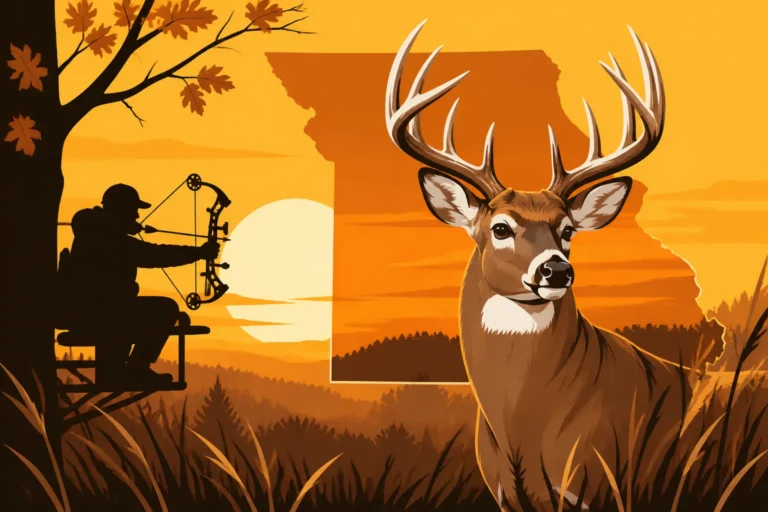
Let's be real, sitting in the same treestand on Missouri public land, day after day, and seeing nothing but squirrels can be incredibly frustrating. You scouted, you hung your stand, you put in the time, but those whitetails just aren't doing what the textbooks say. The truth is, on heavily pressured public ground, deer patterns can be incredibly fluid, and relying on one or two spots often leads to disappointment. This guide is all about embracing a more aggressive, mobile approach – the "run-and-gun" method – to actively find deer on Missouri's public lands, giving you the tools and mindset to adapt and succeed where others might simply give up.
What "Run-and-Gun" Really Means for Missouri Hunters
When we talk about "run-and-gun" in Missouri, we're not just talking about aimlessly wandering through the woods. It's a calculated, mobile hunting strategy, primarily for deer, that involves actively covering ground, constantly scouting, and setting up quickly in hot spots you find along the way. It's a stark contrast to the traditional "set it and forget it" method of hanging a stand and waiting. For Missouri's diverse public land – from the sprawling Mark Twain National Forest to smaller Conservation Areas (CAs) tucked into farm country – this adaptability can be your biggest asset.
Why Public Land Demands Mobility
Missouri's public lands, while abundant, often come with a significant amount of hunting pressure. Deer on these tracts learn quickly where hunters sit, where the parking lots are, and what routes lead to safety. They become nocturnal or simply move through areas with extreme caution. This means that a buck using a specific ridge one week might be miles away the next, pushed by pressure or seeking new food sources. Trying to force a deer into your fixed setup becomes a losing battle.
This is where mobility shines. Instead of waiting for deer to come to you, you go to them. You're constantly seeking fresh sign – rubs, scrapes, fresh tracks, and active feeding areas – and then quickly setting up to capitalize on what you've just found. This strategy is particularly effective on properties where deer densities might not be sky-high or where the landscape itself dictates dynamic movement. Think of those winding creek bottoms or the complex topography of the Ozarks where deer might follow subtle terrain features that change daily based on wind, weather, or other hunters. It’s about being a predator, not just a patient observer.
The Mindset Shift From Passive Waiting to Active Pursuit
Adopting a run-and-gun approach requires a significant shift in mindset. You're no longer just a spectator; you're an active participant in the hunt. This means being comfortable with uncertainty, being ready to hike several miles in a day, and embracing the idea that your "spot" for the morning might be entirely different from your spot for the afternoon. It's about being proactive rather than reactive.
This mindset also means being okay with not spending hours in a stand. Sometimes, a 45-minute sit in a freshly discovered pinch point is more productive than a half-day sit in a traditional stand location that hasn't seen fresh deer activity in days. It's also about having the confidence to make a move when your gut tells you to. If the sign isn't there, or if the deer simply aren't moving where you expected, the run-and-gun hunter doesn't just sit and hope; they pack up and go find new ground, often pushing deeper into areas others don't want to walk. This helps you actively combat Hunting Pressure on Missouri Public Ground.
Essential Gear for a Mobile Public Land Attack
Your gear is paramount when committing to a run-and-gun strategy. Every item you carry needs to be evaluated for its weight, versatility, and efficiency. You can't afford to be bogged down by unnecessary bulk or cumbersome equipment when your success depends on quick, quiet movement and rapid setups.
Lightweight Mobility Kit
A lightweight treestand or a saddle hunting setup is absolutely critical. For run-and-gun, a saddle is often preferred because it's incredibly compact, lightweight, and allows you to hunt virtually any tree, even those with awkward limbs or leaning trunks, which are common on Missouri's public lands. Paired with lightweight climbing sticks, you can get up a tree quickly and quietly. Consider brands known for their lightweight systems, often made from aluminum or carbon fiber, to shave off those precious pounds.
Beyond your climbing system, your pack needs to be lean. Think about essentials: a small first-aid kit, a headlamp, a reliable knife, a saw or pruners for clearing shooting lanes, a rangefinder, binoculars (8×42 or 10×42 are often ideal for timber), and perhaps a few calls like a grunt tube or a rattling antler. Every ounce counts when you're covering several miles of rugged terrain in a single hunt.
Navigation and Mapping Tools
This is where modern technology truly shines for the run-and-gun hunter. A reliable GPS unit or, more commonly now, a smartphone app with robust mapping capabilities is non-negotiable. Tools like GoHunt offer incredible detail, including public/private land boundaries, topographical maps, aerial imagery, and even layers for identifying specific habitat types or potential deer bedding areas. These tools allow you to quickly identify promising terrain features, mark fresh sign, and navigate efficiently, even in dense cover or unfamiliar territory.
Before you even step foot on the property, you can use these digital maps to identify Entry Routes on Rolling Farm Ground or pinpoint hidden draws and ridges that might hold deer. While on the move, they help you stay oriented, ensure you're on public land, and allow you to quickly drop pins on interesting sign or potential future stand locations. The ability to see your precise location in relation to property lines, roads, and key habitat features is invaluable for optimizing your movement and maximizing your time.
Stealth and Scent Control
When you're constantly moving and getting into new areas, your scent becomes an even greater factor. Deer have an incredible sense of smell, and a mobile hunter is constantly spreading scent. While complete scent elimination is a myth, minimizing your odor is crucial. This includes showering with scent-free soap, using scent-free detergents for your hunting clothes, and storing your hunting clothes in airtight containers.
More importantly for run-and-gun, pay attention to the wind. Always. On public land, deer are often using the wind to detect threats. When you're actively moving, you need to be constantly aware of the prevailing wind direction and how it interacts with the terrain. This might mean making a longer loop to approach a promising area from downwind or adjusting your setup quickly if the wind shifts. Understanding Wind and Thermals in Ozark Hills is especially vital in Missouri's varied landscape. Additionally, quiet clothing that doesn't rustle or snag on brush is essential for silent movement through the timber.
Scouting Smart: Finding Your Starting Line
Run-and-gun doesn't mean you skip scouting. In fact, it demands a different, more dynamic kind of scouting – one that combines digital reconnaissance with on-the-go confirmation. You're not just looking for a spot; you're looking for areas with high potential that you can quickly move through or set up in.
Pre-Season Digital Scouting
Before you even tie your boots, you should be deep into digital scouting. Use your mapping apps like GoHunt to pore over aerial photos and topographical maps of your chosen public land. Look for obvious funnels: saddles between ridges, pinch points created by terrain features or changes in habitat, thick cover adjacent to food sources (even if it's just acorn flats in oak timber), and water sources. Identify areas of dense cover where deer might bed, and potential travel corridors leading to or from these spots.
Pay close attention to subtle details. Is there a small, overlooked timbered draw connecting two larger woodlots? Are there old logging roads or faint game trails that indicate consistent deer movement? What about remote corners of the property that are far from parking areas and likely see less pressure? GoHunt's detailed layers can help highlight these features that might be missed with less sophisticated tools. This deep dive lets you form a hypothesis about where deer should be, giving you a starting point for your boots-on-the-ground efforts. You can even use this to narrow down areas for Scouting Missouri Public Land Before Season.
Boots-on-the-Ground Reconnaissance
Digital scouting gives you the blueprint, but nothing replaces putting boots on the ground. This isn't about hanging stands; it's about confirming your digital hunches and finding fresh, actionable sign. Walk those identified pinch points. Look for rub lines, scrape lines, fresh droppings, and distinct travel trails. Pay attention to the age of the sign – fresh sign is paramount for run-and-gun success. If you find a promising area but the sign is old, keep moving.
Identify potential trees for your saddle or lightweight stand. Are there trees that offer good cover, shooting lanes, and a clear view of the suspected travel route? How's the access? Can you get in and out quietly? This pre-season reconnaissance helps you understand the lay of the land, find alternative routes, and identify escape cover for deer, which can inform your in-season movements. Remember, you're looking for multiple potential setup locations, not just one. Knowing Where North Missouri Bucks Bed or Reading an Ozark Hollow for Deer Movement can really give you an edge.
Reading the Land on the Fly
The true art of run-and-gun lies in your ability to "read" the land as you're hunting it. This means being constantly aware of your surroundings and interpreting the subtle cues deer leave behind. As you move, are you seeing fresh tracks? Are those rubs shiny and new? Is there a fresh scrape under an overhanging branch? If you encounter any of these, especially fresh, active sign, you need to be prepared to stop, assess, and potentially set up immediately.
This might mean spotting a hot scrape line along a logging road, or noticing fresh tracks entering a thick bedding area you hadn't anticipated. It's about being flexible and letting the deer tell you where they are. Don't be so fixated on your pre-planned route that you ignore what's right in front of you. The goal is to find where the deer are now, not where you hoped they would be. This constant micro-scouting is what makes the run-and-gun strategy so dynamic and often so rewarding.
Tactical Execution: Moving and Setting Up
Once you've done your homework and refined your gear, the real test comes in how you execute your hunt. This isn't about crashing through the woods; it's a careful, deliberate dance between movement and stillness, constantly adapting to what the deer are doing.
Methodical Movement Through the Woods
Think of your movement as an extended still-hunt. You're covering ground, but you're doing it slowly, deliberately, and with all your senses engaged. Move slowly, taking a few steps, then stopping to scan, listen, and glass ahead. Use natural cover to break up your silhouette. Look for subtle deer trails, rub lines, and any fresh sign. This is where your lightweight gear pays off – it allows you to be nimble and quiet.
Your pace should be dictated by the terrain and the amount of sign you're seeing. In open timber with less sign, you might move a bit faster. In thick cover or areas with fresh activity, slow down to a snail's pace, pausing frequently to listen for subtle sounds like a distant grunt or the rustle of leaves. The idea is to move through areas of low probability to find areas of high probability without alerting any deer along the way. Your goal is to find Finding Ground Others Walk Past that may hold unpressured deer.
Quick Setups and Adaptability
The moment you find fresh, compelling sign, you need to be ready to set up immediately. This means having your saddle or climbing sticks prepped for quick deployment. Practice setting up your system in low light and quietly so you can do it in a matter of minutes. Whether it's a Treestand Setups in Hardwood Timber or Saddle Hunting in Missouri Oaks, speed and silence are critical.
Sometimes, the "setup" might just be quickly finding a downed log or a thick cluster of brush to break up your outline for a ground ambush. This is where a compact, lightweight ground blind or even just a simple camouflage net can be incredibly effective, especially if you're on public land where you can't leave stands overnight. Learning to quickly brush in a makeshift blind using natural vegetation is a key skill. The ability to adapt to the situation, whether it's setting up in a tree or hunkering down on the ground, will maximize your opportunities.
Playing the Wind, Thermals, and Calls
No matter how good your gear or scouting, hunting against the wind is almost always a losing battle. As you move through the timber, constantly check the wind direction using a wind checker. If you find a promising area, but the wind is wrong for an approach or a setup, you either need to circle around or abandon that spot for now. In hilly or mountainous terrain, thermals also come into play, especially in the mornings and evenings. Warm air rises in the morning; cool air falls in the evening. Understanding how these air currents flow can help you pick the right approach and setup location.
Incorporating calls can also be highly effective in a run-and-gun scenario, particularly during the rut. A soft Grunt Calls in Missouri River Bottoms or a series of quiet doe bleats can often stop a cruising buck or pique the curiosity of one that's out of sight. During the pre-rut or peak rut, more aggressive tactics like Rattling Volume for Thick Timber can draw a buck right into your quick setup. The key is to use calls sparingly and subtly, letting the terrain and the deer's behavior dictate your calling strategy. A mobile hunter can quickly move to a better calling position if the situation dictates.
| Feature / Method | Stationary Hunting (Traditional) | Run-and-Gun Hunting (Mobile) |
|---|---|---|
| Primary Goal | Wait for deer to come to a predetermined spot | Actively seek out deer and fresh sign |
| Gear Focus | Comfort, stability, long sits | Lightweight, compact, efficient for quick setup |
| Scouting Style | Finding one or two "perfect" stand locations | Identifying multiple potential hot spots & travel routes |
| Pace | Slow, patient waiting | Dynamic, methodical movement with frequent stops |
| Adaptability | Low (relies on deer moving through fixed spot) | High (constantly adjusting to deer activity) |
| Public Land Appeal | Can be challenging due to pressure & changing patterns | Excels in pressured areas, allows access to overlooked spots |
| Physical Demand | Low to Moderate | Moderate to High |
Disclaimer
Hunting involves inherent risks, including but not limited to those associated with firearms, archery equipment, tree stands, and navigating outdoor terrain. Always prioritize safety, understand and follow all Missouri Department of Conservation regulations, and obtain proper landowner permission when hunting private land. This guide is for informational purposes only and does not substitute professional safety training or expert guidance.