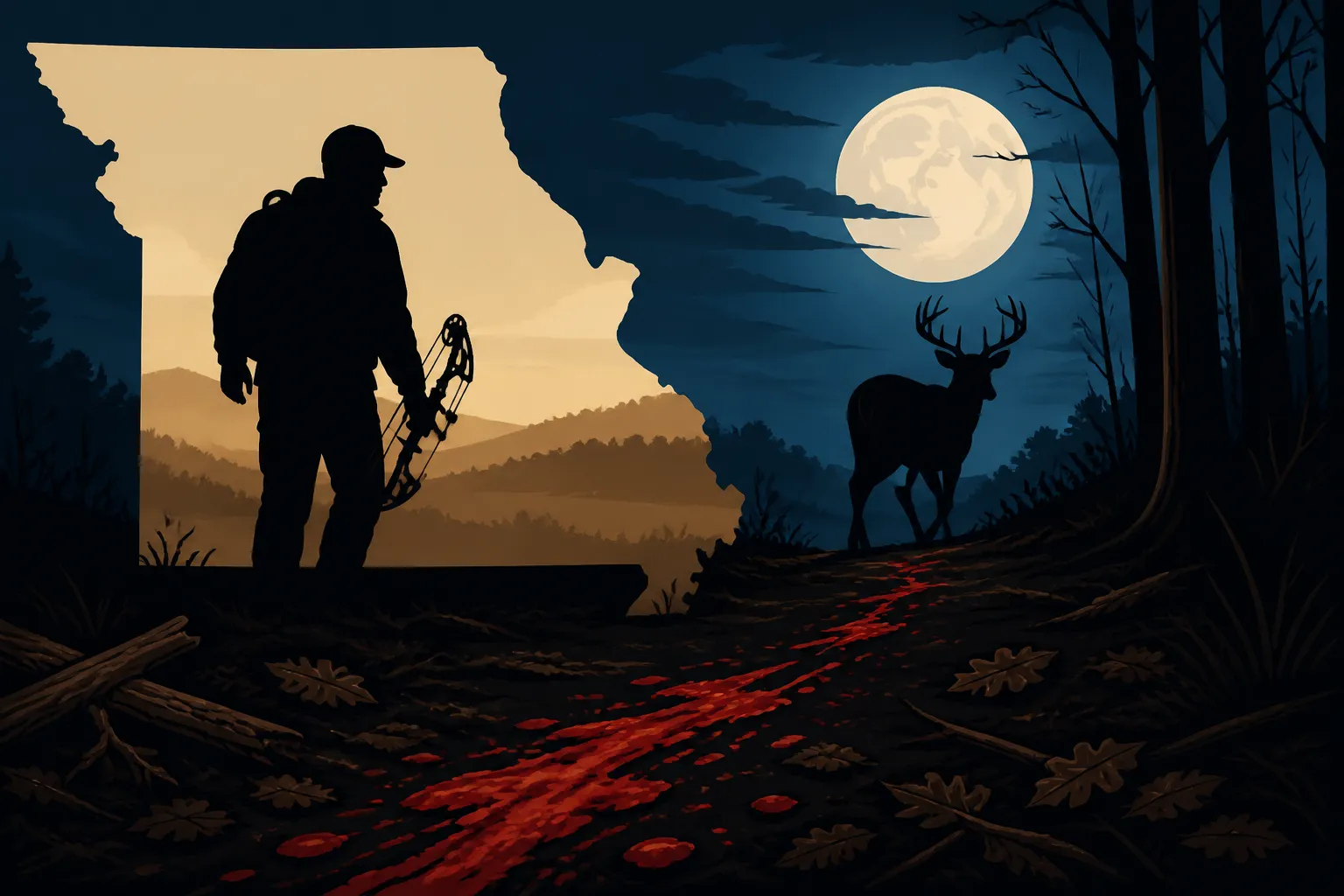
Blood Trailing After Dark in Missouri
You've made a shot on a deer, the adrenaline is pumping, but as the last light fades, you're faced with the daunting task of following a blood trail in the pitch black. This gut-wrenching scenario is all too common for Missouri hunters, and the pressure to find your animal before it's lost to coyotes or spoilage is immense. This guide is here to walk you through the realities, best practices, and crucial decisions involved in blood trailing after dark in the Show-Me State.
The Reality of a Night Trail in Missouri
There are few feelings quite as sickening as knowing you've hit a deer, but the light is quickly fading, or worse, has already disappeared. It's a heavy burden, this responsibility we take on as hunters, and the thought of leaving an animal out overnight often feels like a punch to the gut. The truth is, blood trailing in Missouri after dark is incredibly challenging, fraught with its own unique set of difficulties, from the tricky terrain of the Ozarks to the dense brush of the river bottoms.
The Ethical Dilemma and Your Responsibilities
When the shot rings out and you see that deer bolt, your mind immediately goes to the placement, the reaction, and the possibility of recovery. But when darkness descends, that responsibility intensifies. Ethically, we owe it to the animal to make every reasonable effort to recover it. This isn't just about filling a tag; it's about respect for the game we pursue.
However, "every reasonable effort" doesn't mean putting yourself in danger or making decisions that will ultimately hinder recovery. Pushing a deer that is marginally hit, especially one that may be bedded down nearby, can often result in it running further and making the recovery exponentially harder, if not impossible. The internal struggle is real: do you push on into the dark, hoping to find it, or do you back out, risking spoilage or scavengers, but giving the animal time to stiffen up? It's a question every hunter has faced, and there's no single easy answer. Often, the best decision involves a blend of persistence and strategic retreat, all while keeping the animal's welfare and your own safety paramount.
Legalities of Night Recovery in Missouri
It's absolutely critical to understand Missouri's regulations regarding what you can and cannot do after dark when recovering an animal. The Missouri Department of Conservation (MDC) has clear rules about night hunting, and while you're not "hunting" in the traditional sense, retrieving game can sometimes blur the lines if you're not careful.
Generally, it is permissible to use a flashlight or headlamp to follow a blood trail and recover a legally harvested deer after legal shooting hours. However, this is strictly for recovery. You cannot use lights to spot or locate live deer with the intent to take them, which falls under illegal "spotlighting" activities. This distinction is vital. If you stumble upon a live deer while trailing, you absolutely cannot raise a weapon or attempt to take it. Your weapon, if carried, should remain unloaded and preferably cased during night recovery efforts, signaling your intent is purely for retrieval.
The MDC typically defines legal shooting hours for deer as 30 minutes before sunrise and 30 minutes after sunset. So, if you're out there two hours after sunset, you're firmly in "after dark" territory. It's always a good idea to confirm current regulations, as they can sometimes change. If you have any doubt or are in a particularly tricky situation, contacting a local conservation agent is always the safest bet. They can often provide guidance or even assistance, ensuring you stay on the right side of the law while fulfilling your ethical obligation. Remember, your permit covers legal take and recovery, but it doesn't grant carte blanche for shining lights on live animals or carrying a loaded weapon outside of legal shooting times. This knowledge is an important part of Missouri Hunter Education and Orange Rules.
Tools and Tactics for Successful Night Trailing
Alright, so you've got a deer down, or at least you believe it's down, and now the real work begins as dusk turns to night. You need to be prepared, both mentally and with the right gear, to tackle a night trail in Missouri. This isn't a race; it's a methodical investigation, and patience will be your greatest ally.
Essential Gear for Your Night Trailing Kit
Trying to trail a deer in the dark with just your phone's flashlight is a recipe for frustration and failure. A dedicated "blood trailing kit" can make all the difference. Here’s a rundown of what you should ideally have on hand:
- Powerful Lights (and plenty of them): This is your number one asset.
- Headlamp: Absolutely essential for hands-free light. Get one with a red light option to preserve your night vision when you don't need intense white light. Make sure it's bright, at least 300-500 lumens for spotting faint sign.
- Handheld Flashlight(s): Carry at least one very bright, focused beam flashlight (1000+ lumens). Some hunters even use specialized blood-tracking lights that filter light to enhance blood visibility, though a good quality white light is often sufficient. Carry spare batteries or a fully charged power bank for USB-rechargeable lights.
- Marking Supplies: You need to mark your progress.
- Reflective Tacks/Tape: These are game-changers. Stick them on trees, bushes, or even the ground. A good headlamp beam will make them glow brightly, allowing you to retrace your steps or see the path ahead.
- Flagging Tape: Bright orange or pink flagging tape can be tied to branches to mark individual blood spots, especially if you have to leave an area to circle.
- Gloves: Protect your hands, and sometimes they can help you feel subtle signs on the ground.
- First-Aid Kit: Accidents happen, especially when navigating unfamiliar terrain in the dark. A basic kit for cuts, scrapes, and twisted ankles is non-negotiable, especially if you're on challenging ground like when Tracking a Deer in Ozark Rock.
- Water and Snacks: This could be a long night. Stay hydrated and keep your energy up.
- Navigation Tools:
- GPS or Phone App: A GPS unit or a reliable hunting app like GoHunt on your smartphone is crucial. Mark your starting point, the last known blood, and any areas you've searched. Many apps allow you to drop pins and even record your track, which is invaluable if you need to backtrack or call for help. Using the aerial imagery and topo maps on GoHunt can help you visualize the terrain the deer might have taken, giving you a serious advantage.
- Scent Eliminator: If you decide to back out for the night, spray down the area around the last blood to help reduce human scent that might spook the deer further.
- Binoculars: Believe it or not, binoculars can sometimes help you spot blood against certain backgrounds, even at night, by gathering more ambient light. It's a long shot, but sometimes worth a try.
Here’s a quick summary table for your kit:
| Item | Purpose | Notes |
|---|---|---|
| Headlamp | Hands-free illumination, preserves night vision | Red light option is a plus; 300-500 lumens |
| Handheld Flashlight | Powerful, focused beam for spotting blood | 1000+ lumens, spare batteries/power bank |
| Reflective Tacks/Tape | Mark trail for easy retracing | Highly visible with headlamp beam |
| Flagging Tape | Mark individual blood spots, potential paths | Bright colors for visibility |
| Gloves | Hand protection, feeling for sign | Consider durable, waterproof options |
| First-Aid Kit | Emergency medical care | Essential for safety in the dark |
| Water & Snacks | Hydration and energy | Crucial for extended efforts |
| GPS/GoHunt App | Navigation, marking waypoints, tracking progress | Use for terrain analysis, marking last blood, next day plan |
| Scent Eliminator | Minimize human scent if leaving for morning | Helps prevent further spooking of a bedded deer |
| Binoculars | Aid in spotting subtle signs, gathering light | Optional, but can sometimes help with faint details |
Methodical Trailing Techniques When Light Fades
The biggest mistake a hunter can make when trailing at night is to rush. Panic and haste will lead to missed signs, lost trails, and more frustration. Here's a systematic approach:
- Stop, Look, and Listen: After the shot, take a moment. Listen for the crash of a deer going down or the sounds of it running off. Note the direction it took. Sometimes, in the quiet of the night, you can hear a deer expire.
- Mark the Shot Location: If you haven't already, walk to where the deer was standing when you shot it and mark it clearly with flagging tape or a reflective tack. This is your baseline.
- Find First Blood: Carefully move in the direction the deer ran. Walk slowly, scanning the ground, leaves, and low-hanging vegetation for blood. Your powerful flashlight will be key here. Blood often looks dark or even black in low light, but a good beam will make it glisten.
- The "Last Blood" System: This is paramount. When you find a blood sign, mark it immediately with a reflective tack or flagging tape. Then, do not move from that spot until someone else (or you, if alone) finds the next spot of blood. If you're alone, find the next spot, then walk back to the marked spot, and repeat. This ensures you never lose the last known location. This is where those reflective tacks really shine; you can place them every few yards and see a line of them leading forward.
- Look for ALL Signs: Don't just look for blood. Deer leave other clues:
- Tracks: Fresh tracks in soft dirt or mud.
- Disturbed Ground: Scuffed leaves, broken twigs, turned-over moss.
- Hair: Different colors can indicate different hit locations (brown for flank, white for belly, dark for brisket).
- Gut Contents: If you find stomach contents, it's a definite gut shot. This means you need to back out immediately (more on that later).
- Broken Branches: Deer can break small branches as they crash through cover.
- Grid Search in Sparse Areas: If the blood trail peters out, don't just wander aimlessly. Expand your search in a methodical grid or spiral pattern around the last known blood. Use your GoHunt app to record your search pattern so you don't re-cover the same ground.
- Bring a Partner: If possible, two or more sets of eyes are infinitely better than one. One person can focus on the blood, while another looks for tracks or other signs. They can also provide an extra light source and a psychological boost.
- Mind the Terrain: Missouri's terrain can be brutal after dark. Whether it's the steep, rocky slopes of the Ozarks or the thick, tangled briar patches of the river bottoms, pay close attention to safety. Be extra cautious around creek beds, drop-offs, and fallen timber. Navigating a hollow alone in the dark, as described in Getting a Deer Out of a Hollow Alone, can be very dangerous if you're focused only on the ground.
- Walk Beside, Not On, the Trail: Avoid walking directly on the blood trail, as you might inadvertently destroy precious evidence. Walk parallel to it, sweeping your light.
- Analyze the Blood:
- Color: Bright red, frothy blood indicates a lung shot (good sign). Dark red blood suggests a muscle hit or liver shot. Greenish-brown with stomach contents indicates a gut shot (very bad sign for immediate recovery).
- Amount: Heavy, consistent blood is a good sign. Sparse, sporadic drops mean a superficial hit or a clotted wound.
- Location: High blood suggests an entry or exit wound high on the body, possibly not a vital hit. Blood low to the ground indicates the deer is bleeding freely from a lower wound.
Remember, every sign, no matter how small, tells a part of the story. Don't discount anything. If you're hunting in a familiar area that you've extensively scouted, perhaps even using a tool like GoHunt to mark potential travel corridors or bedding areas during Scouting Missouri Public Land Before Season, you might have a better idea of where the deer might be headed.
Knowing When to Call It Quits (For the Night)
This is perhaps the hardest decision a hunter faces: when to temporarily abandon the trail. The ethical responsibility to recover the animal weighs heavily, but sometimes, continuing the search into the dark does more harm than good. It's a judgment call that requires discipline, experience, and a willingness to accept a difficult reality.
Reading the Signs for a Temporary Halt
There are several clear indicators that it might be time to back out and wait for morning light. Ignoring these signs can lead to pushing a wounded animal further, making recovery nearly impossible, or even putting yourself in a dangerous situation.
- Gut Shot: This is the most critical sign for an immediate cessation of trailing. If you find greenish, brownish, or partially digested stomach contents, or blood mixed with fecal matter, the deer has been gut shot. A deer with a gut shot will often bed down nearby and stiffen up, increasing your chances of finding it alive or recently deceased in the morning. If pushed, it will run for miles and often be lost. Mark the last blood extremely well, spray the area with scent eliminator if possible, and leave immediately. Do not resume trailing for at least 6-8 hours, preferably longer if the weather is warm. You want that deer to expire and stiffen up.
- Minimal or Fading Blood Trail: If the blood trail becomes incredibly sparse, tiny drops far apart, or disappears entirely, you're likely dealing with a superficial wound, a high hit, or a wound that has clotted. Pushing a deer that's barely bleeding at night is often fruitless and can push it into impenetrable cover.
- Bad Weather Moving In: Rain or snow will wash away or cover a blood trail, making it impossible to follow. If the forecast calls for precipitation, especially heavy rain, you might have a very limited window. If it starts raining during your trail, and the blood is already light, it's probably best to mark your last spot and wait.
- Dangerous Terrain: The Ozarks, in particular, can be treacherous after dark. Steep bluffs, loose rock, thick briars, or deep creek beds pose significant safety risks. If you're alone and the terrain becomes too dangerous to navigate safely, your own well-being must come first. No deer is worth a broken leg or worse.
- Uncertainty of Hit Location: If you're truly unsure if you made a lethal hit, or if the deer seems to be moving purposefully (not stumbling), it's often better to give it time. A deer with a non-lethal hit will likely recover if not pushed. A deer with a lethal, but slow-acting hit, will bed down and die if left undisturbed.
- Late Night/Early Morning: If you've been at it for hours and it's approaching 1:00 or 2:00 AM, fatigue can set in, leading to mistakes. You'll be far more effective after a few hours of rest and with the benefit of daylight.
Preparing for a Morning Recovery Effort
Making the tough decision to back out for the night is only half the battle. What you do next can dramatically impact your chances of success in the morning.
- Mark Your Last Blood Extensively: This cannot be overstressed. Use multiple reflective tacks, flagging tape, and even tie a bright piece of cloth to a prominent branch at the last confirmed blood sign. Take GPS coordinates on your GoHunt app, and drop multiple pins around the area so you have a precise starting point for your morning search. Using the satellite imagery on GoHunt can help you identify a prominent landmark or tree near your last spot for easy visual confirmation in the morning.
- Clear the Area Quietly: Once you've marked the spot, back out as quietly as possible. Avoid making noise that could spook a bedded deer. Walk in a wide circle around the marked spot before heading back to your vehicle, leaving as little human scent as possible around the deer's likely bedding area.
- Plan Your Morning Strategy: Before you even leave the woods, start thinking about how you'll approach the recovery in the morning.
- Time of Return: Aim to be back at your last blood mark at first light. Fresh morning dew can sometimes make a faded blood trail more visible.
- Recruit Help: More eyes are always better. Call friends or family to join you. Explain the situation, the last known signs, and your intended search pattern.
- Consider the Weather: If temperatures are warm, spoilage becomes a concern. You'll want to be out there as early as possible. In cold weather, you have a bit more leeway, which is a consideration for Cold Weather Sitting Strategy and how long you have.
- Review Maps: Use GoHunt or your topo maps to analyze the terrain around your last blood. Where would a wounded deer likely go? A thicket for cover? Downhill towards water? What natural funnels or obstacles exist?
- Stay Positive, But Be Realistic: It's heartbreaking to walk away from a deer, but it’s often the best move. Remind yourself that you're doing everything you can. If you approach the morning search with fresh eyes, well-rested, and with a solid plan, your chances of success are significantly higher. There's no shame in backing out; the shame is in giving up entirely on your responsibility. Remember, a successful recovery means getting that deer Field Dressing and Cooling in Early-Season Heat or Field Dressing a Deer in Warm Weather as quickly as possible once located.
Ultimately, blood trailing after dark in Missouri is a test of skill, patience, and ethical resolve. With the right preparation, tools, and a clear head, you can significantly improve your odds of recovering your deer and upholding your responsibility as a hunter.
Disclaimer
The information provided in this guide is for general informational purposes only and does not constitute legal advice. Hunting regulations, including those concerning game recovery and legal shooting hours, are subject to change by the Missouri Department of Conservation (MDC). Always consult the most current MDC regulations and, if in doubt, contact a local conservation agent for clarification. The author and publisher are not responsible for any actions taken based on the information in this guide.