Reporting a Sick Animal in Missouri
It's never a pleasant sight to encounter an animal that appears sick or injured out in the Missouri woods or even in your backyard. That feeling of wanting to help, yet knowing you shouldn't, can be really unsettling. This guide is here to walk you through exactly what you should do when you find a distressed wild animal in Missouri, explaining why your report is so vital, what signs to look for, and how to make sure your information gets to the right people safely and effectively.
Why Reporting Sick or Injured Wildlife is Crucial for Missouri's Ecosystem
When you're out enjoying Missouri's incredible natural beauty, whether you're deer hunting the Ozarks, turkey hunting in the timber, or just hiking a local trail, seeing wildlife is often a highlight. But sometimes, that sighting can be distressing. You might come across a deer stumbling, a turkey acting unusually lethargic, or a raccoon that seems disoriented in broad daylight. Your first instinct might be to help, but the most responsible action you can take, for both the animal and the broader ecosystem, is to report it to the proper authorities. This isn't just about one animal; it's about the health of entire populations and, in some cases, even human safety.
The Silent Threat of Disease: CWD and EHD
Wildlife diseases are a constant, often unseen, threat to animal populations. In Missouri, we've had our share of concerns, particularly with deer. Conditions like Chronic Wasting Disease (CWD) and Epizootic Hemorrhagic Disease (EHD) can devastate local deer herds, impacting hunting opportunities and the overall balance of the ecosystem. While EHD outbreaks tend to be seasonal and often tied to biting insects, leading to quick die-offs, CWD is a progressive, fatal neurological disease that spreads slowly but relentlessly. It's a game-changer for wildlife management, and every piece of information helps.
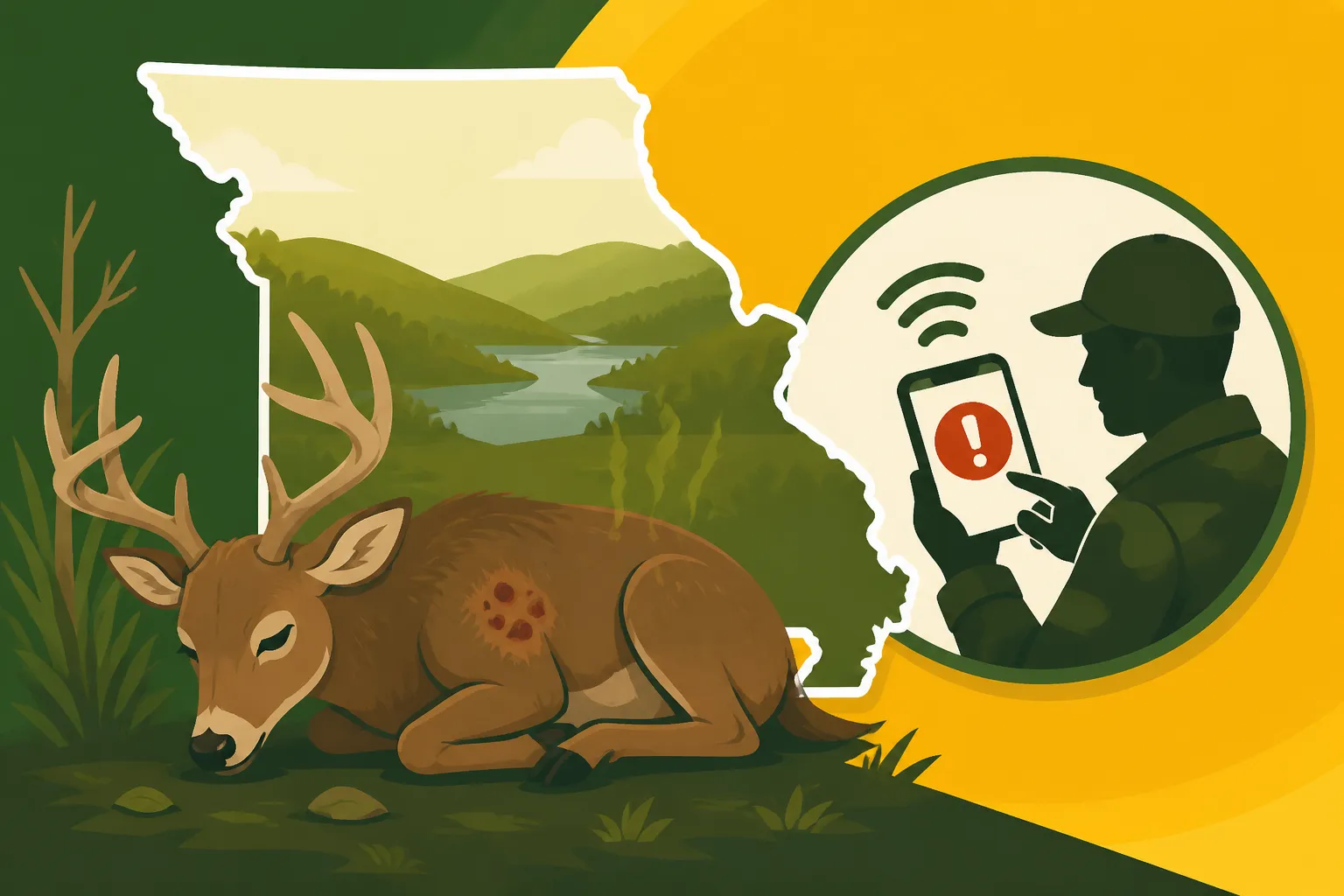
When you report a deer showing signs consistent with CWD – things like extreme emaciation, excessive drooling, stumbling, or unusual behavior – you're providing critical data to the Missouri Department of Conservation (MDC). This allows them to monitor the spread, understand prevalence rates, and implement management strategies to protect the herd. Similarly, reports of multiple dead deer in a short period can help confirm an EHD outbreak, which is important for understanding the disease's impact in different areas. Your casual observation can become a vital part of the larger scientific effort. For more on these specific threats, check out Chronic Wasting Disease in Missouri Deer and EHD Outbreaks in Missouri Deer.
Protecting Public Health and Animal Welfare
Beyond direct wildlife impacts, some sick animals can pose risks to humans or domestic animals. Rabies, for example, can affect a variety of mammals, including raccoons, foxes, skunks, and even bats, and can be transmitted to people or pets through bites or scratches. An animal acting unnaturally aggressive or disoriented during the day might be rabid, and that's a serious public health concern that demands immediate attention. In these situations, your report isn't just about wildlife; it's about community safety.
Furthermore, reporting an injured animal can sometimes be an act of compassion. While wildlife agencies generally don't intervene with every injured animal, certain situations, like an animal hit by a car near a busy road or one caught in a fence, might warrant a response. The goal isn't always direct rescue, but rather to assess the situation, prevent further suffering, or ensure the animal isn't posing a hazard to traffic or other people. It's about finding that balance between letting nature take its course and intervening responsibly when necessary.
Building a Better Picture: How Your Report Helps Wildlife Management
Every report of a sick or injured animal contributes to a much larger dataset that helps wildlife managers track trends, identify emerging threats, and refine their strategies. Imagine trying to understand the health of an entire state's deer population without any input from the thousands of hunters and outdoor enthusiasts who spend time in the field. It would be impossible! Your observations are literally on-the-ground intelligence that MDC biologists can't gather alone.
These reports help inform decisions about hunting regulations, habitat management, and disease surveillance programs. When MDC compiles information from citizen reports, alongside scientific studies and harvest data, they get a more complete picture of what's happening in Missouri's wild places. This data directly influences everything from permit quotas to where CWD testing stations are set up. Your simple phone call or online submission is a direct contribution to sound wildlife conservation, allowing agencies to act proactively rather than reactively. The efforts of Missouri Wildlife Disease Monitoring rely heavily on public involvement.
How to Spot the Signs: Recognizing a Troubled Animal in the Wild
Knowing what to look for is half the battle. Many animals, when they're simply wary or if you've caught them off guard, might act "odd" to the untrained eye. But there are specific behavioral and physical indicators that strongly suggest an animal is genuinely sick, injured, or in distress. Becoming familiar with these cues will help you make an accurate assessment and ensure you're reporting legitimate concerns, rather than just an animal being naturally wild.
Behavioral Clues That Scream "Something's Wrong"
A healthy wild animal is typically alert, cautious, and exhibits natural behaviors for its species. If something feels off about an animal's demeanor or actions, trust your gut. One of the most common red flags is a lack of fear of humans. A deer that walks right up to you, or a raccoon that doesn't retreat when approached in the daytime, is exhibiting highly abnormal behavior. They may also appear disoriented, stumbling, walking in circles, or struggling with coordination.
Lethargy and unresponsiveness are also major warning signs. An animal that seems to be "zoned out," standing still for long periods without reacting to its surroundings, or moving very slowly, is likely ill. Conversely, an animal that is unusually aggressive, charging at inanimate objects, or acting erratically without provocation can also be a sign of illness, particularly neurological issues like rabies. Keep a safe distance and observe from afar.
Physical Indicators You Shouldn't Ignore
Beyond behavior, there are visual cues on an animal's body that can indicate sickness or injury. Obvious injuries, like a broken leg, visible wounds, or extensive bleeding, are clear signs of distress. However, illnesses can manifest more subtly. Extreme emaciation, where an animal appears extremely thin with prominent bones, suggests a chronic health problem. Discharge from the eyes or nose, matted fur, or patchy hair loss (sometimes indicative of mange or other parasites) are also physical signs of illness.
The following table summarizes some key signs to watch for when observing a potentially sick or injured animal in Missouri:
| Category | Behavioral Red Flags | Physical Symptoms to Note |
|---|---|---|
| Alertness | Lethargy, unresponsiveness, "zoned out" | Dull eyes, glazed look |
| Movement | Stumbling, walking in circles, difficulty standing | Limping, dragging limbs, favoring one side |
| Fear of Humans | Lack of fear, approaching people/pets | None directly, but often accompanies severe illness |
| Coordination | Disorientation, head tilting, tremors | Drooping head, unusual posture |
| Appearance | Extreme hunger/thirst (unusual for species) | Extreme emaciation, visible ribs/hip bones |
| Coat/Skin | Constant scratching/itching | Patchy fur, hair loss, skin lesions, matted fur |
| Discharge | Excessive drooling, nasal discharge | Foam around mouth, watery eyes, snotty nose |
| Other | Unusual aggression, vocalizations of pain | Visible injuries (cuts, breaks), abnormal growths/lumps |
When using mapping apps like GoHunt to mark potential hunting spots or track your routes, you can also drop a pin to precisely mark the location of a sick animal, adding notes about the physical symptoms and behaviors you observed. This helps create a detailed record if you need to refer back to it during your report.
Knowing When to Observe Versus When to Act
It's important to distinguish between a truly sick animal and one that's simply exhibiting natural behaviors. For example, a fawn lying alone in the woods is typically not abandoned; its mother is likely nearby. Intervention in such cases can actually do more harm than good. Similarly, animals resting or feeding might seem lethargic, but are just being natural. Sometimes, what looks like an injury might just be an animal grooming itself or stretching.
The general rule of thumb is: if an animal appears healthy but is simply in a location where it shouldn't be (like a deer in a residential area, but acting normally), local law enforcement or animal control might be the first call. However, for genuinely sick, injured, or obviously distressed wildlife, especially game species, the Missouri Department of Conservation (MDC) is the primary contact. Never approach, touch, or attempt to "rescue" a wild animal yourself. You risk injury to yourself, potential disease transmission, and further stressing or injuring the animal. Your role is to observe, report, and let the professionals handle it.
Your Action Plan: Step-by-Step Guide to Reporting in Missouri
You've observed an animal exhibiting concerning signs, and you know not to intervene directly. Now what? Getting that information to the right people efficiently is key. In Missouri, the process is straightforward, but being prepared with the right details can make all the difference in how quickly and effectively your report can be acted upon.
Who to Call: Navigating the Missouri Department of Conservation
For reports of sick, injured, or deceased wildlife that you suspect is due to illness, disease, or a significant injury, the Missouri Department of Conservation (MDC) is your go-to resource. They have dedicated staff—wildlife biologists, conservation agents, and animal health specialists—who are trained to assess these situations.
The best way to contact MDC depends on the urgency of the situation:
- For non-urgent reports or general inquiries about wildlife health: Use the MDC's online reporting tools or their general contact forms available on their website. You can also contact your local MDC office during business hours. This is ideal if you've seen an animal showing mild, long-term signs of illness or a deceased animal where there's no immediate public safety risk.
- For urgent reports (e.g., animal exhibiting aggressive behavior, immediate public safety concern, severely injured animal near a roadway): Call your local MDC conservation agent directly, if you have their number, or contact the nearest MDC regional office during business hours. If it's outside business hours and involves a potential public safety threat or an immediate danger (like a deer hit on a highway), call local law enforcement (sheriff, police, or Missouri State Highway Patrol). They can assess the immediate risk and contact MDC as needed.
It’s always a good idea to bookmark the MDC’s contact page on your phone. You never know when you might need it, whether you’re hunting on public land, like those accessible via the Missouri Conservation Atlas, or just driving down a backroad.
Gathering Essential Information: Be Prepared When You Call
Before you make that call or fill out an online form, take a moment to gather as much precise information as possible. The more detail you can provide, the better MDC can understand the situation and decide on the appropriate response.
Here's a checklist of information that's invaluable for your report:
- Your Contact Information: Name and phone number, in case they need to follow up for more details.
- Location, Location, Location: This is absolutely critical. Be as specific as possible.
- Street Address: If it's near a home or business.
- Cross Streets: "Near the intersection of Highway 13 and Route T."
- Landmarks: "About a half-mile north of the old red barn on County Road 123."
- GPS Coordinates: If you have a GPS unit or use a mapping app like GoHunt, provide the exact coordinates. This is especially helpful in rural areas or on public land where physical addresses are scarce. Many hunters, myself included, rely on tools like GoHunt for mapping and tracking their spots, and it's invaluable for reporting too, allowing you to quickly drop a pin with high accuracy.
- County: Always helpful for initial routing of the report.
- Date and Time of Sighting: "I saw it today, October 26th, at approximately 2:15 PM."
- Animal Species: Is it a white-tailed deer, a wild turkey, a raccoon, a fox, etc.? Be specific.
- Observed Symptoms/Behaviors: Describe what you saw in detail. Refer to the table above.
- "The deer was extremely skinny, stumbling in circles, and had foam around its mouth."
- "The raccoon was walking aimlessly in my yard during the day and didn't run away when my dog barked."
- "Found three dead turkeys scattered over a 50-yard area in the woods."
- Number of Animals Affected: Is it one animal or multiple?
- Your Actions Taken: Briefly state that you observed from a distance and did not approach or touch the animal.
Having this information ready when you call will make the process much smoother and more effective for the MDC staff. Using the What the MO Hunting App Does can also provide useful location data if you're out in the field.
Prioritizing Your Safety and the Animal's Well-being
I can't stress this enough: your safety is paramount. Wild animals, especially when sick or injured, can be unpredictable and dangerous. They may bite, scratch, or transmit diseases. Even a normally docile deer can kick with surprising force when cornered or distressed.
Therefore, when reporting, remember these key safety rules:
- Maintain Distance: Never approach a wild animal, especially one that appears sick or injured. Use binoculars or the zoom on your phone camera for better observation from a safe distance.
- Do Not Touch: Avoid all physical contact with the animal, living or dead. This prevents potential injury to you and minimizes the risk of disease transmission. Even with deceased animals, diseases like CWD can persist in the environment, so it's best to let professionals handle them.
- Secure Pets and Children: If the animal is near your home, ensure pets are safely indoors and children are kept far away from the area.
- Wash Hands: If you somehow came into accidental contact, or even just after observing, thoroughly wash your hands with soap and water, and consider using hand sanitizer.
By following these simple guidelines, you protect yourself and allow wildlife professionals to address the situation without added complications. Remember, your job is to be a good observer and reporter, not a rescuer.
Beyond the Report: Understanding the Broader Impact
You've made the call, provided the details, and kept yourself safe. What happens next? And what does your single report really contribute to the grand scheme of Missouri wildlife management? It's natural to wonder if your effort truly makes a difference. The answer is a resounding "yes," and understanding the larger context can reinforce the importance of every citizen's role in conservation.
Your Report Does Make a Difference
It's easy to think that one report among thousands might get lost, but that's simply not true for a wildlife agency like MDC. Every single report of a sick or injured animal is a data point. Biologists meticulously track these reports, looking for patterns, spikes in activity, or new areas where diseases might be emerging. A single report could be the first indication of a new CWD case in a county, or the start of an EHD outbreak that helps How MDC Counts Deer and Turkeys get more accurate data.
Think of it like putting together a giant puzzle. Each hunter, hiker, and homeowner who reports a distressed animal is contributing a small, but often critical, piece of that puzzle. Without these individual observations, the MDC would be operating with far less information, making it harder to protect our wildlife. Your contribution, no matter how small it feels, is a vital part of proactive wildlife management and helps ensure healthy populations for future generations to enjoy.
The Chain of Events: What Happens After You Make the Call
Once you've reported a sick or injured animal to the MDC, here's a general idea of what typically happens:
- Initial Assessment: An MDC representative (often a conservation agent or a wildlife biologist) will review your report. They'll consider the species, location, symptoms described, and any potential public safety concerns.
- Field Investigation (if warranted): Depending on the severity and nature of the report, an agent may be dispatched to the location to confirm the sighting, assess the animal's condition firsthand, and gather additional information. They might collect samples if a disease is suspected, especially for things like CWD testing. This is why accurate location details (like those from GoHunt) are so important.
- Intervention or Monitoring:
- Public Safety Risk: If the animal poses a direct threat to public safety (e.g., an aggressive rabid animal), immediate action will be taken, often involving law enforcement.
- Severely Injured: For animals with severe, untreatable injuries, humane euthanasia may be performed to prevent prolonged suffering.
- Disease Surveillance: If disease is suspected, samples might be taken for laboratory testing. This data is then added to state-wide disease monitoring efforts. You can learn more about where and how to get these tests done at Where to Get a Missouri Deer CWD Tested.
- No Intervention: For less severe injuries, or animals that are simply exhibiting natural but slightly unusual behavior, the decision might be to monitor the situation without direct intervention, allowing nature to take its course.
- Data Collection: All relevant information from your report and any subsequent investigation is entered into MDC's wildlife health database. This helps track disease prevalence, monitor population trends, and inform future management decisions.
It's important to note that MDC resources are finite. They can't respond to every single report, especially if it's not a threat or a significant wildlife health concern. However, they will always prioritize situations that pose a risk to public safety or indicate a serious threat to wildlife populations.
Important Distinctions: Sick Animal vs. Poaching or Protected Species
Sometimes, what looks like a sick animal might actually be something else, and it's good to know the distinctions:
- Poaching: If you witness someone actively harming an animal illegally, or suspect a poaching incident (e.g., finding an animal killed out of season, or with only parts removed), this is a different kind of report. For this, you would typically contact Operation Game Thief, a dedicated hotline for reporting wildlife violations. The process for Reporting a Poacher in Missouri is slightly different, though still goes through MDC.
- Protected Species: While most reports concern common game species, occasionally you might encounter a sick or injured animal that is a federally or state-protected species. Even for these, the general rule is to not approach and to report to MDC. They have specific protocols for handling such situations, often involving partnerships with wildlife rehabilitation centers. Understanding Protected Species Hunters Should Know is always a good idea.
- Carcass Transport Rules: If you find a deceased animal, especially a deer, on public or private land and you intend to harvest it (if legal and safe to do so, e.g., a fresh roadkill), be aware of rules regarding Missouri Deer Transport Rules and Carcass Transport Rules Out of Missouri, especially concerning CWD. These rules are in place to prevent the spread of disease.
By taking the time to report a sick or injured animal in Missouri, you're doing your part as a responsible citizen and a true conservationist. You're providing critical information that helps protect our wildlife and ensures the health of the ecosystems we all love to explore.
Disclaimer
This article is for general informational purposes only and does not constitute professional advice. Laws, prices and regulations vary by location and change over time. Consult a qualified professional for guidance on your specific situation.