How Missouri Antlerless Quotas Are Set
If you've ever found yourself scratching your head, wondering why one county has a generous antlerless quota while the one right next door seems to be locked down, you're not alone. It can feel like there's a mysterious process at play, making it tough to plan your deer season effectively. This comprehensive guide is here to demystify how Missouri's antlerless deer quotas are established, giving you a clearer picture of the science, strategy, and local factors that shape your hunting opportunities each year.
Understanding Missouri's Deer Management Philosophy
Missouri's approach to deer management is a complex dance between science, conservation, and the diverse expectations of its hunters and landowners. The Missouri Department of Conservation (MDC) doesn't just pull numbers out of a hat; there's a deep-seated philosophy driving their decisions, particularly when it comes to antlerless quotas. It’s all about maintaining a healthy, sustainable deer population that provides ample recreational opportunities while minimizing negative impacts like crop damage or deer-vehicle collisions.
The Role of Antlerless Harvest in Herd Control
Let's be honest, for many hunters, the focus is often on bucks, especially during peak rut. But the real work of managing a deer herd effectively often falls to the harvest of antlerless deer – does and fawns. Think of it this way: a deer herd's growth potential is primarily driven by its female segment. If you're looking to stabilize a population, reduce its overall size, or even prevent overpopulation in certain areas, increasing the antlerless harvest is your most potent tool. This isn't just about reducing numbers; it's about maintaining a balanced sex ratio and age structure within the herd, which ultimately leads to healthier deer and better overall hunting in the long run. Without adequate antlerless harvest, a deer population can quickly outgrow its habitat, leading to decreased body weights, lower fawn survival, increased disease transmission like Chronic Wasting Disease (CWD), and a higher incidence of deer-related conflicts with humans. That's why understanding How Many Deer You Can Take in Missouri often involves understanding antlerless options.
Balancing Hunter Opportunity and Herd Health
This is where things get tricky, and it's a constant balancing act for the MDC. On one hand, hunters want opportunities to fill their freezers and enjoy their time in the woods. On the other, the MDC has a mandate to ensure the long-term health and sustainability of the state's deer herd. Sometimes these goals align perfectly, and other times, they create tension. For instance, in areas with burgeoning deer populations and significant agricultural damage, increasing antlerless quotas offers both increased hunter opportunity and a crucial tool for herd reduction. However, in areas where deer numbers are stable or even slightly declining, the MDC might pull back on antlerless opportunities to allow the population to rebound. It’s a delicate calibration, influenced by ecological data, public input, and a forward-looking vision for Missouri's wildlife resources. The goal is to provide enough opportunity without compromising the future of the herd. When you’re planning your hunts, especially for specific portions like Missouri's Early and Late Antlerless Portions, it’s helpful to remember this dual objective.
The Science Behind the Numbers: How MDC Sets Quotas
So, how does the MDC actually crunch the numbers and decide on those seemingly arbitrary quotas? It’s far from arbitrary. It's an intensive, data-driven process that leverages a variety of sources and sophisticated analytical methods to paint the most accurate picture possible of Missouri's deer population. For hunters using tools like GoHunt to scout regulations, knowing the "why" behind the numbers can be incredibly empowering.
Data Collection and Population Models
The foundation of Missouri's antlerless quota system lies in robust data collection. The MDC gathers information from several key sources, creating a comprehensive dataset that informs their population models. These models are essentially mathematical tools that estimate deer numbers, project growth, and assess the impact of various harvest strategies.
- Harvest Data: This is perhaps the most direct and crucial piece of information. Every deer harvested in Missouri must be Telechecked, providing immediate data on the number of deer taken, their sex, and the county of harvest. This year-over-year data is invaluable for tracking population trends. The MDC analyzes not just the total harvest, but also the buck-to-doe ratio in the harvest, the age structure of harvested bucks, and antlerless harvest efficiency.
- Hunter Observation Surveys: Hunters themselves are a vital source of information. Through programs like The Bowhunter Observation Survey and other voluntary surveys, hunters report their sightings of deer (bucks, does, fawns), turkeys, and other wildlife while in the field. This "boots on the ground" perspective provides critical indices of deer abundance and reproductive success (fawn-to-doe ratios).
- Landowner Surveys: The perceptions and experiences of landowners are incredibly important. They report on deer numbers, crop damage, and deer-vehicle collisions on their property. This helps the MDC understand local impacts and concerns, providing a crucial socio-economic layer to the biological data.
- Chronic Wasting Disease (CWD) Surveillance: CWD testing provides not only critical information on disease prevalence but also additional data on deer health and population characteristics in specific areas. Elevated CWD rates in a county, for example, might trigger higher antlerless quotas to help manage the disease's spread by reducing overall deer density. This ties directly into understanding Missouri CWD Prevalence Rates and management.
- Environmental Factors: Droughts, severe winters, and EHD (Epizootic Hemorrhagic Disease) outbreaks can significantly impact deer populations. The MDC monitors these factors closely, as they can necessitate rapid adjustments to quotas to either protect a struggling population or respond to a natural reduction.
All this data feeds into sophisticated population models, often using software developed specifically for wildlife management. These models help biologists estimate the current deer population in each county, predict future trends, and simulate the effects of different harvest levels. This allows them to project, with a reasonable degree of accuracy, how many antlerless deer need to be harvested to achieve specific management objectives – whether that's reducing the population, stabilizing it, or allowing it to grow.
Local Factors and County-Specific Adjustments
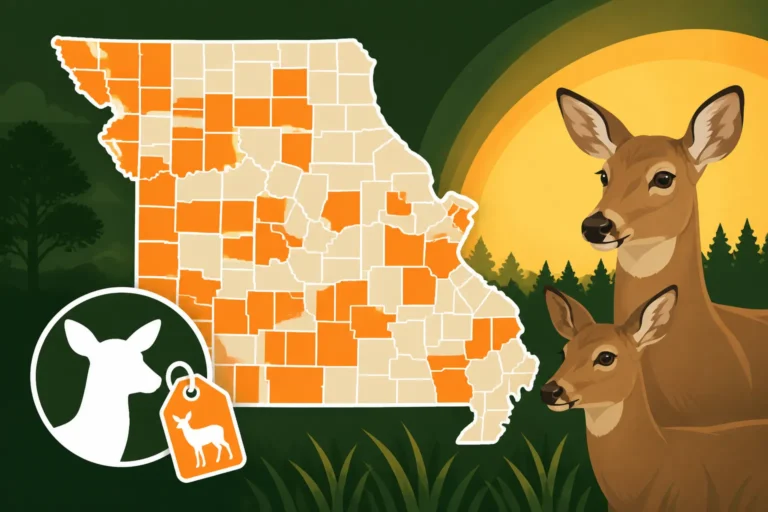
One of the biggest frustrations for hunters is when quotas change or differ dramatically from one county to the next. But this isn't random; it’s a deliberate strategy that recognizes the incredible diversity of Missouri's landscape and its deer populations. Deer management is inherently local.
Missouri is a big state, and a deer living in the intensively farmed fields of North Missouri faces a vastly different environment than one in the rugged, timbered hills of the Ozarks.
- North Missouri's Farm Country: In counties dominated by row crops (corn and soybeans), deer often have abundant food sources. This can lead to higher fawn survival rates and robust populations. Consequently, these areas often have higher antlerless quotas to mitigate crop damage and manage high deer densities. When you're Hunting North Missouri's Big-Buck Farm Country, you might find more antlerless tags available.
- Missouri Ozarks: The Ozarks, with its extensive timber and less intensive agriculture, typically supports lower deer densities. Food resources might be more scattered, and habitat can be more challenging. Here, antlerless quotas are often more conservative to allow populations to thrive without overtaxing the available browse. Hunters exploring Deer Hunting the Missouri Ozarks will notice these differences.
- Suburban and Urban Interface: Areas near cities or rapidly developing suburbs often present unique challenges. Deer populations can be dense due to limited hunting pressure and abundant landscaping, leading to increased deer-vehicle collisions and property damage. Quotas in these areas might be designed to address public safety concerns as much as biological objectives.
The MDC's biologists use the collected data and population models to make county-specific recommendations. They look at each county's unique situation, considering factors like:
- Current deer population density.
- Trends in deer harvest (up, down, stable).
- Number of deer-vehicle collisions.
- Reports of agricultural damage.
- Prevalence and distribution of CWD.
- Habitat carrying capacity.
- Hunter success rates and demand.
This granular approach means that what's right for one county might be entirely wrong for another. It's a testament to the MDC's commitment to localized, adaptive management, even if it sometimes means more detailed planning for hunters, especially those who rely on resources like GoHunt to get the specific information on Missouri Antlerless Deer Permits by County.
The Impact on Hunters and What It Means for Your Season
Understanding how antlerless quotas are set isn't just academic; it has very real implications for how you plan and execute your deer season in Missouri. These quotas directly influence your opportunities, so staying informed is key.
Navigating Antlerless Opportunities in Different Regions
As we've discussed, antlerless opportunities vary significantly across Missouri. This means that successful hunters often need to be strategic about where they choose to hunt, or at least understand what to expect in their local areas.
- Counties with High Antlerless Quotas: If you're primarily focused on filling the freezer or introducing a new hunter to deer hunting, targeting counties with more liberal antlerless quotas makes sense. These are often counties with high deer densities, where taking a doe helps the overall health of the herd. These areas might also see more pressure from other hunters, so Scouting Missouri Public Land Before Season becomes even more crucial to find those less-pressured pockets.
- Counties with Limited Antlerless Tags: In counties with lower deer populations or specific management goals (like increasing herd size), antlerless tags might be restricted or require special permits (e.g., through managed hunts). If you hunt in such an area, you might need to adjust your expectations, perhaps focusing more on antlered deer or traveling to a different county for antlerless opportunities.
- Special Management Areas: Some areas, particularly those affected by CWD, might have specific CWD management permits that allow for additional antlerless harvest, even beyond the general statewide limits. These are critical tools for controlling disease spread and are often part of the reason for changes to What Changed in Missouri Deer Rules for 2026. Always check the MDC's current regulations for these areas.
Tools like the MO Hunting app or the MDC website, and even third-party apps like GoHunt, are indispensable for navigating these regional differences. Before you finalize your hunting plans, always double-check the specific regulations for the counties you intend to hunt.
Staying Informed About Annual Changes
Deer populations are not static; they ebb and flow with habitat changes, weather patterns, disease outbreaks, and hunter harvest. Because of this dynamic nature, antlerless quotas and regulations can and do change from year to year. What was true last season might not be true this season, and failing to stay updated can lead to missed opportunities or, worse, unintended violations.
The MDC typically announces its proposed and final regulation changes well in advance of the hunting seasons. Here's how to stay in the loop:
- MDC Website: The Missouri Department of Conservation website is your primary source for official regulations, deer harvest reports, population data, and announcements about upcoming changes. They publish detailed county-by-county regulations each year.
- Annual Hunting Prospects: The MDC also releases "hunting prospects" for various game species, including deer. These documents often include insights into population trends and expected opportunities in different regions.
- MDC Publications: Subscribe to the Missouri Conservationist magazine or other MDC newsletters to receive updates directly.
- Hunter Education: While not directly about annual changes, staying brushed up on your Missouri Hunter Education and Orange Rules ensures you’re ready for the season.
- Hunting Apps and Websites: Many hunting apps and websites, including GoHunt, strive to provide up-to-date regulation information. While these can be incredibly convenient, always cross-reference with official MDC sources to ensure accuracy, especially before making any irreversible decisions.
By proactively checking these resources, you can adapt your hunting strategy, purchase the correct permits, and maximize your chances of a successful and legal harvest. It’s all part of being a responsible and effective hunter in Missouri.
Key Factors Influencing Antlerless Quota Adjustments
To give you an even clearer picture, here's a table summarizing some of the key factors that can influence the MDC's decision-making process for antlerless quotas:
| Factor | Indication | Likely Impact on Antlerless Quota | Rationale |
|---|---|---|---|
| High Deer Density | Consistent high harvest, frequent sightings | Increase | Reduce population pressure on habitat, mitigate crop damage. |
| Low Fawn-to-Doe Ratios | Poor fawn recruitment over several seasons | Decrease | Allow population to recover, improve reproductive success. |
| Increased CWD Prevalence | New CWD detections, rising infection rates | Increase | Reduce deer density to slow disease transmission. |
| Significant EHD Outbreak | Widespread deer deaths reported | Decrease | Protect surviving population, allow for natural rebound. |
| High Deer-Vehicle Collisions | Rising number of accidents involving deer | Increase | Reduce deer numbers for public safety. |
| Extensive Crop Damage Reports | Farmers report significant losses | Increase | Alleviate economic burden on agriculture. |
| Stable Population | Consistent harvest, balanced age structure | Maintain | Maintain current management goals and opportunities. |
| Reduced Hunter Participation | Fewer hunters, lower overall harvest | Potentially Increase | Encourage harvest to meet management goals, if deer numbers are high. |
This table illustrates the interconnectedness of ecological data, public impacts, and management decisions. It's a dynamic system designed to keep Missouri's deer herd healthy and balanced for generations of hunters and wildlife enthusiasts.
Disclaimer
The information provided in this guide is for general informational purposes only and is subject to change. Always consult the official Missouri Department of Conservation (MDC) regulations, available on their website or in their current hunting guide, before engaging in any hunting activities. Hunters are responsible for knowing and adhering to all applicable laws and regulations.