When the Missouri Rut Peaks
The Missouri deer rut breeding peak occurs consistently in November, driven by photoperiod and shortening daylight hours.
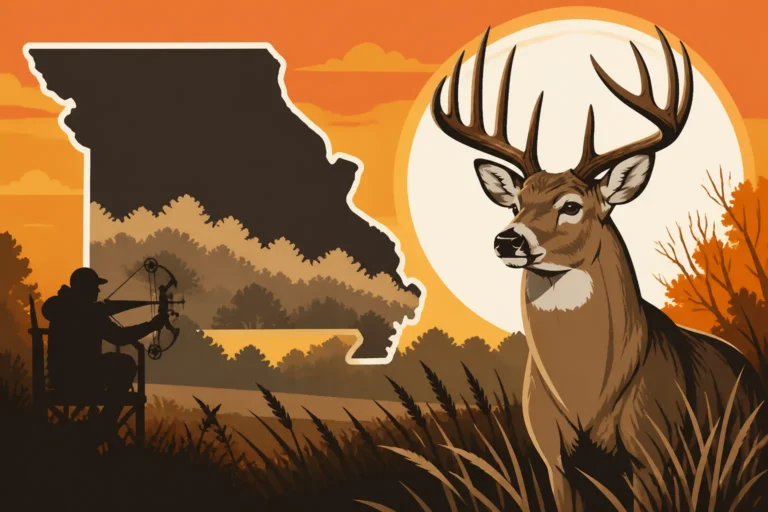
The Missouri deer rut breeding peak occurs consistently in November, driven by photoperiod and shortening daylight hours.
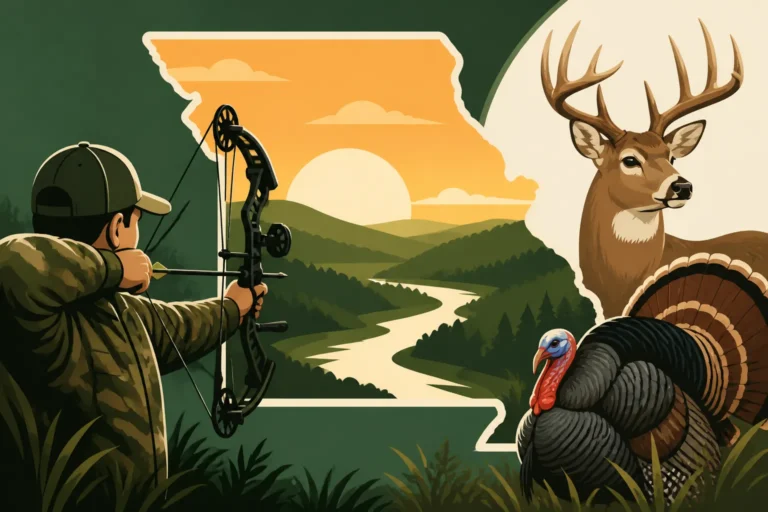
The Missouri Record Book Program explains scoring methods, fair chase rules, and qualification steps for deer and turkeys.
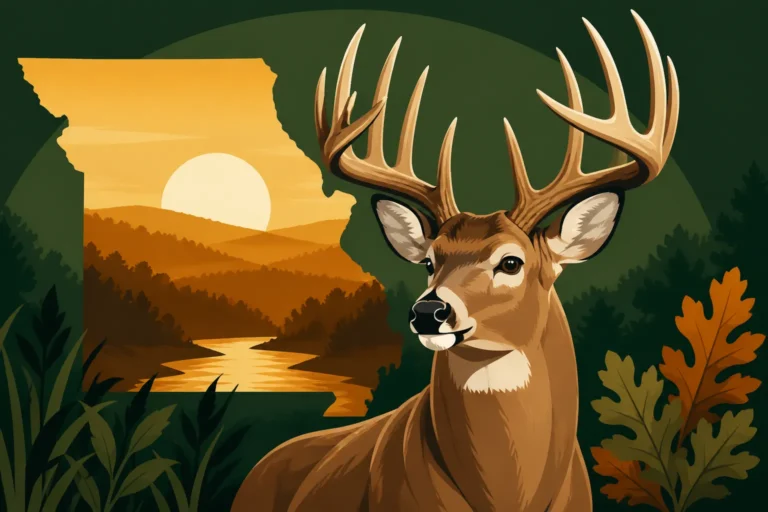
The Missouri Monarch non-typical whitetail found in St. Louis County in 1981 explains record antler growth and Boone and Crockett Club records.
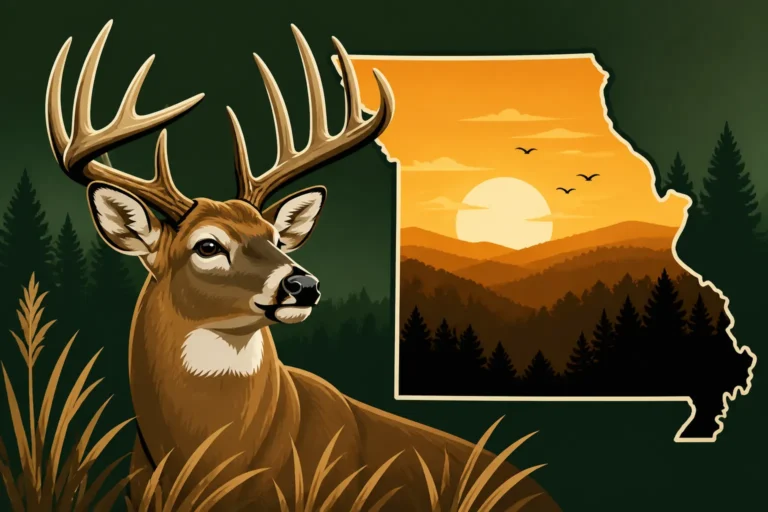
Missouri Boone and Crockett whitetails require specific genetics, nutrition, and age structure to reach trophy score minimums.
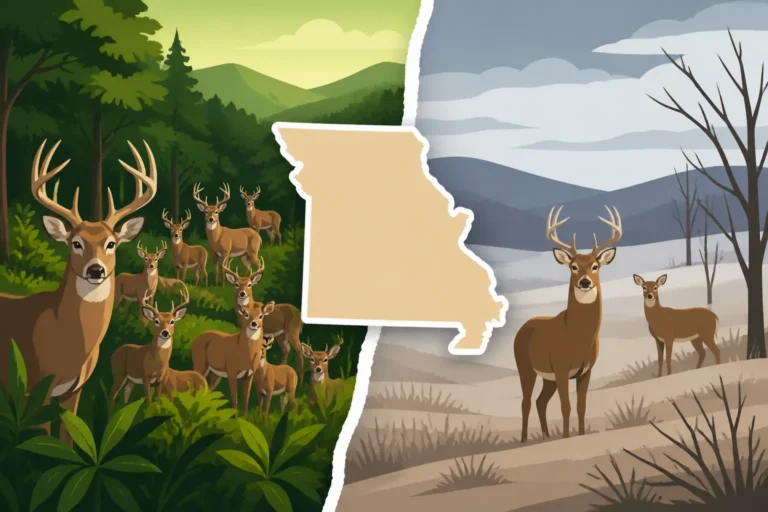
Missouri deer hunting regions present a clear contrast between northern agricultural abundance and rugged southern Ozark timber habitats.
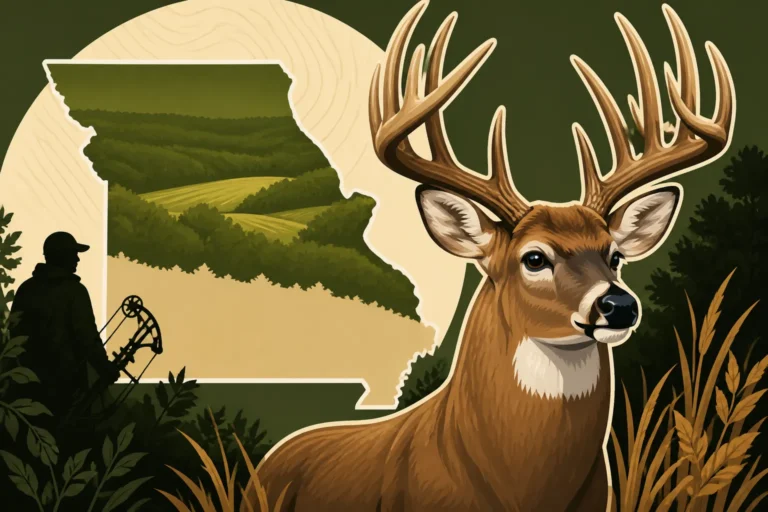
North Missouri deer consume corn, soybeans, and alfalfa from fertile soils containing calcium and phosphorus to grow massive antlers.
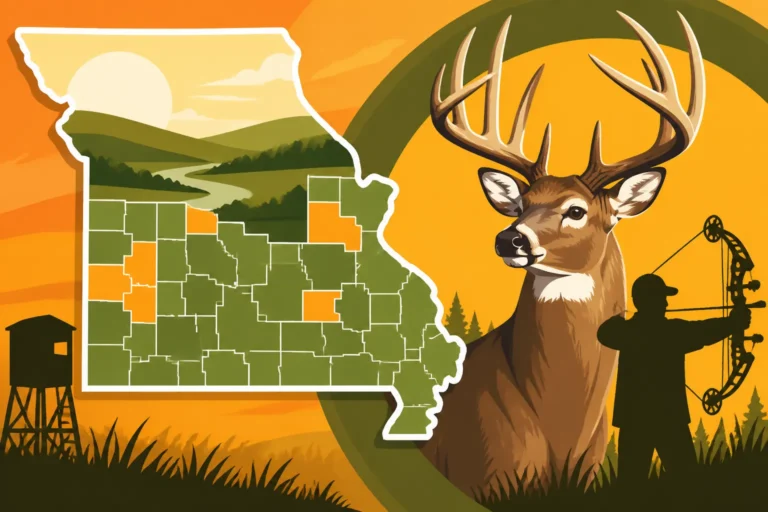
Missouri counties with strong habitats, abundant nutrition, and older age structures produce the state’s largest trophy white-tailed deer.
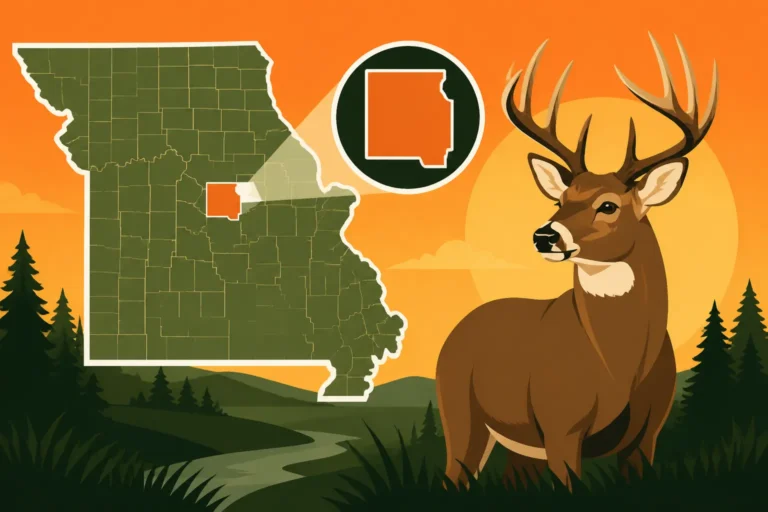
Missouri deer harvest totals depend on northern crop food sources, Ozark timber habitats, private land access, and hunter density.
Missouri annual deer harvest data reveals population health, hunter success rates, and conservation strategies across counties.
Missouri deer herd size and population estimates rely on harvest reports, bowhunter observations, and advanced biological modeling data.