Missouri Record Book Program
There's a special kind of pride that settles in after you've spent countless hours in the timber or trudging through frosted fields, finally punching your tag on an animal that truly stands out. You look at those antlers, or that thick beard, or the sheer size of your harvest, and you can't help but wonder: "Is this a record?" For many Missouri hunters, turning that personal triumph into official recognition is a goal. This guide will walk you through the ins and outs of the Missouri Record Book Program, explaining what it is, how your animal can qualify, and the steps to getting your trophy officially recognized in the state's hunting heritage.
Understanding Missouri's Official Record Book Program
For generations, hunters have told stories, passed down traditions, and yes, even boasted a little about the size of their harvest. But beyond the campfire tales, a more formal system exists to honor truly exceptional animals: the Missouri Record Book Program. This program isn't just about bragging rights; it's a vital part of documenting the health and quality of our state's game populations, celebrating ethical hunting, and preserving our rich hunting heritage for future generations. It’s a testament to good conservation practices and the incredible wildlife resources we have here in the Show-Me State.
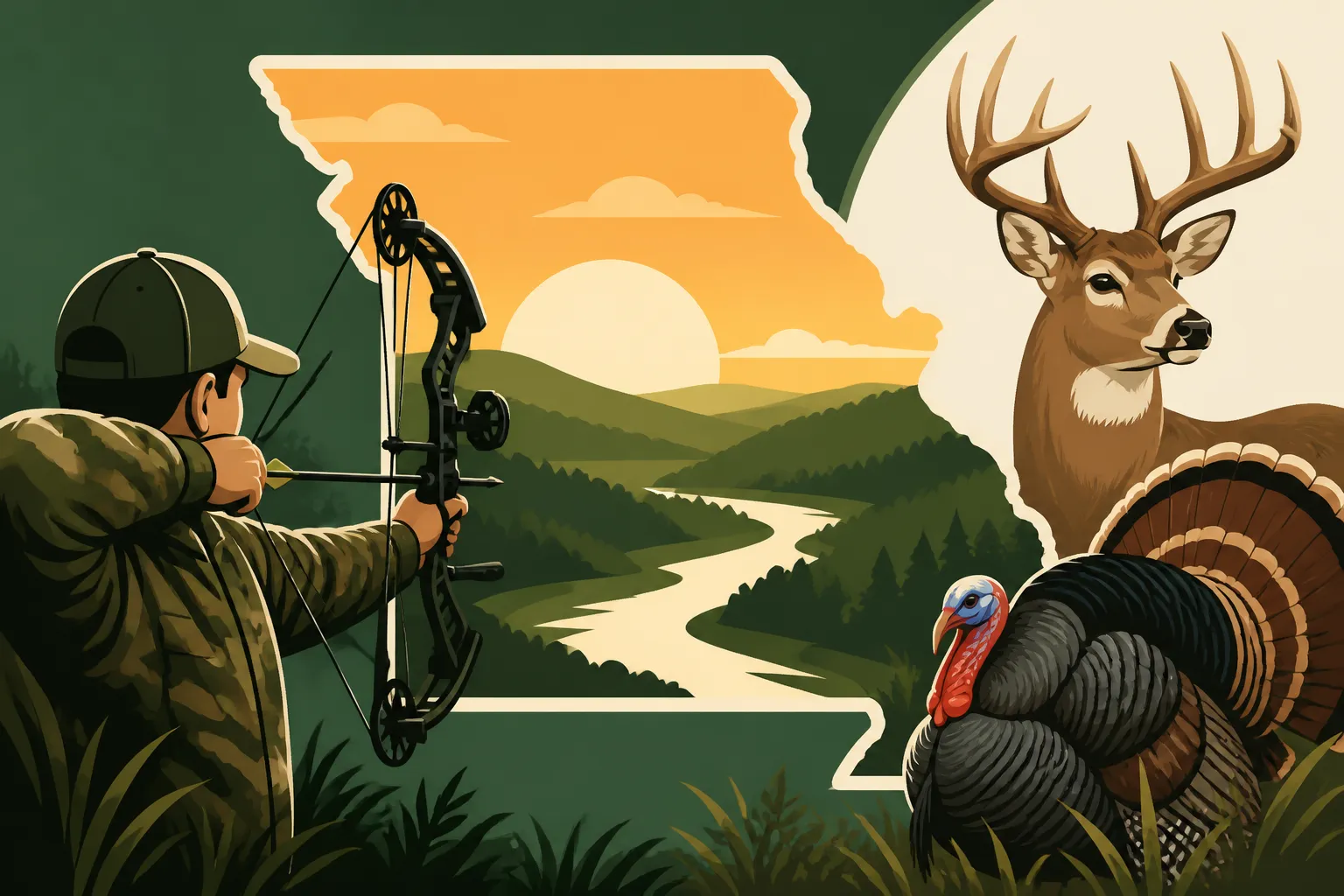
The Missouri Record Book Program, like similar programs across the nation, serves as a repository for the largest and most impressive game animals harvested within state lines. While often associated primarily with whitetail deer antlers, it actually encompasses a broader range of species and categories, including wild turkeys, black bears, and even some non-antlered game. The records recognize animals taken by various legal hunting methods, from the traditional firearms hunter during Missouri's Eleven-Day November Firearms Deer Season to the dedicated archer putting in the time during Bowhunting Missouri's Four-Month Archery Season. Each entry represents not just a magnificent animal, but also the dedication, skill, and sometimes sheer luck of the hunter who pursued it.
At its core, the program is built upon the principles of fair chase. This means that every animal submitted must have been taken legally, ethically, and without undue advantage over the animal. This unwavering commitment to fair chase ensures the integrity of the records and upholds the highest standards of sportsmanship. It validates the hunter's skill and patience, knowing they earned that trophy through hard work and respect for the game. When you see an animal listed in the record book, you know it was harvested under conditions that truly tested the hunter, often after extensive scouting and strategic planning, whether on vast public tracts or on smaller private lands.
What Makes a Missouri Trophy "Record Book" Caliber?
The journey from a successful harvest to a recognized record book entry hinges on specific criteria, primarily focusing on the animal's physical dimensions. For antlered game like whitetail deer, Missouri's program largely follows the established methods of the Boone and Crockett Club for firearms-taken animals and the Pope and Young Club for archery-taken animals. These nationally recognized systems provide a standardized, objective way to measure and score antlers, ensuring consistency across all entries. Understanding these scoring methods is crucial, as they account for various measurements of beam length, tine length, circumference, and spread, with deductions for abnormal points that don't match symmetrically.
There are distinct categories for "typical" and "non-typical" antlers. A typical rack is one that is largely symmetrical, with points growing primarily off the main beams in a balanced fashion. Non-typical racks, on the other hand, feature significant abnormal points, drop tines, or unusual growth patterns that deviate from symmetry. While deductions for asymmetry are applied to typical racks, non-typical racks get "credit" for their unique and often impressive irregular points, adding them to the overall score. This dual classification ensures that both perfectly symmetrical and spectacularly unique animals receive their due recognition.
Of course, to even be considered, an animal must meet a minimum score requirement for its species and category. These minimums are set to reflect truly exceptional animals and ensure the prestige of being included in the record book. For example, a whitetail buck taken with a firearm would have a higher minimum score for typical antlers than one taken with a bow. These numbers are carefully considered to maintain the program's integrity and value. While exact figures can vary or be updated, you'll generally find that a typical whitetail buck taken by archery might need to be in the low 100s, while a typical firearms buck is often in the 140s or higher. Non-typical minimums are commensurately higher to account for the additional points. You can often find resources, including hunting apps like GoHunt, that can help you do a rough estimate of your deer's score based on photos or your own measurements, giving you a good idea if you're in the ballpark.
Beyond the actual score, there's another critical requirement for antlered and horned game: the mandatory drying period. Once an animal is harvested, its antlers or horns contain moisture that will cause them to shrink slightly as they dry out. To ensure fair and consistent scoring, all antlers must undergo a minimum 60-day drying period from the date of harvest before they can be officially measured. This prevents variations in score due to moisture content and ensures that all entries are compared on an equal footing. It requires patience, but it's a non-negotiable step in the official process. For other species, like wild turkeys, the score is based on a combination of beard length, spur length, and body weight, while bears are typically scored by skull measurements. Knowing these details upfront will prevent disappointment and ensure your trophy is ready for evaluation.
Here’s a simplified look at general minimum score ranges for some common Missouri game species. Keep in mind that official rules and precise numbers should always be confirmed with the program's current guidelines:
| Species | Category | Typical Minimum Score (approx.) | Non-Typical Minimum Score (approx.) | Scoring Method Notes |
|---|---|---|---|---|
| White-tailed Deer | Archery | 125-130 | 155-160 | Boone & Crockett/Pope & Young system (green score & final) |
| White-tailed Deer | Firearms | 140-145 | 170-175 | Boone & Crockett/Pope & Young system (green score & final) |
| Wild Turkey | Eastern | 60-65 | N/A | Beard length, spur length, live weight |
| Black Bear | Skull | N/A | 18-19 inches | Skull length + width (inches) |
The Step-by-Step Process for Official Scoring
So, you've taken an exceptional animal, you've patiently waited out the drying period for those antlers, and you're pretty sure it meets the minimums. Now what? The process of getting your trophy officially recognized involves a few key steps that require careful attention to detail. It's not overly complicated, but it does demand accuracy and adherence to the program's rules.
First, it's a good idea to conduct a preliminary assessment yourself. There are numerous resources available online and in hunting publications that detail the Boone and Crockett or Pope and Young scoring methods. Taking your own "green score" will give you a solid indication of whether your trophy is likely to meet the minimum requirements. This can save you time and effort if your animal is clearly below the threshold. Many hunters use various mapping and scouting tools, like GoHunt, not just for planning their hunt but also for tracking potential trophy areas and even estimating rack size from trail cam photos, which can give you a head start on understanding a deer's potential.
Once you feel confident your trophy is a contender, the next crucial step is finding an official scorer. The Missouri Record Book Program relies on a network of certified measurers who have been trained and certified in the specific scoring methodologies. These individuals are often volunteers, deeply passionate about hunting and conservation, and they are the only ones authorized to provide an official score. You can typically find a list of certified scorers through the Missouri Department of Conservation or through official Boone and Crockett or Pope and Young channels. Don't just pick any taxidermist or knowledgeable friend; seek out an officially certified scorer to ensure your measurements will be accepted.
During the actual scoring session, the certified measurer will meticulously measure various aspects of your trophy. For deer antlers, this involves everything from the length of the main beams, the length of each individual tine, and the circumference at specific points, to the greatest spread measurement. They will carefully record these measurements on an official score sheet and apply any necessary deductions for asymmetry in typical racks. It's a precise, sometimes lengthy process that reflects the dedication required to maintain accurate records. It's also a fantastic opportunity to learn more about antler growth and the finer points of scoring, and many hunters enjoy being present to witness the measurements being taken. This meticulous process helps to build the comprehensive Missouri Deer Harvest Records that provide so much insight into herd health.
After the official scoring is complete and the score sheet is finalized, you'll typically need to submit the documentation to the Missouri Record Book Program. This submission usually includes the signed score sheet, sometimes an affidavit attesting to the fair chase method of harvest, and often high-quality photographs of the animal and its antlers from various angles. Make sure your photos are clear and show the rack without obstruction. There might be a nominal fee associated with the submission to cover administrative costs. The program administrators will then review your submission, verify all the details, and if everything checks out, your trophy will be officially entered into the Missouri Record Book. This final verification process is important to uphold the integrity of the record system, ensuring that only legitimately harvested and properly measured animals are included.
Why Record Books Matter Beyond Bragging Rights
While the personal satisfaction of having your name, and your animal's impressive dimensions, etched into the Missouri Record Book is undeniable, the program's significance stretches far beyond mere bragging rights. These records are a powerful testament to the success of wildlife management and conservation efforts in our state, serving as a vital barometer of the health and quality of our various game populations. Each entry isn't just a number; it's a snapshot of the genetics, habitat quality, and management practices that allowed that animal to reach its full potential.
These detailed records provide invaluable data for wildlife biologists and conservation agencies. By analyzing trends in record book entries over the years – looking at average scores, harvest locations, and even the age structure of bucks being entered – they can gain critical insights into Missouri Deer Population Estimate and specific herd dynamics. This information helps shape future management decisions, ensuring that regulations and habitat initiatives continue to foster healthy, robust wildlife populations. For example, a decline in record-book entries in a particular region might signal a need for habitat improvement, or a change in antler point restrictions (if applicable) might influence the age structure of bucks. These entries contribute to a scientific understanding that benefits all hunters and wildlife enthusiasts.
Moreover, the impressive animals showcased in the record book serve as a powerful inspiration for current and future generations of hunters. They demonstrate what's possible when proper management, ethical hunting, and a deep respect for wildlife converge. Seeing a massive typical or non-typical whitetail, or an old tom with an incredible beard, often ignites a passion in young hunters and reinforces the commitment of seasoned veterans. It encourages responsible hunting practices and a deeper engagement with the outdoors. Even using tools like GoHunt to research harvest data in areas known for producing quality animals can inspire hunters to put in the effort required to pursue truly magnificent game.
Ultimately, entering an animal into the Missouri Record Book solidifies a profound personal achievement and memory. It’s a formal recognition of the time spent, the lessons learned, and the respect shown to the animal and its environment. It's about that crisp autumn morning, the careful stalk, the perfect shot, and the quiet awe of standing over a truly magnificent creature. Whether you're hunting North Missouri's Big-Buck Farm Country or deep in the Deer Hunting the Missouri Ozarks, the journey to a record-book animal is filled with effort and unforgettable moments. This program ensures that those memories, and the animals themselves, are forever honored as part of Missouri's rich outdoor legacy, encouraging others to pursue their own passions responsibly and ethically, while also contributing to the ongoing story of conservation in our state.
Disclaimer
This article is for general informational purposes only and does not constitute professional advice. Laws, prices and regulations vary by location and change over time. Consult a qualified professional for guidance on your specific situation.