The Nonresident Spring Turkey Limit Change
Hunting in Missouri has always been a fantastic experience, drawing enthusiasts from all over. But if you're a nonresident planning your spring turkey hunt in the Show-Me State, you might have felt a bit of a sting lately with the recent changes to permit limits. It's frustrating when you've planned your trip, invested your time and money, only to discover that the rules you counted on have shifted beneath your feet. This comprehensive guide is here to help you navigate the new landscape, clearly explaining the nonresident spring turkey limit change and how it impacts your chances of tagging a gobbler this season.
Understanding the Core Change: One Bearded Turkey Limit
Let's cut right to the chase because this is the biggest shift for our nonresident friends. The days of potentially taking multiple bearded turkeys as a nonresident are, for now, behind us in Missouri. This change wasn't made lightly, and it certainly stirred up some discussion, but understanding the specific regulation is your first step to a successful hunt.
What the New Regulation States
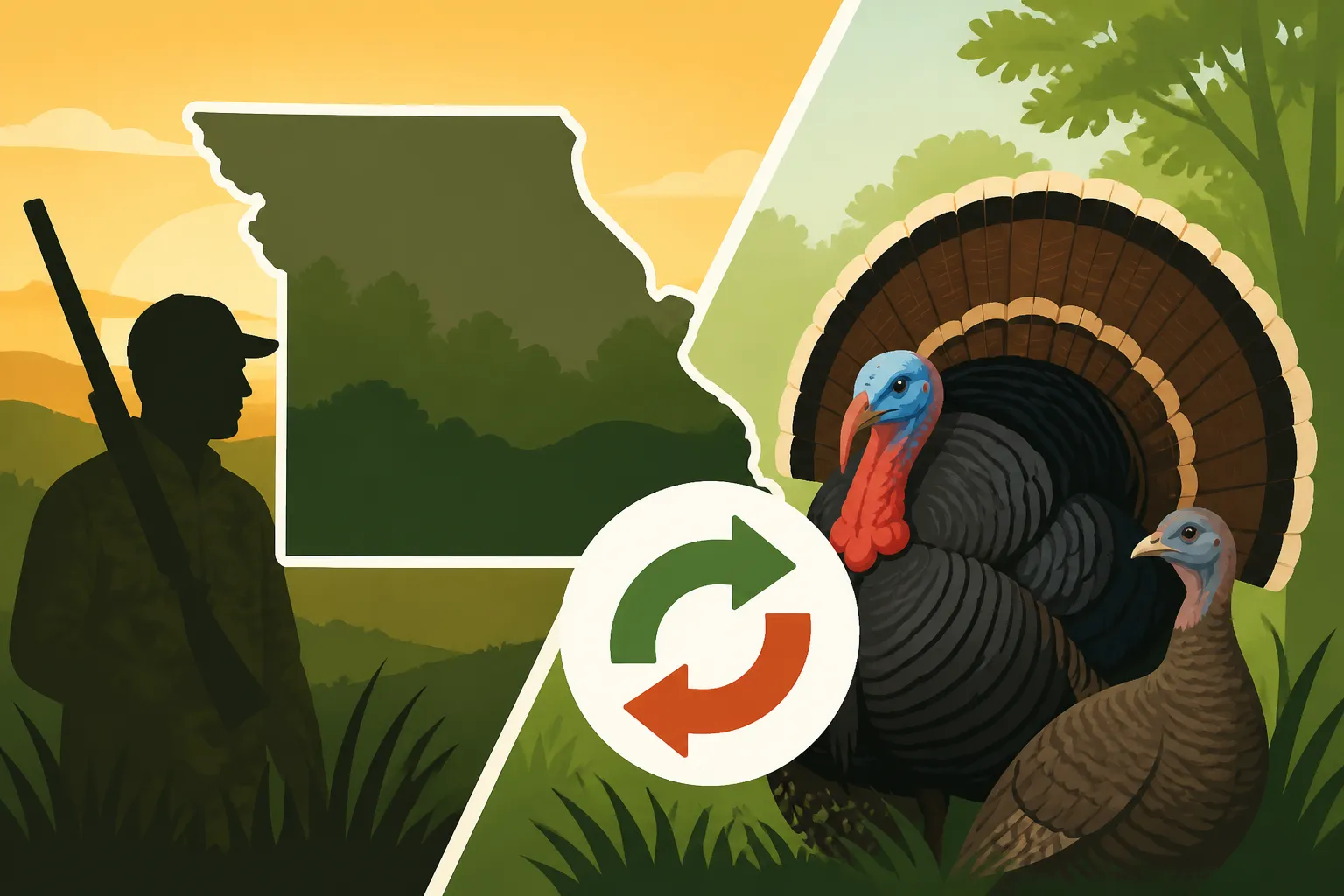
As of recently, nonresidents purchasing a Missouri spring turkey permit are now limited to harvesting just one bearded turkey for the entire spring season. This is a significant adjustment from previous regulations that allowed nonresidents to take two birds, similar to residents. For years, nonresidents enjoyed the opportunity to fill two tags, much like resident hunters who still retain that privilege. This shift means that your single nonresident spring turkey permit now entitles you to one and only one bearded bird, whether that's a gobbler or a bearded hen, throughout the entire spring season, including any youth portions if you are eligible to hunt them.
This change is a direct response to broader conservation goals, aiming to alleviate some of the harvest pressure on the state's wild turkey population. While it might feel like a punch to the gut for those accustomed to a two-bird limit, it's crucial to acknowledge that the Missouri Department of Conservation (MDC) is trying to manage the resource for long-term health. It essentially means that the hunting strategy that nonresidents employ now needs to be more focused and perhaps a bit more conservative, given that there's no "second chance" on a separate tag.
What this boils down to for you, the nonresident hunter, is a higher stakes game. Every setup, every call, every decision in the woods takes on added importance because you have just one opportunity to punch that tag. It truly makes that single harvest a cherished accomplishment, but it also necessitates a refined approach to your spring turkey pursuits in Missouri.
Impact on Season Planning and Strategy
The one-bearded-turkey limit undeniably forces a complete rethink for many nonresident hunters when it comes to season planning. In the past, you might have hunted aggressively early in the season, hoping to tag one bird quickly and then spend the rest of your time trying for a second. Now, every moment spent in the woods, every call made, every gobbler pursued, must be approached with the understanding that this could be the bird. This isn't just about bagging a turkey; it's about bagging your turkey, the only one you'll get for the season.
This "one and done" mentality means that being overly selective might actually work against you if you're not careful. While it's tempting to hold out for a massive longbeard, passing on a callable two-year-old gobbler early in your hunt could leave you empty-handed if conditions turn sour later on. The challenge lies in balancing your desire for a trophy with the reality of having only one chance. You'll want to focus your efforts during peak gobbling activity and in areas where you have a higher probability of success, rather than waiting for that elusive "perfect" bird that might never materialize.
Consider a real-world scenario: you've driven several hours to hunt a specific Missouri Conservation Area. You've scouted a few spots, and on the second morning, a vocal gobbler responds aggressively to your calls. He comes in, strutting and drumming, but he's "only" a jake. In years past, you might have held off, hoping for a mature gobbler later. With the new limit, however, that jake represents your sole opportunity. You have to make the decision on the spot: is this the bird you want to take home, or will you gamble on a bigger one that may not show? It’s a tough decision, but one that highlights the strategic shift demanded by this regulation.
Clarifying "Bearded Turkey"
To avoid any costly misunderstandings in the field, it's absolutely crucial to have a crystal-clear understanding of what constitutes a "bearded turkey" in Missouri. When the regulations state "one bearded turkey," they mean any turkey, male or female, that possesses a visible beard. This typically refers to gobblers (adult male turkeys) and jakes (juvenile male turkeys), both of which sport beards. However, it's also important to remember that some hens, though rare, can also grow beards. If a hen has a visible beard, she is also a legal bird under this definition.
The key here is "visible beard." You need to be able to clearly identify the beard before you take the shot. This means waiting for a bird to present itself in a way that leaves no doubt about its legal status. In the excitement of the moment, with a gobbler thundering into your setup, it can be easy to rush a shot. However, ensuring positive identification isn't just about following the rules; it's also about ethical hunting. Make sure you can see that beard unequivocally before you pull the trigger.
Imagine you’re tucked into a blind, a gobbler slowly working its way through the timber, partially obscured by brush. Your heart is pounding. In this situation, patience is paramount. You need to let that bird clear the obstructions, present itself fully, and allow you to confirm that distinct beard hanging from its chest. If there's any doubt, hold your shot. With only one tag to fill, you want to make sure it's for a legally harvested bird, avoiding potential fines or even losing your hunting privileges. Take your time, confirm your target, and make a clean, ethical shot.
Historical Context: Why the Change Happened
Understanding why this change was implemented can help ease some of the sting, even if you don't fully agree with it. It wasn't an arbitrary decision, but rather one rooted in the broader conservation efforts for Missouri's wild turkey population. The Missouri Department of Conservation (MDC) constantly monitors game populations, and when trends indicate a need for adjustment, they act.
Missouri's Wild Turkey Population Trends
For decades, Missouri was a shining example of wild turkey restoration, boasting a robust and expanding population that brought joy to countless hunters. However, over the last 10 to 15 years, much like in many other states across the nation, Missouri's wild turkey population has shown a concerning decline. Data collected by the MDC through various surveys and monitoring programs has indicated lower poult (young turkey) survival rates, which directly impacts the number of birds entering the population each year. Factors contributing to this decline are complex and multi-faceted.
Experts point to a combination of issues including changes in habitat quality, particularly the loss of early successional cover crucial for nesting and brood-rearing, increased predation on nests and poults, and adverse weather patterns during critical nesting and hatching periods. Diseases can also play a role, though generally less significant than habitat and predation. When you consider these challenges, it becomes clear that the population is facing pressure from multiple angles, leading to fewer turkeys overall and, more importantly, fewer mature gobblers.
The MDC uses a variety of metrics to track these trends, including spring harvest data, summer brood surveys (which monitor poult-to-hen ratios), and hunter observation surveys. All of these indicators have, unfortunately, painted a picture of a shrinking turkey population. This overall trend, which you can delve into further by reading about Missouri Turkey Population Trends and Why Missouri Turkey Poult Survival Fell, has necessitated a reevaluation of harvest strategies to ensure the long-term sustainability of the resource.
Balancing Hunter Opportunity and Conservation Goals
The core mission of the Missouri Department of Conservation is to protect and manage the state's fish, forest, and wildlife resources, providing sustainable public opportunities for their enjoyment. This means constantly walking a tightrope between offering ample hunting opportunities and ensuring that those opportunities don't jeopardize the health of the species in question. When turkey numbers begin to dip, particularly due to factors outside of direct harvest, wildlife managers have to look at all variables they can control, and hunter harvest is certainly one of them.
The decision to reduce the nonresident limit for spring turkey isn't about discriminating against out-of-state hunters; it's a strategic move to reduce the overall harvest pressure. While nonresidents typically make up a smaller percentage of the total turkey harvest compared to residents, every bird counts when a population is struggling. By reducing the number of birds nonresidents can take, the MDC aims to provide a slight boost to the breeding population, allowing more gobblers to survive and contribute to future hatches. It’s a tough choice, especially for those who travel long distances and invest significant resources to hunt in Missouri.
Ultimately, this change reflects the MDC's commitment to conserving Missouri's wild turkey flock for future generations. It’s a proactive step, albeit one that impacts hunter experience, designed to help stabilize and hopefully reverse the current population decline. The goal isn't to eliminate nonresident hunting but to adjust it in a way that contributes positively to the conservation of a treasured game species, ensuring that our grandchildren will also have the opportunity to experience the thrill of a spring gobbler.
Public Input and Decision-Making Process
Regulation changes, especially those impacting hunting limits or seasons, rarely come out of thin air. They are typically the culmination of extensive biological research, data analysis, and often, a period of public comment and input. The Missouri Department of Conservation operates with a public trust mandate, and while they rely heavily on scientific data, they also take into account the concerns and opinions of hunters and other stakeholders.
Before any significant regulation like the nonresident spring turkey limit change is enacted, the MDC's wildlife biologists present their findings and recommendations to the Missouri Conservation Commission. These proposals are usually based on years of data, population modeling, and comparisons with management strategies in other states facing similar wildlife challenges. Following this, the proposed changes are often made public, allowing hunters, landowners, and the general public to offer feedback through surveys, public meetings, or direct communication.
While these decisions are ultimately made by the Conservation Commission, having gone through this process, it indicates a deliberate effort to manage the resource effectively. It’s understandable that changes like this can be met with frustration and even anger, especially by those who feel directly impacted. However, it's worth remembering that these decisions are informed by the best available science and are intended to serve the long-term health of the wildlife resource, which benefits all hunters, resident and nonresident alike, in the long run.
Implications for Nonresident Hunters
For nonresident hunters, this rule change isn't just a minor tweak; it fundamentally alters the dynamic of their Missouri spring turkey hunt. It adds a layer of pressure and necessitates even more careful planning and decision-making in the field.
Increased Pressure on Success
Let's be honest, hunting is already a challenging pursuit, especially when you factor in unpredictable weather, elusive game, and the inherent difficulties of public land. Now, imagine adding the mental weight of knowing you only get one shot, literally, to fill your tag for the entire season. That pressure can be intense. Where you might have previously felt the freedom to be highly selective, knowing a second tag was available, you now face a single, high-stakes opportunity. This means every aspect of your hunt, from scouting to calling, becomes even more critical.
This increased pressure means that thorough preparation is no longer just a good idea; it's practically a requirement. You can't rely on sheer luck or the hope of a second chance. Nonresidents will feel compelled to invest more time in pre-season scouting, perhaps utilizing mapping apps like GoHunt to analyze aerial photos, identify potential roosting areas, and pinpoint travel corridors. The goal is to maximize your chances of encountering a callable bird early in your hunt or during the most opportune times, minimizing the risk of a "busted" hunt leaving you without a bird.
Furthermore, this pressure can sometimes lead to hasty decisions. The urge to "get a bird down" to avoid an empty tag can cause hunters to take riskier shots or pursue birds that might not be fully committed. It's vital to resist this urge and stick to ethical hunting practices. Remember that even with one tag, the quality of the hunt and the respect for the animal should remain paramount. The pressure is real, but managing it effectively is part of becoming a more skilled hunter.
Financial and Time Investment Considerations
Nonresident hunting permits are, almost universally, more expensive than resident permits. This is a reality across the country, and Missouri is no exception. When you factor in the cost of a nonresident spring turkey permit – which you can check on a page like Missouri Nonresident Spring Turkey Permit Cost – along with travel expenses, lodging, food, and potentially lost wages from taking time off work, the total investment for a Missouri turkey hunt can be substantial. For many, that investment was justified by the opportunity to potentially harvest two birds, doubling the freezer meat and the overall experience.
Now, with the limit reduced to one bearded turkey, some nonresidents might feel that the "value" of their investment has diminished. It's a valid frustration. Spending hundreds, if not thousands, of dollars and dedicating precious vacation time for a single bird can feel less appealing than when a second opportunity was on the table. This could lead some hunters to reconsider their annual trips to Missouri, or at least prompt them to be even more strategic about when and where they hunt to maximize their odds.
This situation also puts more emphasis on the overall hunting experience rather than just the harvest numbers. While punching a tag is always the goal, the journey, the camaraderie, the time spent in Missouri's beautiful timber, and the thrill of the chase take on even greater significance when the harvest potential is limited. Nonresidents might find themselves focusing more on the entire adventure, appreciating the smaller moments, and celebrating the hunt itself, even if the tag count is lower.
Ethical Hunting and Responsible Practices
With the increased pressure of a single-bird limit, upholding the highest standards of ethical hunting and responsible practices becomes even more critical. It’s not just about compliance with the law, but about honoring the resource and the tradition of hunting. The "one and done" nature of the permit means there's less room for error, and every shot must be deliberate and well-placed.
This means reinforcing the importance of positive identification. As discussed earlier, waiting for a clear, ethical shot where you can unequivocally confirm a visible beard is paramount. Rushing a shot due to "tag pressure" is an ethical lapse that can lead to wounded birds, wasted meat, and potential regulatory violations. It’s far better to let a questionable bird walk away than to take a chance that you might regret.
Furthermore, hunters are conservationists first and foremost. By respecting the new limits, even if they are personally inconvenient, nonresidents contribute directly to the MDC's efforts to rebuild and sustain the wild turkey population. Engaging in responsible scouting, minimizing disturbance to sensitive habitats, and promptly telechecking your harvested bird (more on that below) are all part of being a good steward of Missouri's wildlife. Your actions, even as a nonresident, have a direct impact on the reputation of hunters and the future of the resource.
Navigating Missouri's Spring Turkey Season
Even with the new nonresident limit, Missouri still offers fantastic spring turkey hunting. You just need to be more strategic and fully understand the season structure to maximize your one opportunity.
Understanding the Youth and Regular Seasons
Missouri's spring turkey season traditionally kicks off with a short, exciting youth-only portion, followed by the longer regular firearms season. For nonresidents bringing youth hunters, understanding these dates is critical. The Youth Turkey Weekend Rules allow eligible young hunters to get out in the field before the general rush, often when gobblers are less pressured and more vocal. If you have a youth hunter in your party who qualifies for these dates, it can be a phenomenal opportunity to get a bird on the ground without competing with adult hunters.
For adult nonresident hunters, the main event is the regular spring firearms season. This typically runs for about three weeks in April and May, offering a good window of opportunity. While you are limited to one bearded bird for the entire season (including any youth portion you might participate in), understanding the different phases of the season can help you plan your visit. Early season might see gobblers still grouped up and very vocal, while the mid-season often coincides with peak breeding activity, and late season can mean more difficult hunting as hens begin nesting and gobblers become less responsive. Knowing these phases, which are outlined in resources like Missouri Spring Turkey Season Structure, helps you pick the best dates for your hunt.
Regardless of when you choose to hunt, remember that your single nonresident permit covers you for one bearded turkey across all these portions. This means if you bring a youth hunter and legally tag a bird during the youth portion as an eligible adult mentor (if rules allow), that counts as your one bird for the entire spring. So, careful planning of your hunting days is more important than ever.
Scouting and Location Strategies
Effective scouting has always been the bedrock of a successful turkey hunt, but with only one tag, it becomes absolutely indispensable for nonresidents. You can't afford to waste precious hunting days trying to locate birds. Pre-season scouting, whether in person or remotely, is crucial. If you can make a trip or two before the season opens, you'll gain invaluable insights into roosting areas, travel routes, and primary strutting zones. Look for tracks, droppings, and shed feathers. Listen for distant gobblers at dawn and dusk.
For those who can't scout in person, technology can be your best friend. Mapping applications, like GoHunt, offer detailed aerial imagery, topographic maps, and public land boundaries. You can spend hours analyzing potential spots, identifying pinch points, saddles, and timber breaks that could funnel turkey movement. Look for areas with a mix of mature timber for roosting, open fields for strutting, and dense cover for escape routes. The Missouri Conservation Atlas is another invaluable resource for identifying public hunting opportunities across the state. Using these tools to plan out several potential spots will save you precious hunting time once your permit is in hand.
When it comes to selecting your actual hunting location, consider the pressure. Highly accessible public lands often see a lot of hunter traffic, especially on opening day and weekends. If you're willing to walk a bit further or explore lesser-known corners of a conservation area, you might find birds that are less pressured and more receptive to calling. Don't be afraid to try different types of habitat, from bottomland timber to Ozark ridgetops. You can also explore different tactics like Roost Hunting Missouri Gobblers or simply focusing on areas where you know turkeys have been seen regularly, ensuring you're in a high-percentage spot when that single opportunity arises.
Calling and Decoying Tactics
Your calling and decoying tactics will also need to be fine-tuned to ensure you capitalize on your single opportunity. The goal, more than ever, is to bring that gobbler into ethical shotgun or bow range, leaving no doubt about the shot. Aggressive, run-and-gun tactics might be exciting, but if they push a bird away, you've lost your one chance.
Consider the temperament of the birds you're hunting. If you're on heavily pressured public land, an overly aggressive calling sequence might actually spook birds that have heard it all before. Sometimes, soft, subtle yelps and purrs can be more effective at drawing in a wary gobbler. Think about the scenario: do you want to scream at him from a distance and hope he commits, or do you want to set up quietly, make subtle calls, and let him come searching for the "hen" he thinks he heard? Tactics like Calling a Missouri Gobbler Off the Roost are great, but the follow-up calling needs to be adapted to the situation.
Decoy placement is another critical element. With one bird on the line, you want your decoys to effectively draw a gobbler into a comfortable, close-range shot. Consider using a single hen decoy, or a jake/hen combination if you want to challenge a dominant gobbler. Ensure your decoys are visible but not too far out, ideally within 20-30 yards of your position. Think about the sun direction to make your decoys pop, and if you're dealing with pressured birds, consider the advice in Decoy Placement for Pressured Birds. Remember, the closer and more committed the bird, the higher your chances of a clean, ethical harvest.
Permit Purchase and Important Considerations
Getting your permit is the first step, but understanding the entire process, including what happens after you harvest a bird, is just as crucial for a nonresident hunter in Missouri.
How to Acquire Your Nonresident Turkey Permit
Purchasing your Missouri nonresident spring turkey permit is typically a straightforward process, thanks to modern technology. The easiest and most convenient way for most nonresidents is through the Missouri Department of Conservation's (MDC) official website. You can navigate their permit sales portal, select the appropriate nonresident spring turkey permit, and complete the transaction online. Make sure you're getting the correct permit type, as there are different options for various species and residency statuses.
Alternatively, you can purchase your permit through the MO Hunting app, which is available for both iOS and Android devices. This app is incredibly useful for hunters, allowing you to not only buy permits but also to telecheck your harvest directly from your smartphone, which we'll discuss next. For those who prefer a more traditional route, you can also purchase permits in person at various vendors across the state, including many sporting goods stores, bait shops, and some general stores. However, given that you're traveling from out of state, the online options or the app are likely the most efficient ways to secure your permit before you even set foot in Missouri.
Regardless of your chosen method, make sure you purchase your permit well in advance of your hunt. While typically available up until the season opens, avoiding last-minute scrambling ensures you're ready to hit the woods as soon as you arrive. Double-check all your information to ensure accuracy on the permit itself, as errors can cause complications down the road.
Telecheck Requirements After Harvest
So, you’ve put in the work, made a great call, and successfully harvested your one bearded turkey – congratulations! Now, the next crucial step is to comply with Missouri's Telecheck requirements. This isn't optional; it's a mandatory part of the legal harvest process and helps the MDC collect vital harvest data for population management. You must telecheck your turkey by 10 p.m. on the day of harvest. Failure to do so can result in fines or other penalties.
The Telecheck process is fairly simple. You can do it online via the MDC's website, through the MO Hunting app, or by calling a toll-free number. You will need your permit number and some basic information about your harvest, such as the date, county of harvest, and whether it was a male or female bearded bird. Once you've successfully telechecked your turkey, you'll receive a confirmation number. It is crucial to write this number down and keep it with your permit or on the bird itself, as it serves as proof of legal harvest and proper reporting.
This system is essential for the MDC to monitor harvest rates and make informed decisions about future regulations. Your cooperation ensures that the data they collect is accurate, which in turn helps them manage the wild turkey population effectively. Just as you'd learn about Telechecking a Missouri Deer after a successful deer hunt, the turkey process is very similar and equally important. Don't let the excitement of a successful hunt distract you from this critical step.
Hunter Orange Rules and Safety
While many associate hunter orange with deer season, it's also an important consideration for spring turkey hunting in Missouri, especially given certain conditions or locations. While full hunter orange isn't required for most of the regular spring turkey season if you're on private land or in timber, there are specific situations where it becomes mandatory, and general safety dictates its use in many others. Always prioritize safety in the woods.
If you are hunting on public land, particularly during the youth firearms portions, or if you are crossing public access roads, you absolutely must comply with Missouri's hunter orange regulations. These rules require hunters to wear a cap or outer garment that is hunter orange, visible from all sides. Even if not legally required for your specific situation, many seasoned hunters opt to wear a hunter orange vest or hat when walking to and from their hunting spots, especially in areas of high hunter traffic. This dramatically increases your visibility to other hunters and dramatically reduces the risk of an accidental shooting. You can find detailed information on Missouri Hunter Orange Rules to ensure full compliance.
Beyond hunter orange, basic firearms safety remains paramount. Always know your target and what is beyond it, keep your muzzle pointed in a safe direction, and keep your finger off the trigger until you're ready to shoot. When calling, always be aware of your surroundings and avoid setting up in a position where you could be mistaken for a turkey by another hunter. While the focus of this guide is the permit change, never forget that safe hunting practices are the most important part of any hunt, ensuring everyone comes home safely.
Looking Ahead: Future of Nonresident Turkey Hunting
While the current nonresident spring turkey limit change might feel restrictive, it's important to view it within the broader context of wildlife management. Regulations are dynamic, and the MDC's ultimate goal is a healthy, sustainable turkey population for everyone to enjoy.
Monitoring Population Response and Future Adjustments
The Missouri Department of Conservation is not static in its approach to wildlife management. This recent change to the nonresident turkey limit is a direct response to current population trends, and the MDC will continue to closely monitor how the turkey population responds. This involves ongoing research, summer brood surveys, analysis of harvest data, and various other metrics. They are essentially running an adaptive management program, where regulations are adjusted based on real-world outcomes.
It's entirely possible that if turkey numbers stabilize or show significant improvement in the coming years, the MDC could revisit these regulations. Conversely, if the population continues to decline despite the current measures, there could be further adjustments, possibly even impacting resident limits or season lengths. The key takeaway is to stay informed. Hunters should regularly check the MDC's official website and publications for updates, as regulations can and do change. Organizations like GoHunt often summarize these changes, making it easier for hunters to keep up with the latest rules and prepare for their hunts.
Therefore, while the current limit is one bearded bird, it's not necessarily set in stone forever. The future of nonresident turkey hunting in Missouri will be dictated by the health of the wild turkey flock itself, and the MDC's data-driven approach to ensure its long-term viability. Your compliance now contributes to the data that will inform future decisions.
The Long-Term Vision for Missouri Turkeys
The long-term vision for Missouri's wild turkeys is, simply put, a thriving and robust population that provides ample hunting opportunities for both residents and nonresidents alike. This vision isn't just about hunter satisfaction; it's about maintaining ecological balance and preserving a species that holds significant cultural and natural value. The current nonresident limit change is one piece of a larger puzzle designed to achieve this sustainability.
Hunters play a crucial role in realizing this long-term vision. Beyond simply complying with regulations, there are proactive steps that can be taken. Supporting habitat restoration efforts, reporting suspicious activity like poaching, and even educating new hunters on ethical practices all contribute to the overall health of the turkey population. The passion that hunters have for these birds is a powerful force for conservation, and channeling that passion into stewardship is incredibly important. If you’re interested in the broader picture, looking into articles like Missouri's Restored Wild Turkey Flock can provide valuable historical context on how far these birds have come and the ongoing efforts to keep them healthy.
Ultimately, the future of turkey hunting in Missouri relies on a delicate balance of careful management, sound science, and responsible hunter participation. While the one-bearded-turkey limit for nonresidents is a challenging adjustment, it's a testament to the MDC's commitment to ensuring that the thrill of a Missouri spring gobbler continues for generations to come. Embrace the challenge, enjoy the hunt, and be a part of the solution for these magnificent birds.
Missouri Spring Turkey Nonresident vs. Resident Limits
Here's a quick overview of the current spring turkey limits for residents and nonresidents in Missouri to clarify the differences:
| Hunter Type | Spring Turkey Limit (Bearded Birds) | Permit Cost (Approx. 2024-2025) | Notes |
|---|---|---|---|
| Missouri Resident | 2 | $17 | Two tags, one may be taken during the first week of the regular season, second after the first week. |
| Nonresident | 1 | $210 | One tag for the entire spring season, including youth portion (if eligible adult mentor). No second bird allowed. |
Note: Permit costs are approximate and subject to change. Always check the official Missouri Department of Conservation website for the most current regulations and pricing before purchasing your permit.
Disclaimer
The information provided in this guide is for general informational purposes only and is based on publicly available regulations at the time of writing. Hunting regulations can change frequently. It is the hunter's sole responsibility to consult the official Missouri Department of Conservation (MDC) regulations, permit requirements, and season dates directly before hunting. Failure to comply with all state and federal regulations can result in fines, penalties, and loss of hunting privileges.