What the One-Eighth-Cent Tax Funds
When you head out into Missouri's woods and waters, whether you're chasing whitetails in the Ozarks or calling turkeys in northern timber, it's easy to wonder about the bigger picture. We all pay for permits, licenses, and gear, but where does the bulk of the funding for all the amazing conservation work truly come from? Many folks don't realize the massive impact of Missouri's one-eighth-cent sales tax. This guide will peel back the layers and show you exactly how this quiet, yet incredibly powerful, tax underpins nearly everything we cherish about Missouri's hunting and outdoor heritage.
The Genesis of Missouri's Conservation Tax
It might surprise some, but Missouri’s robust conservation funding model wasn't always this way. There was a time when wildlife management in our state, much like in many others, relied heavily on license sales alone. While licenses are absolutely vital, they simply weren't enough to tackle the growing challenges of habitat loss, declining wildlife populations, and the ever-increasing demand for outdoor recreation. This created a real frustration among hunters, anglers, and nature enthusiasts who saw our natural resources slowly slipping away. We knew something more substantial, more reliable, was needed to secure the future of Missouri's wild places.
A Visionary Move for Wildlife
Back in the 1970s, a visionary movement known as the "Design for Conservation" began to take shape across Missouri. It wasn't just a handful of politicians making decisions behind closed doors; this was a grassroots effort, driven by passionate citizens who recognized the urgent need for a dedicated, long-term funding source for conservation. They understood that relying on fluctuating state general revenues or sporadic federal grants simply wouldn't cut it. What was truly revolutionary about this initiative was its direct appeal to the public: a proposal to establish a constitutional amendment for a dedicated sales tax.
Imagine the foresight it took for Missourians to vote on their own accord to tax themselves, not for roads or schools, but specifically for fish, forest, and wildlife. This wasn't some minor tweak to a budget; it was a fundamental shift in how conservation would be funded in our state. The sheer audacity and collective will of the people in approving this measure truly set Missouri apart. It solidified a commitment that continues to pay dividends decades later, ensuring that the health of our natural resources would be a priority, sustained by a stable and predictable revenue stream.
How the Tax Works, Simply Put
So, what exactly is this one-eighth-cent sales tax? In simple terms, it's a small fraction of a penny that gets added to nearly every taxable purchase you make in Missouri. Think about it this way: for every dollar you spend on groceries, clothes, or pretty much anything else subject to state sales tax, an additional one-eighth of a cent (or 0.125 cents) goes directly into the conservation fund. It might seem like an insignificant amount on a single purchase, but when you multiply that by the millions of transactions that happen across our entire state every single day, it adds up to a truly staggering sum dedicated exclusively to managing Missouri's fish, forest, and wildlife resources.
The beauty of this funding mechanism lies in its broad base and its dedicated nature. Because it's a sales tax, everyone who buys goods in Missouri contributes, not just hunters or anglers. This creates a collective ownership of our natural resources. Furthermore, and perhaps most critically, this isn't just a regular tax that can be diverted to other state programs at the whim of changing political winds. It's constitutionally earmarked. This means the funds are legally protected and must be used for conservation purposes, providing a rock-solid, predictable budget for the Missouri Department of Conservation (MDC) year after year. This stable foundation allows for long-term planning and ambitious projects that simply wouldn't be possible with less reliable funding.
Where the Money Goes: Pillars of Conservation
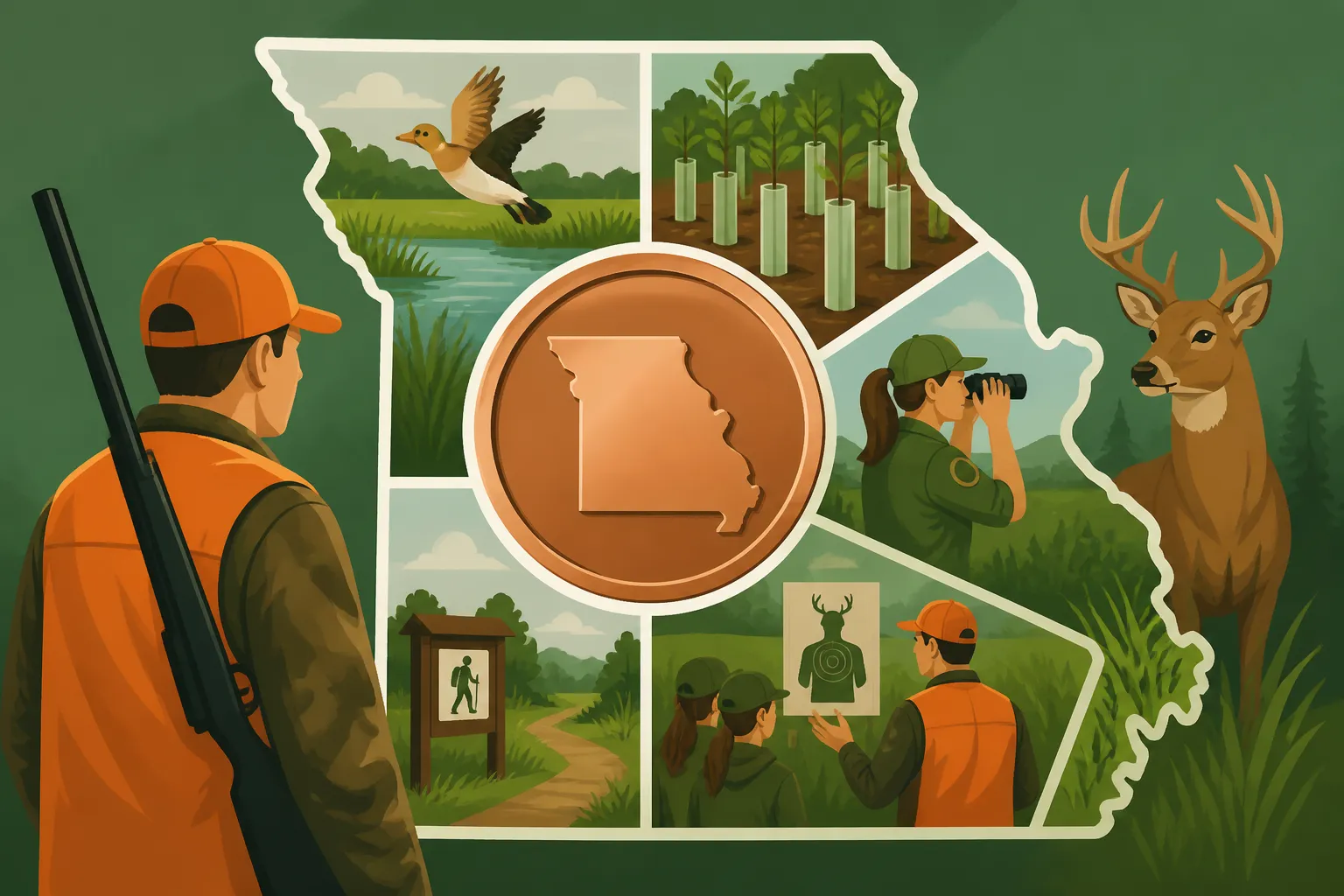
The one-eighth-cent sales tax is the bedrock of Missouri's conservation efforts, making possible a vast array of programs and initiatives that directly benefit hunters, anglers, and all outdoor enthusiasts. Without this consistent funding, the landscape of hunting in Missouri would look dramatically different, and not for the better. It allows the MDC to think big, plan long-term, and execute projects that truly make a difference on the ground.
Land Acquisition and Management
One of the most tangible and appreciated benefits of the conservation sales tax is the direct funding it provides for acquiring and managing public lands. If you've ever spent a crisp fall morning walking through a timber stand on a Conservation Area, or pulled a limit of crappie from a lake managed by the MDC, you've directly benefited from this tax. It's what has allowed Missouri to grow its network of Public Hunting Land in Missouri, creating opportunities that simply didn't exist for previous generations.
These aren't just empty acres; they are actively managed ecosystems. The tax dollars go into vital work like timber stand improvements, which means foresters are strategically thinning trees to promote healthier growth and better mast production for deer and turkeys. Prescribed burns are conducted to restore native grasslands and open timber understories, benefiting species like Northern Bobwhite Quail in Missouri and creating better browse for deer. Roads and trails are maintained, parking areas are kept clear, and informational kiosks are updated. Tools like onX Hunt become incredibly valuable here, allowing hunters to navigate these diverse public lands with confidence, knowing exactly where the boundaries lie and where MDC has invested in access points and habitat work, all thanks to this dedicated funding.
Wildlife and Fisheries Management
Beyond just land, the conservation sales tax is the lifeblood for all of Missouri's incredible wildlife and fisheries programs. It’s what allowed for the breathtaking recovery of Missouri's Restored Wild Turkey Flock from near extinction to the healthy populations we enjoy today. It's also making possible the careful reintroduction and management of Elk in the Missouri Ozarks, providing a truly unique hunting opportunity for a select few. This funding supports essential research, too. Biologists are constantly monitoring populations, tracking health trends, and studying diseases like Chronic Wasting Disease in Missouri Deer to protect our herds.
For anglers, this means robust fish stocking programs in lakes and streams across the state. It funds habitat improvement projects in rivers and impoundments, ensuring healthier aquatic ecosystems. Think about the countless hours of research that go into understanding fish spawning cycles, water quality, and invasive species control. All of this scientific work, which is critical for maintaining healthy, sustainable populations for both game and non-game species, is directly supported by the one-eighth-cent tax. Without it, our waters would be less vibrant, and our forests less alive.
Education, Outreach, and Enforcement
The impact of the conservation tax isn't just about land and animals; it's also about people. It provides crucial funding for critical educational programs, ensuring that future generations understand and appreciate our natural world. This includes the mandatory Missouri Hunter Education Requirements courses that teach safety, ethics, and conservation principles to new hunters, ensuring responsible participation in our traditions. Beyond that, it supports nature centers across the state, offering hands-on learning experiences for families and school groups.
Moreover, the tax is instrumental in funding the dedicated conservation agents who patrol our fields, forests, and waterways. These men and women are not just law enforcement; they are educators, first responders, and vital contacts for the public. They ensure regulations are followed, protect our resources from poaching and illegal activities, and often serve as the public face of conservation in rural communities. The availability of resources like the Missouri Conservation Atlas, which helps hunters find and understand public hunting areas, is also a direct result of the comprehensive programs funded by this tax. It's about empowering people with knowledge and protecting our shared resources.
The Impact on Missouri Hunters and Outdoor Enthusiasts
As hunters, we often feel the direct impact of conservation efforts, sometimes without even realizing the intricate funding mechanisms behind them. The one-eighth-cent sales tax isn't some abstract government fund; it's a tangible investment in our passion and our outdoor lifestyle. It has shaped the very landscape of what hunting in Missouri looks like today, making it more accessible and more fruitful.
More Access, Better Hunting
This tax directly translates into more places for us to hunt. When the MDC purchases land and designates it as a Conservation Area, it's opening up public access that might otherwise be developed or remain private. This means we have a growing network of public lands for Deer Hunting the Missouri Ozarks, Hunting North Missouri's Big-Buck Farm Country, and even Flooded Timber Duck Hunting in Missouri. Imagine if all those areas were closed to public use; our opportunities would be drastically limited.
Beyond just sheer acreage, the tax funds active habitat management on these lands, which directly contributes to healthier and more abundant game populations. Better habitat means more deer, more turkeys, and more quail. This translates to more consistent hunting opportunities and a better chance for success. While no tool can guarantee a harvest, knowing you're hunting on land that is actively managed for wildlife, and being able to navigate it effectively with tools like onX Hunt which often integrates MDC data, makes a world of difference. It's about investing in the future of the resource we love to pursue.
Protecting Our Natural Heritage
Ultimately, the one-eighth-cent conservation tax is about something much larger than just hunting numbers or public acres; it’s about safeguarding Missouri’s incredible natural heritage for generations to come. It ensures that the wild places we cherish today—the clear Ozark streams, the sprawling northern prairies, the ancient river bottom forests—will still be there for our children and grandchildren. This isn't just about game species; it's about supporting entire ecosystems, from the tiniest insects to the largest trees, all of which contribute to the overall health and beauty of our state.
This dedicated funding provides a sense of security and long-term vision that many other states simply don't have. It validates the idea that conservation is a collective responsibility and a worthwhile investment. It's about ensuring clean water, healthy air, and the simple joy of being able to step into a truly wild place. As hunters, we are often at the forefront of conservation, and knowing that a significant portion of what we contribute through our everyday purchases goes directly back into protecting these resources provides a powerful sense of purpose and pride.
Looking Ahead: Sustaining the Legacy
While Missouri has an incredibly strong foundation for conservation thanks to the one-eighth-cent sales tax, the work is never truly done. The natural world is constantly changing, and with it come new challenges that demand ongoing vigilance and adaptation. This dedicated funding stream is what empowers the Missouri Department of Conservation to face these head-on, ensuring our legacy endures.
Ongoing Challenges and Adaptations
Our natural resources are under constant pressure, and the MDC, supported by the conservation tax, must remain agile and responsive. We see this with issues like urban sprawl, which continually encroaches on wildlife habitat. There are also the ever-present threats of invasive species, which can outcompete native plants and animals, and evolving diseases like CWD, which require ongoing research and management strategies. Environmental changes, including shifts in weather patterns, can impact everything from deer browse to duck migrations, demanding adaptable management plans.
The stability of the conservation tax allows the MDC to invest in long-term solutions, not just band-aid fixes. It funds the scientific research necessary to understand these complex challenges and develop effective strategies. It supports the personnel who are on the ground every day, observing changes and implementing new approaches. Without this reliable funding, Missouri's ability to adapt to these ongoing and emerging threats would be severely hampered, putting our precious natural resources at risk.
Your Role in the Future
The beauty of the one-eighth-cent sales tax is that almost every Missourian contributes to it, often without even thinking about it. Every time you make a taxable purchase, you are directly investing in the future of our state's wild places. But your role doesn't stop there. Continuing to buy your hunting and fishing permits, even when you're fortunate enough to have public land available through the tax, is crucial, as license sales are another vital component of conservation funding.
Beyond monetary contributions, engaging with the Missouri Department of Conservation, staying informed about issues like CWD Sampling and Testing for Hunters, and even participating in programs like Share the Harvest Program Numbers by donating venison, all play a part in sustaining this incredible legacy. Understanding where the funding comes from helps us appreciate the efforts and ensures we remain advocates for conservation. It’s a shared responsibility, and every action, no matter how small, helps keep Missouri wild and wonderful for generations to come.
Disclaimer
This article is for general informational purposes only and does not constitute professional advice. Laws, prices and regulations vary by location and change over time. Consult a qualified professional for guidance on your specific situation.