Treestands and Saddles on Public Ground
The challenge of finding a sweet spot on public land, one that hasn't been trampled by a dozen other hunters before you, is a universal frustration for Missouri whitetail enthusiasts. It's especially true when you're lugging heavy gear deep into the timber. This guide is all about helping you navigate the world of treestands and saddle hunting, specifically tailored for the unique demands and rules of Missouri's public hunting grounds, so you can increase your chances of success and minimize your impact.
Understanding Missouri's Public Land Regulations for Elevated Hunting
Hunting public land in Missouri offers incredible opportunities, but it comes with a strict set of rules that are absolutely crucial to follow, especially when it comes to elevated hunting methods like treestands and saddles. It’s not just about avoiding a ticket; it's about respecting the land and ensuring a fair experience for everyone. Ignoring these guidelines can lead to fines, loss of hunting privileges, and even property damage.
General Rules for Stands on Conservation Areas
Missouri Conservation Areas (CAs), managed by the Missouri Department of Conservation (MDC), are some of the most popular public hunting spots. They have specific rules regarding how you can use and leave treestands. Generally, portable stands are allowed, but they must be clearly marked with your name and address, or your MDC ID number. This isn't just a suggestion; it's a hard rule. Many CAs permit you to leave stands up for the entire deer season, but they often require removal shortly after the season closes. This is to prevent abandonment and to allow for management activities. Leaving a stand up year-round will almost certainly get you into trouble and might even result in the stand being removed by area managers.
It's also vital to remember that altering the habitat is a big no-no. You cannot cut down trees, trim branches for shooting lanes, or otherwise damage vegetation to facilitate your stand placement. The idea is to leave the area as you found it. This can make scouting and stand placement more challenging, as you're working with what nature provides, but it's part of the public land ethos. Always check the specific area regulations, as some smaller or more sensitive CAs might have even tighter restrictions or specific areas where stands are prohibited. A quick glance at the Missouri Conservation Area Rules section in the MDC's online atlas or on your GoHunt app before you head out can save you a lot of headache.
Mark Twain National Forest and Federal Land Regulations
The Mark Twain National Forest (MTNF) offers a different flavor of public land hunting, often characterized by vast, rugged timberlands in the Ozarks. The rules here, while similar in spirit, can differ slightly because it's federal land managed by the U.S. Forest Service. Like CAs, portable treestands are generally permitted. However, the Forest Service is often more concerned about long-term impacts, so rules regarding how long a stand can remain in the woods can be stricter. Some districts may require stands to be removed within a shorter timeframe after use, or even daily in certain high-traffic areas.
It’s crucial to understand that federal regulations tend to emphasize "leave no trace" even more rigorously. This means no nails, screws, or any permanent attachment that could damage the tree. Even screw-in steps, once a common sight, are often explicitly forbidden. Climbing sticks or strap-on steps are the way to go. Wilderness Areas within the MTNF, like Hercules-Glades or Irish Wilderness, typically have even more stringent rules, often prohibiting any structure that isn't carried in and out daily. Always consult the specific ranger district for the most up-to-date information on stand regulations. You can usually find this information on the Forest Service website or by calling the district office. Knowing these nuances is key to hunting successfully and legally on Mark Twain National Forest Hunting ground.
Traditional Treestands for Public Ground Hunting
When we talk about traditional treestands for public land, we're generally discussing portable models that you can carry in and out, or at least hang for the season and retrieve. The days of permanently nailed-up platforms are long gone (and good riddance, in my opinion, for public land!). For public access, mobility, weight, and ease of setup are paramount.
Climbing Stands and Public Land Accessibility
Climbing stands, for many hunters, are the classic choice for public land. The beauty of a climber is its self-contained nature; you don't need separate climbing sticks or steps. This makes for a lighter, quicker setup once you find the right tree. And finding the right tree is the key. Climbers require a relatively straight, limb-free trunk from the ground up, with consistent diameter. This might sound easy, but in many parts of Missouri's diverse timber, especially the gnarly, twisting oaks of the Ozarks, finding such a perfect tree can be a real hunt in itself. You might scout a perfect ridge, only to realize there isn't a single "climber tree" in the prime spot.
However, when you do find that perfect tree, a good climbing stand like a Summit or a Lone Wolf can get you silently up to hunting height in minutes. They excel in areas with uniform timber, like some of the larger blocks of pine or mature hardwoods. Their relatively light weight means you can pack them a good distance, which is often necessary to get away from road noise and other hunters on Hunting Pressure on Missouri Public Ground. The downside, beyond the tree requirement, is that they can be bulky to carry, and setting them up in the dark before dawn can be a noisy affair if you're not practiced. Still, for a lot of folks, the simplicity of a single unit makes them hard to beat for versatility, provided you know your hunting area holds suitable trees.
Hang-On Stands with Climbing Sticks
For ultimate versatility on public land, a hang-on stand combined with climbing sticks is often the preferred choice, especially if you anticipate hunting diverse timber types. This setup frees you from the perfect tree requirement of a climber. With hang-on stands, you can utilize trees with branches, crooks, or even multi-trunked trees, giving you far more options for strategic placement. This is invaluable when you're trying to set up on a specific travel corridor, a Scrape Lines Along a Logging Road, or a ridge saddle, where the perfect tree for a climber simply doesn't exist.
The trade-off, of course, is that you're carrying multiple pieces of gear: the stand itself and several climbing sticks. This can add up in weight and bulk. However, modern lightweight aluminum sticks and stands have made this much more manageable. Brands like X-Stand and Hawk offer excellent, packable options that are designed with public land hunters in mind. The setup can take a bit more time and practice than a climber, as you need to safely ascend, attach your sticks, and then hang your stand. But the ability to place your stand precisely where you need it, rather than where a specific tree dictates, is a huge advantage. This flexibility can be the difference between seeing deer and just sitting in the woods, especially when you're trying to sneak into a specific area like Hunting a Missouri Fencerow Between Fields or setting up in a complex Treestand Setups in Hardwood Timber.
The Rise of Saddle Hunting in Missouri
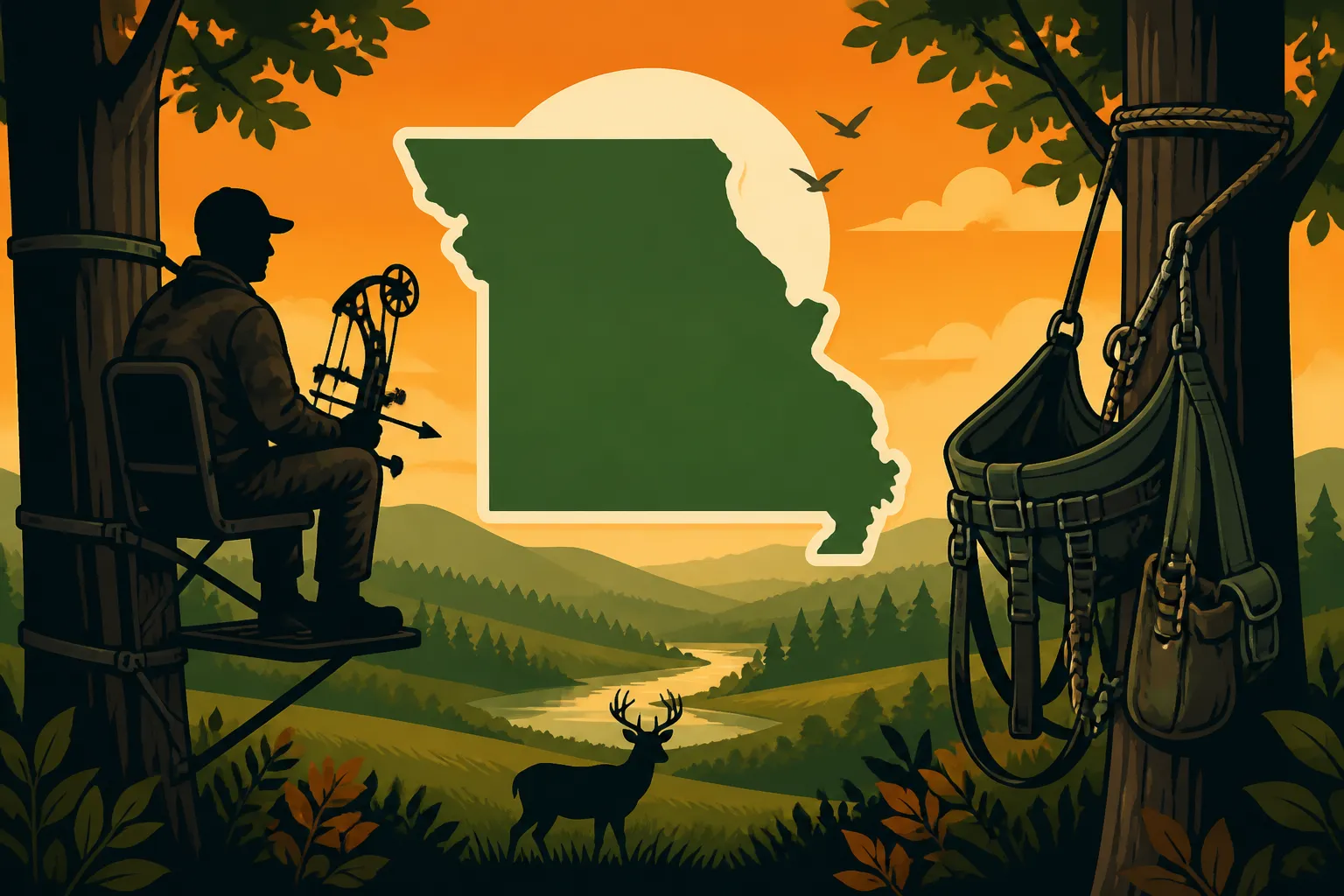
Saddle hunting has truly exploded in popularity over the last decade, and for good reason, especially for public land hunters in Missouri. It offers an unparalleled level of mobility and stealth that traditional treestands often can't match. It's not just a fad; it's a legitimate, effective hunting method that emphasizes being lightweight and adaptable.
Advantages of Saddle Hunting for Public Land
The primary advantage of saddle hunting on public land is its incredible portability. A full saddle setup—saddle, lineman's belt, tether, and climbing method (usually sticks or a one-stick)—often weighs significantly less and packs down much smaller than even the lightest traditional treestand. This means you can pack deeper into areas that other hunters shy away from, accessing those untouched pockets of deer. Imagine hiking miles back into the Mark Twain National Forest Hunting ground or walking a complex river bottom, where every ounce counts. A saddle makes that feasible.
Beyond weight, versatility is key. With a saddle, you're not in the tree; you're attached to it. This allows you to hunt around the tree, using it as natural cover. You can pivot, lean, and shoot from almost any angle, giving you a 360-degree shot opportunity that's difficult to achieve in a traditional stand. If a deer approaches from an unexpected direction, you can often shift your body around the tree to get a shot without being silhouetted. This stealth factor is huge on pressured public ground where deer are wary. Plus, you can hunt from almost any tree that will safely hold your weight and climbing sticks, greatly expanding your options compared to a climber or even a hang-on. Brands like Trophyline, Tethrd, and Latitude Outdoors have really driven innovation in this space, offering comfortable and safe systems. The ability to climb high and stay hidden is a serious advantage when Hunting a Timbered Draw in Row-Crop Country or trying to get above a deer's line of sight on a busy ridge.
Learning the Ropes: Safety and Technique
While saddle hunting offers fantastic benefits, it's not something you just jump into without practice. Safety is paramount, and there's a definite learning curve. Unlike a treestand where you sit in a platform, a saddle involves hanging from a harness, often leaning against the tree. This requires building comfort and confidence at height. The first few times you try it, you'll likely feel awkward and maybe even a little exposed. Practicing in your backyard or a low-stress environment is absolutely essential before taking it to the woods.
Key techniques to master include safely ascending and descending using your climbing sticks, managing your lineman's belt for hands-free climbing, and efficiently deploying your tree tether and rappel system. You'll need to learn how to adjust your position for comfort and shot angles, which is very different from sitting in a stand. It's also critical to understand tree selection, ensuring the tree is healthy and strong enough to support you. Just like with any elevated hunting method, a fall arrest system is not optional; it's mandatory. Your saddle is your fall arrest system, but you need to know how to use it properly, especially the bridge and tether. Taking a specific saddle hunting safety course or watching reputable instructional videos can make a huge difference in your confidence and safety. Never compromise on safety to save a few minutes or ounces of gear.
Safety First: Essential Gear and Practices for Elevated Hunting
Regardless of whether you choose a traditional treestand or a saddle, safety should always be your number one priority when hunting from an elevated position. The woods are unpredictable, and accidents can happen quickly. A momentary lapse in judgment or a forgotten piece of gear can have serious consequences.
Full-Body Harness and Lifelines
For any treestand hunter, a full-body harness is non-negotiable. This is your lifeline, literally. Don't skimp on this piece of gear. When using a hang-on or ladder stand, you should be connected to the tree from the moment your feet leave the ground until they return. A "lifeline" or "safety line" that runs from the base of the tree up to your stand is highly recommended. This allows you to remain tethered to the tree while climbing up and down, eliminating the dangerous transition period when you're moving from climbing sticks to your stand and vice-versa. Many stands come with a basic harness, but investing in a comfortable, high-quality harness designed for all-day wear is a wise decision.
For saddle hunters, the saddle itself acts as your full-body harness, but understanding how to use your lineman's belt and tree tether properly is just as critical. The lineman's belt keeps you connected to the tree while you climb, allowing you to use both hands to set sticks. Once at height, your tree tether is what you attach to your saddle's bridge, allowing you to lean and maneuver around the tree. Regularly inspect all straps, buckles, ropes, and carabiners for wear and tear, especially before and after each season. UV exposure, moisture, and general use can degrade materials over time. If anything looks frayed, cracked, or compromised, replace it immediately. Your life literally depends on it.
Pre-Season Checks and Practice
Just buying the gear isn't enough; you need to know how to use it safely and efficiently. Pre-season checks and practice are absolutely vital. Before opening day, take your stand or saddle setup to your backyard or a safe practice area. Set it up multiple times. Practice climbing, descending, and maneuvering. Do this in full daylight first, then practice in the dark, simulating a pre-dawn setup. This helps you identify any squeaks, rattles, or awkward movements that could give you away in the woods. It also builds muscle memory, which is critical when you're cold, tired, and trying to be quiet.
Check all bolts, nuts, and straps on your treestand to ensure they are tight and in good working order. For saddles, inspect your ropes and carabiners for any signs of fraying or wear. Lubricate any moving parts that might squeak. Make sure your climbing sticks or steps are solid and don't wobble. This is also a great time to practice packing your gear, ensuring it's quiet and secure for long walks into your hunting area. Knowing your gear inside and out, and being comfortable with its operation, will not only make you a safer hunter but also a more confident and effective one.
Maximizing Your Setup on Pressured Public Land
Hunting public land, especially heavily pressured areas, requires a different mindset and approach than private ground. Deer on public land are often more skittish, move cautiously, and learn quickly. Your stand or saddle setup needs to reflect this understanding, aiming for stealth, adaptability, and minimal impact.
Scouting for Subtle Travel Corridors
Forget finding obvious, heavily used trails on public land; those are often where other hunters are set up. Instead, focus your scouting on subtle travel corridors that indicate deer are trying to avoid pressure. Look for faint trails along thick cover, through dense brush, or in the bottom of small ditches and drainages. Deer will often use these less obvious routes to move between bedding and feeding areas, especially during daylight hours. Ridge saddles, benches, and draws are classic funnel points that are often overlooked or underutilized. A contour map on your GoHunt app or the Missouri Conservation Atlas can help you identify these topographical features even before you step foot in the woods.
When you find these subtle corridors, look for fresh sign like droppings, small rubs, or barely visible tracks. Pay close attention to wind direction and thermals in these areas. On public ground, deer will almost always try to use the wind to their advantage, circling downwind of perceived threats. Your stand or saddle placement should account for this, allowing you to get into a spot where your scent is carried away from the expected travel path of deer. Don't be afraid to walk past existing sign to find the fresher sign or the more subtle route where deer might feel safer. This involves a lot of walking and observing, but it's how you unlock the potential of pressured public land.
Strategic Placement for Wind and Thermals
Understanding and utilizing wind and thermals is probably the single most important factor for success when setting up on public land, even more so than finding deer sign. Deer have an incredible sense of smell, and on public ground, they are highly attuned to human scent. A stand placed even slightly wrong for the prevailing wind or thermal conditions will often result in deer busting you long before you ever see them.
- Wind: Always hunt with the wind in your favor, carrying your scent away from where you expect deer to approach. This sounds simple, but it requires diligent checking of weather forecasts and potentially having multiple stand locations for different wind directions. If you only have one spot, you might only be able to hunt it a few days a season.
- Thermals: In hilly or mountainous terrain, thermals play a huge role, especially during the early morning and late afternoon. As the air warms, thermals rise, carrying scent uphill. As it cools in the evening, thermals fall, carrying scent downhill. This means a stand placed high on a ridge might be good in the morning as thermals rise, but deadly in the evening as they fall and carry your scent directly into a bottom where deer are likely to be. Wind and Thermals in Ozark Hills is a specific challenge that requires careful planning.
A wise strategy is to identify a core area and then find 2-3 suitable trees within that area that cater to different wind directions. This way, you can pick the best tree on any given day. With a mobile setup like a saddle or a lightweight hang-on, this becomes much more feasible. Don't just settle for the first good tree you see; think about the wind, the thermals, and how deer will naturally use the landscape to their advantage.
Maintaining and Packing Out Your Gear
The life of a public land hunter often means packing in and out with every hunt, or at least setting up and taking down stands seasonally. Proper maintenance and efficient packing are key to longevity of your gear and ensuring you're ready for the next adventure.
Seasonal Removal and Storage of Stands
Even if your chosen Missouri Conservation Area allows stands to be left up for the entire deer season, it's absolutely crucial to remove them promptly once the season closes. Not only is it a regulation, but leaving stands out year-round exposes them to unnecessary wear and tear from the elements, potential theft, or damage from wildlife. Imagine finding your carefully placed hang-on stand chewed up by a squirrel or rusted beyond repair because you forgot about it for six months.
When you remove your stand, take the time to clean it thoroughly. Wipe down metal parts to remove dirt, mud, and moisture. Inspect all straps, cables, and hardware for any signs of wear, fraying, or rust. If anything looks suspicious, replace it before next season. Lubricate moving parts (like pivot points on a climbing stand or hinges on a hang-on) with a scent-free lubricant to prevent rust and ensure quiet operation. Store your stand in a dry place, ideally somewhere that's not exposed to extreme temperature fluctuations. Many hunters hang their stands in a garage or shed. Proper storage will extend the life of your expensive gear for many years, saving you money in the long run.
Quiet Packing and Minimal Impact
One of the biggest giveaways for public land hunters isn't just their scent; it's the noise they make. This applies especially to packing your gear. Clanking climbing sticks, rattling buckles, and squeaky straps can alert every deer within a hundred yards to your presence. Investing in quiet packing solutions, like padded straps or silencer wraps for your climbing sticks, is a game-changer. When packing your saddle, ensure all carabiners are secured and not able to clink together. Many saddle systems come with built-in compression straps to keep everything tight and quiet.
Your goal when packing in and out of public land should be to leave no trace. That means picking up any trash, spent broadheads, or even small pieces of flagging tape you might have used. The public land you hunt today should be just as pristine for the next hunter, or for future generations. This minimal impact approach extends to your entry and exit routes. Use trails when possible, but if you're bushwhacking, try to do so in a way that doesn't create new, obvious pathways for deer or other hunters to follow. The less visible your presence, the better your chances of encountering those wary public land deer.
Here's a quick comparison of traditional portable treestands versus saddle hunting for public land:
| Feature | Traditional Portable Treestands (Climber/Hang-on) | Saddle Hunting (Saddle + Sticks) |
|---|---|---|
| Portability | Moderate to heavy, can be bulky | Very lightweight, compact, easy to pack deep |
| Setup Time | Moderate, requires practice for speed and quietness | Moderate to fast, requires practice for safety and efficiency |
| Tree Selection | Climber: straight, limb-free; Hang-on: more versatile | Extremely versatile, almost any healthy tree that supports weight |
| Comfort | Often good for long sits, especially larger platforms | Can be less comfortable initially, but good for active hunters |
| Stealth/Cover | Limited movement, can be silhouetted | Excellent 360-degree movement, uses tree as cover |
| Shot Angles | Generally limited to front/sides from platform | Full 360-degree range, can pivot around tree |
| Cost | Varies, can be similar to saddles or more expensive | Varies, can be similar to treestands or more expensive |
| Learning Curve | Lower for basic setup, higher for quiet/speed | Higher initially for safety and technique |
Remember, whether you choose a trusty hang-on or embrace the saddle life, knowing your gear, following the rules, and prioritizing safety are the cornerstones of successful and ethical hunting on Missouri's public lands. Go explore those Missouri Ozark Public Land Worth Walking areas, but do it safely and responsibly!
Disclaimer
This article is for general informational purposes only and does not constitute professional advice. Laws, prices and regulations vary by location and change over time. Consult a qualified professional for guidance on your specific situation.