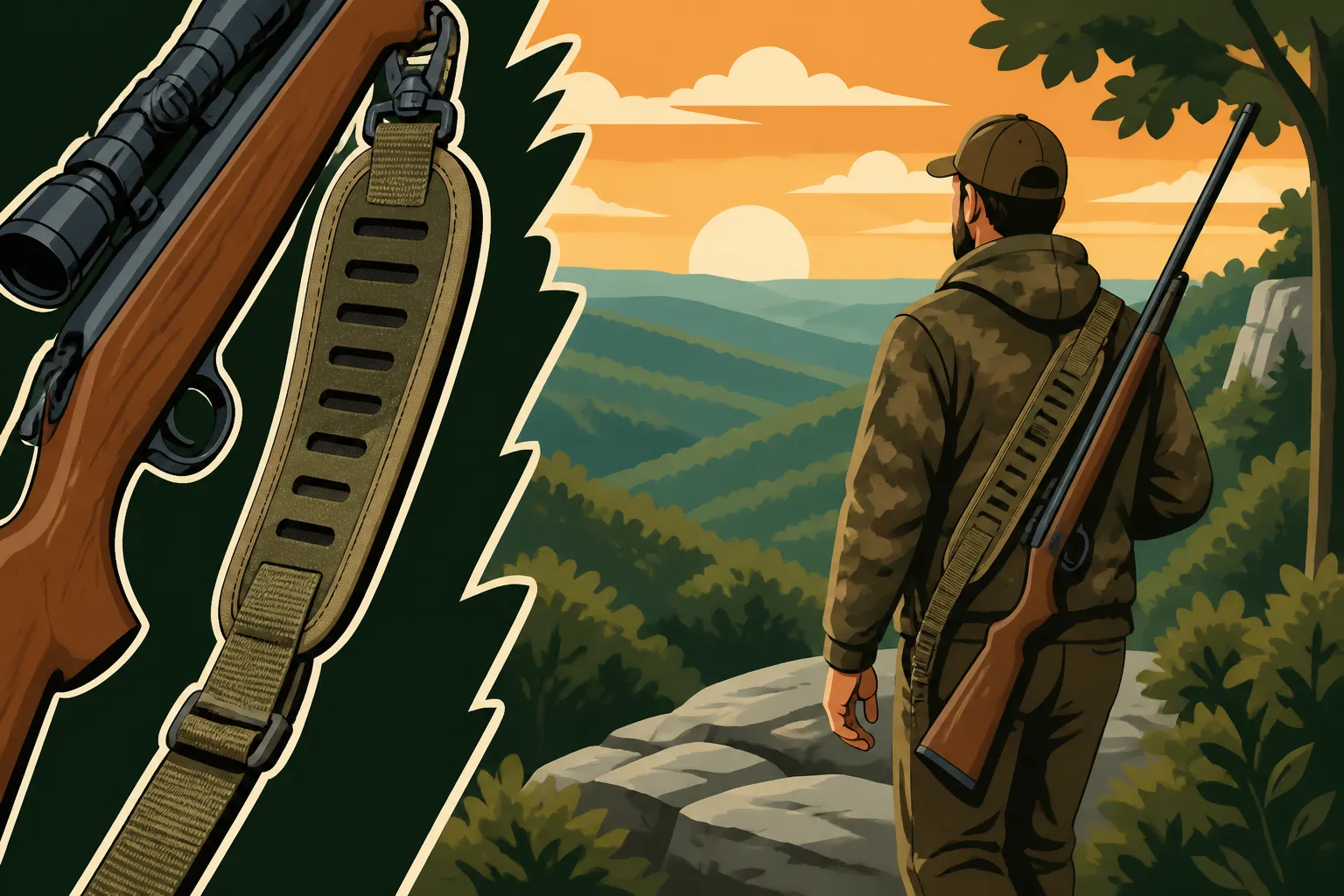
Slings for Long Ozark Walks
The Missouri Ozarks are a special kind of beautiful, but let's be honest, they can really test your stamina. Those endless hills, the rocky terrain that hides beneath a blanket of leaves, and the thick brush that seems to grab at you from all sides — it all adds up to some seriously challenging hiking when you're loaded down with a rifle or shotgun. Trying to navigate all that with a firearm constantly slipping off your shoulder or banging against your leg is a recipe for frustration, fatigue, and even a missed opportunity. This guide is all about making those long Ozark walks easier and more efficient, focusing on how a good sling can transform your hunting experience from a struggle to a comfortable trek, freeing up your hands and saving your energy for what really matters.
Why a Quality Sling is Non-Negotiable for Ozark Hunting
If you've spent any time hunting the hills and hollows of the Missouri Ozarks, you know it's not like walking a manicured trail in a park. You're climbing steep bluffs, traversing rocky creek beds, pushing through tangled briar patches, and navigating dense timber. All of this demands your full attention, and frankly, your hands. Trying to carry a rifle or shotgun in your hands for hours on end, or constantly readjusting a poorly fitted sling, isn't just annoying; it can be downright dangerous and can cost you a shot at a deer or turkey.
Hands-Free Navigation and Safety
One of the biggest advantages of a well-chosen sling is the ability to go hands-free. Imagine scrambling up a slick, rocky incline after a rain, needing both hands to grab roots or steady yourself. Or perhaps you're pushing through a thick stand of greenbrier, needing to use an arm to clear a path. Without a reliable sling, your firearm becomes a hindrance, forcing you to choose between your safety/mobility and keeping your gun secure. A good sling ensures your rifle or shotgun stays put on your back or chest, allowing you to use your hands for balance, climbing, or even carrying additional gear like a GPS or a pair of binoculars. It also drastically reduces the risk of dropping your firearm on unforgiving Ozark rock or snagging it on brush, which could lead to damage or an accidental discharge. This peace of mind is invaluable when you're miles deep in rugged terrain.
Combating Fatigue on Long Treks
The Ozarks are notorious for their ability to wear you down. Even a fit hunter can find themselves surprisingly tired after a few hours of elevation changes and rough footing. Carrying a rifle, even a relatively light one, in your hands for an entire morning or afternoon adds significantly to that fatigue. The constant muscle strain in your arms, shoulders, and back can accumulate quickly, leading to shaky aim when it's time to take a shot. A properly adjusted sling distributes the weight of your firearm across your shoulders and back, using larger muscle groups that are far more capable of enduring long periods of activity. This isn't just about comfort; it's about preserving your energy and focus so you remain sharp and ready when that trophy buck or gobbler steps out. Think of it as investing in your performance in the field, not just your comfort.
Protecting Your Firearm from the Elements and Accidents
Missouri weather can be unpredictable, and the Ozark environment is unforgiving. Rain, mud, dust, and abrasive rocks are all part of the game. A sling helps keep your firearm tucked close to your body, protecting it from direct exposure to the elements when not in use. It prevents the stock from scraping against rocks, the barrel from filling with mud if you slip, or the scope from getting battered by low-hanging branches. While a sling isn't a magical shield, it significantly reduces the chances of dings, scratches, or more serious damage that can occur when your firearm is constantly swinging or being put down on rough surfaces. When you're spending good money on a quality rifle and optic, a durable sling is a small but important investment in its longevity and functionality. Rifle Setups for Missouri Timber and Fields touches on how critical the right gear is.
Types of Slings and Their Features for Rugged Terrain
Not all slings are created equal, especially when you're talking about the demands of Missouri's Ozark terrain. What works for a quick trip to the range might not cut it for an all-day still-hunt through a hollow. Understanding the different types and their features can help you pick the right tool for the job.
Traditional Two-Point Slings
The classic two-point sling attaches to your firearm at two distinct points, typically one near the buttstock and one near the front of the forend. These are the most common type and offer a good balance of security and versatility for hunting.
- Fixed Two-Point Slings: These are simple, often with a padded section and a basic buckle adjustment. They are reliable and straightforward. The main con is that adjusting the length quickly for different carry positions or shooting stances can be cumbersome. For long walks, comfort is key, and the padding on these is crucial.
- Quick-Adjust Two-Point Slings: This is where the two-point sling truly shines for rugged hunting. These slings incorporate a cam buckle or a pull tab that allows for rapid length adjustments. You can cinch the rifle tight to your back for scrambling up a hill, then quickly loosen it to bring it to your shoulder for a shot. Brands like Blue Force Gear or Viking Tactics offer excellent examples of these, though many hunting-specific brands have similar designs. The ability to switch from a secure, compact carry to a ready-to-shoot position in a second is invaluable in dynamic hunting scenarios. When you're trying to stay mobile and cover ground, this feature is a game-changer. Still-Hunting a Missouri Ozark Hollow is a perfect example of a situation where quick adjustments matter.
Single-Point Slings: Limited Use for Hunting
Single-point slings attach to a single point on your firearm, usually near the receiver or pistol grip. They allow for very fast transitions between shoulders, which is why they are popular with tactical users. However, for hunting in the Ozarks, they typically present more downsides than benefits.
- Pros (Limited): Extremely fast to bring the weapon to bear.
- Cons (Significant for Hunting): The primary drawback is instability. The firearm hangs freely, making it prone to swinging and bouncing, which is terrible for long walks, climbing, or navigating thick brush. This can lead to the gun banging against your legs or snagging on vegetation, increasing noise and potential damage. Weight distribution is also poor, concentrating all the firearm's weight on one point on your body, leading to faster fatigue. For these reasons, single-point slings are generally not recommended for hunting in environments like the Missouri Ozarks where stability and long-term comfort are paramount.
Specialized Slings and Materials for Comfort and Durability
Beyond the basic mechanics, the materials and design features of a sling make a huge difference in performance, especially for those grueling Ozark treks.
- Padding: This is a big one. A thin nylon strap will dig into your shoulder after an hour with a 10-pound rifle. Look for slings with thick, wide, and comfortable padding, especially where it rests on your shoulder. Neoprene is a popular choice for its cushioning and elasticity, while closed-cell foam offers firm support without absorbing moisture.
- Non-Slip Properties: Some slings feature rubberized backing or textured materials on the padded section to prevent the sling from sliding off your shoulder. This is incredibly helpful when you're wearing multiple layers of clothing or climbing steep terrain.
- Materials: Durability is key. High-quality nylon webbing is robust and weather-resistant. Leather slings offer a classic look and can be very durable, but they tend to be heavier and less quick-drying than synthetic options. Consider how the material will stand up to briars, rocks, mud, and moisture. Clothing for a Missouri November often includes layers that can interact differently with sling materials.
- "GoHunt" Recommendations: When researching different sling options, consider checking out reviews on specialized hunting platforms like GoHunt. They often provide detailed insights into how various gear performs in real-world hunting conditions, which can be invaluable when trying to decide between different brands and features.
| Sling Type | Key Pros for Ozark Hunting | Key Cons for Ozark Hunting | Best Use Case |
|---|---|---|---|
| Fixed Two-Point | Simple, reliable, good stability, often well-padded | Slow to adjust for different carry/shooting positions | Less dynamic hunts, carrying to and from a fixed stand |
| Quick-Adjust Two-Point | Excellent stability, rapid length adjustment, versatile carry positions, frees up hands, reduces fatigue | Can be slightly more complex/expensive than fixed | Active hunting, still-hunting, traversing rough terrain, carrying heavy rifles |
| Single-Point | Very fast to bring weapon to bear (tactical contexts) | Poor stability, weapon swings excessively, uncomfortable for long walks, concentrates weight | Generally NOT recommended for Ozark hunting |
Choosing and Setting Up Your Sling for Maximum Comfort and Efficiency
Okay, so you understand the "why" and the "what" of slings. Now for the "how." Choosing the right sling is only half the battle; setting it up correctly for your body and your hunting style is crucial for getting the most out of it, especially when facing those long, arduous Ozark walks.
Prioritizing Padding and Material
When you're eyeing a sling, the first thing to assess for Ozark hunting is the comfort of the shoulder strap. This isn't a fashion statement; it's a functional piece of equipment.
- Wide, Thick Padding: Look for a shoulder pad that is at least 2-3 inches wide and has substantial cushioning. Neoprene is a popular choice because it has some give and excellent shock absorption, which is fantastic for heavier rifles. Closed-cell foam is also great as it won't soak up water like open-cell foam might. A good pad prevents the sling from digging into your shoulder, even when carrying your firearm for hours on end, especially important when Getting a Deer Out of a Hollow Alone.
- Durable and Weather-Resistant Materials: The Ozarks will test your gear. Your sling needs to stand up to abrasion from brush, moisture from dew or rain, and general abuse. High-quality nylon webbing is a go-to for its strength and quick-drying properties. If you opt for leather, make sure it's thick, well-treated, and understand that it will gain weight when wet. Avoid flimsy materials that will fray or stretch under pressure.
Swivels, Attachments, and Security
The points where your sling connects to your firearm are just as important as the sling itself. These need to be robust, secure, and quiet.
- QD (Quick Detach) Swivels: These are fantastic for hunting. They allow you to rapidly attach or detach your sling from the rifle, which can be useful when you need to hand off the rifle, store it in a case, or use it without a sling (e.g., from a shooting bench). Ensure they are made of quality metal and lock securely into the QD cups on your rifle.
- Traditional Swivels: The classic push-button swivels that attach to sling studs are reliable and widely available. Just ensure they have a strong spring and a positive lock. Avoid cheap, flimsy swivels that can accidentally open or bend.
- Attachment Points: Most hunting rifles come with traditional sling studs. However, many modern sporting rifles (MSRs) and some bolt actions now feature M-LOK or Picatinny attachment points, requiring specific adapters for your QD swivels. Whatever your setup, test the security of your attachments thoroughly before heading into the field. You don't want your rifle hitting the ground when you're navigating a steep incline.
Optimal Carry Positions for Ozark Terrain
The beauty of a good, adjustable two-point sling is its versatility in carry methods. Different situations in the Ozarks call for different carries.
- Strong Side Carry (Shoulder Sling): This is the most common and comfortable for covering ground. The rifle rests across your back with the muzzle pointing up or down, depending on your preference and rifle length. For shorter firearms or open timber, muzzle-up can be fine. For longer rifles or thick brush, muzzle-down helps keep the barrel clear of snags and overhead debris. Ensure the sling is adjusted so the rifle doesn't bounce excessively but can still be brought to the shoulder relatively easily.
- Cross-Body Carry (Muzzle Up/Down): Also known as a "patrol carry" or "ready carry," this involves slinging the rifle across your chest, often with the muzzle pointed up on your weak side. This keeps the rifle highly accessible for quick shots and is great for still-hunting or moving through areas where you expect an encounter. The downside is that it can interfere with bending over or navigating very thick brush. Some hunters prefer muzzle-down cross-body for even better snag prevention. This method is particularly effective when Reading an Ozark Hollow for Deer Movement and need to be ready to react quickly.
- Back Carry (Tight and Secure): For truly rugged terrain, long climbs, or when you need both hands completely free (like dragging a deer), you can cinch a quick-adjust sling tightly to your back. The rifle is held firmly against your body, preventing any swing or bounce. This isn't ideal for quick access, but it's the safest and most comfortable way to transport your firearm when your priority is hands-free movement. Remember to loosen it up before you get into potential shooting zones.
Adjusting for Your Body and Gear
Getting the sling length just right is critical. What feels comfortable over a T-shirt might be too tight over a heavy hunting coat.
- Trial and Error: Spend time adjusting your sling at home, with your hunting clothes and pack on. Walk around, simulate climbing, and practice bringing the rifle to your shoulder from different carry positions.
- Balance and Distribution: The goal is to distribute the firearm's weight evenly without restricting your movement or making it awkward to access. For shoulder carry, the rifle should rest comfortably without constantly sliding off or digging in. For cross-body, ensure it doesn't impede your draw or vision.
- "GoHunt" Training: Many online resources and even articles on GoHunt can offer visual guides and techniques for proper sling adjustment, demonstrating various carry methods. It's worth watching a few videos to see different setups in action and find what works best for your body type and hunting style.
Beyond the Basic Sling: Advanced Techniques and Considerations
Once you've mastered the basics of carrying your rifle comfortably and securely through the Ozarks, there are a few extra tips and advanced considerations that can further enhance your hunting experience. These focus on not just carrying, but also using the sling as a versatile tool in the field.
Using the Sling as a Shooting Aid
Many hunters overlook the fact that a properly designed two-point sling can be more than just a carry strap; it can be a significant aid in steadying your shot, especially in situations where you don't have time for Shooting Sticks in a Stand or a natural rest.
- Loop Sling Technique: For a more stable offhand or kneeling shot, you can use a quick-adjust two-point sling to create a shooting loop. With the rifle shouldered, thread your non-shooting arm through the sling, pushing it up towards your bicep. Then, pull the sling tight, creating tension between your support arm and the rifle. This effectively creates an additional point of contact and significantly reduces wobble. Practice this technique repeatedly at the range to build muscle memory. It can turn a marginal shot into a confident one, especially when that big Ozark gobbler appears suddenly.
- Supported Positions: Even in a prone or sitting position, cinching the sling tight against your body can provide extra stability. The key is to create tension, essentially "locking" the rifle into your body, which minimizes movement and improves accuracy. This is especially useful in open fields or on a ridge where natural rests might be sparse, allowing you to maximize Practical Range in Missouri Timber.
Sling Maintenance and Longevity
Your sling is a piece of gear that takes a lot of abuse in the Ozarks. Regular maintenance will ensure it remains reliable when you need it most.
- Inspect Regularly: Before and after each hunting trip, inspect your sling for any signs of wear and tear. Check the webbing for fraying, especially near attachment points. Examine the buckles, swivels, and adjustment mechanisms for cracks, bends, or stiffness.
- Clean When Needed: If your sling gets muddy or wet, clean it. A simple rinse with water and mild soap, followed by air drying, is usually sufficient for synthetic slings. For leather slings, follow specific leather care instructions to prevent drying and cracking.
- Lubricate Swivels: A tiny drop of light oil on metal swivels can prevent rust and ensure they operate smoothly and quietly. Squeaky swivels can be a dead giveaway to game animals, so address them promptly.
Quiet Operation is Key
The Ozarks are not a place for noisy gear. Every little rattle, squeak, or clink can send a wary deer or turkey bolting. Your sling should be as quiet as possible.
- Material Choice: As mentioned, avoid materials that rub loudly against clothing. Nylon is generally quiet, but some stiffer fabrics can create friction noise.
- Secure Attachments: Ensure all swivels and buckles are tight and free of play. Loose metal parts can clink against each other or your rifle. Some hunters use small amounts of electrical tape or heat shrink tubing on metal parts that might make contact to dampen noise, but be careful not to impede functionality.
- Sling Keepers: If your sling has a lot of excess webbing after adjustment, use sling keepers or elastic bands to secure it. Flapping straps are not only annoying but can also make noise against your clothing or gear.
By putting thought into your sling choice, setup, and maintenance, you're not just buying a strap; you're investing in a more comfortable, safer, and ultimately more successful hunting experience in the wild beauty of Missouri's rugged Ozark hills.
Disclaimer
This article is for general informational purposes only and does not constitute professional advice. Laws, prices and regulations vary by location and change over time. Consult a qualified professional for guidance on your specific situation.