Arrow Weight for Short Shots
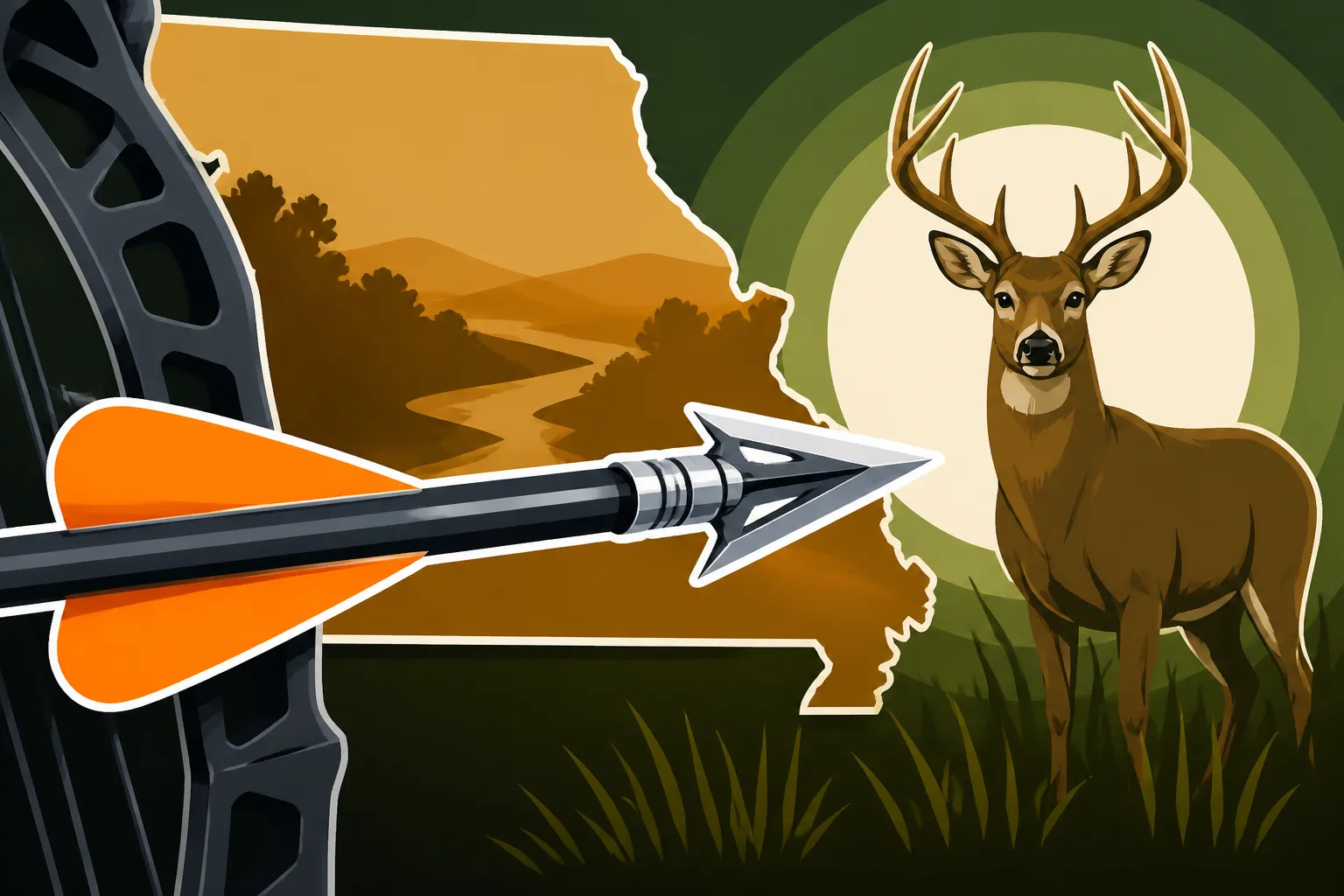
You’ve finally nailed that perfect treestand setup overlooking a subtle deer trail cutting through thick timber, or perhaps found a cozy ground blind tucked into a fencerow bordering a standing bean field. A big Missouri whitetail steps out, broadside or slightly quartering, at a mere 10 or 20 yards. It’s the shot you've dreamed of, a chip shot by most standards, but have you truly optimized your arrow for this exact scenario? It’s a common misconception that all arrows perform the same at close range, but for those critical, short-distance encounters that often present themselves in Missouri’s varied landscapes, arrow weight can make a significant difference in penetration and ultimately, your success.
Understanding the Physics of Arrow Flight and Impact
When it comes to arrow dynamics, especially for the close-range shots we often take in the dense cover across Missouri, understanding the interplay between speed, kinetic energy, and momentum is absolutely critical. It’s not just about how fast your arrow leaves the string, but how efficiently it carries and transfers its energy upon impact. Many hunters get caught up in pure speed numbers, but for deep penetration, especially through hide and bone, momentum often tells a more complete story.
Kinetic Energy Versus Momentum Explained
Let's break down these two key concepts in a way that makes sense for us hunters in the field. Kinetic energy (KE) is essentially the energy an object possesses due to its motion. Think of it as the raw power of your arrow. A faster arrow with lighter weight can have a respectable KE number. However, momentum (P) is a measure of the mass and velocity of an object, representing its "ability to keep moving." For an arrow, momentum is often the better predictor of penetration, particularly when dealing with tough hide, muscle, and bone that we commonly encounter with a whitetail deer.
Imagine two arrows: one light and fast, the other heavier and slightly slower. The light, fast arrow might have a higher kinetic energy number on paper at the point of launch because of its sheer velocity. But when that arrow hits a dense medium, like the shoulder blade of a big Missouri buck, its lighter mass means it sheds that energy more quickly. A heavier arrow, even if it's moving a bit slower, carries more momentum. This momentum helps it punch through resistance, maintaining its forward drive and delivering deeper penetration, even if its initial kinetic energy reading was lower. This distinction is especially important for Bow Draw Weight for Missouri Whitetails and understanding what truly works in the field.
How Different Arrow Components Affect Total Weight
The total weight of your arrow is a sum of its parts, and each component plays a role. You have the shaft itself, which comes in various spines and weights per inch. Then there's the fletching—three or four small vanes that stabilize the arrow in flight. Next, you have the insert, which is glued into the front of the shaft and provides a mounting point for your broadhead. Inserts can range from lightweight aluminum to heavier brass or stainless steel, offering a significant opportunity to adjust front-of-center (FOC) balance and total weight.
Finally, and perhaps most importantly for overall weight, is your broadhead. Whether you choose fixed-blade or mechanical, broadheads vary widely in weight, typically from 100 to 150 grains or more. By selecting heavier inserts, heavier shafts, or heavier broadheads, you can progressively increase your total arrow weight. For instance, moving from a 100-grain broadhead to a 125-grain broadhead immediately adds 25 grains to your total setup, which can subtly yet significantly shift the balance of speed versus momentum. Understanding these components allows for precise tuning, which is vital for consistency and impact performance on those short shots.
Why Arrow Weight Becomes Crucial for Short Shots
It might seem counterintuitive, but the distance to your target, even if it's a short one, significantly impacts how arrow weight performs. For hunters focused on longer shots, a lighter, faster arrow might be favored for its flatter trajectory, minimizing yardage estimation errors. However, when the range is close, those concerns mostly vanish, and other factors come to the forefront that make a heavier arrow incredibly advantageous.
Maximizing Penetration on Quartering and Angled Shots
At 15 yards, trajectory isn't really a concern; you're essentially shooting flat. What is a concern is how your arrow will perform if that big buck is quartering away or even slightly quartering to, exposing tougher bone structures like the scapula or ribs at an angle. This is where the increased momentum of a heavier arrow truly shines. A heavier arrow carries more force through the target, reducing deflection and increasing the likelihood of a complete pass-through, even if it encounters a rib or shoulder blade.
Think about it: you want maximum damage and a robust exit wound for a good blood trail. A pass-through means two holes for blood to escape and a better chance of recovering your deer. A lighter arrow, even with good kinetic energy, might simply run out of steam or deflect more readily upon encountering significant resistance, especially if it's not a perfectly broadside shot. This isn't just theory; it's a difference many Missouri hunters have seen firsthand when tracking deer in thick cover. Choosing wisely between Fixed Versus Mechanical Broadheads also ties directly into this, as the type of broadhead can affect penetration just as much as arrow weight.
Minimizing Noise and Vibration for Less Jump
Another often-overlooked benefit of a heavier arrow, particularly for those close shots, is its impact on the bow's performance. A heavier arrow absorbs more of the bow's stored energy during the shot, which can result in a quieter shot and less hand shock or vibration. This might seem minor, but in a quiet timber stand, a noisy bow can give a deer precious milliseconds to react and "jump the string" or duck before the arrow arrives.
Even at 15 yards, a deer can drop several inches in the time it takes an arrow to travel. If your arrow is quieter and smoother, the deer has less warning, increasing the chances of the arrow hitting its intended mark before the animal can react. This slight edge can be the difference between a clean kill shot and a high-hit or even a miss. For archers hunting in deep woods, where deer are often alert and skittish, this quiet advantage of a heavier arrow can be a real game-changer.
Less Impact from Minor Obstructions
Missouri timber is rarely a clean shooting lane. You often find yourself picking through small branches, leaves, or even strands of spiderweb between you and the deer. While hitting any obstruction is obviously detrimental, a heavier arrow can sometimes be slightly less affected by very minor, glancing blows from small twigs or leaves. Its increased mass can help it push through or deflect less severely than a lighter arrow, which might be thrown off course more dramatically. This isn't an excuse for poor shot selection or trying to shoot through brush, but it's an added layer of resilience for those unavoidable, barely-there obstructions that can plague bowhunters in dense cover. It's a small advantage, but every little bit helps when you're pursuing a White-Tailed Deer Across Missouri.
Choosing the Right Arrow Weight for Your Missouri Hunt
So, you're convinced that arrow weight matters, especially for the close-range encounters that are so common in Missouri's varied hunting environments. But how do you actually go about choosing the "right" weight for your specific setup and hunting style? It’s not a one-size-fits-all answer, but rather a balance of performance characteristics tailored to your needs.
Ideal Arrow Weight Ranges for Whitetail Hunting
For most adult whitetail hunters using modern compound bows, a total arrow weight in the 400 to 500-grain range is often considered an excellent sweet spot.
- 400-425 grains: This range offers a good blend of speed and momentum. You'll still get a relatively flat trajectory out to typical bowhunting distances, combined with enough punch for solid penetration on deer. It's a popular choice for those who might occasionally stretch their shots a bit further, or who appreciate slightly faster flight characteristics without sacrificing too much momentum.
- 425-475 grains: This is often seen as the "gold standard" for balancing penetration and acceptable trajectory. Arrows in this range hit hard, carry excellent momentum, and often result in consistent pass-throughs on whitetails, even through bone. The slight drop in speed compared to lighter arrows is negligible at short ranges, and the benefits in penetration are substantial. Many seasoned hunters gravitate towards this range for its reliability.
- 475-500+ grains: For hunters prioritizing maximum penetration above all else, especially those taking steep quartering shots or hunting exceptionally large-bodied deer, arrows in this heavier range are fantastic. While noticeably slower, their momentum is incredible. This weight class often results in extremely quiet bow performance and can be very forgiving in terms of deflection. However, you'll need to practice at various distances to account for the more pronounced arrow drop at longer ranges, although for our focus on "short shots," this is less of a concern.
Remember, these are general guidelines. Your specific bow's draw weight, draw length, and cam system will also influence how these arrow weights perform. Services like GoHunt often have forums or resources where hunters discuss their setups, which can offer anecdotal evidence and help you fine-tune your approach.
Matching Arrow Weight to Missouri's Hunting Conditions
Missouri presents a diverse range of hunting conditions, from the open crop fields and fencerows of North Missouri to the thick timber and rugged terrain of the Ozarks. Your typical shot opportunities will vary based on where you hunt, and this should influence your arrow weight choice.
If you primarily hunt in the dense timber of the Ozarks, where shots are frequently under 30 yards and often through brushy lanes, leaning towards a heavier arrow (425-500+ grains) makes a lot of sense. The emphasis here is on deep penetration through potentially angled bone and minimizing noise in a quiet, close-quarters environment. For instance, if you're hunting a ridge saddle or a thick creek bottom in southern Missouri, those deer are likely to be up close and personal. Reading an Ozark Hollow for Deer Movement often means anticipating these tight, quick shots.
Conversely, if you primarily hunt the edges of vast crop fields in North Missouri, where deer might offer shots out to 40 or even 50 yards (though we’re focusing on short shots here), a slightly lighter arrow (400-450 grains) might offer a flatter trajectory for those more open opportunities, without completely sacrificing momentum for the closer ones. The key is to assess your typical shot distances and the likelihood of encountering bone at various angles within those distances. Tools like the ones offered by GoHunt, with their detailed mapping features, can even help you visualize typical shot ranges in your specific hunting areas.
Here’s a quick comparison of general arrow weight performance:
| Total Arrow Weight (grains) | Typical Speed (fps, from 70lb bow) | Kinetic Energy (ft-lbs) | Momentum (slug-fps) | Best Use Case for Short Shots |
|---|---|---|---|---|
| 350 (Light) | 290-310 | 65-75 | 0.45-0.50 | Fast, flat trajectory (less for short shots), less penetration on bone |
| 400 (Mid-Light) | 270-290 | 70-80 | 0.52-0.58 | Good balance, solid penetration for broadside shots |
| 450 (Mid-Heavy) | 250-270 | 75-85 | 0.60-0.67 | Excellent penetration, less noise, ideal for quartering shots |
| 500+ (Heavy) | 230-250 | 80-90+ | 0.70-0.78+ | Max penetration, very quiet, forgiving for minor obstructions |
Note: Speeds, KE, and Momentum are approximate and will vary significantly based on individual bow setup, draw length, and efficiency.
Tuning Your Bow for Optimal Performance
Once you've settled on a desired arrow weight range, the next critical step is to tune your bow to that specific arrow. An untuned bow, regardless of arrow weight, will never achieve its full potential. Paper tuning, walk-back tuning, and bare shaft tuning are all methods you can use to ensure your arrow flies true out of your bow.
Paper tuning involves shooting an arrow through a piece of paper a few feet in front of your bow. The tear in the paper indicates if your arrow is leaving the bow perfectly straight. Walk-back tuning involves shooting at a vertical line at increasing distances to ensure your arrow isn't drifting left or right. Bare shaft tuning, where you shoot an arrow without fletching, is perhaps the most advanced and accurate method for ensuring perfect arrow flight.
Proper tuning ensures that your broadheads fly exactly like your field points, eliminating the need to re-sight for hunting. It also maximizes the kinetic energy and momentum transfer by ensuring the arrow isn't wobbling or correcting itself in flight, which can rob it of power upon impact. Investing the time in tuning your bow to your chosen arrow weight is just as important as selecting the weight itself, ensuring that when that short shot opportunity arises, your setup delivers precisely what it's designed to do. For more on this, check out Bow Draw Weight for Missouri Whitetails.
Practical Considerations and Testing Your Setup
It's one thing to read about arrow weight, and another to put it into practice in the field. Missouri's diverse hunting terrain, from rolling farmlands to rugged hills, demands a setup that you're confident in for those real-world situations. Practical testing and understanding the nuances of your gear are key to maximizing your success on short shots.
Real-World Scenarios in Missouri Hunting
Consider a common scenario: you're sitting in a ground blind near a Hunting a Missouri Fencerow Between Fields on a frosty November morning. The wind is swirling, and a mature buck finally slips through, presenting a 12-yard shot. Or perhaps you're high in a treestand overlooking a timbered draw in row-crop country, and a deer skirts the edge at 20 yards. These aren't long bombs; these are tight, quick shots where precision and penetration are paramount.
In these situations, the difference between a 350-grain arrow and a 450-grain arrow can be profound. The heavier arrow, with its enhanced momentum, is more likely to drive through heavy bone on a quartering shot, ensuring a quick, ethical kill and a short blood trail. The quieter shot from a heavier arrow means the deer has less time to react, a crucial advantage when they're already on edge. These are the kinds of specific conditions in Missouri where focusing on a heavier, more momentum-driven arrow for short shots truly pays off. Entry Routes on Rolling Farm Ground often create these close encounters.
The Importance of Front-of-Center FOC
Beyond total arrow weight, the arrow's Front-of-Center (FOC) balance is a critical factor for accuracy and penetration. FOC refers to how much of the arrow's total weight is located in the front half of the arrow. Generally, a higher FOC (typically 12-18%) is preferred for hunting arrows because it helps the arrow steer more effectively through the air and creates a more stable, "broadhead-seeking" flight. This increased stability can be especially beneficial for broadhead flight, reducing planing and improving accuracy, even at shorter distances.
You can increase FOC by using heavier broadheads or by using heavy inserts, such as brass or steel. When you're building a heavier arrow for increased momentum, you're often naturally increasing your FOC, which is a double win. A heavier arrow with a good FOC will fly true and hit harder, driving through tissue and bone with greater efficiency. This combination is particularly effective for those close-range shots where every inch of penetration counts.
Testing and Practice for Confidence
Ultimately, the "best" arrow weight for you is the one you shoot most accurately and confidently. It's not enough to simply choose a weight; you need to practice extensively with your chosen setup.
- Broadhead Tuning: Ensure your broadheads fly identically to your field points. If they don't, your bow isn't tuned, or your broadheads aren't flying true. Don't compromise on this.
- Practice at Varying Close Ranges: While we're focusing on short shots, practice at 10, 15, 20, 25, and 30 yards. Understand your pin gaps and how your arrow behaves.
- Practice from Hunting Positions: Shoot from your treestand or ground blind. Practice shooting while sitting, kneeling, and from awkward angles you might encounter. This builds muscle memory for real hunting situations.
- Impact Testing: If possible, test your arrow's penetration on a dense target medium, like a layered foam block or even a ballistic gel substitute. This can give you a visual representation of how your chosen arrow weight and broadhead combination performs.
Services like GoHunt offer detailed mapping that can help you plan your setups, but nothing replaces hands-on practice. The more you shoot and test, the more confidence you’ll build in your gear, ensuring that when a deer steps out at 15 yards in the Missouri timber, you’re ready to deliver a precise, ethical shot with an arrow optimized for success. This dedication to practice ensures that when you're Bowhunting Through the Missouri Firearms Portion or any other part of the season, your equipment is an extension of your skill.
Disclaimer
This article is for general informational purposes only and does not constitute professional advice. Laws, prices and regulations vary by location and change over time. Consult a qualified professional for guidance on your specific situation.