Face Masks and Gloves for Turkey Hunting
There's nothing quite as frustrating in the turkey woods as doing everything right – getting set up perfectly, making the right calls, having a gobbler strut right into view – only to have him suddenly snap to attention, lock eyes, and disappear into the timber before you can even think about shouldering your shotgun. More often than not, when this happens, it's not your calling that gave you away, but a flash of bare skin or a subtle movement that their incredible eyesight picked up. This guide is all about preventing those heartbreaks by ensuring your face and hands are perfectly concealed, giving you the upper hand on those cagey Missouri gobblers.
Why Camouflage is Critical for Missouri Turkeys
Let's face it, wild turkeys are practically equipped with built-in lie detectors when it comes to visual deception. Their eyesight isn't just good; it's legendary. We hunters spend so much time and effort dialing in our calls, patterning our shotguns, and scouting prime locations, but often overlook the fundamental importance of complete concealment. In Missouri's diverse habitats, from the open fields of the north to the dense Ozark timber, leaving any part of yourself exposed is an invitation for a gobbler to bust you.
The Unforgiving Vision of a Wild Turkey
A wild turkey's vision is arguably their greatest defense. They have a nearly 270-degree field of vision, meaning they can see almost all around them without moving their heads. Think about that for a second: they’re essentially seeing in panoramic view, constantly scanning for threats. They also possess exceptional color perception, reportedly seeing a wider spectrum of colors than humans, which means even a slight variation from natural tones can jump out at them. They aren't just seeing color, they're seeing movement and shapes with a clarity that would put most human eyes to shame, especially at a distance.
Imagine you're hunkered down against a big oak, perfectly still, watching a longbeard strut into your setup. He's at 60 yards, then 50, then 40. Your heart is pounding. You know he's coming. But then, he pauses, stretches his neck, and puts his keen eyes right on your position. Maybe it was the subtle shine off your watch, or the pale flesh of your neck where your mask pulled up, or even the slight glint from a bare fingertip as you adjusted your grip on your call. That gobbler saw it. He processes that unnatural detail instantly, and that's it – game over. He might not even spook wildly; he might just turn and walk the other way, leaving you wondering what went wrong. It's those tiny, often imperceptible (to us) details that turkeys pick up. This makes comprehensive camouflage, especially for exposed areas like your face and hands, absolutely non-negotiable for success in the Missouri turkey woods.
Beyond the Vest: Completing Your Camo Ensemble
Many hunters invest heavily in a top-tier camouflage jacket, pants, and even a fancy turkey vest. And that’s great, it’s a crucial foundation. But it's almost pointless if you neglect the two most obvious parts of your body: your face and your hands. These are the areas most likely to be in motion as you call, check your surroundings, or prepare to shoot. They're also the areas that, when exposed, offer the most stark contrast to natural surroundings. A pale face or hand against the dark bark of a tree, or even against your own dark camo, can look like a beacon to an incoming gobbler.
Consider a situation where you're hunting in open country, perhaps trying some Turkey Tactics for Crop Country where a gobbler has a long sightline to your position. Your full camo outfit blends perfectly with the stubble and cover. But if your face is uncovered, that pale circle stands out like a full moon. Similarly, your hands, often moving as you operate a friction call or adjust your shotgun, can easily catch the light or create a distinct, unnatural shape against the background. Even if you're perfectly still, the human form is easily recognizable to a turkey, and the face and hands are key identifiers. Completing your camo ensemble with a good mask and gloves isn't just an option; it's essential for breaking up your outline and eliminating those tell-tale flashes that give you away. It’s about creating a seamless, invisible profile that lets you blend into the natural world, rather than standing out as an alien intruder.
Choosing the Right Face Mask for Missouri Turkey Hunts
Once you understand why a face mask is so critical, the next step is selecting one that works for you. Just like choosing a call or a shotgun, there are different styles and features that cater to various hunting preferences and conditions you'll encounter in Missouri.
Types of Face Masks and Their Practicality
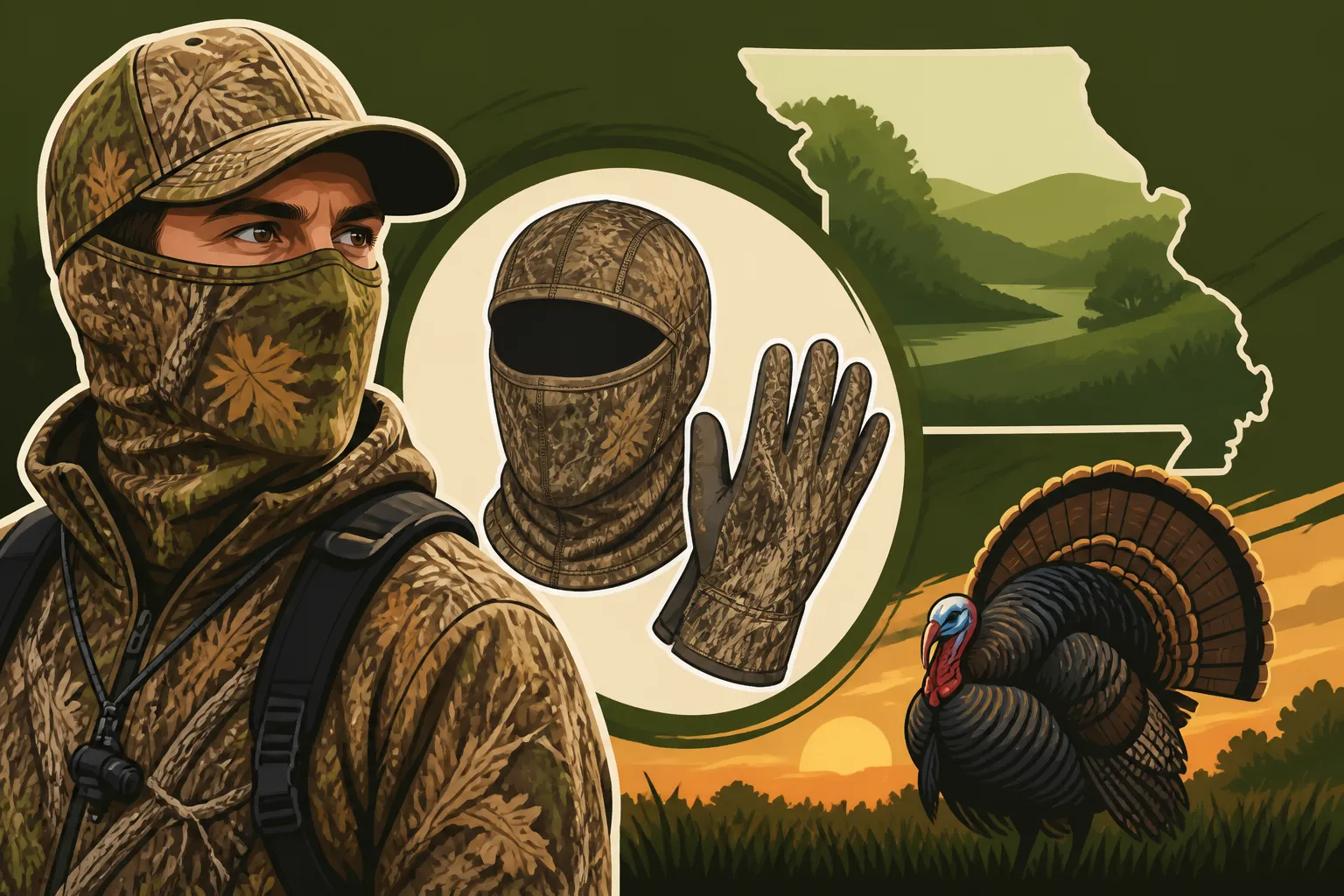
There's a variety of face masks on the market, each with its own advantages and disadvantages. The most common types include full headnets (often called balaclavas), half masks (often with ear loops or elastic bands), and traditional face paint.
Full headnets or balaclavas cover your entire head, neck, and face, often leaving only your eyes exposed. Some even have mesh over the eyeholes for added concealment, though this can slightly reduce visibility. These are fantastic for complete concealment, especially if you're not wearing a hat or if you want extra neck protection from bugs or sun. They tend to stay in place well, which is a big plus when you're making quick movements or doing a lot of Run-and-Gun Turkey Tactics in the Missouri Ozarks. However, they can sometimes feel a bit warm on early spring days or if you're hiking a lot. They might also interfere with certain types of glasses or hearing aids, or feel a bit restrictive around the mouth if you’re using a mouth call.
Half masks are typically simpler, covering just the lower half of your face from the nose down. They often secure with elastic bands around the back of your head or ear loops. These are generally cooler and less restrictive, which can be a huge benefit for comfort and for clear communication with your hunting partners. They are particularly good if you prefer to wear a baseball cap or other headwear separately. The downside is they might leave more of your neck or forehead exposed, requiring extra attention to those areas with face paint or careful positioning.
Then there's face paint, the old-school, tried-and-true method. This offers incredible flexibility and breathability. You can apply it exactly where you need it, matching your pattern to the environment. It never interferes with calls or vision. The drawbacks are obvious: it's messy, can sweat off, and isn't something you can quickly put on or take off in the field. It also requires careful washing after each hunt. For hunters who prioritize comfort and minimal equipment, face paint is a solid choice.
Here's a quick comparison to help you weigh your options:
| Feature | Full Headnet (Balaclava) | Half Mask (Chin/Nose) | Face Paint |
|---|---|---|---|
| Concealment | Excellent (full head/neck) | Good (lower face) | Excellent (custom application) |
| Comfort | Can be warm/restrictive | High (cooler, less bulk) | Highest (no fabric) |
| Breathability | Moderate | High | Excellent |
| Call Usage | Can muffle/interfere with mouth calls | Minimal interference | None |
| Durability | High (fabric) | High (fabric) | Depends on sweat/rubbing |
| Ease of Use | Quick on/off | Quick on/off | Takes time to apply/remove |
| Mess Factor | Low | Low | High |
Comfort, Concealment, and Call Usage
When you're out in the Missouri timber, especially in late April or May, comfort is paramount. A mask that's too hot, too tight, or constantly slipping can be a major distraction. Look for materials that are breathable and moisture-wicking to help manage sweat. Many masks incorporate lightweight mesh or perforated fabrics in key areas.
Concealment, of course, is the primary goal. Choose patterns that match your existing camo or blend well with the typical spring turkey woods in Missouri – greens, browns, and some bark-like textures are usually a safe bet. The fabric should be non-reflective, avoiding any sheen that could alert a gobbler. It’s also a good idea to wear a brimmed cap under any headnet or half mask to help break up the outline of your head and provide a shadow over your eyes. This simple trick can make a big difference in how well you blend in against a tree when Setting Up Against a White Oak.
Finally, consider how your mask interacts with your calls. If you're a mouth call expert, a very tight-fitting balaclava might muffle your sounds or make it difficult to get a good seal with the call. Some masks have specific cutouts or looser fabric around the mouth area to alleviate this. For friction calls or box calls, interference is less of an issue, but you still want full range of motion. If you rely heavily on Turkey Calls Worth Carrying in Missouri, try on your mask with your calls beforehand to ensure you can operate them smoothly and effectively. The last thing you want is to be fumbling with your mask when a gobbler is answering your purrs and clucks.
Selecting Gloves to Seal the Deal on a Gobbler
Just like your face, your hands are highly visible and often in motion during a turkey hunt. Overlooking them is a common mistake that can easily cost you a bird. A good pair of hunting gloves completes your visual deception and allows you to move freely without fear of giving away your position.
The Role of Gloves in Total Concealment
Think about how often your hands move, even when you're trying to stay still. You might slowly reach for a mouth call, adjust your grip on your shotgun, or just shift your weight slightly, and your hands move with you. Bare hands, with their light skin tones, stand out dramatically against the dark background of a tree trunk, a camo vest, or even the dirt and leaves on the ground. This contrast is exactly what a turkey's keen eyesight is looking for.
Moreover, if the sun catches your bare skin, it can create a flash or glint that turkeys can spot from an impressive distance. Gloves eliminate this issue, providing a consistent, non-reflective camouflage pattern that blends seamlessly with your overall hunting attire. For archers, especially, hand concealment is vital. When Hunting Turkeys With a Bow, your hands are constantly involved in drawing, holding the bow, and releasing the arrow. Every one of those movements needs to be cloaked in camo. Even if you're perfectly still, your hands form a distinct, unnatural shape that can draw a gobbler's attention if left uncovered. Covering them with camo gloves removes that visual alert.
Material, Grip, and Dexterity Considerations
When choosing turkey hunting gloves, you'll want to balance concealment with functionality. The ideal glove offers good camouflage, excellent grip, and sufficient dexterity to handle your calls and firearm.
Most turkey hunting gloves are made from lightweight, breathable synthetic materials like polyester or spandex blends. These fabrics offer good stretch for comfort and dexterity. You'll find options ranging from thin mesh gloves, perfect for warmer early spring days, to slightly thicker fleece-lined gloves for cooler mornings. The key is to find a balance that suits the typical Missouri Spring Turkey Season Dates.
Grip is crucial, especially for safely handling a shotgun. Look for gloves with silicone dots, textured palms, or synthetic leather patches that provide a secure hold, even if your hands get a little sweaty. You want to feel confident in your grip when that gobbler finally commits. Dexterity is equally important. You need to be able to manipulate your mouth calls, operate a friction call, or load a shotgun shell without feeling like your hands are encased in bulky mittens. Many gloves feature thin, form-fitting designs, and some even have touchscreen-compatible fingertips, which can be surprisingly handy for checking maps on your phone if you happen to use one from GoHunt or similar outdoor apps.
A good pair of gloves should fit snugly but not be so tight that they restrict blood flow or make your fingers cramp. You should be able to pick up small objects and feel the trigger of your Turkey Shotgun Gauge Choice with ease. The GoHunt brand, for example, is known for offering hunting apparel that focuses on functionality and comfort, and you can often find gloves designed with these specific considerations in mind, ensuring you have the grip and feel you need without sacrificing concealment. Remember, the goal is to disappear into your surroundings, and your hands are a big part of that equation.
Integrating Your Gear for Maximum Effectiveness
Getting the right face mask and gloves is one thing, but making them work together seamlessly with the rest of your kit is where true concealment happens. It's about thinking of your entire body as a single, camouflaged unit, leaving no stone unturned in your quest to become invisible to a wild turkey.
Matching Patterns and Avoiding Common Pitfalls
One of the most common mistakes hunters make is mixing and matching camouflage patterns without considering how they look together. You might have a great jacket, but if your headnet is a completely different pattern or shade, it creates a visual break that turkeys can easily spot. Strive for consistency. Most major camo brands offer matching headwear and gloves to complement their clothing lines. If you can't find an exact match, choose patterns and color palettes that are similar and blend well, prioritizing earthy tones that mimic the natural environment of Missouri's spring woods.
Beyond mismatched patterns, there are other subtle pitfalls that can blow your cover. Shiny objects are absolute no-nos. This includes watch faces, rings, shiny zippers, or even the reflective glint from certain sunglasses. Always remove or cover anything that can reflect light. Even bare skin around your eyes or peeking out from under a mask can be a problem. That's why some hunters opt for mesh eye coverings or apply a bit of face paint around the eyes for extra insurance. Also, consider the back of your head and neck – if your headnet pulls up when you sit, ensure your collar is high enough or your hood is positioned to prevent any exposed skin. It's the small details that make the biggest difference, just like how careful Decoy Placement for Pressured Birds can be the key to bringing a wary gobbler in close.
Practical Tips for Missouri Hunters
So, how do you put all this into practice for your next Missouri turkey hunt? It starts with preparation long before opening day.
First, practice with your gear on. Don't wait until you're sitting in the woods with a gobbler thundering to discover your mask muffles your mouth calls or your gloves hinder your shotgun grip. Put on your full hunting attire, including your mask and gloves, and practice your calling sequences. Shoulder your shotgun a few times. Simulate a draw if you're Hunting Turkeys With a Bow. Get a feel for how everything works together. This builds confidence and helps you identify any potential issues before they cost you a bird.
Second, always have a backup. Whether it's an extra pair of gloves in your vest pocket, a spare headnet, or even a stick of face paint, having alternatives can save a hunt. Masks can get snagged, gloves can get wet or lost, and face paint can rub off. Being prepared for these small contingencies ensures you maintain your concealment throughout the hunt, no matter what happens. Many hunters find that keeping a small kit, perhaps in their GoHunt hunting pack, with a spare mask, some face wipes, and even a compact mirror for quick checks, is a smart move.
Finally, pay attention to your surroundings and your position. Even the best camouflage won't save you if you're fidgeting constantly or positioned against a sky-lined background. When Setting Up Against a White Oak or any other tree, ensure your head and shoulders are firmly against the trunk, breaking up your outline. Use the natural shadows and cover to your advantage. And remember, stillness is your ultimate camo. Once you’re set up, limit your movements to the absolute minimum, relying on your calls and patience to bring the bird to you. These small efforts, combined with a perfectly concealed face and hands, will dramatically increase your chances of tagging a Missouri gobbler.
Disclaimer
This article is for general informational purposes only and does not constitute professional advice. Laws, prices and regulations vary by location and change over time. Consult a qualified professional for guidance on your specific situation.