Hunting a Missouri Fencerow Between Fields
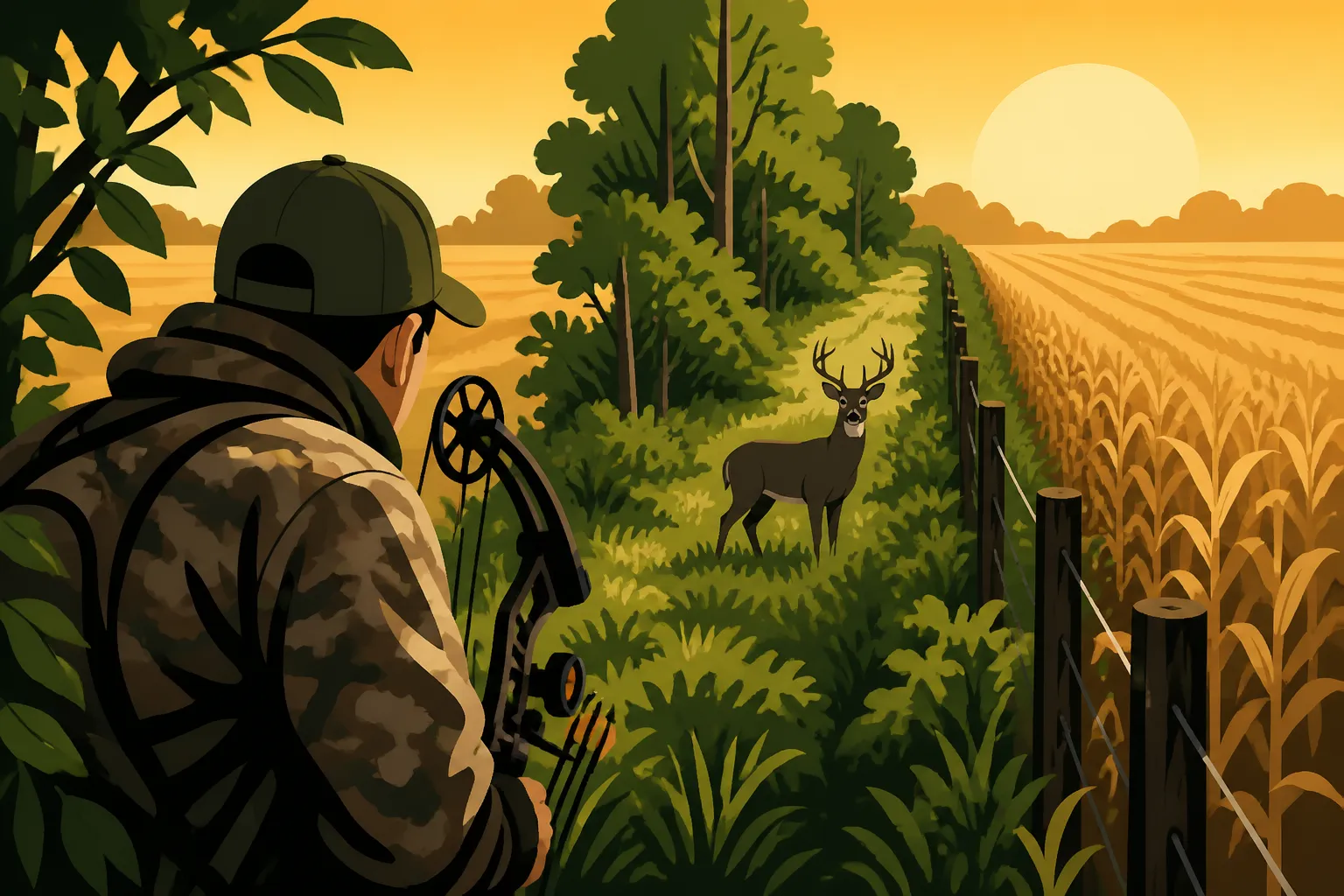
Oh, the Missouri fencerow! If you've spent any time hunting the rolling hills and expansive crop fields of northern or central Missouri, you know the frustration of watching a mature buck seemingly materialize out of nowhere, only to vanish just as quickly along a thin line of brush separating two fields. These unassuming strips of cover are absolute magnets for whitetails, providing crucial sanctuary and travel corridors in otherwise open landscapes, and figuring out how to hunt them effectively can be a real game-changer. This guide is all about demystifying those linear hideouts and helping you connect with the deer that call them home.
Understanding the Fencerow Advantage in Missouri Farm Country
When you look across vast stretches of corn, soybeans, or even pastureland, a fencerow often appears as nothing more than a thin, scraggly line of trees, bushes, and weeds. To our eyes, it might seem insignificant, but to a whitetail deer, especially a wary buck in farm country, it's a lifeline. These fencerows aren't just property markers; they are often the only consistent cover between large blocks of timber or bedding areas and the abundant food sources in agricultural fields.
Imagine a big, mature buck bedded down a half-mile away in a small woodlot. He's got to get to that luscious standing corn or that recently cut soybean field, but he's not about to waltz across 500 yards of open ground in broad daylight. That's where the fencerow becomes his personal highway. These linear features connect the dots: bedding cover to feeding areas, one timber block to another, even providing a sneaky route to water. Deer, by nature, prefer to travel with cover, even minimal cover, between them and potential threats. A fencerow, no matter how sparse it seems, offers just enough visual obstruction to make them feel secure. This is particularly true in areas where the actual timber is fragmented, making these narrow strips of brush vital for deer movement. Understanding that these are essentially hidden trails or protected travel routes is the first step in unlocking their potential. You might think about how a deer uses these pathways, similar to how they utilize Entry Routes on Rolling Farm Ground but on a much smaller, more concentrated scale. They represent a significant shift in behavior compared to deer in sprawling forests, forcing hunters to adapt their strategies to these thin, linear features.
Scouting Fencerows for Active Deer Sign
Successful fencerow hunting starts long before you ever set foot in the stand or blind with a bow or gun. It's all about meticulous, year-round scouting. Don't make the mistake of just driving by in the truck a week before the season and thinking you've got it figured out. Deer sign in a fencerow can be subtle, but when you find it, it's often incredibly concentrated and telling. What you're looking for isn't just any fencerow, but an active one, a fencerow that deer are using regularly and purposefully.
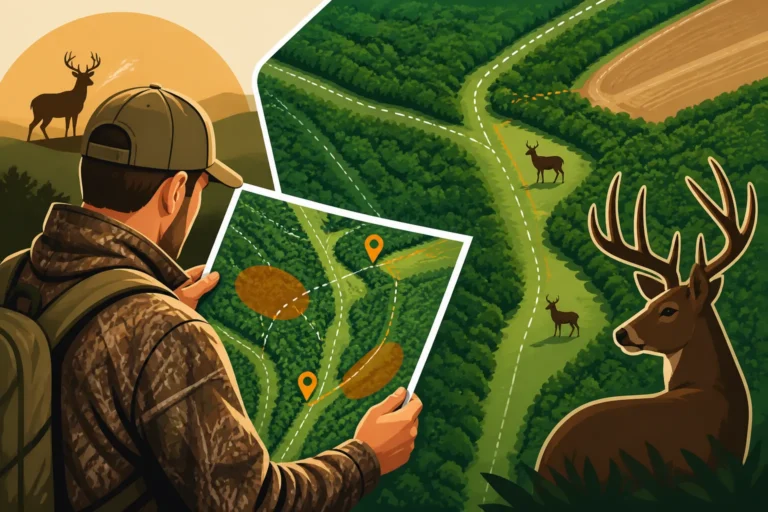
Start by really digging into mapping tools. Platforms like GoHunt are invaluable for identifying promising fencerows. Look for those that connect larger woodlots to fields, or link multiple small pockets of cover. Pay attention to how a fencerow interacts with terrain – does it run along a subtle ditch or a rise that offers extra concealment? Does it provide a windbreak from prevailing winds? Once you've identified a few high-potential fencerows on your map, it's time to hit the ground. Focus on finding established trails, especially those with deeply worn paths, indicating consistent use. Look for crossover points where deer might leave the fencerow to enter a field, or where other deer trails intersect. During the rut, these fencerows can explode with activity. Keep an eye out for fresh rubs and scrapes. Bucks will often create these signposts right on the edge of the cover, or even slightly inside, letting other deer know they're in the area. A really hot fencerow might have multiple scrapes and rubs packed into a short section, telling you it's a popular thoroughfare. Remember, these aren't just random paths; they are often a buck's preferred route when traveling between Where North Missouri Bucks Bed and their feeding grounds. Identifying these consistent travel patterns is key to success.
Another crucial aspect is understanding how deer use the fencerow at different times of the day. Are there specific points where they enter or exit fields at dawn or dusk? Are there thicker pockets within the fencerow that could serve as temporary bedding during the day? Pay attention to the types of trees and shrubs present. Thorns, multi-floral rose, and dense honeysuckle can create impenetrable thickets that offer supreme security, making deer feel safe traveling even in daylight. While scouting, don't just look at the fencerow itself, but also the surrounding fields. What crops were planted last year, and what's going in this year? How far are the nearest water sources? All these pieces of the puzzle come together to paint a picture of deer movement. The more diligently you scout and interpret the sign, the better your chances of intercepting a deer. This kind of detailed reconnaissance, whether by walking or using advanced mapping, is similar to the thorough analysis required for Scrape Lines Along a Logging Road or when trying to Find Sign in Big Timber, but with the added challenge of working within a very narrow habitat band.
Strategic Setups for Fencerow Hunting
Hunting a fencerow effectively requires a thoughtful approach to your setup, often quite different from hunting large expanses of timber. Because the cover is so linear and often narrow, deer are acutely aware of their surroundings. Your setup needs to minimize your visibility and scent, while maximizing your shot opportunities. The primary consideration will always be the wind. Since deer often use fencerows as travel corridors, they'll be moving along them, so predicting their direction and having the wind in your favor is paramount.
Treestand Placement
If the fencerow has trees large enough to support a treestand, this can be an excellent option. Look for a tree that offers good cover from the deer's likely approach direction, but also provides clear shooting lanes along the fencerow and into the adjacent fields. The goal is to be invisible from the deer's perspective as they walk down their preferred travel route. Often, this means setting up slightly inside the fencerow, or on the edge of the field, with the fencerow itself providing your backdrop. Consider how the sun will hit your stand in the morning and evening – you don't want to be silhouetted. A stand that's tucked into a bend or a thicker clump of trees within the fencerow can be golden. Remember to trim shooting lanes subtly and well in advance, so as not to alert deer to your presence. These types of setups demand careful attention to detail, much like intricate Treestand Setups in Hardwood Timber. Having access to a good mobile setup, like a quality climbing stick system and a comfortable saddle or lock-on stand, allows for maximum flexibility when a prime location reveals itself.
Ground Blind Advantages
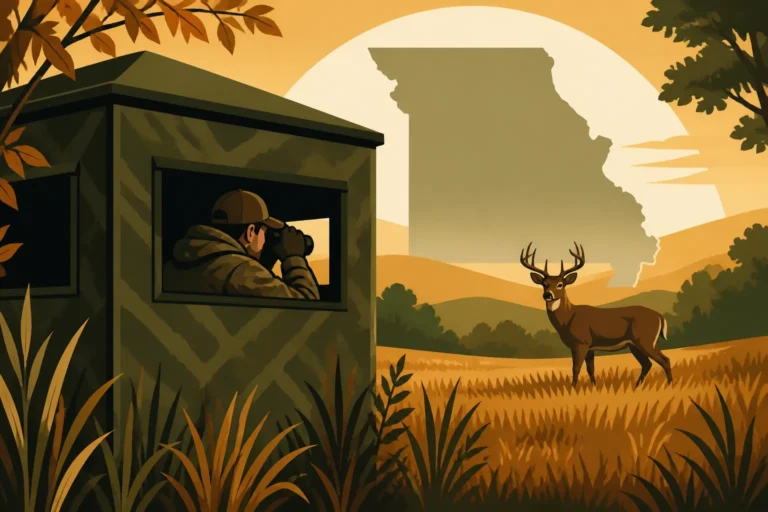
Sometimes, trees in a fencerow are too small, too sparse, or simply nonexistent for a safe treestand setup. In these cases, a ground blind can be incredibly effective. The key with a ground blind in a fencerow is concealment and blending in. Brush it in thoroughly with local vegetation, making it look like a natural part of the landscape. Set it up several days, or even weeks, before you plan to hunt to allow deer to get accustomed to its presence. Position the blind so that you have clear views along the fencerow and, crucially, into the fields where deer might be feeding. Consider shooting lanes carefully; you don't want to be caught with a deer just out of range because a stray branch is in the way. A ground blind also offers an advantage in scent control, as your scent cone is often more contained and closer to the ground, although proper wind management remains critical. For those hunting public land or needing to be highly mobile, portable pop-up blinds can work well, especially if you can get them set up early and brushed in. These considerations are not unlike those for Ground Blinds on Crop Field Edges, but within an even more restrictive environment.
Playing the Wind and Entry/Exit
No matter your setup, the wind is your ultimate boss. Always, always hunt with the wind in your face or quartering away from where you expect deer to approach. Fencerows often act as wind tunnels, so understanding prevailing winds and thermals (especially in early mornings and late evenings) is crucial. A simple app like GoHunt can give you real-time wind conditions and forecasts, allowing you to make informed decisions. Your entry and exit routes are just as important. Plan them so you don't spook deer in the fields or in the fencerow itself. This might mean walking a ditch, staying on the far edge of a field, or using topographical features to hide your approach. Deer in fencerows are often highly alert, and a single mistake in your approach or scent control can ruin the hunt. The behavior of deer in these environments is often different than in dense woods; they rely on these linear covers so much that they become accustomed to certain travel patterns. Your goal is to intercept them without becoming part of their detection. This careful planning mirrors the precise approach needed when dealing with Wind and Thermals in Ozark Hills, but within a more constrained landscape.
Common Challenges and How to Overcome Them
Hunting fencerows isn't without its unique set of challenges. It's not always as straightforward as it seems on a map, and deer are masters of adapting to human pressure. But with a bit of foresight and flexibility, you can turn these obstacles into opportunities.
Lack of Suitable Trees and Limited Cover
One of the most common frustrations is the lack of mature, straight trees suitable for a treestand. Fencerows are often dominated by brush, small saplings, or thorny species. If you can't find a good tree, don't force it. This is where a well-placed and thoroughly brushed-in ground blind becomes indispensable. Consider lightweight, portable ground blinds that are easy to carry in and out, especially if you're on public land or need to quickly adapt to changing deer patterns. Another option is a tree saddle, which can often be used in smaller, more crooked trees where a traditional treestand might not be safe or practical. Sometimes, the best "cover" isn't a solid wall, but rather a chaotic mix of multiflora rose and honeysuckle that breaks up your outline. Embrace the mess and use it to your advantage.
Swirling Winds and Scent Control
Fencerows, particularly those running across open fields, can create unpredictable wind patterns. Even on a seemingly steady wind day, thermals can cause swirling, especially at dawn and dusk. This makes scent control even more critical. Beyond playing the wind as best you can, employ rigorous scent elimination practices: scent-free laundry detergent, scent-absorbing sprays, and rubber boots for your walk-in. Consider carrying a small bottle of a wind-checker powder and using it frequently. If the wind consistently swirls in a particular fencerow, it might be one to avoid on those days, or you might need to adjust your setup to hunt from a crosswind position, hoping for a quick shot as a deer passes quickly. Remember that deer will also often use the prevailing wind to their advantage, walking into it along a fencerow so they can smell what's ahead. Your job is to set up downwind of their anticipated travel.
Educated Deer and Agricultural Activity
Deer that habitually use fencerows are often highly educated. They've learned to avoid human presence and are keenly aware of movement and foreign objects. This means minimal movement in your stand or blind, and utmost patience. If you're on private land, coordinate with the landowner regarding agricultural activity. A fencerow hunt can be ruined if the farmer decides to work the adjacent field right when you're settling in. However, agricultural changes can also create new opportunities. When crops like standing corn are harvested, deer patterns can shift dramatically. Suddenly, that fencerow might become an even more crucial travel corridor, as the deer lose the dense cover of the corn. Staying informed about the local farming calendar can be a significant advantage, particularly when trying to predict What Changes After the Beans Come Off or how deer respond to Hunting Standing Corn Before Harvest. Being adaptable and understanding these shifts will put you in a better position to intercept a cruising buck or a doe heading to a new food source.
| Feature | Treestand in Fencerow | Ground Blind in Fencerow |
|---|---|---|
| Visibility | Elevated view, better range of sight over fields. Can be silhouetted. | Eye-level view, excellent concealment if brushed in. Limited field of view. |
| Cover | Relies on natural tree canopy, smaller trees can be an issue. | Creates its own cover; needs significant brushing in to blend. |
| Scent Control | Scent dispersed higher, but still susceptible to swirling winds. | Scent closer to ground, can be contained if sealed, but still requires strict management. |
| Mobility | Can be more involved to set up/take down, but mobile options exist. | Often easier to set up for quick deployment, especially pop-ups. |
| Comfort/Patience | Can be less comfortable for long sits, but good for active scanning. | Generally more comfortable, better for all-day sits in bad weather. |
| Ideal Scenario | Fencerow with mature trees, offering good sight lines and backdrop. | Fencerow with sparse trees, dense brush, or for stealthy all-day hunts. |
Disclaimer
Hunting is an inherently dangerous activity. Always prioritize safety, understand and follow all Missouri Department of Conservation regulations, and obtain appropriate permits and landowner permissions. The advice provided here is for informational purposes only and should not replace proper hunter education and personal judgment.