Hunting a Timbered Draw in Row-Crop Country
Hunting deer in Missouri's vast row-crop regions can feel like a game of hide-and-seek where the deer always win, especially when they seem to vanish into thin air after harvest season. The challenge often lies in deciphering their movement patterns across fragmented landscapes, where pockets of timber are separated by expansive agricultural fields. This comprehensive guide will walk you through the nuances of effectively hunting a timbered draw in Missouri's farm country, transforming these subtle landscape features into your most productive deer hunting spots.
Understanding the Landscape of Row-Crop Country Draws
Missouri's agricultural areas, particularly in the northern and central parts of the state, are characterized by vast fields of corn and soybeans interspersed with woodlots, creek bottoms, and, crucially, timbered draws. These draws, often overlooked by less experienced hunters, are absolute goldmines for deer movement.
Why Draws are Deer Magnets in Farm Fields
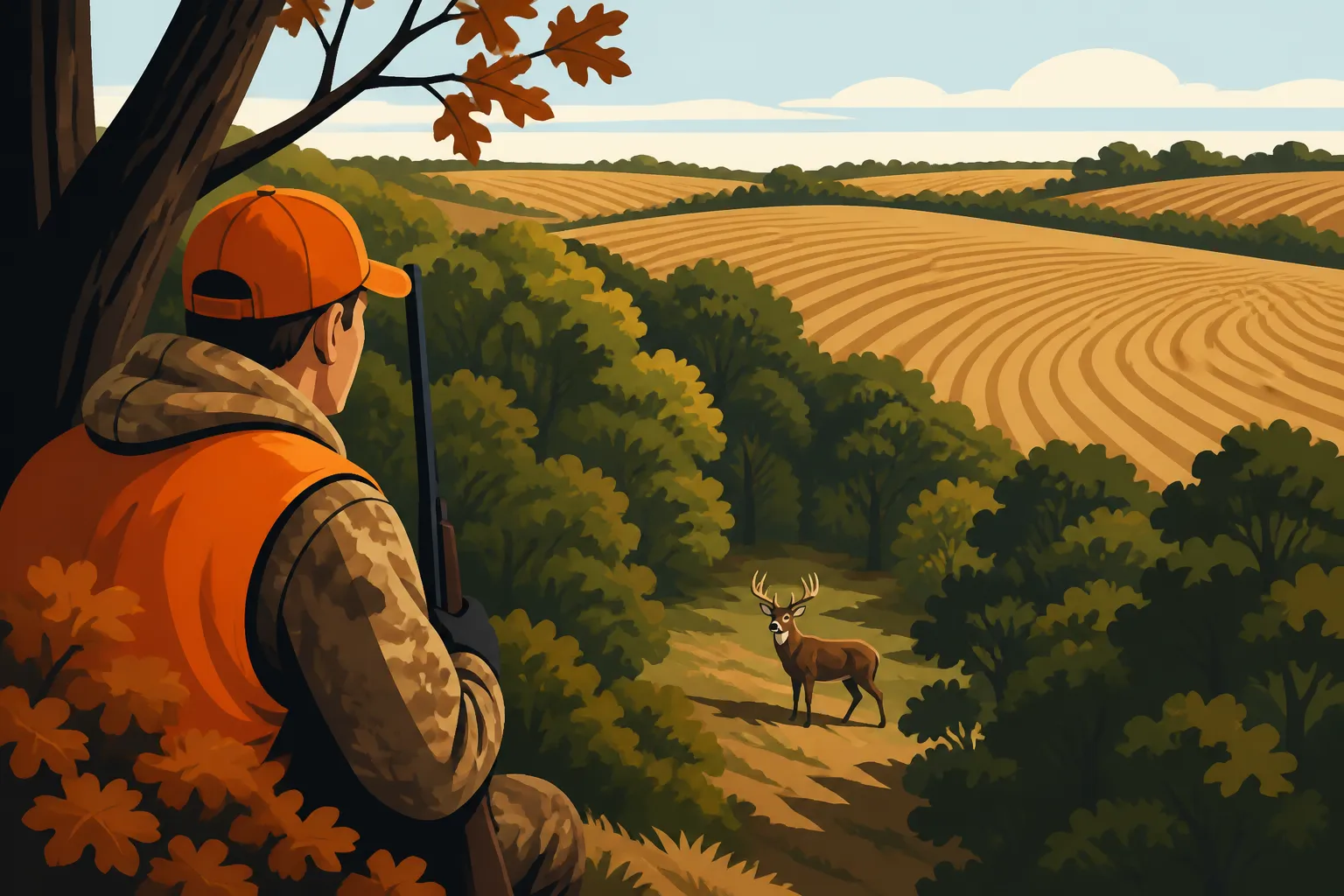
Imagine a deer needing to get from one block of timber to another, or from bedding cover to a prime feeding area in a freshly cut soybean field. They aren't going to sprint across an open expanse in broad daylight, especially if there's any pressure. This is precisely where timbered draws come into play. A draw is essentially a natural depression or valley, often carved out by water erosion, that typically holds a line of trees or dense brush. In the flat to gently rolling topography of Missouri's farm country, these draws serve as indispensable travel corridors for deer.
Think of them as insulated highways. They provide crucial cover from predators, both four-legged and two-legged, offering deer a sense of security as they move. During daylight hours, a deer might feel comfortable traversing a timbered draw when an open field would be out of the question. These draws also often contain valuable bedding cover, particularly if they feature thick undergrowth or evergreens that offer thermal protection from harsh winds. Deer will bed down in these sheltered spots, especially during the colder months, knowing they are close to food sources and have an easy escape route along the draw itself. They act as funnels, concentrating deer movement into predictable pathways, making them prime locations for setting up ambushes.
Reading Topography and Satellite Imagery for Key Funnels
Modern technology has revolutionized how we scout and locate these critical deer highways. Gone are the days of just walking until you find a deer trail. Now, sophisticated mapping tools allow us to pinpoint ideal hunting locations from the comfort of our homes, giving us a massive advantage.
When you're trying to locate the best draws, high-quality satellite imagery is your best friend. Services like GoHunt, or other detailed mapping applications, are invaluable for this type of digital scouting. Start by looking for the largest blocks of timber in an area. Then, zoom in and identify any smaller, isolated woodlots or patches of trees. The timbered draws are the natural connectors between these larger features. Look for subtle elevation changes that indicate a dip in the terrain where water would naturally flow, as these are often the same paths deer prefer.
Pay close attention to pinch points—areas where the timbered draw narrows significantly, or where other topographical features like a creek or a fence line force deer into a very specific, confined path. These are high-traffic areas where you can almost guarantee deer will pass. Also, look for draws that converge, forming a natural "Y" shape. Such intersections are like major highway interchanges for deer, creating multiple travel options and concentrating movement from various directions.
Furthermore, connect these draws visually to primary food sources. Does a draw lead directly into a standing cornfield? Does it parallel a soybean field that will be a hotspot once the beans are cut? Understanding these relationships is key to predicting when and where deer will use the draw. For a deeper dive into scouting techniques, checking out resources like Scouting With the Missouri Conservation Atlas can provide excellent foundational knowledge, even for private land, by helping you understand how deer relate to different types of habitat.
Strategic Approaches to Hunting Timbered Draws
Once you've identified promising timbered draws, the next crucial step is developing a strategy for how to hunt them effectively. This isn't just about throwing up a stand; it's about understanding how your presence impacts deer movement and how to minimize that disruption.
Entry and Exit Routes Without Spooking Deer
This is arguably the most critical component of successfully hunting a timbered draw, or any deer hunting for that matter. If deer know you're there before you even settle into your stand, your hunt is likely over before it begins. Deer in farm country, especially, are incredibly sensitive to pressure. They live in a relatively open environment and rely heavily on their senses to detect threats.
Your entry and exit routes must be meticulously planned to avoid detection. Always consider the prevailing wind direction, and try to use it to your advantage by walking with the wind in your face or across your body, ensuring your scent is not blowing into the draw where deer might be. Walk creek beds, drainage ditches, or the very edge of open fields if they allow you to stay out of sight and mask your sounds. The sound of crunching leaves or snapping twigs can carry surprisingly far on a still morning, so choose your path carefully, prioritizing quieter footing whenever possible.
Approach your stand or blind from a direction that keeps you hidden, using existing terrain features or dense cover. Early mornings, try to arrive well before first light, using a headlamp with a red or green filter to preserve your night vision and minimize your visible signature. For evening hunts, stay until well after dark, allowing deer to move past your location before you exit. Avoid walking directly through known bedding areas within the draw on your way in or out. If you spook deer out of a bedding area, especially multiple times, they will quickly shift their patterns and find a new, safer spot, rendering your carefully chosen location useless. For more detailed advice on navigating these areas, insights from Entry Routes on Rolling Farm Ground can be incredibly helpful.
Stand and Blind Placement for Optimal Shot Opportunities
The type of setup you choose for hunting a timbered draw largely depends on the specific characteristics of the draw itself, the surrounding cover, and your hunting style. Both treestands and ground blinds have their advantages and disadvantages.
Treestands are often preferred in draws with mature, straight trees that offer good elevation. Setting up in a treestand allows you to get your scent above the primary deer travel lanes, making you less detectable. From an elevated position, you also gain a broader view of the draw, allowing you to see deer approaching from a distance and giving you more time to prepare for a shot. Look for trees that are strategically located along the most active deer trails within the draw, particularly where trails intersect or where the draw creates a natural funnel. Consider the sun's position throughout the day; you don't want to be silhouetted against the rising or setting sun. Ideal placement also accounts for the prevailing wind, ensuring your scent blows away from where you expect deer to approach. More comprehensive guidance can be found in Treestand Setups in Hardwood Timber.
Ground blinds are excellent options when suitable trees for a treestand are scarce, or when you need to be more mobile. They offer concealment, especially if brushed in properly, and provide a comfortable, warm, and dry environment, which can be a huge advantage during colder, wetter late-season hunts. When placing a ground blind in a draw, position it slightly off the main trail, perhaps tucked into a thicket or along a field edge adjacent to the draw. Blinds are great for capturing deer moving along the edges of the draw, transitioning between the timber and the crop fields. You'll want to brush in your blind meticulously, making it blend seamlessly into the natural surroundings. Think about existing features like fallen logs, stumps, or dense briar patches to break up the outline of your blind. For more in-depth advice on this, check out Ground Blinds on Crop Field Edges.
Regardless of your choice, ensure your shooting lanes are clear but not overly cut. You want to be able to make a clean shot without broadcasting your presence by clearing too much brush. Always visualize the shot angles before a deer appears.
Adapting Tactics to Seasonal Deer Behavior
Deer behavior shifts dramatically throughout the hunting season, primarily driven by food availability, breeding instincts, and the need for thermal regulation. Understanding these changes is crucial for maximizing your success in a timbered draw.
Early Season and Food-Driven Movement
When archery season opens in Missouri, typically in mid-September, the deer's world revolves around food. Crop fields are often still standing, providing abundant sustenance and cover. Deer will spend a lot of time in these fields, moving into them during the evening and retreating to bedding areas within the timbered draws or larger woodlots in the morning.
During this period, your focus should be on draws that lead directly to or from active food sources. If the corn is still standing, deer will use draws to move unseen to and from the edges of those fields. Once the crops are harvested, the deer's primary food sources will shift to agricultural waste (beans left on the ground, dropped corn kernels) or natural browse. Draws connecting to these post-harvest fields become exceptionally hot.
Evening hunts are often more productive during the early season as deer emerge from their bedding areas. Position yourself in a stand or blind overlooking a draw that provides a clear view of the edge of a crop field. Be prepared for early morning action as well, especially if you can get into a draw that funnels deer away from a field and back to deeper cover. Stealth is paramount, as the vegetation is still lush, meaning deer have plenty of hiding spots but also rely heavily on their acute sense of smell and hearing. For specialized tactics, delving into articles like Hunting Standing Corn Before Harvest and What Changes After the Beans Come Off will offer invaluable insights.
Rut Period and Cruising Bucks in Draws
Mid to late October and especially November bring the peak of the deer rut in Missouri. This is when deer movement explodes, and bucks become far more active during daylight hours, often abandoning their typical food-to-bed patterns in favor of searching for does.
Timbered draws become major highways for bucks during the rut. They will cruise these corridors, scent-checking for estrous does. The security offered by the draw's cover allows them to travel with a greater sense of confidence than if they were crossing open fields. Look for draws that connect larger blocks of timber or those that offer multiple intersecting trails within them. These are prime locations for intercepting a mature buck.
This is also an excellent time to incorporate calling strategies. Light rattling and grunting can be very effective in draws, especially in Missouri's often thick timber where visibility is limited. A buck cruising a draw might not see another deer, but he'll certainly hear a challenge or a tending grunt. Articles like Rattling Volume for Thick Timber and Grunt Calls in Missouri River Bottoms (which often feature timbered creek beds and draws) can give you ideas on how to adjust your calling to fit the environment and increase your chances. Focus on pinch points, saddles within the draw, or any other natural funnel that concentrates movement.
Late Season and Thermal Cover Importance
As the temperatures drop and winter sets in, deer behavior shifts again. Food remains critical, but thermal cover becomes equally important for survival. Timbered draws, especially those with dense evergreen cover or south-facing slopes, become magnets for deer seeking shelter from the bitter cold winds.
During the late season, deer will often bed in the thickest parts of a draw, particularly if it's sheltered from north or west winds. Draws that connect these bedding areas to late-season food sources like brassicas, standing soybeans (if any are left), or acorn flats are incredibly productive. Focus your efforts on the warmest parts of the day when deer are most likely to move, often in the late morning or early afternoon.
Scouting for fresh tracks and droppings in the snow can reveal specific travel routes within these draws. If you find a draw with good thermal cover and a reliable late-season food source nearby, you've hit the jackpot. Patience is key in the cold weather, as deer movement might be sporadic, but when they move, they will often stick to the security of these draws. Understanding Late-Season Food Sources for Whitetails will help you connect these draws to the deer's caloric needs.
Gear and Considerations for Draw Hunting
Having the right gear and a flexible mindset can make all the difference when hunting timbered draws in Missouri's row-crop country.
Essential Gear for Stealth and Success
When you're hunting in draws, especially those with dense cover, your gear choices can significantly impact your success.
- Quiet Clothing: This is non-negotiable. The rustle of typical synthetic hunting clothes can be amplified in the quiet timber, alerting deer long before you see them. Opt for fleece, wool, or soft-shell materials that minimize noise when you move.
- Scent Control: Deer in farm country are constantly exposed to human scent, so they are incredibly wary. Implementing a strict scent control regimen—showering with scent-free soap, using scent-free detergents for your hunting clothes, and storing them in airtight bags—is crucial. Even with careful wind planning, an unexpected swirl can give you away.
- Compact Weapons: Whether you're bowhunting or rifle hunting, a more compact setup can be beneficial in the tight quarters of a timbered draw. A shorter barrel rifle or a compound bow with a shorter axle-to-axle length is easier to maneuver in dense brush or a treestand, allowing for quicker, quieter adjustments when a deer appears close.
- Optics: While long-range glassing might not be as critical as in open country, quality binoculars are still essential for quickly identifying deer within the shadows of a draw, especially at dawn and dusk. An 8×42 pair is often ideal, offering a good balance of magnification and field of view for timbered environments. Consult Binocular Power for Timber Hunting for more specific advice. A rangefinder is also invaluable for quickly and accurately determining distances, as shot opportunities can appear and disappear in an instant.
Overcoming Hunting Pressure and Adapting
Missouri's deer herds, particularly on public lands or smaller private tracts in row-crop country, often experience significant hunting pressure. Deer quickly learn to avoid areas where they've been disturbed. Timbered draws, however, can sometimes offer a refuge.
Even on heavily pressured lands, deer will seek out quiet pockets of cover. A draw that seems too small, too thick, or too difficult to access might be exactly where a mature buck decides to spend his daylight hours. The key is finding ground that others walk past. This often means walking further, pushing into dense, thorny cover, or taking a less obvious route to your stand.
The GoHunt app, or other similar mapping tools, can help you identify these overlooked areas by showing you access points, topography, and potential bedding cover that other hunters might ignore. Look for draws that require crossing a difficult ditch, wading a shallow creek, or navigating through particularly dense briars. These natural barriers often deter less determined hunters, creating sanctuaries for deer.
Finally, patience and minimal intrusion are paramount. One-and-done hunts where you slip in, hunt, and slip out without disturbing the area will be far more effective than repeatedly busting deer out of a draw. If you hunt a draw and don't see anything, consider giving it a few days to recover before returning. Deer are incredibly adaptable, and if you're persistent and intelligent in your approach to these timbered draws, you'll uncover some of the most consistent deer hunting spots Missouri's farm country has to offer.
| Feature / Consideration | Treestand in a Timbered Draw | Ground Blind in a Timbered Draw |
|---|---|---|
| Visibility | Excellent, elevated view down the draw and surrounding area. | Good, but limited to eye-level; requires careful brushing for shooting lanes. |
| Scent Control | Generally better, as scent rises and dissipates above deer travel. | More challenging; requires strict scent control and favorable winds. |
| Concealment | Requires good tree choice and minimal movement; silhouette can be an issue. | Excellent if properly brushed in; allows for more movement. |
| Comfort/Weather | Exposed to elements; less comfortable for long sits. | Sheltered from wind/rain; generally more comfortable and warmer. |
| Setup Time | Can be quicker with climbing sticks or portable stands. | Requires more time for brushing in and preparation. |
| Mobility | Can be moved, but often takes time to set up new locations. | Fairly mobile, but still requires brushing in new spots. |
| Shot Angles | Downward angle, often providing ethical shots into vitals. | Eye-level, requiring careful consideration of foreground obstacles. |
| Pressure Tolerance | Less intrusive once set up, but entry/exit crucial. | Can feel more intrusive if not well hidden, but offers quick escape for deer. |
Disclaimer
Hunting is an activity with inherent risks. Always prioritize safety, understand and follow all Missouri Department of Conservation regulations, and obtain appropriate permits and landowner permissions. The information provided in this guide is for educational purposes only and should not replace professional guidance or personal experience. Always scout your chosen hunting location thoroughly and adapt tactics to specific conditions.