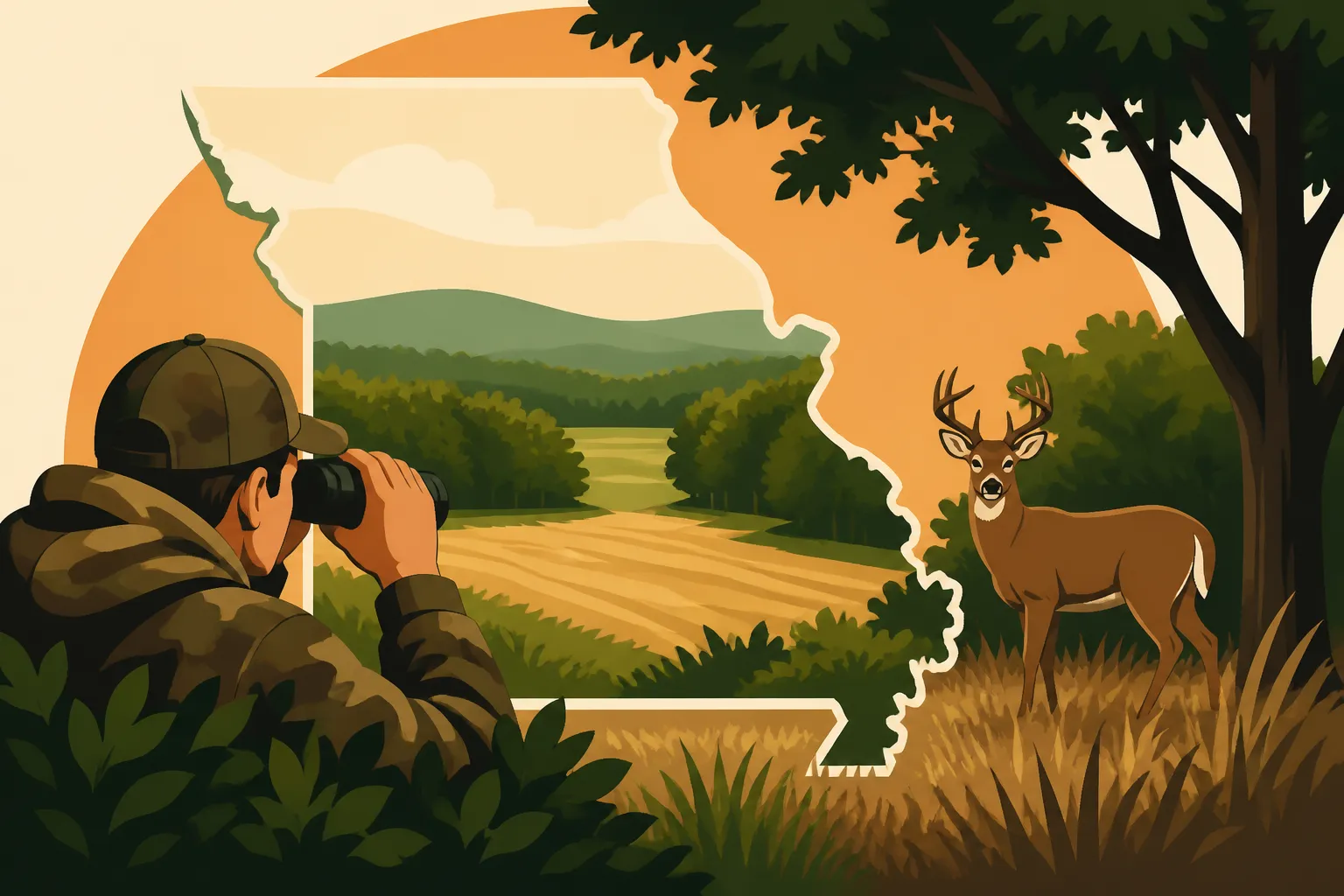
Hunting Small Private Tracts in Missouri
Trying to find quality hunting ground in Missouri can often feel like an uphill battle, especially when public lands are crowded or leased properties are out of reach. Many hunters overlook the incredible potential hiding within smaller, privately owned parcels that dot our landscape. This comprehensive guide will walk you through the nuances of successfully finding, gaining access to, and effectively hunting those often-underestimated small private tracts in Missouri, turning limited acreage into prime hunting opportunities.
Finding and Gaining Access to Small Private Tracts
The first hurdle for any hunter without their own ground is simply finding a place to go, and small private tracts present a unique opportunity if you know how to approach it. These aren't the sprawling cattle ranches or row-crop operations that big outfitters lease; these are often 10, 20, or 40-acre timber blocks, overgrown fields, or creek bottoms tucked behind someone's home or a small farm.
Identifying Potential Properties
Before you even think about knocking on a door, you need to identify parcels that might hold potential and, more importantly, are likely to be available. This takes a bit of legwork and some digital savvy.
You'll want to start by looking at county plat maps, which are typically available at the county courthouse or often accessible online through county assessor or GIS websites. These maps show property lines and landowner names, which are invaluable for your research. When poring over these maps, look for smaller, oddly shaped parcels, especially those that border larger timber blocks, agricultural fields, or water sources. Deer are edge creatures, and small parcels often offer a disproportionate amount of edge habitat compared to their total acreage. You can also use digital tools like GoHunt or similar mapping applications, which overlay property lines and landowner information on satellite imagery, making it incredibly easy to visualize the land.
Beyond the digital realm, nothing beats good old-fashioned scouting from the road. Drive the county roads, paying attention to patches of timber, thick creek drainages, or overgrown fencerows that might connect larger tracts of cover. Look for properties that might seem neglected or unused, as these often present a better chance for access. Keep an eye out for signs of deer activity visible from the road, like rubs, scrapes, or heavy trails leading into thickets. These aren't just potential hunting spots; they're indicators that the property owner might not be actively managing the land for hunting, making them more receptive to your inquiry. Remember, the goal is to find those little honey holes that others might drive right past.
Asking for Permission to Hunt
This is often the most intimidating part, but it's crucial. Approaching a landowner respectfully and professionally is paramount. The general rule of thumb in Missouri is that you absolutely need permission to hunt private land, and while verbal permission is legally binding, written permission is always, always better for clarity and peace of mind. For a deep dive into what's required, you can check out the guide on Missouri Trespass and Permission Law.
When you decide to "knock on doors," timing is key. Avoid approaching during meal times, late evenings, or early mornings. Weekends or late afternoons on weekdays often work best. Dress presentably – not in your hunting camo, but clean casual attire. Bring a small, neatly printed map of their property (which you obtained from your earlier research, perhaps using GoHunt's mapping features) highlighting the specific parcel you're interested in. This shows you've done your homework and respect their property.
Start with a polite introduction, state who you are, and explain why you're there. "Hello, Mr./Ms. Smith, my name is [Your Name], and I was hoping to speak with you for a moment. I noticed your beautiful property at [address/general location] and was wondering if you ever allow anyone to deer hunt it? I'm a responsible hunter, and I'd be incredibly respectful of your land and property." Be prepared for a "no," and accept it graciously. A "no" today doesn't mean a "no" forever. If they say "yes," discuss the specifics: where you can park, what gates to use, what types of game you're interested in, and safety rules. Offering to help with chores around the farm, like mending fences or clearing brush, can also go a long way in building rapport, as detailed in Knocking on Doors in Missouri Farm Country. Some landowners might even qualify for certain permits, so understanding Missouri Landowner Permits and Exemptions could be helpful context for your conversation.
| Aspect of Permission | Best Practice | What to Avoid |
|---|---|---|
| Initial Contact | Polite, brief, respectful | Impatient, demanding, late-night |
| Appearance | Clean, casual clothes | Hunting camo, dirty work clothes |
| Preparation | Property map, specific request | Vague requests, no knowledge of property |
| Conversation | Listen more than talk, be humble | Arguing, entitlement, making assumptions |
| Follow-up | Written agreement, offer help | Never contacting again, taking advantage |
| Safety | Discuss boundaries, shot zones | Ignoring neighbor concerns, unsafe practices |
Key Considerations for Hunting Smaller Properties
Hunting a small private tract isn't just a scaled-down version of hunting a sprawling farm; it requires a unique mindset and strategy. The limited acreage means your every move carries more weight, and your relationship with the landowner and neighbors is paramount.
Respecting Boundaries and Neighbors
On small tracts, property lines are not just lines on a map; they are very real, often invisible boundaries that demand absolute respect. You need to know exactly where those lines are and stay well within them. This isn't just about avoiding trespassing; it's about maintaining trust with your landowner and preventing conflicts with their neighbors. A stray bullet, a dog wandering onto a neighboring property, or even just your vehicle parked in an inconvenient spot can ruin your access forever.
Always discuss potential shot angles with the landowner. On a 10-acre timber plot, you might be aiming towards a neighboring house or livestock field. Ethical hunting on small properties means being acutely aware of your backdrop and only taking shots that are absolutely safe and certain to stay on the property you have permission for. Consider using archery or crossbows, as outlined in Crossbow Hunting Under Missouri Rules, which have shorter effective ranges and lower risk of over-penetration, making them ideal for these situations. Also, be mindful of noise. If you're running hounds or calling loudly for coyotes, consider how it might impact nearby residents. Being a good neighbor, even if you're just a temporary guest, is crucial.
Understanding Deer Movement in Limited Space
Deer are creatures of habit and opportunity, and they will utilize small parcels differently than they would vast tracts of timber. On limited acreage, deer often use these small properties as bedding cover during the day, escape routes between larger food sources, or as secure sanctuaries where they feel less pressured. They might only be on your small piece for short periods, often during low-light hours.
You'll need to think about how deer funnel through the property. Look for natural pinch points, thick fencerows (Hunting a Missouri Fencerow Between Fields offers great insights), creek crossings, or areas where dense cover meets more open ground. These small parcels rarely hold a deer's entire home range, so understanding the adjacent properties – even if you can't hunt them – will help you predict how deer will enter and exit your small tract. They might feed on a neighboring bean field and then bed down in your small woodlot, only to return to the field at dusk. Your scouting, perhaps using methods similar to Reading Aerial Photos for Ozark Deer to identify cover and travel corridors, needs to focus on these transitional movements.
Managing Your Hunting Pressure
This is arguably the most critical aspect of hunting small private tracts. On large properties, deer can absorb a certain amount of hunting pressure and still behave naturally. On a 10 or 20-acre parcel, a single careless hunt can blow deer out of the area for days, if not weeks. Every time you step foot on that property, you're leaving scent and creating disturbance.
Your entry and exit routes must be meticulously planned to avoid spooking deer. Use terrain features, dense cover, or even specific wind directions to mask your approach. Consider only hunting when conditions are absolutely perfect (wind, temperature, time of day) to maximize your chances and minimize wasted pressure. Often, one or two well-executed hunts per week are far more effective than daily trips that keep deer on high alert. If you know when the Missouri Rut in Early November is peaking, that might be the prime time to apply pressure, but otherwise, exercise restraint. Think about low-impact tactics like still-hunting, as you might for Still-Hunting a Missouri Ozark Hollow, moving slowly and deliberately only when conditions allow.
Tactics Tailored for Limited Acreage
Once you've secured permission and understand the unique challenges of small properties, it's time to fine-tune your hunting tactics. These parcels demand precision and a keen understanding of deer behavior within confined spaces.
Strategic Stand Placement
On a small tract, every square foot matters, and your stand placement can make or break your hunt. You don't have the luxury of dozens of stand sites. You need to identify the absolute best locations that maximize your visibility while minimizing your footprint. Look for natural funnels, such as narrow strips of timber between fields, creek bends, or saddles and benches on undulating terrain, as discussed in Treestand Setups in Hardwood Timber. Even a subtle change in elevation or vegetation can create a travel corridor that deer habitually use.
Consider the prevailing wind directions and how they interact with the terrain. On a small property, you might only have one or two stand setups that are effective for specific wind directions. For instance, if deer are bedding to the north and feeding to the south, you'll need a setup that allows you to approach with a north wind, keeping your scent from blowing into their bedding area. Portable treestands or saddle hunting setups are excellent for small properties because they allow you to be nimble and adjust to conditions without leaving permanent scent or disturbing the area. Remember to hang stands well before the season to let deer get accustomed to them, if possible.
Utilizing Natural and Created Cover
Small tracts, especially those often overlooked, usually boast dense, neglected cover. Instead of seeing this as an obstacle, view it as an asset. Deer crave security, and thick brush, overgrown hedgerows, and dense sapling thickets provide just that. These areas often serve as bedding sites or daytime sanctuaries.
Look for opportunities to enhance existing cover or create new cover that funnels deer past your stand. Hingecutting some trees to create a dense brush wall, piling up downed limbs to form a blockade, or even planting a small screen of fast-growing evergreens can subtly alter deer movement. The key is to work with the existing landscape. A tiny, unkempt corner of the property that seems like nothing but thorns and briars might be the most valuable piece of real estate for a mature buck seeking refuge. Think about how deer will naturally use these features to move from one point to another, and place your stand accordingly. Even something as simple as using a Ground Blind on Crop Field Edges that you've carefully brushed in can be an effective, low-impact method.
Low-Impact Scouting and Trail Cameras
Scouting is essential, but on small properties, it needs to be done with an incredibly light touch. Over-scouting a small tract can be as detrimental as over-hunting it. You don't want to leave excessive human scent or create disturbance that makes deer feel unwelcome.
Focus on pre-season scouting, especially when leaves are off the trees, to identify old rubs, scrapes, and major travel corridors. Once the season approaches, minimize your time on the ground. Utilize binoculars from a distance or rely heavily on trail cameras. Place cameras strategically on known travel routes or rub lines, but check them infrequently – perhaps once every week or two – and always approach and exit carefully, preferably when deer activity is low (midday) and with a favorable wind. Wireless or cellular cameras can be a game-changer for small properties, allowing you to monitor deer activity remotely without ever stepping foot on the property, thus reducing pressure. For advice on where to place your cameras, consider tips from Where to Hang a Camera on Big Timber, adapting the principles to your smaller scale. This kind of diligent, low-impact approach helps ensure that deer continue to use your small tract as a sanctuary, rather than associating it with human disturbance.
Building Relationships and Long-Term Access
Hunting small private tracts isn't just about the hunt itself; it's about fostering a lasting connection with the landowner. This relationship is your golden ticket to continued access and often leads to even better hunting opportunities down the road.
Communication and Follow-Up
The permission slip, whether verbal or written, is just the beginning. Regular communication with your landowner is vital. A quick text or phone call before and after each hunt is a simple courtesy that goes a long way. Let them know when you plan to be on their property and, just as importantly, when you're leaving. This keeps them informed, builds trust, and shows you respect their property and their peace of mind.
If you have success, share it with them! Many landowners, especially those who don't hunt themselves, get a real kick out of seeing the game that's taken from their land. A photo of your deer, turkey, or even a nice squirrel can be a great way to thank them. Offering to share some of the venison, especially if they enjoy wild game, is an incredible gesture. This kind of thoughtful follow-up reinforces that you're not just there to take, but to appreciate their generosity. After all, successful retrieval and processing of game meat, like Field Dressing a Deer in Warm Weather and proper cooling, is something every hunter should master to ensure good table fare that's worth sharing.
Adding Value to the Landowner
This is where you truly solidify your long-term access. Don't just be a hunter; be a helpful presence. Many small landowners, particularly elderly ones, could use a hand with various chores. Offer to help with tasks like clearing brush, mending a fence, picking up litter, or even just keeping an eye on their property. This creates a reciprocal relationship where they feel you're not just taking advantage of their kindness, but genuinely contributing.
If they have an issue with nuisance animals, like coyotes or feral hogs, offering to help with Predator and Furbearer Hunting in Missouri can be a huge benefit to them. This demonstrates your value beyond just deer hunting. Think of ways you can be an asset. Perhaps you notice a gate is broken or a tree has fallen across a path. Discreetly asking if you can take care of it or report it shows you're observant and caring. The more value you add, the more likely they are to think of you positively and continue allowing you access for years to come. This relationship-building is a significant part of what makes hunting small private tracts so rewarding, turning a simple permission slip into a lasting friendship and a consistent place to pursue your passion.
Disclaimer
Hunting carries inherent risks, and it is the responsibility of each individual hunter to understand and comply with all applicable state and federal hunting regulations, obtain necessary permits, and prioritize safety. This guide is for informational purposes only and should not replace official regulations or professional instruction. Always respect private property and obtain proper permission before hunting.