Missouri Elk Hunting Counties
For anyone dreaming of hearing a bull elk bugle echo through the Missouri Ozarks, the biggest question isn't if there are elk in the state, but where to even begin looking. It's a daunting thought for many hunters, knowing the population is still recovering and the permits are few and far between. This guide aims to clear up the mystery of Missouri's elk hunting counties, diving deep into where these majestic animals call home and what you need to know to potentially pursue one.
The Story of Missouri's Elk Return
Missouri hasn't always had elk. For a long time, the only way to see an elk here was in a zoo or on a hunting show set in the Rockies. But thanks to incredible conservation efforts, these magnificent animals are slowly but surely making a comeback.
From Extinction to Reintroduction
It's a stark reality that by the mid-1800s, elk were completely extirpated from Missouri. That's a fancy way of saying they were gone, vanished from the landscape due to unregulated hunting and extensive habitat loss as the state was settled. For over a century, the idea of wild elk roaming the Ozarks was just a historical footnote.
But conservationists had a vision, and in the early 21st century, the Missouri Department of Conservation (MDC) began working on a reintroduction program. The goal was ambitious: to bring elk back to their native range in the Ozarks. In 2011, the first group of elk, sourced from Kentucky's thriving herd, were released into Missouri. These animals, which had once roamed these very hills, were finally coming home. This initial release was a huge moment, a testament to what dedicated conservation efforts can achieve. If you're curious about the specifics, there's a great deep dive into Missouri's Elk Reintroduction From Kentucky that chronicles this journey.
The Peck Ranch Blueprint
At the heart of Missouri's elk restoration efforts lies Peck Ranch Conservation Area. Located primarily in Shannon County, this sprawling public land served as the primary release site for the reintroduced elk. It's a rugged, expansive piece of the Ozarks, characterized by dense timber, open glades, and steep hollows – essentially, perfect elk habitat. The MDC strategically chose Peck Ranch for several reasons: its vast size minimized potential conflicts with private landowners, its remote nature provided a buffer for the elk to acclimate, and its habitat was ideal for supporting a growing herd.
Peck Ranch isn't just a release site; it's the core management area for Missouri's elk. The majority of the state's elk population resides within or immediately adjacent to this area. It's where the MDC conducts much of its research, monitoring, and herd management activities. For anyone interested in seeing these animals, Watching Elk at Peck Ranch offers a fantastic opportunity, though hunting them there is a different matter, primarily restricted to lottery permits.
Missouri's Core Elk Hunting Counties
When you talk about elk in Missouri, you're primarily talking about one corner of the state. The herd's restoration has been focused, and so is their current distribution.
Shannon County: The Epicenter
Without a doubt, Shannon County is the epicenter of Missouri's elk country. If you're fortunate enough to draw an elk tag in Missouri, odds are high that your hunt will take place within its borders, or very close by. Shannon County, nestled deep in the Ozark Highlands, boasts the largest concentration of elk in the state. This is largely due to the presence of Peck Ranch Conservation Area, which acts as the core habitat and breeding ground for the herd.
The terrain in Shannon County is classic Ozark ruggedness: rolling hills, steep river breaks, thick oak-hickory forests, and scattered glades. The Current and Jacks Fork Rivers wind through the county, carving out dramatic landscapes that offer both challenge and opportunity for wildlife. Elk thrive in this mix of cover and open areas, finding ample browse and security. Hunters who have spent time Hunting the Missouri Ozarks for deer will be familiar with the demanding nature of the terrain, which is only amplified when pursuing larger, wide-ranging elk.
While Peck Ranch is the primary hub, elk will disperse from this core. You might find them on adjacent public lands within Shannon County, such as sections of the Mark Twain National Forest, or even on private lands bordering the conservation area. Understanding land ownership and access is absolutely critical here, and tools like GoHunt's mapping features can be invaluable for identifying public parcels and potential access points when you're in the field.
Surrounding Counties and Elk Expansion
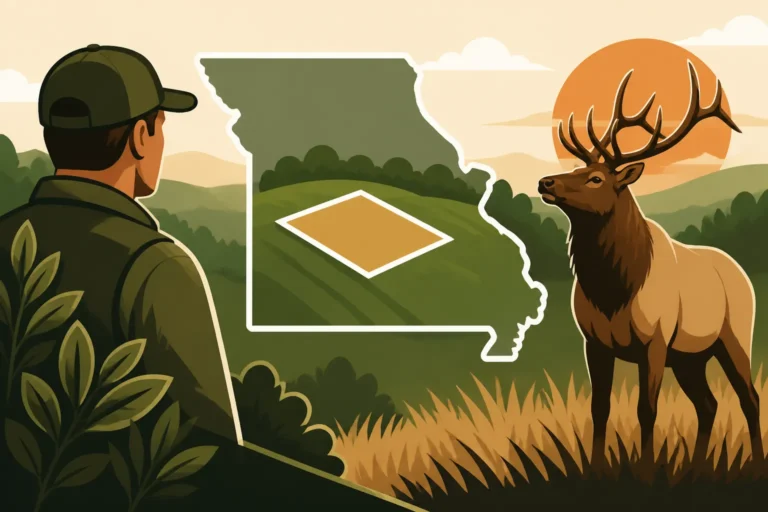
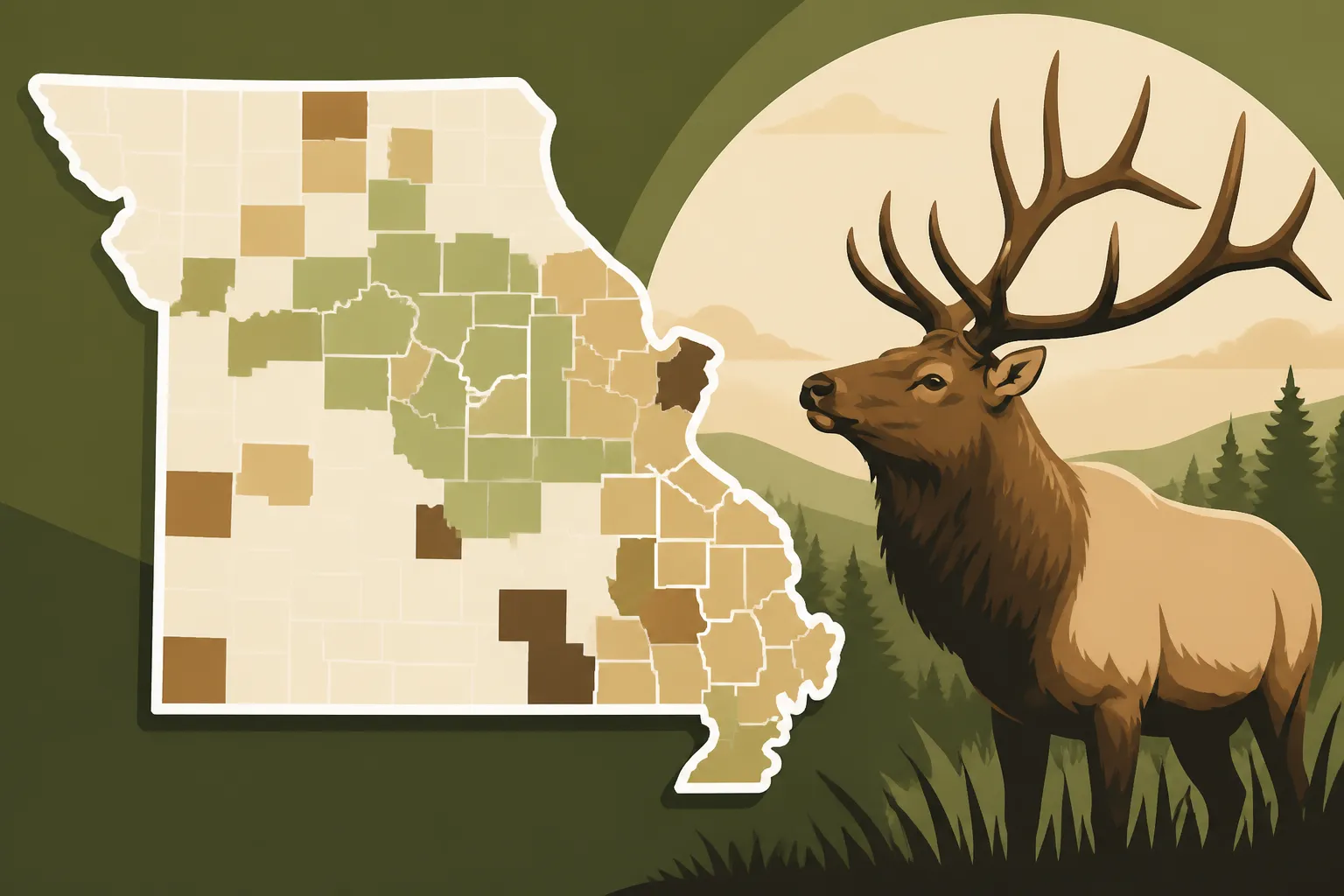
While Shannon County is the main event, elk are not entirely confined to its borders. As the herd has grown and naturally expanded, animals have begun to filter into adjacent counties. These typically include portions of Carter, Reynolds, and Wayne counties.
However, it's important to manage expectations. The numbers of elk in these surrounding counties are significantly lower than in Shannon. These are areas where individual elk or small groups might roam, particularly younger bulls or cows looking for new territories, rather than large, established herds. They are on the fringes of the Elk Management Zone (which we'll discuss next) and represent the natural progression of a growing population.
For a hunter, this means that while an elk could theoretically be found in these areas, your chances of encountering one are far less compared to the core areas of Shannon County. Most successful hunts, and indeed, most of the elk population, are still concentrated closer to the original release sites. Understanding Where Missouri Elk Range Today gives a clearer picture of their current distribution.
Understanding the Elk Management Zone
To properly manage the growing herd, the Missouri Department of Conservation has established an "Elk Management Zone." This isn't just a theoretical boundary; it's a defined area within which elk hunting is permitted, should you be lucky enough to draw a tag.
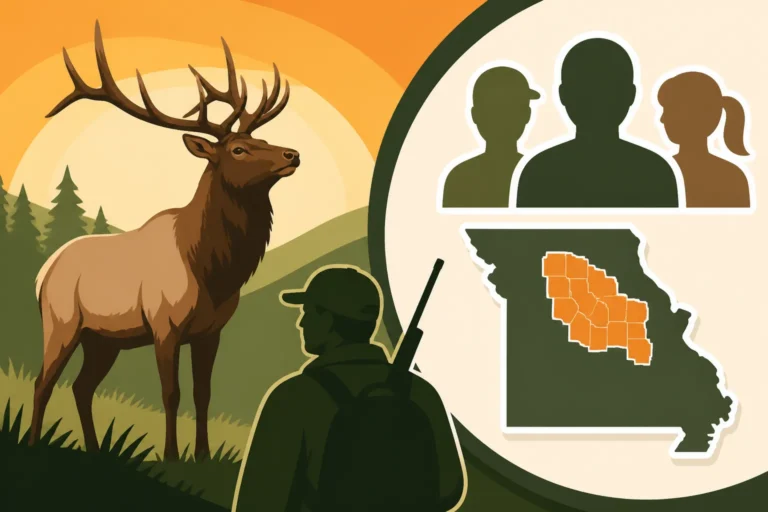
The Elk Management Zone encompasses specific portions of Shannon, Reynolds, Carter, and Wayne counties. It’s critical for any aspiring elk hunter to understand the precise boundaries of this zone, as hunting outside of it is strictly prohibited. The MDC provides detailed maps outlining this zone, and you can often find them on their website or through mapping applications like GoHunt by checking the public land overlays. The zone primarily centers around Peck Ranch and the surrounding public and private lands where elk have established a presence. This structured approach helps concentrate hunting pressure where the elk population is most robust and allows for careful monitoring of herd health and expansion.
Scouting and Locating Elk in Missouri's Ozarks
Drawing an elk tag in Missouri is a true lottery win, but that's just the first step. Finding an elk in the vast, rugged Ozarks presents its own unique set of challenges. It's not like hunting in wide-open Western landscapes; Missouri elk country is thick and unforgiving.
Reading the Landscape for Elk Sign
Elk, like deer, need food, water, and cover, but on a much grander scale. They are primarily browsers and grazers, seeking out tender shoots, grasses, and forbs. In the Ozarks, this often means they'll frequent areas with a mix of dense timber for bedding and security, interspersed with glades, old fields, and open timber stands where they can feed.
When scouting, look for large tracks (much bigger than deer, with a more rounded toe), sizable droppings, and, most notably, elk rubs. A bull elk rub will be significantly larger and higher on a tree than even the biggest whitetail rub, often stripping bark from saplings and small trees with surprising force. Their bedding areas will look like large, flattened depressions in the leaves or grass. Listening for bugles, especially during the early fall rut, is another key indicator of their presence.
Elk are creatures of habit to some extent, often following natural travel corridors like ridge saddles, benches, and stream bottoms. Spending time on foot, especially in the pre-season, is invaluable. You'll want to study the topography, identify potential feeding and bedding areas, and understand how the animals might move between them. For this kind of detailed reconnaissance, having a reliable mapping system, perhaps even one with satellite imagery and topographic overlays like GoHunt, can really help you get a lay of the land without putting boots on the ground initially. It allows you to virtually scout vast areas, identifying potential hot spots before you ever leave home. This preparation is key to Scouting Missouri Public Land Before Season effectively.
Resources for Hunters
The Missouri Department of Conservation is your absolute best friend when it comes to elk hunting resources. Their website is packed with information on the elk restoration project, herd numbers, and detailed maps of the Elk Management Zone. They also publish annual hunt results and draw odds, which can give you an idea of the extremely low chances of drawing a tag, but also highlight the success stories.
Beyond the MDC, leveraging mapping technology is crucial. A tool like GoHunt can provide detailed topographic maps, aerial imagery, and overlays for public land boundaries, including the Mark Twain National Forest and various MDC Conservation Areas. This helps you identify potential hunting spots, plan your approach, and navigate the rugged terrain. Understanding how to use these tools to interpret Reading Aerial Photos for Ozark Deer will translate directly to elk hunting, helping you spot subtle features in the landscape that indicate animal movement.
Remember to also check specific area regulations for places like Mark Twain National Forest Hunting and Missouri Conservation Areas Explained, as rules for vehicle access, camping, and stand placement can vary.
The Challenges of Hunting Elk in Missouri
Let's be realistic: hunting elk in Missouri is incredibly challenging, even if you draw a tag. First and foremost, the population is still relatively small, making actual elk encounters rare. Unlike Western states with thousands of elk, Missouri's herd numbers in the hundreds.
Secondly, the terrain is unforgiving. The Ozarks are beautiful but rugged, with steep hills, dense undergrowth, and often limited road access. This means a lot of walking, climbing, and navigating through thick cover. Tracking a wounded animal in this type of environment can be exceptionally difficult.
Finally, the limited number of permits means that every hunt is a once-in-a-lifetime opportunity for most. The pressure to succeed is immense, and scouting thoroughly, being in peak physical condition, and having a sound hunting strategy are paramount.
| Key Elk Hunting Counties in Missouri | Primary Land Ownership | Elk Density | Management Notes |
|---|---|---|---|
| Shannon County | Public (MDC, USFS) | High | Core of the EMZ, Peck Ranch is here |
| Carter County | Public (USFS), Private | Low-Medium | Southern edge of EMZ, some dispersal |
| Reynolds County | Public (USFS), Private | Low-Medium | Western edge of EMZ, pockets of elk |
| Wayne County | Public (USFS), Private | Low | Eastern edge of EMZ, very few elk |
Applying for a Missouri Elk Permit
The dream of hunting an elk in Missouri starts with a permit application. It's a highly competitive process, but someone has to draw the tags, right?
The Lottery System Explained
Missouri's elk permits are allocated through a rigorous lottery system. This ensures fairness and manages the harvest sustainably, given the limited number of animals. Only a handful of permits are issued each year, typically around 5-10, depending on the herd's health and growth targets. This means the draw odds are incredibly low, often in the single-digit percentages, or even less than one percent.
The application period for these permits usually runs for a specific window in May, with results announced in July. It's crucial to pay close attention to the Missouri Elk Application Dates each year to ensure you don't miss your chance. The lottery is designed to be purely random, giving every eligible applicant an equal shot, regardless of past applications or points.
For many, applying for the Missouri elk lottery becomes an annual tradition, a low-cost chance at a truly unique hunting experience. Even if you don't draw, the application fee supports the state's conservation efforts, which is a win in itself.
Permit Costs and Eligibility
There are strict rules regarding who can apply for a Missouri elk permit. First and foremost, it's a Missouri Resident-Only Elk Lottery. This means only bona fide residents of the state are eligible to apply, a measure designed to prioritize opportunities for those who live in and contribute to Missouri's conservation programs. Non-residents cannot apply for these permits, though they can, of course, enjoy other forms of hunting in the state.
The application fee itself is typically around $10, which is non-refundable. If you are one of the incredibly lucky few to draw a permit, there is an additional permit fee, usually around $50. These fees help fund the ongoing management and research of the elk herd, ensuring its continued recovery and health. You can find all the specific details on eligibility and fees by reviewing the Missouri Elk Permit Lottery Rules annually on the MDC website. Make sure you understand all the requirements before you apply, as mistakes can disqualify your application.
Disclaimer
Please note that hunting regulations, season dates, and permit requirements are subject to change annually. Always consult the most current Missouri Department of Conservation (MDC) regulations and guides before planning any hunting trip.