Where Missouri’s Restoration Landscapes Are
It can be incredibly frustrating to see prime hunting spots diminish over time, with what used to be vibrant wildlife habitat giving way to less diverse landscapes or urban sprawl. Hunters often lament the decline in certain game populations, feeling helpless as their beloved outdoors changes. This guide aims to shed light on a proactive solution: Missouri's restoration landscapes, detailing where these crucial areas are located and how they're bringing back robust game populations for us all to enjoy.
The Vision Behind Missouri's Restoration Landscapes
For many years, the approach to wildlife management often focused on specific species or direct stocking efforts. However, a growing understanding revealed that the root of many population declines wasn't just about individual animals, but about the places they called home – their habitat. This realization sparked a shift toward a more holistic, landscape-level approach, leading to the development of what we now affectionately call restoration landscapes. These aren't just patches of land; they are large, interconnected efforts to bring back the ecological processes and plant communities that historically supported a rich diversity of wildlife, creating a true haven for game and non-game species alike.
Why Habitat Restoration Became Crucial for Game
Think back to the old stories from our grandparents about "busting coveys" of quail around every field edge or deer being a true rarity in some parts of the state. Those tales reflect a changing landscape. Over generations, widespread changes in land use—everything from intensive agriculture to fire suppression and sprawling development—gradually chipped away at the complex, diverse habitats that Missouri's wildlife evolved with. Open woodlands became thick and overgrown, prairies were plowed under, and critical brushy cover vanished. This didn't just impact a single species; it created a domino effect, leading to declines in everything from the iconic bobwhite quail to rabbits, and even influencing the health and distribution of deer and turkeys.
The frustration for hunters was palpable. You'd scout tirelessly, perhaps finding a deer trail here or a turkey roost there, but the overall feeling was that something was missing. The habitat, in many places, simply wasn't diverse or robust enough to support thriving populations year after year. Restoration efforts stepped in as the critical answer, acknowledging that if we wanted to see healthy, huntable numbers of game, we had to first provide them with the best possible places to live, breed, and thrive. It's about putting the foundation back under their feet, not just adding more bricks to a crumbling wall.
Core Principles of a Restoration Landscape
At its heart, a restoration landscape isn't just about planting a few trees or letting a field go fallow. It's about recreating or mimicking the natural disturbance regimes and plant communities that existed before human intervention radically altered them. One of the biggest tools in this kit is often fire. Prescribed burns, carefully planned and executed, mimic the natural wildfires that historically shaped Missouri's prairies and open woodlands. These burns remove dense undergrowth, reduce competition from invasive plants, and stimulate the growth of native grasses and wildflowers that provide both food and cover.
Another key principle is structural diversity. Wildlife needs a mosaic of habitats: open grasslands for nesting, dense shrubby cover for escape, mature timber for roosting, and diverse forest floors for foraging. Restoration landscapes actively work to achieve this variety through selective timber harvesting (thinning out less desirable trees to promote oaks or other mast producers), glade and savanna restoration (removing encroaching cedars to bring back sun-loving native plants), and establishing native warm-season grasses. It's a long-term investment, often taking years or even decades to fully mature, but the results are incredibly rewarding for the land and the wildlife it supports. When you walk through one of these areas, you quickly realize it's managed to be a rich tapestry, not a monoculture.
Pinpointing Key Restoration Areas Across Missouri
Missouri is a diverse state, geographically speaking, and so are its restoration efforts. You'll find different kinds of restoration work happening depending on the native landscape. Whether you're in the rolling hills of northern Missouri, the rugged Ozark highlands, or the fertile river bottoms, there are dedicated efforts underway to bring back the natural beauty and ecological function of these areas, much to the benefit of our hunting pursuits. Finding these spots can be a real game-changer for your hunting success.
North Missouri's Prairie and Grassland Projects
When you think of North Missouri, vast crop fields often come to mind. But historically, much of this region was dominated by tallgrass prairie and savanna ecosystems. These grasslands, interspersed with timbered draws and creek bottoms, were once teeming with quail, pheasants, and deer. Over the last century, most of these prairies were converted to agriculture, leading to significant declines in grassland-dependent species. However, through dedicated restoration programs, pockets of this vital habitat are being brought back.
The Missouri Department of Conservation (MDC) and partners like The Nature Conservancy have established significant grassland restoration landscapes. Areas like the Grand River Grasslands in Harrison and Mercer counties are prime examples. Here, you'll find extensive tracts of native warm-season grasses, managed with prescribed fire and grazing, creating ideal conditions for northern bobwhite quail and cottontail rabbits. These aren't just isolated fields; they're large, interconnected areas offering miles of walk-in hunting opportunities. Similarly, other areas like the Taberville Prairie Conservation Area in St. Clair County and the Wah'Kon-Tah Prairie Conservation Area in St. Clair and Vernon counties are critical to the survival of the greater prairie-chicken, though hunting these specific birds is restricted, the habitat supports a host of other huntable species. When you're scouting for a new spot, especially for quail or rabbits, keep an eye out for these vast grassland projects using mapping tools like GoHunt, as they often stand out with their distinct native vegetation patterns. Walking Missouri Quail Country is an excellent resource for understanding how to approach these types of areas.
Ozark Highland Forest and Woodland Restoration
The Ozarks, with its steep hills and dense timber, might seem like a natural wildlife haven. However, even here, past land use practices have altered the landscape. Historically, much of the Ozarks featured open, park-like woodlands and glades—rocky, sun-baked openings with unique plant communities. Fire suppression led to these areas becoming choked with Eastern red cedar and dense, shade-tolerant trees, reducing the diversity of native plants and limiting forage for deer and turkeys. This created a uniform, less productive habitat.
Ozark restoration efforts focus on returning these woodlands to their historical, open character. This involves extensive timber stand improvement, removing undesirable trees, and aggressively using prescribed fire. The goal is to create areas where sunlight can reach the forest floor, stimulating the growth of native grasses, wildflowers, and forbs, which provide crucial food sources and cover. Iconic areas like Peck Ranch Conservation Area in Shannon County, famous for its elk reintroduction, are prime examples. While elk hunting is a lottery, the habitat management there benefits deer, turkey, and many other species. Other large tracts within the Mark Twain National Forest Hunting and numerous Conservation Areas across the Ozarks, such as Sunklands Conservation Area and Angeline Conservation Area, are undergoing similar transformations. Look for signs of active timber management, glade restoration, and recent burns. These areas offer fantastic opportunities for Deer Hunting the Missouri Ozarks and spring turkey hunting. Understanding Wind and Thermals in Ozark Hills is crucial when hunting these more open, restored woodlands.
River Bottoms and Wetland Reconstruction Efforts
Missouri's vast river systems, particularly the Mississippi and Missouri Rivers, historically featured expansive floodplains filled with bottomland hardwoods, oxbow lakes, and seasonally flooded wetlands. These areas were, and still are, critical for migratory waterfowl and a host of other wetland-dependent species. However, channelization, levee construction, and conversion to agriculture drastically reduced these crucial habitats.
Today, significant efforts are underway to restore these vital river bottom ecosystems. This often involves reconnecting oxbows, removing non-native vegetation, planting native bottomland trees and shrubs, and managing water levels to mimic natural flooding cycles. These areas are particularly important for duck hunters. The Grand Pass Conservation Area in Saline County, Eagle Bluffs Conservation Area near Columbia, and the extensive network of managed wetlands along the Mississippi Flyway are prime examples. These areas offer crucial habitat for species like wood ducks, mallards, and teal, as well as providing excellent cover and forage for deer and turkeys that thrive in these rich environments. When planning a waterfowl hunt, checking out these reconstructed wetlands is essential, and mapping platforms can help identify these dynamic areas. Missouri Flooded Timber Duck Tactics will give you a deeper dive into hunting these specific areas.
Hunting Opportunities on Restored Lands
The entire point of these restoration landscapes, beyond ecological health, is to foster robust populations of game animals, creating more and better hunting opportunities for us. When habitat improves, so do the animals that rely on it. These lands often become hotspots, offering a more diverse and rewarding hunting experience.
Bobwhite Quail and Rabbit Hunting on the Comeback
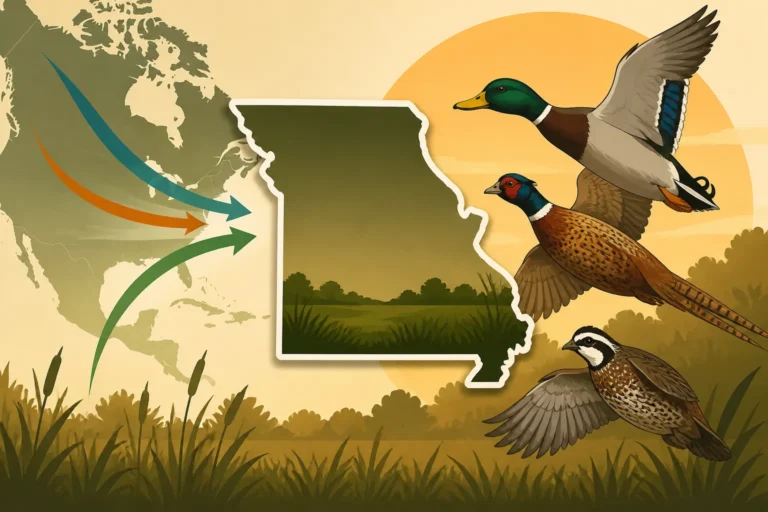
For many years, the iconic call of the bobwhite quail became increasingly rare across Missouri. Habitat loss was the primary culprit, with the conversion of diverse field edges and brushy cover to clean-farmed agriculture. Restoration landscapes, especially those focusing on prairie and grassland complexes, are specifically designed to bring back the conditions these birds need to thrive. By establishing native warm-season grasses for nesting, providing diverse forb communities for insect production (crucial for chick survival), and interspersing brushy coverts for escape from predators, these areas are seeing encouraging rebounds in quail and rabbit populations.
Hunting in these areas is a special experience. You'll often find bigger coveys and more consistent rabbit populations than in unmanaged areas. Imagine walking through shoulder-high native grasses, anticipating the explosion of a covey rise, or watching your dog work scent through a thick plum thicket that was specifically planted for cover. These landscapes offer classic upland hunting that felt lost for a while. Using mapping tools to identify the transitions between grassland and shrubby cover can be especially productive. Look for areas described as "restoration landscapes" on MDC area brochures, which often highlight specific management goals for upland birds. Missouri Quail Restoration Landscapes has more details on what to expect in these fantastic areas.
Deer and Turkey Benefits from Diverse Habitat
While quail and rabbits are often the primary focus of grassland restoration, deer and turkeys benefit immensely from these efforts too, as well as the forest and woodland restoration projects. Think about it: an open, diverse woodland floor provides a bounty of natural forage that simply isn't present in a dense, choked-out timber stand. Acorns from promoted oaks, native berries, young shoots, and a higher insect population all contribute to a healthier, more robust food base for deer and turkeys.
For deer, improved habitat means better nutrition, which translates to healthier fawns and bucks with better antler development. The mosaic of cover—from dense thickets in restored glades to open timber and brushy edges—provides ideal bedding, escape cover, and travel corridors. In areas where glade and savanna restoration is occurring, you'll find deer often prefer these sun-drenched openings for foraging, especially during cooler parts of the day. Turkeys, particularly in the Ozarks, thrive in open woodlands where they can easily move and forage for insects and mast, and find suitable nesting sites among the diverse undergrowth. When you're Scouting Missouri Public Land Before Season, look for areas with active timber management, burn scars, and a variety of vegetation types; these are often restoration landscapes designed to benefit a broad spectrum of wildlife, including the big game we love to pursue. A mapping application can clearly show these transitions, helping you find potential deer beds and travel routes.
| Restoration Landscape Type | Primary Habitat Focus | Key Game Species Benefited | Typical Location in Missouri |
|---|---|---|---|
| Prairie & Grassland | Native Tallgrass Prairie | Quail, Rabbit, Deer | North Missouri, Southwest MO |
| Forest & Woodland | Open Oak Woodlands, Glades | Deer, Turkey, Squirrel | Ozark Highlands, South-Central MO |
| River Bottom & Wetland | Bottomland Hardwoods, Swamps | Waterfowl, Deer, Turkey | Along Major Rivers, Southeast MO |
Navigating and Utilizing Restoration Landscapes
So you know these magical places exist, but how do you actually find them and make the most of your hunting time there? It takes a little homework, but the effort is well worth it for the unique and often more productive hunting experience these landscapes offer. Don't just show up; do your research, and you'll increase your odds significantly.
Using Digital Tools to Find These Special Areas
In today's world, our smartphones and computers are powerful scouting tools. When it comes to locating Missouri's restoration landscapes, the Missouri Department of Conservation's website and their free Conservation Atlas are your best friends. These resources often highlight specific areas undergoing habitat restoration, sometimes even detailing the types of work being done (e.g., "glade restoration," "native grassland planting," "prescribed fire unit"). Don't overlook the detailed brochures available for each Conservation Area; these often contain maps showing different habitat types and planned management activities.
Beyond the MDC's resources, mapping applications are invaluable. Services like GoHunt allow you to overlay different layers, showing public land boundaries, habitat types, and even topographical features. You can use aerial imagery to spot distinct differences in vegetation, such as blocks of native warm-season grass (which often appear coarser or have a different hue than fescue fields) or recently thinned timber. Look for areas where forest cover gives way to open glades, or where agricultural fields transition into robust native grasslands. Identifying these "edge" areas on a map before you even step foot on the ground can help you pinpoint high-potential hunting spots within a restoration landscape. Remember, the goal is often to create diverse edges and mosaics, and those are exactly what show up well on satellite views. Scouting With the Missouri Conservation Atlas and Reading Aerial Photos for Ozark Deer will give you a significant leg up on this digital scouting.
Hunter Etiquette and Expectations on Restored Ground
Hunting on a restoration landscape comes with its own set of considerations and a bit of hunter etiquette. First and foremost, always check the specific regulations for the Conservation Area or public land you plan to hunt. While the general state hunting regulations apply, individual areas often have specific rules regarding vehicle access, camping, target shooting, and sometimes even weapon restrictions for certain portions. For example, some areas might have specific times of year when prescribed burns are conducted, which could temporarily impact access or animal behavior.
Expect to encounter a dynamic landscape. Restoration is an ongoing process, so you might see areas that were recently burned, newly planted, or undergoing active timber work. These changes are all part of the process of making the habitat better for wildlife. Be mindful of any equipment or personnel you might encounter. Also, understand that these efforts are often designed for multiple benefits, not just hunting. You might share the area with birdwatchers, hikers, or photographers, especially on weekends. A good rule of thumb is to always leave the area better than you found it, packing out all trash and respecting the ongoing efforts to improve these vital places. The success of these landscapes depends on all of us doing our part.
Disclaimer
This article is for general informational purposes only and does not constitute professional advice. Laws, prices and regulations vary by location and change over time. Consult a qualified professional for guidance on your specific situation.