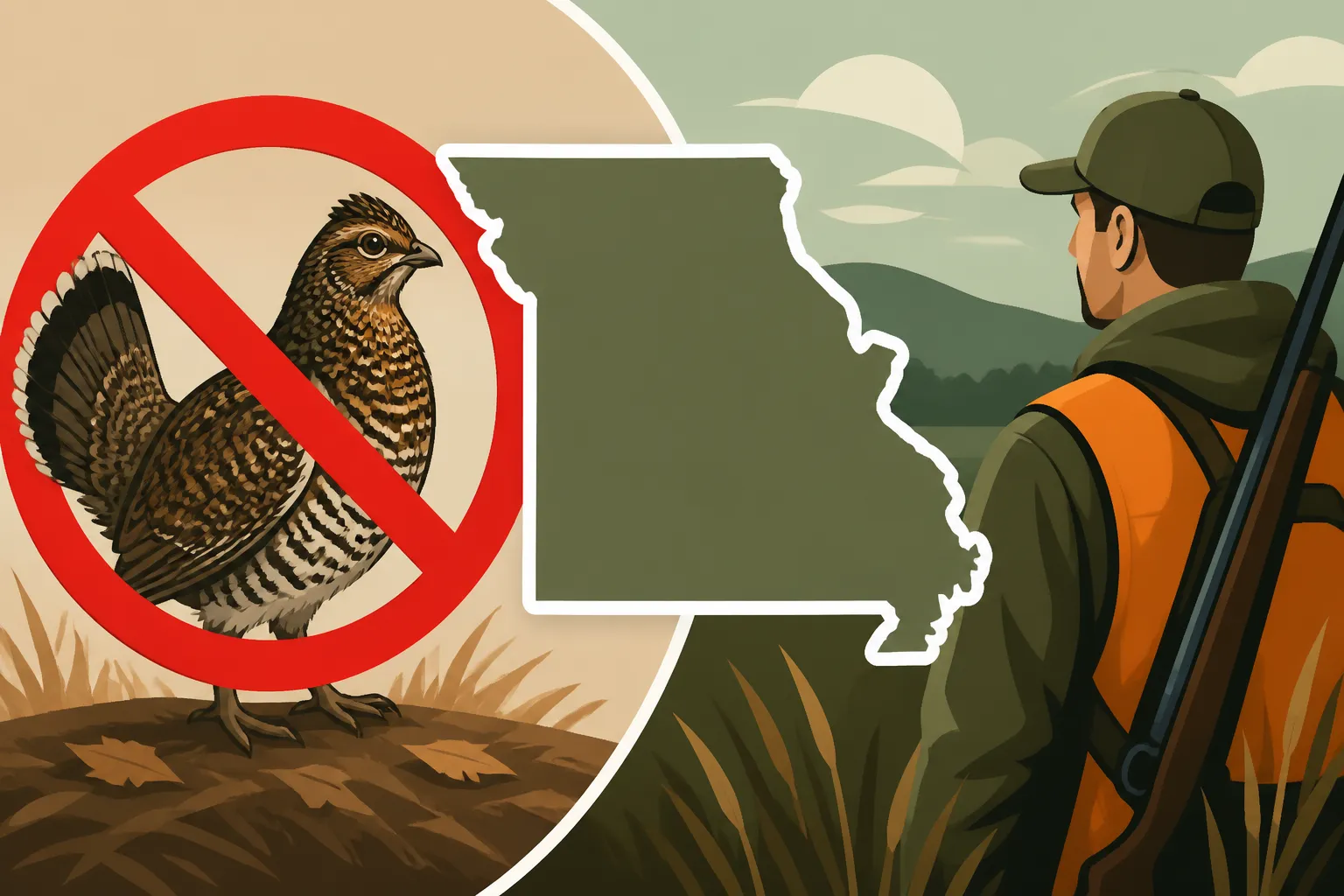
Why Missouri Has No Grouse Season
It’s a question that often pops up in conversations among Missouri hunters, usually accompanied by a shrug or a sigh: why don't we have a ruffed grouse season anymore? For those of us who cherish the tradition of upland bird hunting, or who have heard tales of grouse drumming in the Show-Me State's past, it can be perplexing to see this iconic forest game bird thrive in neighboring states while remaining off-limits here. This guide will peel back the layers on the decline of ruffed grouse in Missouri, exploring their historical presence, the complex reasons for their disappearance from our hunting regulations, and the challenges faced in any potential recovery efforts.
The Ghost of the Ozarks: Ruffed Grouse History in Missouri
Imagine a time when the crisp air of an Ozark autumn wasn't just filled with the rustle of falling leaves, but also with the thunderous flush of a ruffed grouse, exploding from thick cover. It might sound like a dream for modern Missouri hunters, but it was once a reality. Ruffed grouse, with their distinctive fan-like tail and "drumming" display, were once a resident game bird across much of Missouri, particularly in the rugged, forested landscapes of the Ozarks and parts of the northern timber. They were an integral part of the state's natural heritage and provided a challenging pursuit for early upland bird enthusiasts.
Early Abundance and Historical Harvests
Records from the late 19th and early 20th centuries paint a picture of ruffed grouse being relatively common in areas with suitable habitat. While perhaps never as numerous as the bobwhite quail, they were present enough to support a hunting season. Hunters would often target them in conjunction with other small game like squirrels and rabbits, venturing into the vast, unbroken tracts of timber that characterized much of the state. It was a different landscape back then, with logging practices that, while often unsustainable, did create some of the diverse forest age classes that grouse need.
The hunting methods were simple: walk through promising timber, often with a good bird dog, and hope to get a shot at a flushing bird. These birds were known for their explosive take-off and their ability to put trees between themselves and a hunter in a split second. Tales from those days speak of the thrill of the flush and the challenge of hitting such a fast-moving target in dense woods. The experience of pursuing grouse was deeply ingrained in the hunting culture of certain regions. Anyone interested in diving into historical accounts and land use changes might find platforms like GoHunt useful for piecing together how landscapes looked and functioned in earlier eras, though specific historical hunting data for Missouri grouse might require digging into archives.
Habitat Shifts and Early Declines
However, even in those earlier times, the seeds of decline were being sown. As Missouri's population grew, so did the demand for timber and agricultural land. Vast forests were cleared for farming, pastures, and development. The Ozarks, while rugged, were not immune to this conversion. While some initial logging might have created good grouse habitat by opening up the canopy and encouraging new growth, the long-term trend of deforestation and habitat fragmentation began to take its toll. The patchwork of fields and second-growth timber that replaced the original forests was often not ideal for grouse, which rely on specific age structures and types of cover. This gradual erosion of quality habitat meant that while populations might have remained huntable for a time, their overall range and density were shrinking. The ability of the land to support robust grouse numbers was diminishing, setting the stage for more serious declines in the decades to come.
Why the Silence? Factors Behind the Grouse Decline
The question of "what happened?" to Missouri's ruffed grouse is a complex one, without a single, simple answer. Instead, it's a tapestry woven from multiple environmental changes, human influences, and ecological pressures that collectively led to their disappearance from our huntable species list. Understanding these factors is crucial to grasping why Why Missouri Has No Grouse Season today.
The Critical Role of Habitat: Succession and Forest Maturation
Perhaps the most significant factor in the decline of ruffed grouse has been habitat loss, not just in the sense of forests being cleared, but also due to the changing nature of the remaining forests. Ruffed grouse are "early successional" species, meaning they thrive in young, regenerating forests — areas that have been recently disturbed by events like logging, fire, or severe storms. This type of habitat provides the dense understory they need for food, nesting cover, and protection from predators.
Think about a young forest, perhaps 5-20 years old. It's thick with saplings, brush, and briars. That's prime grouse country. However, much of Missouri's timberland, particularly in the Ozarks, has matured over the past century. With widespread fire suppression and less active forest management focused on creating early successional patches, our forests have largely grown into older, more open stands. While beautiful and valuable for other wildlife, these mature forests lack the dense ground cover that grouse require. It’s like a deer needing thick bedding cover; if all the thickets are gone and replaced by open woods, the deer population will struggle. The lack of varied forest age classes across the landscape has been a death knell for ruffed grouse.
Predation Pressures and Population Dynamics
Another significant piece of the puzzle is predation. While predators are a natural part of any ecosystem, an imbalance can have devastating effects on vulnerable populations. As grouse habitat diminished and fragmented, the birds became more susceptible to a range of predators. Raccoons, opossums, skunks, and even domestic cats and dogs can be nest predators, feasting on eggs and young poults. Raptors like hawks and owls, and mammalian predators such as coyotes and bobcats, are also constant threats to adult birds.
When grouse populations are robust and widespread, they can often absorb some level of predation. However, when their numbers are already low due to habitat constraints, even normal predation levels can become overwhelming. There's also the "mesopredator release" phenomenon, where the decline of apex predators (like wolves or cougars, long gone from much of Missouri) leads to an increase in mid-sized predators like raccoons and coyotes, putting more pressure on ground-nesting birds. This amplified predation, combined with dwindling cover, created a difficult environment for grouse to survive and reproduce effectively.
Weather Extremes and Reproduction Challenges
Weather, while often overlooked, also plays a critical role in the reproductive success of ground-nesting birds like grouse. Periods of extreme weather during nesting and brooding seasons can be particularly detrimental. Cold, wet springs can lead to high mortality rates for newly hatched poults, which are highly vulnerable to hypothermia. Heavy, prolonged rains can flood nests or make it difficult for hens to keep their chicks warm and dry. Drought conditions can reduce insect populations, which are a vital food source for growing poults.
While annual weather fluctuations are normal, a series of bad years can severely impact an already struggling population's ability to rebound. If habitat is marginal and predation is high, even a slightly tougher-than-average spring can push a population closer to the brink. For a species that needs consistent reproductive success to maintain its numbers, these environmental challenges can be a significant hurdle. Looking at historical weather patterns in conjunction with wildlife observations, perhaps even through detailed mapping tools or conservation databases, can sometimes reveal these subtle but powerful influences.
A Rocky Road: Missouri's Grouse Restoration Efforts
Recognizing the decline of ruffed grouse, conservation agencies and passionate individuals in Missouri did not simply stand by. Efforts were made, primarily through translocation programs, to bring grouse back to parts of the state where they once thrived. These initiatives, while well-intentioned and based on the best science available at the time, illustrate the immense challenges of restoring a species when its core habitat needs are not consistently met across the landscape.
Early Translocation Programs
Starting in the 1950s and continuing into the 1990s, Missouri undertook a series of ruffed grouse restoration projects. Birds were captured from states with healthy populations, such as Wisconsin, Indiana, and Iowa, and released into carefully selected areas within Missouri. The hope was that these relocated birds would establish breeding populations and begin to expand their range. These efforts were often concentrated in areas of the Ozarks, particularly in parts of the Mark Twain National Forest and larger Conservation Areas, where some semblance of suitable habitat remained.
These translocations often involved extensive planning, site selection based on available cover, and careful handling of the birds to minimize stress. Conservationists monitored release sites, tracking bird movements and reproductive success to gauge the effectiveness of the program. While some initial successes were observed, with birds surviving and even reproducing for a few years, long-term population growth proved elusive. The initial excitement often gave way to the sobering reality that simply releasing birds wasn't enough if the underlying habitat issues weren't fundamentally resolved. The grouse population in Where Missouri Ruffed Grouse Survive today are a testament to where these efforts saw some fleeting success.
The Challenges of Sustained Habitat Management
The primary hurdle for these restoration efforts was the sustained creation and maintenance of suitable early successional habitat on a large enough scale. Ruffed grouse need a continuous supply of young forest patches. This requires active forest management, including practices like prescribed burning, clear-cutting in small, strategically planned blocks, and timber stand improvement. These practices mimic the natural disturbances that historically created grouse habitat.
However, implementing such intensive management across vast acreages faces numerous challenges. Public perception of clear-cutting can be negative, even when it's done for ecological benefit. Funding for extensive forest management projects can be limited. Furthermore, the time scale for managing forests for grouse is long-term, requiring decades of commitment and consistent effort across various land ownerships. Missouri Ruffed Grouse Restoration History shows that while the intent was strong, the scale of consistent, grouse-centric habitat work needed was often beyond what could be achieved. Without this continuous creation of dense, young cover, released birds struggled to find enough secure nesting sites and protection from predators, leading to eventual population declines at the release sites.
The Current Status of Ruffed Grouse in Missouri
Today, official ruffed grouse sightings in Missouri are exceedingly rare. While there might be isolated individuals or very small, fragmented pockets, there are no self-sustaining, huntable populations. The Missouri Department of Conservation (MDC) officially classifies the ruffed grouse as extirpated, meaning it is locally extinct as a breeding population in the wild, though not globally extinct. This status has been in place for quite some time, reflecting the lack of any viable populations that could support a hunting season.
The decision to not have a grouse season isn't arbitrary; it's a reflection of this stark reality. There simply aren't enough birds to warrant it, and opening a season would put undue pressure on an already vanished population. This isn't unique to grouse; we see similar challenges with other struggling species like the Greater Prairie-Chicken Numbers in Missouri or even the Missouri Ruffed Grouse Season Status which remains closed. While we hold out hope for future changes in habitat and successful reintroduction methods, for now, Missouri grouse remain a ghost of the past. Perhaps one day, with renewed, large-scale habitat efforts focusing on early successional timber and integrated forest management, the drumming of a ruffed grouse might echo through our Ozark hollows once more.
Looking Ahead: The Future of Ruffed Grouse in Missouri
While the current outlook for ruffed grouse in Missouri might seem bleak, conservation is a dynamic field, and understanding the past helps chart a course for the future. The conversation around species recovery is ongoing, and factors like new research, evolving forest management techniques, and shifting societal values can all influence what might be possible down the road for the elusive ruffed grouse in the Show-Me State.
The Long Road to Recovery: What It Would Take
For ruffed grouse to ever return to a huntable status in Missouri, it would require a monumental, long-term commitment to habitat restoration on a landscape scale. This isn't just about planting a few trees; it's about actively managing vast tracts of forest to create a mosaic of different age classes. This means embracing techniques like prescribed fire more widely, which can regenerate forest understories and create openings. It also means implementing carefully planned timber harvests, including small clear-cuts, to provide the dense, young growth grouse need.
Such an undertaking would involve significant resources, collaboration between state and federal agencies, private landowners, and conservation organizations. It would also require public education to help people understand that these active forest management practices, while sometimes looking "messy" in the short term, are vital for specific wildlife species. We've seen similar habitat-focused efforts benefit species like Northern Bobwhite Quail in Missouri in certain Missouri Quail Restoration Landscapes, demonstrating that targeted habitat work can make a difference. The sheer scale needed for a wide-ranging forest bird like grouse, however, presents an even greater challenge.
Learning from Successes and Failures in Other States
Missouri isn't alone in facing challenges with forest game birds, and there's a lot to learn from other states. Some states have successfully managed their forests to maintain or even increase grouse populations, often through aggressive timber management and prescribed fire programs. These programs are often integrated with other wildlife management goals, creating a healthier, more diverse forest ecosystem overall.
Studying these strategies, understanding their ecological and economic costs, and adapting them to Missouri's unique conditions would be crucial. It's not about simply copying what another state does, but about learning the principles of effective early successional habitat creation and applying them here. The key takeaway from these success stories is almost always about proactive, sustained, and science-driven habitat management. Without addressing the foundational habitat needs of the species, any reintroduction or recovery effort would likely face the same struggles as past attempts.
The Role of Hunters and Conservationists in Future Efforts
Even without an active hunting season, Missouri hunters and conservationists still have a vital role to play in the future of species like the ruffed grouse. Supporting organizations that advocate for sound forest management, participating in habitat improvement projects, and educating others about the importance of diverse forest habitats are all crucial actions. Even if the goal isn't immediate hunting, the broader benefits of healthy, varied forests extend to countless other species, from Squirrel Hunting in Hickories to deer and wild turkeys.
Furthermore, being observant in the woods and reporting any rare grouse sightings to the Missouri Department of Conservation can contribute valuable data, helping biologists understand if any small, isolated populations still persist or if conditions are slowly changing. While the immediate future likely holds no ruffed grouse season for Missouri, the long-term vision of a richer, more biodiverse forest ecosystem, where the thunderous flush of a grouse is once again a possibility, remains a powerful motivator for continued conservation efforts.
| Factor | Impact on Missouri Grouse Population | Outlook for Recovery |
|---|---|---|
| Forest Maturation | Primary cause of decline | Significant challenge, requires active management |
| Lack of Early Successional Habitat | Critical missing element for survival | Requires large-scale, consistent effort |
| Predation Pressure | Exacerbated by poor habitat | Less solvable without habitat improvement |
| Weather Variability | Impacts reproductive success | Cannot be controlled, but good habitat helps mitigate |
| Past Restoration Attempts | Limited success, highlighted habitat needs | Provides valuable lessons for future efforts |
| Public Land Management | Potential for large-scale impact | Requires political will and sustained funding |
| Private Landowner Engagement | Crucial for landscape-level change | Needs incentives and education |
Disclaimer
This article is for general informational purposes only and does not constitute professional advice. Laws, prices and regulations vary by location and change over time. Consult a qualified professional for guidance on your specific situation.